
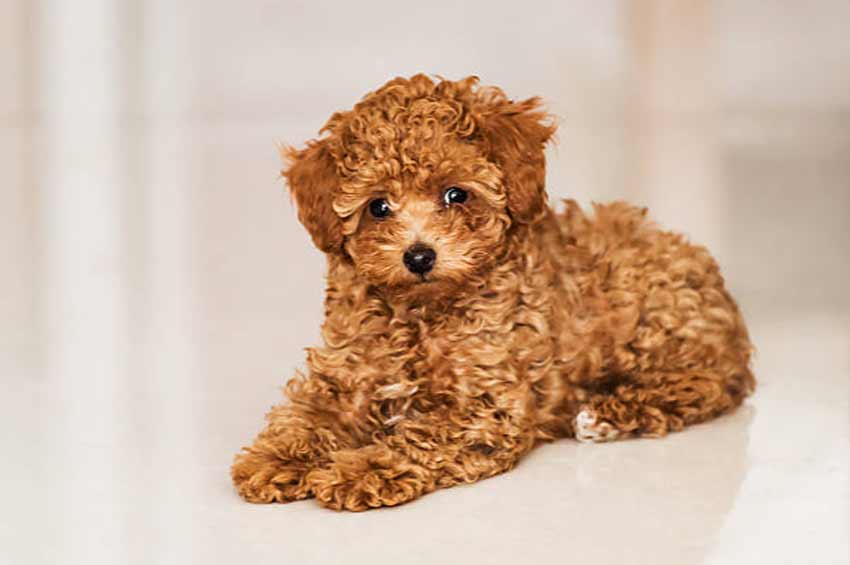
Quick Answer: A Mini Goldendoodle typically reaches its adult height by 9-11 months, once the growth plates close, but continues filling out with muscle and coat volume until roughly 18-24 months. Most land in the 15-35 pound, 13-20 inch range as adults, though exact timing and size depend heavily on the poodle parent’s size and the individual dog’s genetics.
Key Takeaways
- “Full grown” isn’t one milestone – skeletal height finishes around 9-11 months, but muscle and coat continue developing until 18-24 months.
- Adult Mini Goldendoodles typically weigh 15-35 pounds and stand 13-20 inches at the shoulder.
- Which poodle parent (mini vs. toy) was used has a bigger effect on final size than any single growth-timeline number.
- Hip dysplasia, progressive retinal atrophy, and Addison’s disease are the main health conditions to ask breeders about.
- A fluffy adult coat can make a skeletally mature dog look like it’s still growing, which is a common source of confusion.
Why Trust This Guide?
This guide is researched and written by the Pets Store Home editorial team, drawing on veterinary growth-and-development resources and canine genetics information. It’s intended as general information; consult your veterinarian for advice specific to your dog.
Why “Full Grown” Isn’t a Single Date
Owners often expect a single, clean milestone for when a puppy becomes an adult, but with Mini Goldendoodles that expectation causes more confusion than clarity. Skeletal maturity, final scale weight, and full adult body composition are three related but distinct things, and they don’t happen at the same time. A Mini Goldendoodle typically stops getting taller between 9 and 11 months, once the growth plates in the long bones close. From that point forward, any further change in appearance is coming from muscle tone, weight, and coat, not skeletal growth.
That’s an important distinction because a dog can be fully grown in height at ten months and still visibly “filling out” a year later. The dense, fluffy adult coat that gives Goldendoodles their signature look develops gradually over roughly the first year and a half, which adds visual bulk long after the skeleton has finished growing. Many owners mistake this coat development and gradual muscling for continued growth, when the frame underneath stopped changing months earlier.
The Growth Timeline, Stage by Stage
Understanding the general timeline helps set realistic expectations, though individual dogs vary. In the first four to five months, a Mini Goldendoodle puppy typically reaches roughly half of its eventual adult weight, growing quickly during this early window. Growth then begins to slow between about seven and ten months, as the rapid puppy growth spurt tapers off.
Most Mini Goldendoodles reach their adult height somewhere between 9 and 11 months of age, which is when the growth plates close and skeletal growth effectively stops. Weight typically continues increasing a bit longer, often leveling off between 11 and 14 months as the dog finishes its core growth. From there, a longer tail of development continues: many Mini Goldendoodles keep adding lean muscle and filling out their frame until somewhere between 18 and 24 months, and by around two years old, growth has essentially stopped entirely for the vast majority of dogs.
What Size to Expect as an Adult
Fully mature Mini Goldendoodles typically weigh between 15 and 35 pounds and stand 13 to 20 inches tall at the shoulder, though this is a wide range for a reason. “Mini Goldendoodle” describes a Golden Retriever crossed with a Miniature Poodle rather than a single standardized size, and the exact poodle parent used (true miniature versus a smaller “toy” poodle influence in the line) has a bigger effect on final adult size than any growth-timeline number alone. Two puppies from different litters, both correctly called Mini Goldendoodles, can land at meaningfully different points within that 15-35 pound range.
Factors That Influence Growth and Final Size
Several factors shape how large a Mini Goldendoodle ultimately becomes and how smoothly it gets there. Genetics from both parent breeds matters most – Golden Retrievers and Poodles differ in typical size and growth rate, so which traits a given puppy inherits meaningfully shifts its outcome. Nutrition during the growing months needs to be appropriate for a large-breed-adjacent puppy without over-supplementing, since both underfeeding and overfeeding can cause developmental problems. Exercise supports healthy muscle and bone development, though it’s worth moderating high-impact activity (like repeated jumping or long runs on hard surfaces) until the growth plates have closed, to protect developing joints. Underlying health conditions, including hormonal or nutritional issues, can also slow or disrupt normal growth and are worth flagging to a vet if a puppy seems to be developing unusually.
Mini vs. Toy vs. Standard: Why Size Labels Get Confusing
Part of the confusion around “full grown” size comes from how loosely Goldendoodle size categories get used across breeders and marketplaces. A Standard Goldendoodle comes from a standard Poodle parent and typically matures well over 40 pounds, sometimes past 70. A Mini Goldendoodle comes from a miniature Poodle parent and lands in that 15-35 pound range discussed above. Some breeders also use a “petite” or “toy” Goldendoodle label for crosses using a toy Poodle, which can mature under 15 pounds – and because these labels aren’t standardized the way purebred breed sizes are, the same puppy might be marketed as “mini” by one breeder and “toy” by another.
This matters for growth expectations because a smaller adult size generally comes with a shorter timeline to skeletal maturity. Smaller dogs typically finish growing in height sooner than larger ones, which is part of why a Mini Goldendoodle reaches its adult height around 9-11 months while a Standard Goldendoodle can keep growing taller for a couple of months longer. When comparing growth charts or timelines you find online, it’s worth checking which size category they’re actually describing, since a chart built around Standard Goldendoodles won’t translate cleanly to a Mini.
Generation Matters Too (F1, F1B, and Multigen)
Beyond size category, a Mini Goldendoodle’s exact mix of Golden Retriever and Poodle genetics depends on its generation, which is typically labeled F1, F1B, F2, or multigen. An F1 Mini Goldendoodle is a direct cross of a purebred Golden Retriever and a purebred Miniature Poodle, splitting the genetics roughly evenly. An F1B is an F1 Goldendoodle bred back to a Poodle, shifting the genetic mix more heavily toward the Poodle side – often done to produce a coat that sheds less. Multigenerational (multigen) dogs are Goldendoodle-to-Goldendoodle pairings across several generations, which can make coat type and size more predictable over time as breeders select for consistent traits.
Generation affects growth in a practical way: a puppy with more Poodle in its genetic background often (though not always) trends toward the curlier, lower-shedding coat and can mature slightly smaller than a puppy with a more even Golden Retriever-Poodle split. None of this changes the core timeline – skeletal maturity around 9-11 months, continued filling out to 18-24 months – but it helps explain why two puppies labeled identically can still turn out noticeably different.
Temperament
Mini Goldendoodles are typically friendly, intelligent, and eager to please, drawing on the sociable nature of the Golden Retriever and the trainability of the Poodle. They tend to do well with children and other pets when properly socialized and are commonly chosen as family companions for exactly that reason. Like any young dog, the adolescent stretch between roughly six months and two years can bring some testing of boundaries, and consistent, patient training during this period pays off in a well-mannered adult.
Health Considerations
Hip dysplasia is a joint condition where the hip socket doesn’t form properly, and it’s a real risk in this cross since both Golden Retrievers and Poodles can carry the underlying genetics – OFA or PennHIP screening in the parents helps reduce this risk. Progressive retinal atrophy (PRA) is a group of inherited eye conditions that gradually deteriorate the retina, typically becoming noticeable between three and five years of age and eventually leading to blindness; responsible breeders test for the relevant genes before breeding. Addison’s disease, a disorder involving insufficient adrenal hormone production, occurs at a notably elevated rate in Poodle lines and can be passed down to Goldendoodle offspring – it’s sometimes called “the great pretender” because its symptoms (lethargy, vomiting, weight loss) mimic many other illnesses. Allergies, whether to food, pollen, or other environmental triggers, are also common and can show up as skin irritation, ear infections, or digestive upset.
Grooming Needs
The curly or wavy coat that defines this cross needs regular brushing, typically several times a week, to prevent matting, along with professional grooming every four to eight weeks to keep it manageable. Because coat texture and density can vary depending on which parent’s genes dominate, some Mini Goldendoodles need more frequent brushing than others – a looser, wavier coat mats less readily than a tight, dense curl.
Tracking Your Puppy’s Growth
Because “fully grown” plays out in stages rather than on one specific day, regular veterinary checkups are the most reliable way to track whether a puppy’s growth is on a healthy path. A vet can assess body condition, joint health, and overall development at each stage, and flag anything that looks off – whether that’s a growth plate concern, a nutritional issue, or an early sign of one of the breed’s known health risks. If a puppy seems to have stopped growing unusually early, or is still growing well past the typical two-year mark, that’s worth a veterinary conversation rather than an assumption either way.
Frequently Asked Questions
When does a Mini Goldendoodle stop growing taller?
Typically between 9 and 11 months, when the growth plates in the long bones close and skeletal growth stops.
Why does my Mini Goldendoodle still look like it’s growing after a year?
It’s likely filling out with muscle and developing its adult coat, not gaining height. Coat volume alone can take up to about 18 months to fully develop.
How big will my Mini Goldendoodle get?
Most adults weigh 15 to 35 pounds and stand 13 to 20 inches at the shoulder, with the exact number depending heavily on the poodle parent’s size and individual genetics.
What health testing should I ask a breeder about?
Hip screening (OFA or PennHIP), PRA genetic testing, and awareness of Addison’s disease risk from the Poodle side of the pedigree.
Is it safe to exercise a growing Mini Goldendoodle heavily?
Moderate exercise supports healthy development, but high-impact activity is best limited until the growth plates close around 9-11 months, to protect developing joints.
For a closer look at adult size expectations from a different angle, our guide to the Full Grown Mini Goldendoodle is a useful companion read. If weight management comes up at any life stage, our guide on how to help your dog lose weight covers safe, practical steps. And if you’re curious about the Golden Retriever side of this cross specifically, see our guide to Golden Retriever puppy pricing.
[…] Which foreign pets are legal in Washington State? […]