
Senior Cat Won’t Eat Dry Food Anymore
Quick answer: A senior cat refusing dry food is usually driven by dental pain, a reduced sense of smell, or an underlying illness like kidney disease, rather than pure pickiness. Switching to a softer, more aromatic food while you investigate the cause is the safest first step.
Key Takeaways
- Dental disease is one of the most common reasons older cats stop eating dry kibble, since crunching becomes painful.
- A cat’s sense of smell drives appetite more than taste – illness or age-related decline can make dry food less appealing.
- Sudden appetite loss in a senior cat, especially lasting more than 24-48 hours, warrants a vet visit rather than a wait-and-see approach.
- Warming wet food or adding a small amount of low-sodium broth can make meals more enticing without a full diet overhaul.
- Weight loss alongside reduced eating is a red flag for kidney disease, hyperthyroidism, or other conditions common in older cats.
Why Trust This Guide?
This guide draws on general veterinary guidance for feline geriatric care and common causes of appetite change in senior cats, focused on practical, safe first steps rather than a substitute for a vet exam when symptoms persist.
Last reviewed: September 2026
General information, not veterinary advice. A cat that has eaten nothing at all for 24 hours needs veterinary attention promptly — this is especially true for senior and overweight cats. If that describes your situation, contact your vet now rather than continuing to read.
There’s an important distinction to make first: a senior cat that’s gone off dry food specifically but is still eating wet food is a very different situation from a cat that has stopped eating altogether. The first is common and often manageable at home; the second is a genuine veterinary concern, particularly because cats — unlike most other pets — can develop a serious liver condition after even a short period of not eating at all.
Short version: dry food often loses its appeal to senior cats because of dental pain, a diminished sense of smell (dry food has less aroma than wet), and an instinctive pull toward more hydrating food as cats age — none of which is necessarily an emergency on its own. What matters most is whether your cat is still eating something, how suddenly the change happened, and whether any other symptoms are present.
Why Dry Food Specifically Loses Its Appeal
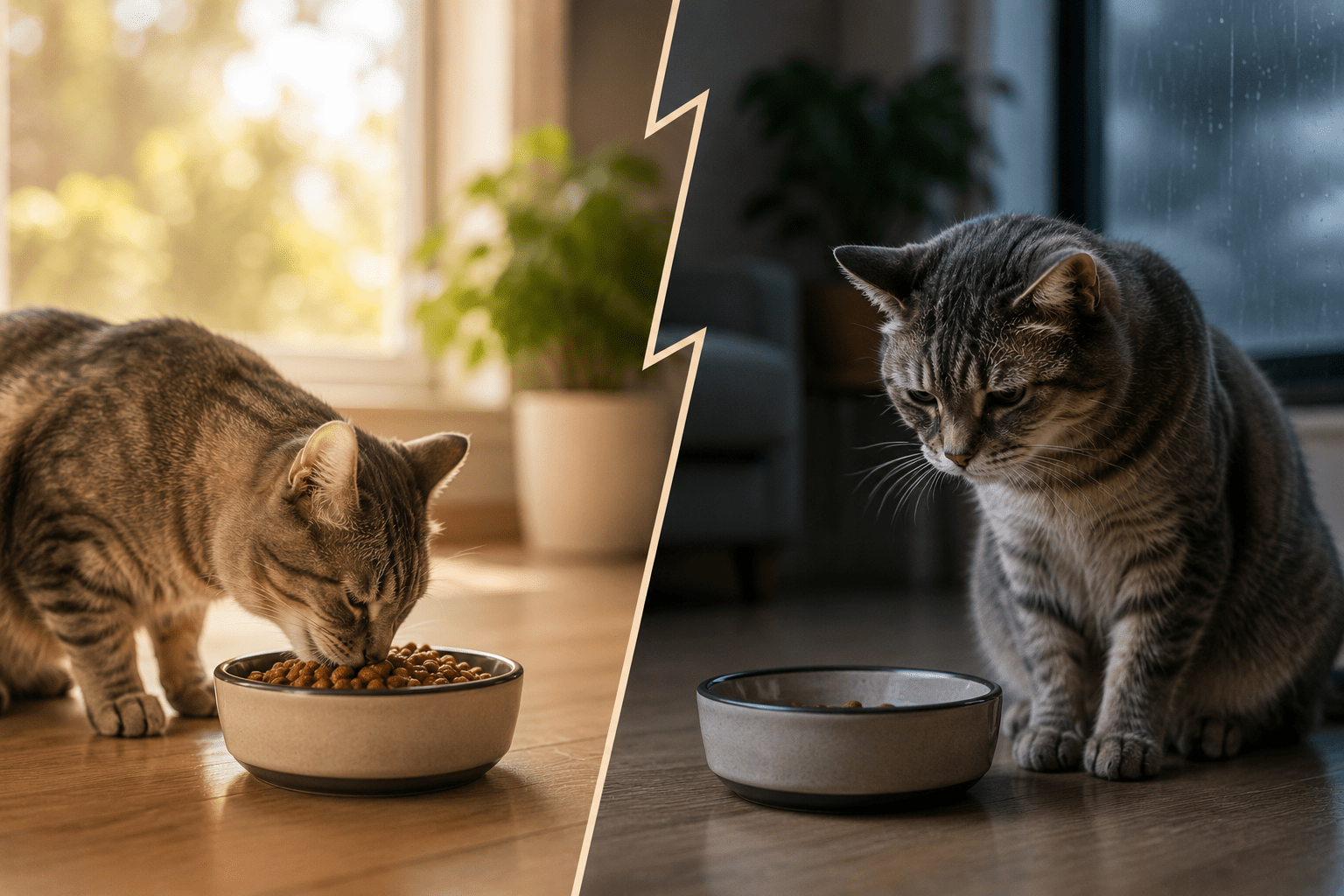
This is the part most general “cat not eating” advice skips over: senior cats often don’t lose interest in food broadly — they lose interest in dry food specifically, while still willingly eating wet food. That pattern itself is a clue, and it usually points to one or more of a few specific things.
Dental pain and kibble hardness. Hard, crunchy kibble requires more chewing force than soft wet food, and dental disease — extremely common in senior cats — makes that chewing genuinely painful. A cat with a sore tooth or inflamed gums will often keep eating soft food (which needs little chewing) while quietly avoiding the food that hurts to eat. Of the possible explanations, dental discomfort is generally the first one worth investigating, since it’s both common and directly treatable.
Diminished sense of smell. Cats rely heavily on smell to find food appealing, and that sense can decline somewhat with age. Wet food is simply more aromatic than dry kibble, so as a cat’s nose gets less sensitive, wet food keeps triggering appetite while drier, less pungent kibble increasingly doesn’t.
Softness and moisture. Wet food may become more appealing simply because it’s softer, more aromatic, and provides substantially more moisture than dry kibble — a combination that matters more as chewing comfort declines and hydration becomes more important with age. This doesn’t require assuming a cat consciously “knows” it needs more water; the food is just easier to eat and more appealing on its own terms.
Is This Actually a Problem?
Not automatically. If your cat is eating wet food well, maintaining its weight, drinking normally, and acting like itself otherwise, a preference shift away from dry food isn’t inherently something to fix. A full transition to a nutritionally complete wet food can be perfectly reasonable for many senior cats, particularly when chewing comfort or hydration is a concern — the important thing is that whatever your cat ends up eating is a complete and balanced food appropriate for its individual needs, not simply whether it’s wet or dry.
The situations that deserve more attention are: your cat eating meaningfully less overall (not just switching format), losing weight, or showing any other change in behavior or bathroom habits alongside the dry food refusal. Those combinations point toward something beyond simple preference.
Dental Disease: The Most Common Culprit
Dental disease is one of the single most common reasons senior cats go off dry food specifically, and it’s often under-recognized because cats are good at hiding pain. Watch for: picking up kibble and dropping it without eating it, chewing on one side of the mouth, drooling, pawing at the face, and noticeably bad or unusual breath odor.
Because dental disease is both common and treatable, it’s worth ruling out early rather than last — a dental exam is a reasonably quick way to confirm or rule out the most likely explanation before assuming something more complicated is going on.
Other Medical Causes Worth Ruling Out
Several conditions that become more common with age can reduce appetite generally, and dry food (requiring more effort to eat) is often the first casualty even when the underlying cause isn’t dental:
- Kidney disease — often paired with increased thirst and urination alongside reduced appetite
- Hyperthyroidism — can cause appetite changes alongside weight loss and increased activity or restlessness
- Diabetes — associated with increased thirst, urination, and sometimes appetite changes
- Gastrointestinal issues — nausea, inflammation, or hairball-related discomfort can make eating uncomfortable
- Cancer — less common but a real possibility in older cats with unexplained appetite or weight change
None of these should be self-diagnosed from a list — the point of naming them is to make clear why a persistent or worsening pattern, rather than a one-off picky day, is worth an actual veterinary visit rather than months of trial and error with new foods.
Non-Medical Causes
Recipe or brand changes. Manufacturers change formulas more often than owners realize, and a cat that was eating a food happily for years can suddenly reject it after a recipe tweak that’s imperceptible to a person.
Bowl location and vision changes. Aging cats sometimes develop reduced vision, and a food bowl moved to a new spot — even slightly — can genuinely be harder for an older cat to find.
Environmental stress. New pets, houseguests, construction noise, or a disrupted routine can all suppress appetite in cats, and senior cats often tolerate change less easily than younger ones.
Simple boredom with the food. Some cats, especially ones fed the exact same kibble for years, appear to develop genuine flavor fatigue over time, independent of any health issue.
The Critical Warning: Hepatic Lipidosis
This is the single most important safety fact in this entire topic, and it’s worth being precise about the timing: unlike most animals, cats can develop a serious and potentially life-threatening liver condition called hepatic lipidosis (fatty liver disease) when they go without adequate food for an extended period — typically described as around three to four consecutive days of little or no eating, with overweight cats at meaningfully higher risk. Twenty-four hours without food isn’t generally when hepatic lipidosis itself sets in, but it is the point at which sustained appetite loss can start affecting an older cat’s health and is a reasonable threshold to seek veterinary advice rather than wait and see.
The mechanism behind hepatic lipidosis is that when a cat isn’t eating enough, its body starts breaking down fat stores for energy faster than the liver can process it, and fat accumulates in liver cells faster than the organ can handle. This is why “just wait and see if she eats when she’s hungry enough” is genuinely bad advice for a cat that has stopped eating meaningfully — cats don’t reliably self-correct the way some other animals might, and the health risk of prolonged fasting is real and time-sensitive.
To put the two thresholds together clearly: 24 hours of no food (or a couple of days of eating very little) is the point to call your vet and get a workup started, while several consecutive days of inadequate intake is where hepatic lipidosis risk becomes an especially serious concern — which is exactly why it’s worth acting on the earlier, more conservative threshold rather than waiting for the more severe one to become likely.
This is specifically about a cat eating little or nothing at all, not one that’s simply switched from dry to wet food while still eating normally — but it’s the reason any full food refusal in a cat, senior or not, deserves prompt attention rather than a wait-and-see approach.
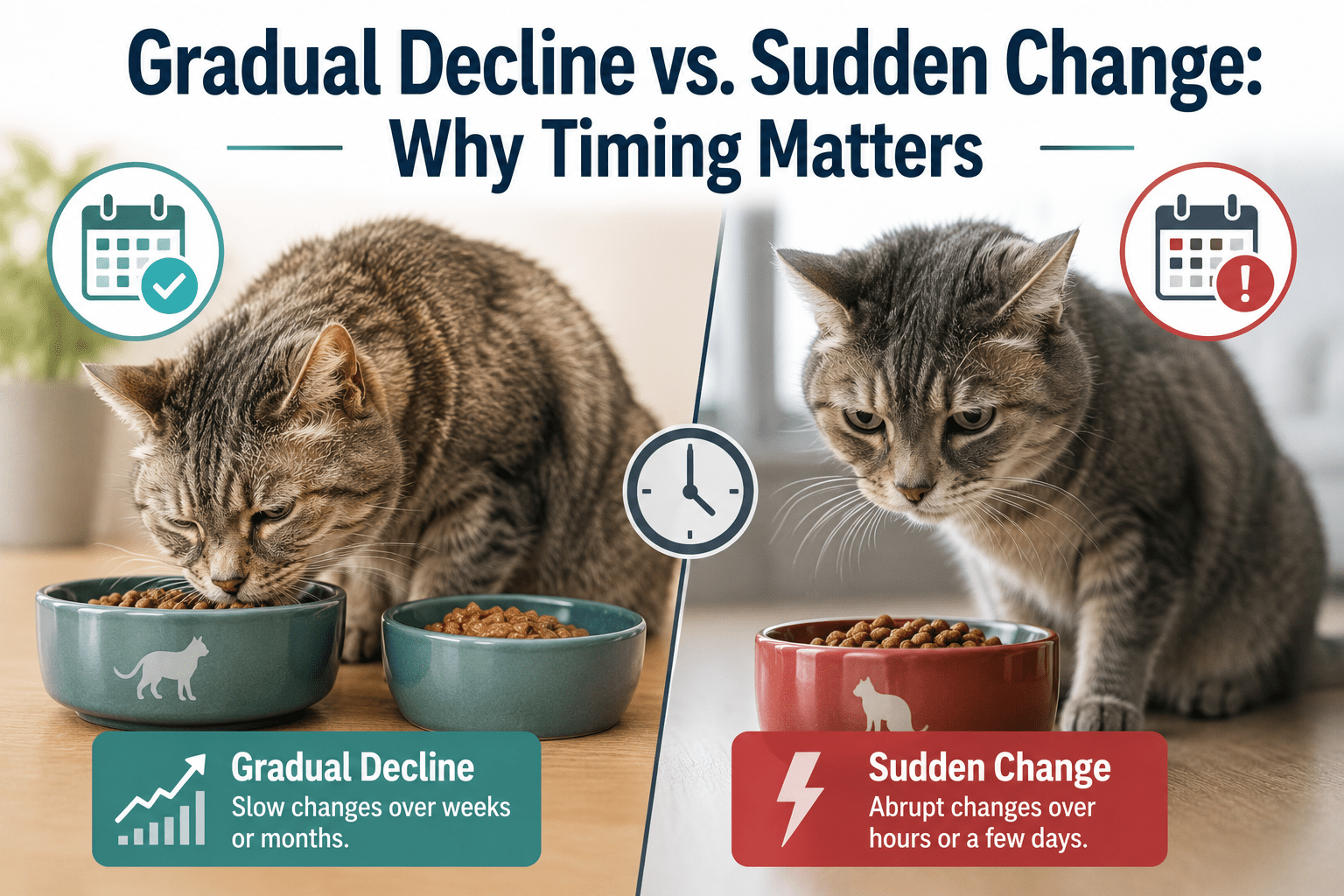
Gradual Decline vs. Sudden Change: Why Timing Matters
A slow, gradual shift away from dry food over weeks or months — especially without other symptoms — more often points toward the ordinary, less urgent explanations: dental wear, diminished smell, or a simple preference shift with age.
A sudden change — a cat that was eating dry food normally last week and refuses it entirely starting yesterday — is more likely to reflect an acute cause: a new dental pain flare, an infection, nausea, or another medical issue that started abruptly. Sudden changes deserve a faster response than gradual ones, even if neither is a full emergency on its own.
How to Transition to Wet Food the Right Way
If dental pain, diminished smell, or hydration needs are genuinely behind the shift, a full or partial move to wet food is often the right long-term answer rather than a workaround to fight against.
Introduce new wet food alongside — not instead of — whatever your cat is still willingly eating, gradually increasing the new food’s share over several days to a week or longer, depending on the cat, rather than swapping abruptly. Cats can be extremely resistant to sudden food changes, so a slower pace is often worth the patience. Offer it at room temperature or slightly warmed (never hot), since warming releases more aroma and makes food more appealing to a cat with a diminished sense of smell. If your cat is used to grazing on dry food throughout the day, plan for more frequent, smaller wet-food meals, since wet food doesn’t sit out safely the way dry food does.
Quick Fixes Worth Trying at Home
For a cat that’s eating less than ideal but isn’t in obvious distress, a few low-risk adjustments are worth trying alongside — not instead of — addressing the underlying cause:
Warm food slightly to increase its aroma. Add a small amount of low-sodium broth or the liquid from tuna packed in water to boost smell and moisture — only if your vet has no reason for your cat to avoid extra sodium or specific ingredients, since senior cats can have kidney disease, heart disease, or hypertension that make this worth checking first. Offer a texture variety — pâté, shredded, or minced — since preferences can shift with age or dental sensitivity. Reduce mealtime pressure by feeding in a quiet, low-traffic spot rather than hovering, which can add stress rather than help. Keep the feeding routine and bowl location consistent, especially if vision changes are a possibility.
Red Flags: When to See a Vet
Contact your vet if any of the following apply, rather than continuing to try home fixes:
- Your cat has eaten nothing at all for 24 hours, or very little for 48 hours
- The change happened suddenly rather than gradually
- You notice weight loss, increased thirst or urination, vomiting, diarrhea, or lethargy
- Your cat shows signs of dental pain — dropping food, drooling, bad breath, pawing at the mouth
- Your cat is overweight and has reduced food intake noticeably, given the added hepatic lipidosis risk
- The reduced eating continues for more than a few days despite trying reasonable adjustments at home
None of these guarantees something serious is happening, but each is a reasonable trigger to get a professional look rather than waiting to see if it resolves on its own.
Common Mistakes Owners Make
Assuming a cat will “eat when hungry enough” and waiting too long before seeking help, which carries real risk for cats specifically because of hepatic lipidosis.
Repeatedly switching brands or flavors without addressing a possible underlying cause like dental pain, which can turn into weeks of trial and error that never solves the actual problem.
Forcing or pressuring a cat to eat during meals, which often increases stress and can make the aversion worse rather than better.
Overlooking dental disease because a cat is still eating something — many cats with real dental pain continue eating soft food while quietly avoiding anything that requires chewing.
Not weighing the cat regularly enough to notice a gradual weight decline before it becomes significant.
Frequently Asked Questions
Is it normal for senior cats to prefer wet food over dry?
Yes — this is a very common shift as cats age, often related to dental comfort, a diminished sense of smell, and hydration needs. It isn’t automatically a sign of a problem if your cat is still eating well overall.
How long can a cat go without eating before it’s an emergency?
As a general guideline, no food at all for 24 hours (or significantly reduced eating for 48 hours) warrants a vet call — cats are at real risk of hepatic lipidosis with prolonged food refusal, more so than many other pets.
Should I just switch my senior cat to wet food permanently?
For many senior cats, this is a completely reasonable and often beneficial choice, especially if dental comfort or hydration is a factor — but it’s worth ruling out a treatable medical cause first if the change was sudden or is paired with other symptoms.
Can dental disease really cause a cat to stop eating dry food while still eating wet food?
Yes, this is one of the most common patterns — hard kibble requires more chewing force than soft wet food, so a cat with dental pain often continues eating what doesn’t hurt while avoiding what does.
My cat is still eating wet food fine — do I need to worry about the dry food refusal?
Not urgently, as long as overall weight, energy, and behavior are normal. It’s still worth mentioning at your cat’s next routine vet visit, particularly to rule out dental disease.
Will warming up food or adding broth actually help?
For many cats, yes — these tricks work by increasing a food’s aroma, which matters more as a cat’s sense of smell declines with age. They’re reasonable things to try alongside, not instead of, figuring out the underlying cause if the problem persists.
Remember
A senior cat going off dry food specifically, while still eating wet food and acting normally, is common and often reflects dental comfort, diminished smell, or a natural shift toward more hydrating food — not necessarily a crisis. What changes the calculus is a sudden onset, other symptoms, or reduced eating overall rather than just a format switch — and any cat eating little or nothing at all for 24 hours needs veterinary attention promptly, given the real risk of hepatic lipidosis in cats specifically.
[…] Which foreign pets are legal in Washington State? […]