
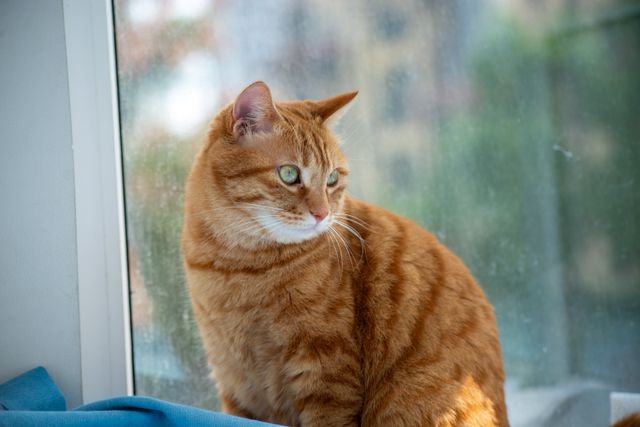
The most common cat in heat symptoms are loud yowling, extra affection, rolling on the floor, raising the hindquarters when petted, restlessness, and more frequent urination or spraying. Most cats show these signs for about a week, and VCA notes that cats don’t usually have the visible bleeding many owners expect from dogs. Unspayed cats can repeat the cycle every few weeks during breeding season.
If your young female cat suddenly seems to be crying all night or acting out of character, heat is a likely explanation, but it isn’t the only one. This guide explains each sign, how long heat lasts, how often it returns, which symptoms need a vet, and how to keep your cat comfortable.
Key takeaways
- Cat in heat behavior is the main clue: vocalizing, rubbing, rolling, a raised rear end, urine marking, and trying to get outside.
- Heat lasts about seven days on average, though VCA notes it can range from 1 to 21 days.
- Unspayed cats may cycle about every three weeks from roughly January to late fall, and indoor cats can cycle year-round.
- First heat often arrives around six months, and some kittens cycle as early as four months.
- Bleeding, pus-like discharge, vomiting, lethargy, or a swollen belly are not normal heat signs. Call your vet.
- Spaying is the only reliable way to stop heat cycles, and AAHA supports spaying by five months of age.
In this guide
Cat in Heat Symptoms: 8 Signs to Watch For
If you’re working out how to tell if a cat is in heat, start with behavior: most cat in heat symptoms are changes in behavior rather than physical changes. VCA’s guide to estrous cycles in cats and the Merck Veterinary Manual describe a consistent pattern:
- Loud, repeated vocalizing. Many cats yowl or call, often at night. Merck describes queens yowling loudly and repeatedly.
- Unusual affection. VCA notes most cats become very affectionate, even demanding, and rub against people and furniture.
- Rolling on the floor. Cats in heat tend to roll more often than usual.
- Raised hindquarters. When stroked along the back, many cats raise their rear end and tread with their back legs.
- Kneading. Some knead with their paws, including the back feet.
- Frequent urination or spraying. VCA says some cats urinate more often or spray urine on vertical surfaces, which can attract male cats.
- Restlessness. PetMD veterinarian Dr. Jamie Lovejoy notes restlessness is common, and some cats eat a little less.
- Trying to get outside. Some cats in heat hang around doors and windows or try to slip out, and VCA notes male cats may try to get in.
These signs a cat is in heat usually appear together for several days. Not every cat shows every sign. A quiet cat may simply seem clingier than normal, while another may be loud enough to keep the household awake.
What Does It Mean When a Cat Is in Heat?
So, what is heat in cats? “In heat,” or estrus, is the part of the reproductive cycle when an unspayed female cat is ready to mate. VCA explains that cats are seasonally polyestrous, meaning they have several cycles during the breeding season, and they’re described as “long-day breeders” because longer daylight hours trigger cycling.
Cats are also induced ovulators: mating itself triggers the release of eggs. That’s why an unmated cat can go out of heat and come back into it again a short time later. If she does become pregnant, Merck notes pregnancy lasts about 60 to 65 days.

When Do Cats Go Into Heat?
VCA says puberty in cats occurs at about six months of age on average. Timing varies: Dr. Lovejoy writes that first heat typically arrives between 5 and 9 months, with some kittens starting at 3 to 4 months and others not until about 18 months. AAHA notes female kittens can enter their first heat as early as four months.
Season matters too. In the Northern Hemisphere, VCA describes the breeding season as running roughly from January to late fall. Indoor cats living under artificial light, and cats in warm, tropical climates, may cycle all year.
If you’ve just adopted a kitten, the first cat in heat symptoms can appear sooner than many owners expect, so talk to your vet about spay timing early.
How Long Do Cats Stay in Heat?
Owners often ask how long is a cat in heat, or how long do cats stay in season. According to VCA, each heat generally lasts several days, with an average of seven days and a possible range of 1 to 21 days. PetMD gives a typical range of about 3 to 14 days. The cat heat cycle has several stages:
| Stage | Typical length | What you may notice |
|---|---|---|
| Proestrus | About 1–2 days | Few or no obvious signs; she isn’t yet receptive |
| Estrus (“in heat”) | About a week on average | Yowling, rolling, rubbing, raised hindquarters |
| Interestrus | Often 1–3 weeks if she isn’t mated | Behavior returns to normal before the next heat |
| Anestrus | Usually a few months a year | No cycling, often in the short-daylight months |
Stage lengths based on PetMD (Dr. Jamie Lovejoy, 2026) and VCA. Individual cats vary.
So how many days is a cat in heat? For many cats, about seven. How long does cat heat last beyond that average? It varies between cats and between cycles, which is why tracking each one helps.
How Often Do Cats Go Into Heat?
An unspayed cat that isn’t mated will usually come back into heat again and again during the breeding season. VCA’s kitten guide says she typically cycles about every three weeks, and its adult guide notes the complete cycle can range from one to six weeks. That means cat in heat symptoms may seem to come and go all spring and summer.
Pet Care Tip: Keep a simple heat diary on your phone. Note the date the yowling or rolling starts and stops. A record of two or three cycles helps your vet plan spay timing and spot anything unusual.
Cat in Heat Symptoms or Something Else?
Cat in heat behavior can look dramatic. Some owners worry their cat is in pain when she rolls, cries, and crouches. Use this table as a guide, and call your vet whenever you’re unsure.
| Usually typical of heat | Not typical: contact your vet |
|---|---|
| Yowling and calling | Vaginal bleeding or pus-like discharge |
| Rolling, rubbing, and kneading | Vomiting or diarrhea |
| Raised hindquarters when petted | Loss of appetite, hiding, or lethargy |
| More frequent urination or spraying | A swollen belly, especially weeks after a heat |
| Restlessness for about a week | Signs in a spayed cat, or signs that don’t fit a cycle |
Unspayed cats are at risk of pyometra, a serious uterine infection. VCA describes it as life-threatening and in need of prompt treatment. It usually develops within about four weeks of a heat, though it can appear two to 16 weeks afterward. With an open cervix, pus may drain from the vulva. With a closed cervix, the belly may swell and the cat can become severely ill quickly. PetMD also advises calling your vet for vaginal discharge, appetite loss, vomiting, or diarrhea.
If your cat’s behavior changes and heat doesn’t seem to fit, our guide to why your cat is acting different all of a sudden covers other possible causes.
What to Do When Your Cat Is in Heat
You can’t switch off cat in heat symptoms at home, but you can keep her safe and make the week easier for everyone:
- Keep her indoors. Close windows, check screens, and watch doors closely. A cat in heat can become pregnant quickly if she slips out, and PetMD suggests a carrier or cat backpack if she must travel.
- Separate her from intact males. Keep her away from any unneutered tomcat in the home, and see our guide to tomcat cheeks if you’re unsure whether a male is intact.
- Offer play and attention. PetMD notes enrichment, a steady routine, and extra attention may help her settle.
- Clean urine marks promptly. Use an enzyme-based cleaner so the scent doesn’t encourage repeat marking. If problems continue after heat, see our tips for when a cat stops using the litter box.
- Don’t give medications or supplements to “calm” her. Ask your vet before giving any product, and never guess at a dose.
- Book a spay consultation. This is the only lasting solution.
Example Scenario (illustrative)
Maya in Ohio adopts a 5-month-old kitten in March. Three weeks later, the kitten starts yowling at 2 a.m., rolls across the rug, and lifts her rear end whenever Maya strokes her back. Maya recognizes the cat in heat symptoms, keeps the windows shut, and adds two extra play sessions a day. When the behavior settles after about a week, she calls her vet to book a spay. She also notes she’ll call sooner if she sees any discharge or loss of appetite.
Common mistakes owners make
| Mistake | Why it matters | Better approach |
|---|---|---|
| Assuming an indoor cat won’t cycle | Indoor cats can cycle year-round | Plan spay timing with your vet |
| Waiting for bleeding as a sign | Cats don’t usually bleed in heat | Watch behavior instead; treat bleeding as a vet visit |
| Letting her outside “for a minute” | Mating can happen quickly | Keep her fully indoors during heat |
| Punishing yowling or spraying | The behavior is hormone-driven | Redirect with play and clean marks calmly |
Spaying: The Only Reliable Way to Stop Heat Cycles
VCA says the best way to prevent pregnancy is spaying, and most vets recommend it around six months of age, before the first cycle. AAHA endorses the Fix Felines by Five approach, recommending that cats be sterilized by five months of age. The ASPCA also advises scheduling surgery before five months to help avoid urine spraying and pregnancy, and the AVMA states there is no known benefit to waiting until after a first heat.
- Ends heat behavior: VCA notes spaying stops heat cycles and the behaviors that come with them.
- Prevents pyometra: VCA and the AVMA note spaying prevents uterine infection.
- Lowers mammary cancer risk: Cornell’s Feline Health Center cites a study in which cats spayed before six months had a 91% reduction in mammary tumor risk, and those spayed before one year had an 86% reduction.
Can a cat be spayed while in heat? Yes, in many cases. VCA notes increased blood flow can raise the risk of bleeding during surgery, but generally only slightly. Your vet will decide whether to operate now or wait until the heat ends.
Questions to ask your vet
- Is she showing cat in heat symptoms now, or could something else explain her behavior?
- Should we spay now or wait until this heat ends?
- What signs after a heat should make me call you right away?
- How should I prepare her for surgery and recovery?
- Are there low-cost spay programs in our area?
Cat in Heat Symptoms: FAQs
How long does a cat stay in heat?
Usually about a week. VCA puts the average at seven days, with a range of 1 to 21 days. If she isn’t mated, she may come back into heat a few weeks later.
How often do cats go into heat?
Unspayed cats often cycle about every three weeks during breeding season, which runs roughly from January to late fall in the Northern Hemisphere. Indoor cats may cycle all year.
At what age do cats go into heat?
Often around six months, though some kittens cycle as early as four months and others later. Ask your vet about spaying before the first heat.
Do cats bleed when they are in heat?
Not usually. Cat in heat symptoms are mostly behavioral. Vaginal bleeding or discharge isn’t a typical heat sign, so contact your veterinarian promptly if you see it.
How can I tell if my cat is in heat or in pain?
Heat brings yowling, rolling, rubbing, and a raised rear when petted, and the cat usually still eats and seeks attention. Hiding, vomiting, lethargy, appetite loss, or discharge point to a problem that needs a vet.
How can I calm a cat in heat?
Keep her indoors and away from intact males, stick to a routine, and offer extra play and attention. Don’t give medications unless your vet prescribes them. Spaying is the lasting solution.
Can a cat get spayed while in heat?
Often, yes. VCA notes the bleeding risk rises only slightly in cats. Your veterinarian will advise whether to spay now or after the heat ends.
Final Verdict: Cat in Heat Symptoms Explained
Cat in heat symptoms usually mean yowling, affection, rolling, a raised rear end, and urine marking for about a week, often repeating every few weeks. Keep her indoors and calm, call your vet for bleeding, discharge, or illness, and talk to your veterinarian about spaying to end the cycles for good.
Your next steps
- Start a heat diary noting when the signs begin and end.
- Book a spay consultation with your veterinarian.
- Explore more behavior and health guides in our cat care section, including cat behavior disorders.
Share your experience with other cat owners in our community on Facebook.
About the author
Written and reviewed by the Pets Store Home Editorial Team: pet owners and animal lovers who check every guide against trusted US veterinary and animal-welfare sources. This article is general information, not a substitute for professional veterinary advice. Always talk to your veterinarian about your own pet’s health.
How we checked this guide: We used the AVMA, VCA Animal Hospitals, the Merck Veterinary Manual, AAHA, the ASPCA, Cornell University’s Feline Health Center, and PetMD (veterinarian-written). We review this article every 12 months, or sooner if guidance changes.
Last reviewed: October 2026
Sources
- VCA Animal Hospitals – Estrous Cycles in Cats (accessed Oct 2026)
- VCA Animal Hospitals – How to Tell if Your Kitten Is in Heat (accessed Oct 2026)
- VCA Animal Hospitals – Pyometra in Cats (accessed Oct 2026)
- VCA Animal Hospitals – Spaying in Cats (accessed Oct 2026)
- Merck Veterinary Manual – Management of Reproduction of Cats (accessed Oct 2026)
- AAHA – When Should I Spay or Neuter My Dog or Cat? (accessed Oct 2026)
- AVMA – Spaying and Neutering (accessed Oct 2026)
- ASPCA – Spay/Neuter Your Pet (accessed Oct 2026)
- Cornell Feline Health Center – Mammary Tumors (accessed Oct 2026)
- PetMD – Cats in Heat: How Long It Lasts and What To Do (Jamie Lovejoy, DVM, 2026) (accessed Oct 2026)
[…] Which foreign pets are legal in Washington State? […]