
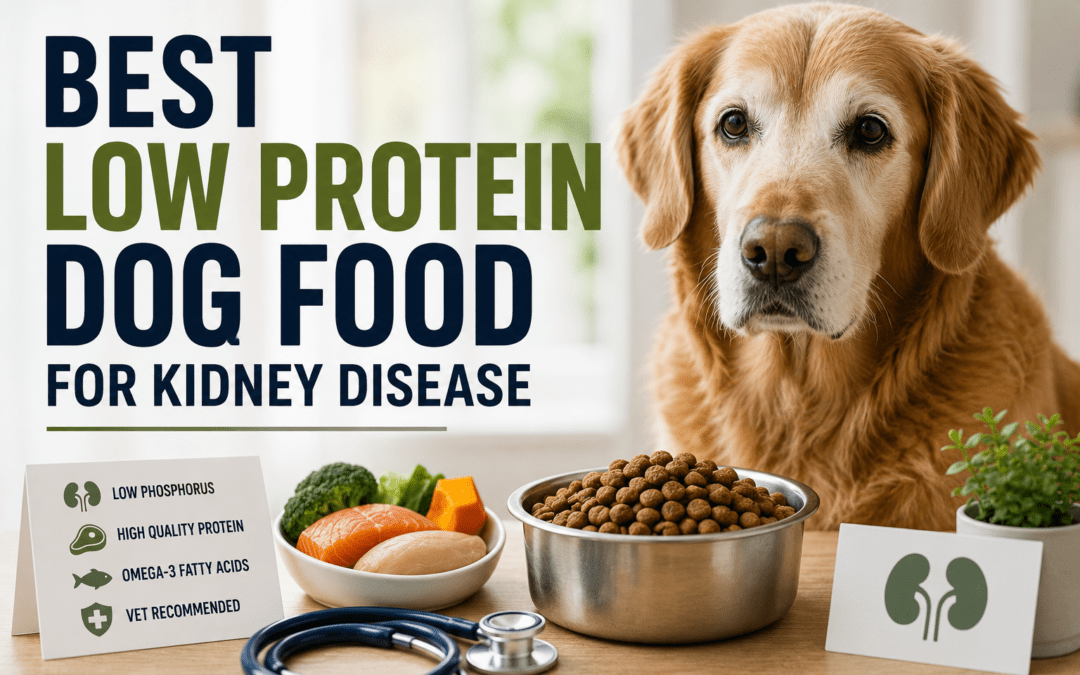
Best Low Protein Dog Food for Kidney Disease
Quick answer: For dogs with kidney disease, a therapeutic low-protein, low-phosphorus diet prescribed or recommended by a vet is the standard approach – it reduces the workload on failing kidneys while still meeting the dog’s nutritional needs. Never restrict protein without veterinary guidance, since dogs still need adequate high-quality protein to avoid muscle loss.
Key Takeaways
- Kidney-support diets aren’t just “low protein” – they’re specifically balanced for reduced phosphorus, controlled sodium, and added omega-3 fatty acids.
- Protein quality matters as much as quantity; highly digestible protein sources reduce waste byproducts the kidneys have to filter.
- Diet changes should be introduced gradually and ideally guided by bloodwork (BUN, creatinine, SDMA) tracked with your vet.
- Prescription renal diets are formulated differently from over-the-counter “senior” or “sensitive” formulas, which are not a substitute.
- Hydration support (wet food, water fountains) is just as important as protein levels for dogs with reduced kidney function.
Why Trust This Guide?
This guide is based on general veterinary nutrition principles for canine chronic kidney disease (CKD) management, intended as an educational starting point – any dietary change for a dog with diagnosed kidney disease should be made in partnership with your veterinarian.
Last reviewed: September 2026
This article is general information, not veterinary advice. Chronic kidney disease is staged and managed individually — always work with your vet before changing a diagnosed dog’s diet, especially before starting a prescription renal food.
“Low protein” is the phrase most people search for, but it’s not the full picture. Phosphorus restriction is one of the most important dietary considerations in managing kidney disease, but the goal is not to drive protein as low as possible. A properly formulated renal diet balances controlled phosphorus with adequate, high-quality protein, calories, and other nutrients according to the dog’s stage of chronic kidney disease (CKD) — not protein cut to the bare minimum. Getting this distinction right matters, because a diet that’s more restrictive than a dog’s actual stage calls for may leave it at greater risk of inadequate protein and calorie intake, and muscle loss, without a clear kidney-function benefit to match.
The Protein Myth: What Actually Matters
Protein itself isn’t the villain it’s sometimes made out to be. The idea that protein damages kidneys traces back to how vets have long managed dogs that already have kidney disease, not evidence that protein causes it in otherwise healthy dogs — research on aging dogs with normal kidney function hasn’t shown higher-protein diets accelerating decline.
At the same time, excessive protein restriction isn’t automatically the safer choice once a dog is diagnosed. Cutting protein far below what a dog needs can lead to muscle loss and poor body condition without a matching benefit to kidney function, especially in earlier disease stages.
Phosphorus restriction is where the research is clearer and more consistent: studies have found clinically meaningful benefits from phosphorus-restricted renal diets in dogs with kidney disease, including effects on disease progression and quality of life, and reducing phosphorus intake helps limit secondary complications — including disruption to parathyroid hormone regulation — that contribute to damage in progressive kidney disease.
Put together: protein isn’t inherently harmful, driving it as low as possible isn’t automatically beneficial, and phosphorus restriction is a major, well-supported part of renal diet management — with the right balance of all three depending on the dog’s specific CKD stage.
Kidney Disease Isn’t One Diet — It’s Staged
CKD staging is based on veterinary assessment — bloodwork (including markers like creatinine and SDMA), urine protein levels, blood pressure, and other clinical findings — most commonly organized using the IRIS (International Renal Interest Society) staging system that vets use to guide treatment and diet decisions. How aggressively a diet should restrict anything depends heavily on which stage a dog falls into, not on a single fixed rule.
In practice, that means a dog’s diet plan should account for: how early or advanced the disease is, current appetite and body weight, and muscle condition — all of which a vet evaluates together rather than reading off a single number. A dog in early-stage disease generally tolerates, and may not even need, the same level of dietary restriction as a dog with more advanced disease and elevated waste products in the blood.
This is exactly why a blanket “buy this low protein food” recommendation, without a vet’s input on staging, can do more harm than good. A dog started on a heavily restricted renal diet earlier than its stage calls for may be at greater risk of inadequate protein and calorie intake and muscle loss, while a dog with more advanced disease left on a regular maintenance diet may progress faster than it would have on a properly formulated renal food.
What a Well-Formulated Renal Diet Actually Looks Like
Protein: Renal diets generally provide controlled, moderate protein rather than extreme protein restriction, with emphasis on protein quality — highly digestible, a complete amino acid profile — and adequate calorie intake, so the dog isn’t relying on breaking down its own muscle for energy.
Phosphorus: Several veterinary nutrition sources point to phosphorus restriction as the most consistently supported dietary change for dogs with kidney disease, and it’s the piece most home cooks and casual product shoppers miss, since phosphorus content isn’t always obvious from a standard nutrition label.
Sodium: Sodium is generally controlled in renal diets, although its role is less strongly supported by direct evidence in dogs than phosphorus restriction — it’s treated as a reasonable precaution, and may be particularly relevant when blood pressure is a specific concern for a given dog.
Omega-3 fatty acids: Renal-support diets commonly include added EPA and DHA (fish-oil-derived fatty acids), which research links to reduced pressure within the kidney’s filtering structures and reduced protein loss in urine — one of the more clearly beneficial additions in a renal diet.
Moisture content: Wet renal food can help increase dietary moisture and may be useful for dogs that benefit from additional water intake. A dry renal diet can also be entirely appropriate if the dog eats it well and maintains adequate hydration on its own — moisture form is one factor to discuss with your vet, not a fixed rule.
Prescription vs. Over-the-Counter Options
Three widely used veterinary therapeutic renal diet ranges include Hill’s Prescription Diet k/d, Purina Pro Plan Veterinary Diets NF, and Royal Canin Veterinary Diet Renal Support. In the U.S., these diets are typically sold through veterinary-authorized channels and require veterinary authorization to purchase; exact requirements can vary by country. These are examples of established options, not a ranked “best,” since the right fit depends on your dog’s stage, bloodwork, and what the dog will actually eat.
Retail “low protein” or “senior kidney support” foods sold without veterinary authorization are a different category entirely. They aren’t necessarily formulated to the same phosphorus targets, and most haven’t gone through the same feeding trials as prescription renal diets. That doesn’t automatically make them unsuitable, but it does mean the label alone won’t tell you whether a given product actually matches what your dog’s specific stage of kidney disease calls for — this is a conversation for your vet, not a shelf comparison.
Comparing the Main Prescription Options
|
Diet |
Formats available |
Good to know |
|
Hill’s Prescription Diet k/d |
Wet and dry |
Widely stocked through vet clinics and vet-authorized online pharmacies; multiple flavor options |
|
Purina Pro Plan Veterinary Diets NF |
Wet and dry |
Available in multiple textures and formats, which can help when a dog is switched from one renal diet to another |
|
Royal Canin Veterinary Diet Renal Support |
Wet and dry, with sub-variants (Renal Support A, S, T) |
Multiple formulations and textures exist specifically to work around palatability and flavor preference issues rather than a single fixed recipe |
None of these is universally “the best” — vets often try a different one if a dog rejects the first, since acceptance matters as much as formulation when a dog won’t eat enough to maintain body weight. Exact nutrient targets vary by product and are adjusted periodically by the manufacturer, so treat any specific number you see elsewhere as a snapshot rather than fixed — the current guaranteed analysis on the product itself, discussed with your vet, is the reliable source.
Monitoring Progress After a Diet Change
Switching foods isn’t a one-time decision — it’s the start of an ongoing check-in process. Most vets recommend rechecking bloodwork (kidney values, phosphorus, and related markers) some weeks after a diet change to confirm the new food is having the intended effect, then periodically after that as the disease is monitored over time.
Body weight and muscle condition score are worth tracking between vet visits too — a dog steadily losing weight or visible muscle mass on a renal diet may be under-eating, over-restricted for its actual stage, or need the plan adjusted, and catching that early is easier than catching it months later at a routine appointment.

Reading Labels: Why the Protein Percentage Isn’t Enough
Standard pet food labels list protein as a percentage on an “as fed” basis, which varies enormously between wet and dry food because of moisture content — comparing a canned food’s percentage directly to a kibble’s percentage without converting both to a dry matter basis will give you a misleading picture.
More importantly, phosphorus content — the factor with the strongest research backing for kidney disease — often isn’t printed on standard guaranteed analysis panels at all. Renal-specific diets typically disclose it because it’s central to the formulation; many regular adult or senior foods don’t list it clearly, which makes side-by-side comparison difficult without contacting the manufacturer or relying on a diet specifically designed and tested for renal support.
Protein percentage alone shouldn’t be used to select a renal diet — phosphorus content and overall formulation matter more than the number on the front of the bag.
Homemade Diets: What the Research Actually Found
Homemade renal diets are a common instinct for owners who want more control over ingredients, but the research on owner-created recipes is a serious caution flag. Published analyses of home-prepared, kidney-disease-specific dog recipes have found substantial nutritional deficiencies in many of them — commonly missing key nutrients or poorly balanced on phosphorus, calcium, or other minerals that matter specifically for kidney disease management.
If a homemade or fresh-cooked approach is something you want to pursue, the safer path is having a veterinary nutrition specialist (in the U.S., a board-certified veterinary nutritionist) formulate the recipe — some services offer this remotely — rather than adapting a general recipe found online. The margin for error with phosphorus and mineral balance is narrow enough that “close enough” isn’t reliably safe for a dog with reduced kidney function.
Helping a Picky or Nauseated Dog Eat the Right Food
Dogs with kidney disease sometimes feel nauseated as a symptom of the disease itself, which can make switching to any new food — even the right one — a real challenge, separate from simple pickiness.
Transition gradually over several weeks, adjusting the pace to the dog’s tolerance, gradually mixing the new food into the old rather than switching all at once. Approved low-phosphorus, low-sodium toppers (your vet can suggest safe options) can make a renal diet more appealing without undoing its formulation. For dogs whose disease itself is suppressing appetite, anti-nausea medication prescribed alongside the diet change is common and often makes a bigger difference than the food choice itself — this is worth raising with your vet rather than assuming the food is the problem.
Common Mistakes Owners Make
Buying a retail “low protein” food based on the percentage alone, without checking phosphorus content or getting a vet’s input on whether that level of restriction fits the dog’s actual disease stage.
Switching a newly diagnosed early-stage dog straight to a heavily restricted diet, causing unnecessary muscle loss when a more moderate approach may have been appropriate at that stage.
Assuming a homemade recipe found online is nutritionally complete simply because it avoids high-protein ingredients — phosphorus and mineral balance are the parts most home recipes get wrong.
Switching foods abruptly instead of transitioning gradually, which increases the odds of refusal or digestive upset on top of an already sensitive system.
Treating the diet change as a one-time decision rather than something to revisit with your vet as bloodwork and disease stage change over time.
When to Talk to Your Vet Right Away
Any diet change for a dog with diagnosed kidney disease should start with a conversation with your vet, not a product purchase — the right level of protein and phosphorus restriction depends on bloodwork your vet has that a food label can’t replace.
Contact your veterinarian promptly if your dog stops eating, repeatedly vomits, loses weight, becomes unusually lethargic, or develops a significant change in drinking or urination. Dogs with CKD can deteriorate when appetite, hydration, or body condition declines, so these changes shouldn’t be ignored or left to resolve on their own.

Frequently Asked Questions
Do I need a prescription for kidney-support dog food?
Widely used veterinary therapeutic renal diets — Hill’s k/d, Purina NF, Royal Canin Renal Support among them — require veterinary authorization to purchase (in the U.S., this is a prescription; requirements can vary elsewhere). Some retail products are marketed for kidney support without that authorization, but they aren’t held to the same formulation and testing standard.
Is a small amount of protein restriction better than none?
Not necessarily, and more isn’t automatically better either — the right level depends on your dog’s specific disease stage. This is a case where “more restriction is always safer” is a common but inaccurate assumption.
Can I just feed a senior dog food instead of a renal diet?
Senior formulas aren’t formulated around phosphorus restriction the way renal diets are, so they’re not a reliable substitute once kidney disease is actually diagnosed, even if the protein percentage looks similar on the label.
Will changing my dog’s diet cure kidney disease?
No — chronic kidney disease in dogs is a progressive condition, and diet is a management tool that can help slow progression and manage symptoms, not reverse existing kidney damage.
How do I get my dog to actually eat the new food?
Transition gradually over several weeks at a pace the dog tolerates, ask your vet about approved toppers, and mention persistent refusal or nausea to your vet rather than assuming it’s simple pickiness — it may be a symptom worth treating directly. Maintaining adequate calorie intake matters too, so a renal diet the dog consistently refuses to eat may need to be reconsidered with your vet rather than pushed through.
Are grain-free or raw diets better for kidney disease?
Neither grain-free status nor raw feeding addresses the phosphorus and protein-quality factors that actually matter for kidney disease management, and raw diets in particular carry additional food-safety risks that should be discussed with your veterinarian.
Conclusion
Getting a kidney-disease diet right comes down to three things, in order: first, the dog’s actual CKD stage, confirmed by your vet’s bloodwork; second, controlled phosphorus in a diet properly formulated for renal support; and third, adequate calories and high-quality protein that the dog will actually eat consistently, since a perfectly formulated diet a dog refuses doesn’t help it. Prescription renal diets from Hill’s, Purina, and Royal Canin are well-established examples that fit this approach — not a fixed ranking — and any diet change for a diagnosed dog should start with your vet rather than a product label comparison.
Weight management often goes hand in hand with kidney-friendly nutrition, since carrying extra weight puts additional strain on organs already working harder. Our guide to helping your dog lose weight safely covers how to set an appropriate calorie target alongside any prescription diet.
Building a Full Nutrition Plan Around a Kidney Diagnosis
A prescription kidney diet is one piece of a larger picture. Our guide to building a personalized dog nutrition plan covers how to calculate calorie needs, track body condition, and work with your vet to keep the whole plan on track as your dog’s needs change.
Exploring Protein Options Beyond Prescription Diets
Novel proteins aren’t only useful for allergies. Our guide to sustainable insect protein dog food covers a genuinely lower-impact protein source worth understanding, though any diet change for a dog with kidney disease should go through your vet first.
[…] Which foreign pets are legal in Washington State? […]