
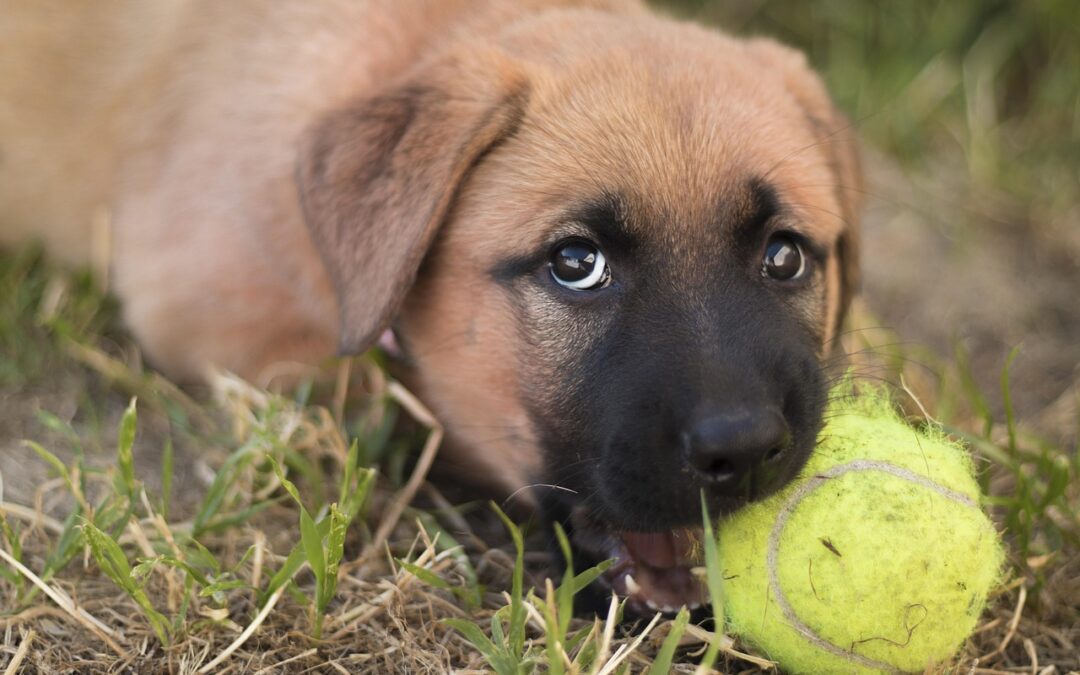
Puppy teeth are sharp for a reason: they’re a puppy’s primary tool for exploring the world, and biting and nipping during play is completely normal behavior, not a sign of aggression or a temperament problem. That said, normal doesn’t mean it should be left unaddressed. Left unmanaged, a puppy that never learns bite inhibition can grow into an adult dog with a genuinely hard mouth, which matters a great deal even if the dog never intends to cause harm.
This guide covers why puppies bite and nip, how to teach bite inhibition using the same techniques puppies naturally use with littermates, and the specific redirection strategies that work best for different biting triggers, from overexcited play to teething discomfort.
Quick Answer: Stop puppy biting by yelping and briefly withdrawing attention the moment a bite is too hard, then redirecting to an appropriate chew toy, gradually lowering your threshold as the puppy’s mouth control improves. Most puppies show meaningful improvement within a few weeks, with mouthing largely resolved by around six months.
Key Takeaways
- Puppy biting is normal exploratory and play behavior, not aggression, and is closely tied to teething between three and six months.
- The yelp-and-withdraw method mimics how littermates naturally teach bite inhibition.
- Always redirect to an appropriate chew toy immediately after interrupting a bite, giving the puppy an acceptable alternative.
- Physical punishment tends to backfire, either escalating fear-based biting or suppressing warning signs like growling.
- Consistency across every household member, including children, is what most speeds up progress.
Why Trust This Guide?
This guide is written and researched by the Pets Store Home editorial team. We cross-check our puppy training guidance against established veterinary behavior and force-free training sources, and this article is reviewed periodically to keep it accurate and current. It’s intended as general information; a certified professional trainer can help if biting seems to signal genuine aggression or resource guarding.
Why Puppies Bite and Nip
Several overlapping reasons drive puppy biting. Exploration is a big one; puppies use their mouths the way human infants use their hands, investigating textures and objects. Play is another major driver, since mouthing and wrestling is completely normal interaction between littermates, and a puppy doesn’t automatically know human skin is different from a littermate’s fur-covered body. Teething, which typically runs from around three to six months of age, adds physical discomfort that increases the urge to chew on anything available, including hands and clothing. Overstimulation and overtiredness can also trigger increased mouthing, similar to how an overtired toddler becomes harder to manage rather than calmer.
Understanding Bite Inhibition
Bite inhibition is the learned ability to control the force of a bite, and puppies begin learning this from their littermates and mother well before they come home. When one puppy bites another too hard during play, the bitten puppy yelps and stops playing, which teaches the biter that hard bites end the fun. This same principle can be taught by humans using a similar approach, and it’s the foundation of most effective puppy biting training.
Step-by-Step: Teaching Bite Inhibition
Step 1: Yelp and stop moving when a bite is too hard. The moment a puppy bites with real force, let out a sharp, high-pitched “ow!” and immediately stop all movement and play, similar to how a littermate would react.
Step 2: Briefly withdraw attention. After the yelp, turn away or step back for ten to twenty seconds, removing yourself as a source of play and interaction. This mimics the natural consequence a puppy would experience with littermates.
Step 3: Resume calmly. After the brief pause, return to normal interaction. If the puppy bites hard again, repeat the yelp-and-withdraw sequence.
Step 4: Gradually lower your threshold for what counts as “too hard.” Early on, only react to genuinely hard bites. As the puppy learns to moderate its force, start reacting to progressively softer bites, gradually shaping the mouth toward very gentle contact and eventually no mouthing on skin at all.
Step 5: Redirect immediately to an appropriate chew item. Every time you interrupt a bite, offer a toy or chew as the replacement behavior, so the puppy has an immediate, acceptable alternative rather than just a “no” with nothing to do instead.
Redirecting to Appropriate Chew Outlets
Keep a variety of chew toys with different textures accessible throughout the house, especially in the areas where biting tends to happen most, like near the couch or the puppy’s main play area. Rotating toys periodically keeps them novel and interesting, and freezing certain rubber chew toys can provide extra teething relief during the peak discomfort months.
Managing Overexcited Play Biting
A lot of biting happens specifically during high-energy play sessions, when a puppy becomes overstimulated and its mouth control temporarily degrades along with its impulse control generally. If a puppy consistently escalates to hard biting during a particular type of play, like chasing or tug, it’s worth pausing that specific game and calming the puppy down before resuming, or shifting to lower-arousal activities until bite control improves.
Managing Teething-Related Biting
During the teething window, roughly three to six months, increased chewing and mouthing is largely driven by physical discomfort rather than a training gap. Frozen wet washcloths, appropriate teething toys, and cold chew items can offer real relief and reduce the urge to chew on hands and furniture during this period. This phase does pass as adult teeth come in, though the training and redirection work done during it still matters for building long-term habits.
Why Punishment-Based Corrections Backfire
Physical corrections like tapping a puppy’s nose, holding its mouth shut, or scruffing tend to either escalate the behavior into fear-based biting or teach a puppy to bite without warning signs, since punishment can suppress the early, softer signals (like growling or intense mouthing) without addressing the underlying arousal or teaching a better alternative. Removing warning signs is genuinely dangerous long-term, since those signals are what let people know a dog is becoming uncomfortable before things escalate further.
Managing Overtiredness
Puppies, similar to toddlers, often become harder to manage and more mouthy specifically when overtired rather than when they need more stimulation. If biting tends to spike at certain times of day, especially evenings, building in a consistent nap or quiet crate time before that window can reduce the overtired-driven biting significantly.
Involving Children Safely
Puppy biting, even gentle mouthing, can be frightening or painful for young children, and children often unintentionally escalate a puppy’s excitement through high-pitched squealing or fast movements, which can worsen biting in the moment. Supervised interactions, teaching children to stand still and fold their arms if a puppy starts mouthing (rather than pulling away, which can turn into a chase game), and giving children age-appropriate ways to interact, like tossing toys rather than direct hand play, all help keep both puppy and child safe during this developmental stage.
Exercise and Mental Stimulation’s Role
A puppy that isn’t getting enough physical exercise or mental engagement for its age and breed often channels excess energy into more persistent, harder biting. Regular structured play, short training sessions throughout the day, and appropriate physical exercise all reduce the overall drive behind excessive mouthing, complementing the direct bite-inhibition training itself.
Biting Directed at Clothing and Shoelaces
Many puppies target moving fabric, like pant legs, shoelaces, or sleeve cuffs, which tends to trigger a prey-drive-like chase response that’s distinct from general mouthing. Standing still rather than moving away (movement often intensifies the behavior) and redirecting to an appropriate tug toy tends to work better than trying to pull free, which can turn into an inadvertent game of keep-away that reinforces the exact behavior being discouraged.
Socialization’s Role in Reducing Biting
Puppies that get regular, well-managed exposure to a variety of people, environments, and calm play opportunities during the socialization window often show better overall impulse control, including around mouthing, compared to puppies with limited social exposure. This isn’t a direct fix for biting specifically, but a well-socialized, confident puppy generally has an easier time learning bite inhibition alongside its broader behavioral development.
When Biting Might Signal Something Else
While most puppy biting is entirely normal developmental behavior, a puppy that bites with genuine aggression, accompanied by stiff body language, prolonged growling, or biting outside of a play context (for example, when approached near food or when startled awake) may be showing early signs of resource guarding or fear-based reactivity, which benefit from a tailored approach beyond standard bite inhibition training.
Breed Differences in Mouthiness
Some breeds and breed groups are naturally more mouth-oriented than others. Retrievers and other breeds developed to carry things in their mouths often show more persistent mouthing behavior simply as an expression of that inherited trait, even when well past the typical teething window. Herding breeds sometimes direct mouthing toward ankles or moving objects as an expression of herding instinct rather than typical play biting. Recognizing these breed tendencies helps set realistic expectations and can guide which redirection outlets, like appropriate carrying toys for a retriever-type puppy, work particularly well for an individual dog.
Setting Up the Household for Success
Beyond direct training, a few environmental changes reduce overall biting opportunity: keeping several chew toys within easy reach in every room the puppy spends time in, using baby gates to create calm-down zones when play escalates too far, and having every family member, including children, follow the same yelp-and-redirect approach consistently, since mixed responses across the household slow down a puppy’s ability to learn the pattern clearly.
Biting During Grooming and Handling
Some puppies mouth or nip specifically during handling, like nail trims, brushing, or bathing, which is usually a stress or overstimulation response rather than typical play biting. Building separate positive associations with handling, through short, reward-heavy sessions practicing calm touch before ever needing to do the real grooming task, tends to reduce this handling-specific mouthing over time, similar to the broader desensitization approach used for nail trims and other care routines.
How Long Bite Inhibition Training Typically Takes
Most puppies show noticeable improvement in mouth control within a few weeks of consistent yelp-and-redirect training, with mouthing on skin largely resolved by around six months of age as adult teeth finish coming in and impulse control matures. Some individual puppies and high-drive breeds take longer, and occasional mouthing during highly excited play can persist a bit further into adolescence even with good training, gradually fading as the dog matures.
Common Mistakes That Slow Down Training
Inconsistent reactions (sometimes allowing rough mouthing during play, other times correcting it) confuse a puppy about the actual rule. Playing rough, hands-on wrestling games that directly encourage mouthing on skin works against the training goal even if it’s not the primary source of biting. Punishing growling, rather than just hard biting, removes an important warning signal a puppy needs to retain. And giving up on redirection too early, before the puppy has had enough repetitions to generalize the lesson, is a common reason progress feels slower than expected.
The Role of Consistent Family Rules
Bite inhibition training progresses fastest when every household member responds to mouthing the same way. If one person tolerates rough hand-wrestling while another consistently redirects to a toy, a puppy receives mixed signals about what’s actually allowed, which slows down the overall learning process. Taking a few minutes to walk the whole family, including regular visitors like grandparents or babysitters, through the same yelp-and-redirect approach pays off in faster, more consistent progress.
Transitioning Away From Hand Play Entirely
Many puppies develop persistent hand-mouthing habits specifically because early play with them involved wiggling fingers or hands as toys. Switching entirely to toy-based interaction, even during simple affectionate moments, removes the temptation and the muscle memory that hand-play habits create. This single change, on its own, resolves a surprising amount of ongoing mouthing in puppies whose biting seems otherwise well-managed elsewhere.
Biting During Walks and On-Leash Excitement
Some puppies redirect mouthing toward the leash itself, tugging and biting at it during walks, particularly when overstimulated by new sights, sounds, or other dogs passing by. Rather than yanking the leash away, which can turn into an inadvertent game, pausing the walk, waiting for calm, and redirecting to a small carried chew toy tends to interrupt this pattern more effectively. Over time, most puppies grow out of leash-directed mouthing as general impulse control matures alongside the rest of the biting behaviors covered in this guide.
Multi-Pet Households and Biting Between Animals
In homes with an existing adult dog or cat, a new puppy’s mouthy play style can be genuinely overwhelming or even risky for the resident pet, especially smaller or older animals with less patience for rough play. Supervised, structured introductions with breaks built in, along with separate space where either animal can retreat if overwhelmed, help prevent a puppy’s normal biting behavior from souring the relationship with established household pets while its own bite inhibition is still developing.
What a Realistic Timeline Actually Looks Like
It’s worth setting expectations early: most puppies don’t progress in a straight line. A puppy might show excellent mouth control for a week, then regress noticeably during a growth spurt, a new teething phase, or a particularly overtired stretch. This isn’t a sign that training has failed; it’s a normal part of puppy development, and consistent redirection through these temporary regressions, rather than assuming the training itself needs to change, usually gets things back on track within a few days.
Recognizing When Progress Is Actually Happening
Because improvement is often gradual, it helps to look for specific markers rather than expecting biting to simply vanish: shorter individual mouthing bouts, softer bite pressure even when mouthing does occur, and a faster response to the redirect cue are all genuine signs of progress, even while a puppy is still mouthing daily. Focusing on these incremental changes rather than an all-or-nothing standard of success helps owners stay consistent through the slower stretches of training.
Related Reading
Frequently Asked Questions
Is puppy biting a sign of aggression?
Almost always no. Play biting and mouthing during exploration and teething are normal developmental behaviors, distinct from aggressive biting driven by fear or resource guarding.
When does puppy biting usually stop?
Most puppies show significant improvement by four to five months, with mouthing largely resolved by six months as adult teeth finish coming in, assuming consistent training throughout.
Should I yelp every single time my puppy’s teeth touch skin?
Early on, focus on genuinely hard bites. Gradually lower your threshold over time as the puppy’s mouth control improves, rather than reacting to every soft touch from day one.
My puppy just gets more excited when I yelp. What should I do instead?
For puppies that find the yelp exciting rather than a deterrent, silently standing up and walking away for a short time-out can work better than a vocal reaction.
Is it okay to let my puppy mouth gently as long as it doesn’t hurt?
Many trainers recommend working toward no mouthing on skin at all, since it’s simpler and safer long-term than trying to maintain a “gentle mouth okay, hard bite not okay” distinction, especially with children in the home.
Can teething toys alone fix biting?
They help significantly with teething-driven chewing, but general play-related mouthing still needs the bite inhibition training described above.
A Final Note on Patience
Every puppy moves through this stage on its own timeline, and comparing progress to another dog’s experience rarely helps. Staying consistent, even on the days when mouthing seems worse rather than better, is what ultimately gets a puppy through this developmental window with solid, lasting bite inhibition, and most owners look back on this phase as far shorter and more manageable than it felt in the middle of it.
Final Thoughts
Puppy biting is a normal, temporary developmental stage, not a preview of a puppy’s adult temperament. Teaching bite inhibition through consistent yelp-and-redirect training, paired with plenty of appropriate chew outlets and adequate exercise, gives most puppies everything they need to develop excellent mouth control well before adulthood. Consistency across everyone in the household, adults and children alike, is what makes the biggest difference in how quickly this phase resolves.
[…] Which foreign pets are legal in Washington State? […]