
Why Does My Dog Eat Grass and Throw Up?
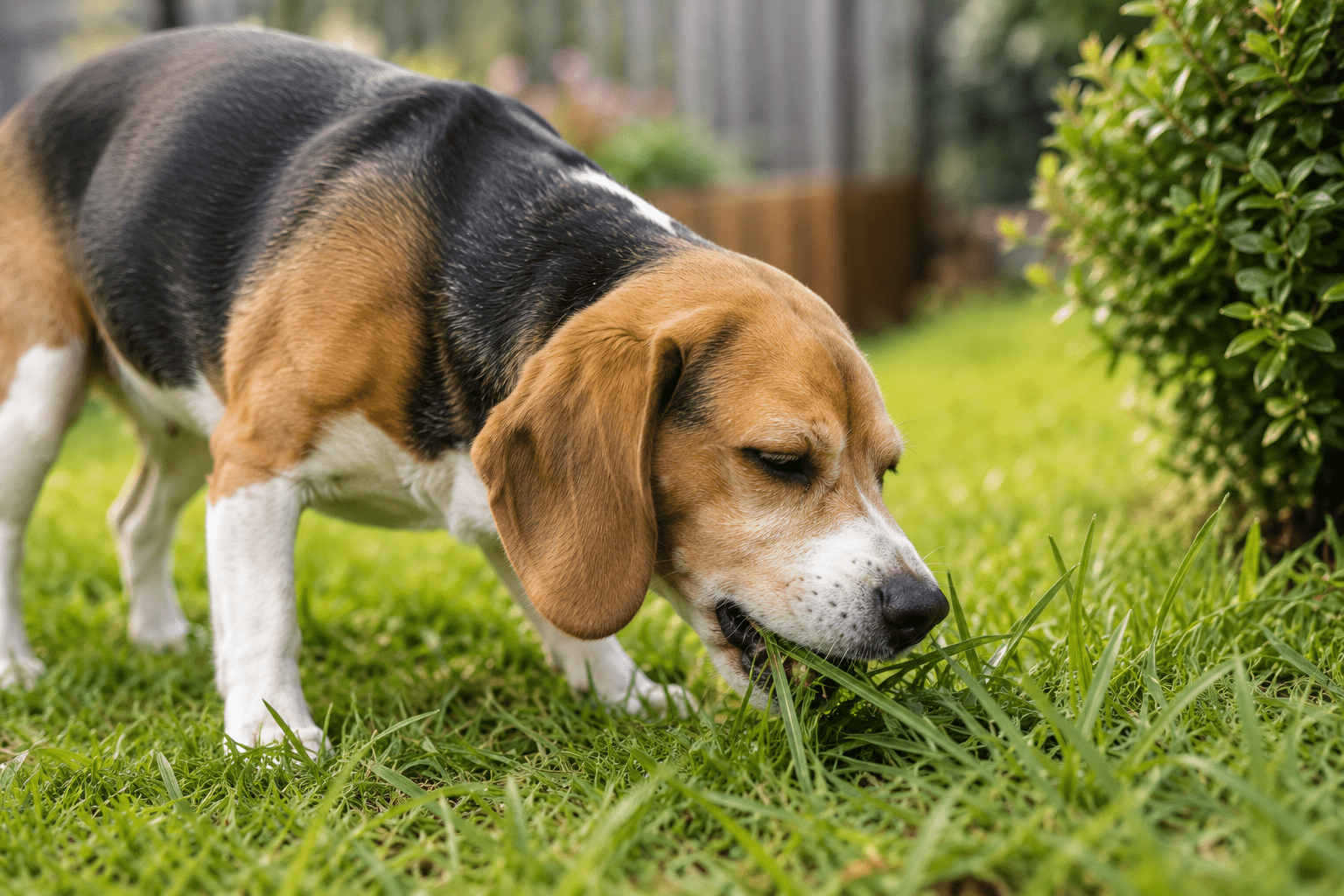
Quick answer: Occasional grass-eating followed by vomiting is common and usually harmless in dogs – it’s often linked to mild stomach upset or simply normal foraging behavior. Frequent or persistent episodes, though, are worth mentioning to your vet since they can point to an underlying digestive issue.
Key Takeaways
- Most dogs that eat grass show no signs of illness beforehand – it appears to be a normal behavior rather than a symptom on its own.
- Vomiting after eating grass may simply be a mechanical response to the grass blades irritating the stomach lining.
- Occasional grass-eating (a few times a month) is generally not a cause for concern in an otherwise healthy dog.
- Frequent grass-eating paired with vomiting, lethargy, or appetite changes can signal gastritis, dietary intolerance, or other GI issues.
- Providing a balanced diet and enough fiber can sometimes reduce grass-seeking behavior driven by nutritional gaps.
Why Trust This Guide?
This guide reflects widely observed veterinary behavior science on canine grass-eating (a behavior formally studied as “pica” when compulsive), balanced with practical guidance on when the behavior crosses from normal into a symptom worth investigating.
Last reviewed: September 2026
General information, not veterinary advice. If your dog’s grass-eating is frequent, sudden, or paired with other symptoms, talk to your vet.
The popular explanation — that dogs eat grass on purpose to make themselves vomit because they feel sick — doesn’t hold up well against the numbers. Research on the behavior consistently finds that fewer than a quarter of dogs actually vomit after eating grass, and only a small fraction show any sign of being unwell beforehand. Most grass eating has nothing to do with self-medicating at all.
Short version: most dogs eat grass because they simply like the taste or texture, out of boredom, or as leftover instinct from wild ancestors that ate plant matter along with prey — not as a deliberate attempt to throw up. When vomiting does follow, it’s usually incidental, caused by the grass blade’s texture irritating the throat, not the dog’s intent.
The Big Myth: “Self-Medicating” Isn’t What’s Actually Happening
The idea that dogs instinctively know grass will make them vomit, and eat it specifically for that reason, is one of the most repeated pieces of pet folklore — and one of the least supported by actual observation. Multiple behavioral studies looking at grass-eating episodes found that only a small minority of dogs showed any signs of illness (lethargy, existing nausea, reduced appetite) in the time before they started grazing. If grass eating were really a purposeful “cure,” you’d expect sick dogs to reach for it — but that’s not the pattern researchers have found.
The vomiting rate tells a similar story: less than 25% of dogs actually throw up after eating grass, and some research puts it closer to 1 in 10. If the behavior were a deliberate emetic strategy, vomiting would be the expected outcome nearly every time, not an occasional side effect.
None of this means a dog is never nauseated when it eats grass — sometimes it is, and grazing behavior can genuinely accompany an upset stomach. The key distinction is that grass eating usually isn’t caused by nausea, even though nausea can sometimes be present alongside it.
What’s Actually Causing the Grass Eating
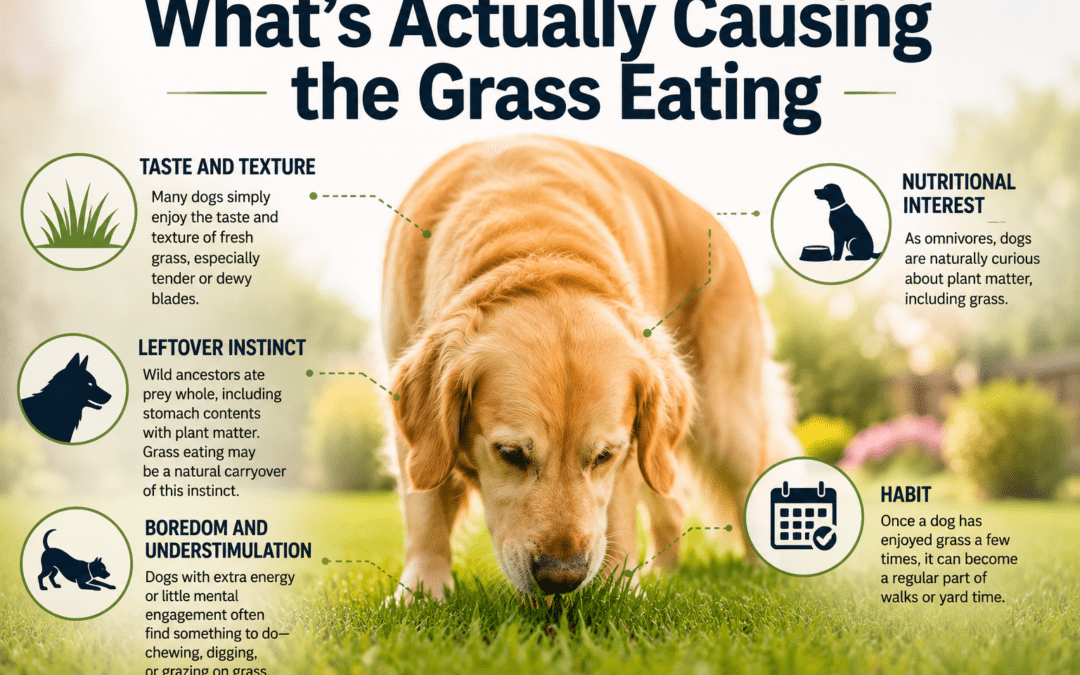
Taste and texture. For a lot of dogs, this is likely the simplest explanation — they seem to enjoy how grass tastes and feels, particularly fresh spring growth or grass with morning dew on it. Dogs are natural omnivores, not strict carnivores, so an interest in plant matter isn’t inherently unusual.
Leftover instinct. Wild canine ancestors ate prey whole, including the stomach contents of herbivorous animals — meaning partially digested plant matter was a routine part of their diet. Grass grazing in domestic dogs may simply be an echo of that inherited foraging behavior, rather than anything the dog is “deciding” to do for a specific purpose.
Boredom and understimulation. This shows up especially in puppies and younger dogs. A dog without enough physical activity or mental engagement will often find something to do with its mouth — chewing, digging, or grazing on grass are all common outlets for that extra energy.
Habit. Once a dog has grazed on grass a few times, it can simply become a routine part of walks or yard time, similar to any other repeated behavior that isn’t tied to a specific trigger anymore.
Why It Looks Like They’re Trying to Throw Up
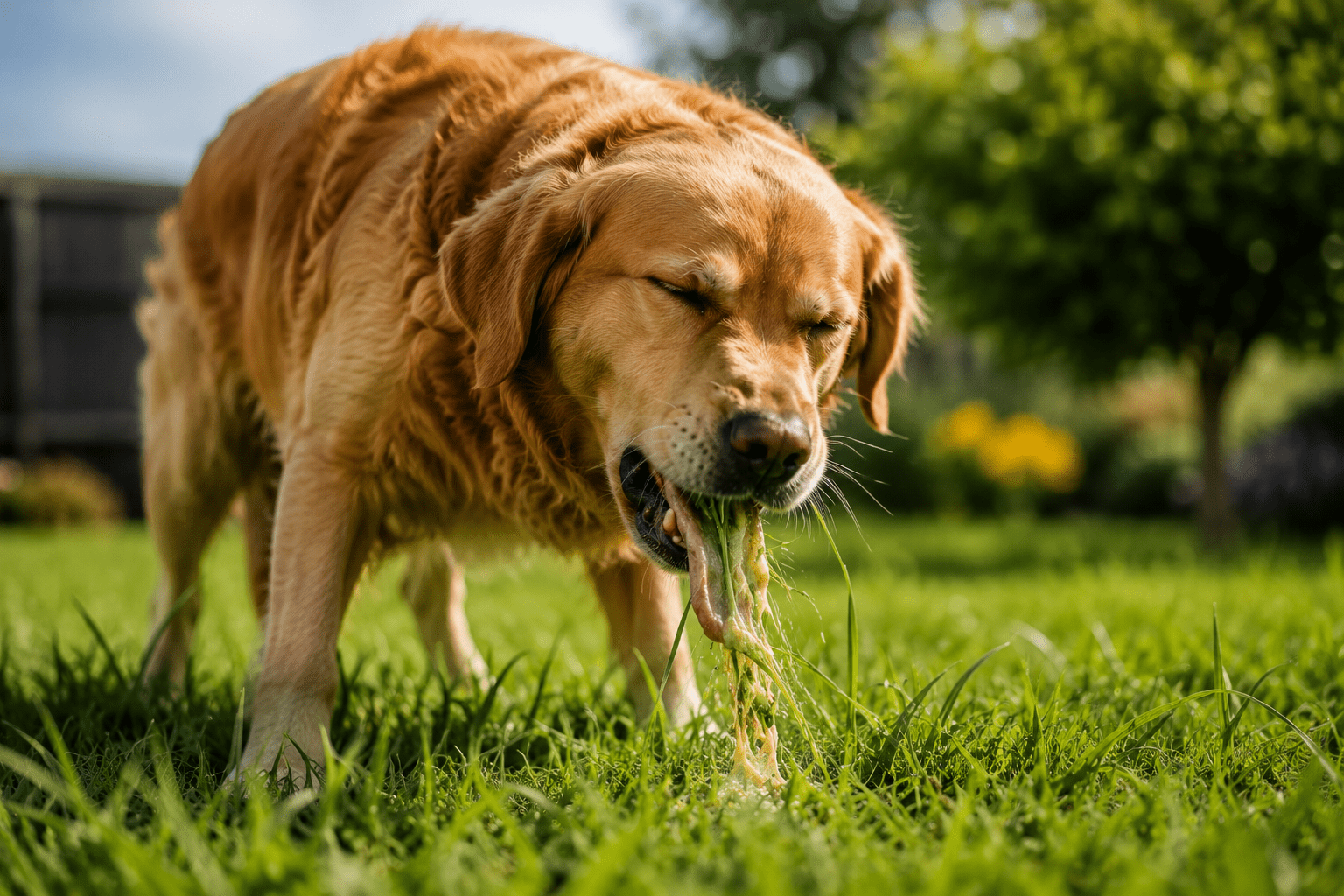
The sequence that convinces so many owners their dog is “self-medicating” is easy to misread: the dog eats grass, then vomits shortly after, and the timing looks purposeful. What’s more likely happening mechanically is that the grass blade itself — especially a long, coarse piece — physically irritates the back of the throat on the way down, triggering a gag reflex and vomiting as a direct physical response, not because the dog wanted to be sick.
This distinction matters because it explains why most dogs that graze on grass don’t vomit at all (no irritation occurs), while a smaller number do (irritation happens to trigger the reflex) — a pattern that fits incidental physical irritation far better than deliberate self-treatment.
Could It Be a Fiber or Nutritional Gap?
This is one of the more debated explanations, and the evidence is genuinely mixed rather than settled. Grass does contain fiber, and there are individual anecdotal cases — including reports of dogs stopping grass-eating entirely after being switched to a higher-fiber diet — that suggest a dietary link for at least some dogs. But broader research hasn’t established a strong, consistent connection between grass eating and diagnosable nutritional deficiencies, and dogs on complete, balanced commercial diets rarely have real fiber or nutrient gaps in the first place.
If your dog grazes frequently and you’re curious whether diet plays a role, this is worth raising with your vet rather than switching foods on your own — a diet change made to address a behavior that has nothing to do with diet won’t fix anything, and may not be necessary at all.
Is This Pica? How to Tell the Difference
Pica is a specific condition involving the compulsive eating of non-food items — items with no nutritional value at all, like rocks, fabric, or plastic — and it’s genuinely uncommon. Occasional grass grazing during a walk doesn’t meet that bar; grass is a plant, dogs are omnivores, and eating some of it periodically is well within normal behavior.
The distinction that actually matters is frequency and what else is being eaten. A dog that occasionally grazes on grass during walks is behaving normally. A dog that’s compulsively eating grass along with other clearly non-food items, or doing so to an extent that interferes with normal eating and behavior, is a different situation worth discussing with your vet.
Age and Pattern Differences
Grass eating tends to show up more in puppies and younger, higher-energy dogs, which lines up with boredom and instinct being bigger drivers at that life stage than any digestive explanation. It also tends to spike seasonally — spring grass, in particular, seems to draw more interest, possibly related to its taste, texture, or the dew that collects on it in the morning.
Neither pattern is a red flag on its own. A young dog grazing more than an older one, or grazing more in spring than winter, fits well within normal variation rather than signaling a problem.
Safety Risks Worth Knowing About
Grass itself is not toxic to dogs, but where it’s growing matters. Lawns and public grass areas treated with pesticides, herbicides, or chemical fertilizers can make grass eating genuinely risky, and soil can carry parasite eggs (such as roundworm or hookworm) that a grazing dog can pick up along with the grass.
Large quantities of grass eaten quickly can also pose a mechanical risk — undigested grass can occasionally contribute to an intestinal blockage in extreme cases, though this is uncommon with typical occasional grazing. It’s a bigger consideration for a dog that suddenly starts eating unusually large amounts.
What to Do Right After Your Dog Throws Up Grass
A single episode of grazing followed by vomiting, with your dog acting completely normal afterward — eating, drinking, playing — usually doesn’t need immediate action beyond keeping an eye on them for the rest of the day. Withhold food for a short period (an hour or so) to let the stomach settle, then offer a small amount of water and, if that stays down, a regular small meal.
Take note of what the vomit contains and how your dog behaves in the hours after — this is useful information if the same thing happens again or if you end up calling your vet. A single, isolated episode with a bright, normal, otherwise-healthy dog is very different from a repeated pattern or an episode paired with other symptoms.
Red Flags: When to See a Vet
Occasional grazing with occasional, mild vomiting in an otherwise healthy dog is common and not typically a concern on its own. Contact your vet if any of the following apply:
- Grass eating and vomiting happen frequently, not just occasionally
- Vomiting is paired with lethargy, diarrhea, reduced appetite, or your dog seeming genuinely unwell
- Your dog eats an unusually large amount of grass in one sitting
- The grass may have been treated with pesticides, herbicides, or other chemicals
- The behavior appears suddenly after months or years of no interest in grass
- You notice signs of pica — your dog eating other non-food items, not just grass
None of these individually confirms a serious problem, but any of them is a reasonable trigger to get a professional opinion rather than assuming it will resolve on its own.
How to Redirect the Behavior
If grazing seems tied to boredom, more consistent exercise and mental stimulation — longer walks, puzzle toys, more structured playtime — often reduces the behavior noticeably, since it removes the underlying reason the dog was looking for something to do.
Pet-safe grass planters (sometimes sold as “cat grass,” which dogs can eat too) offer a controlled, pesticide-free alternative if you’d rather your dog graze on something you know is clean than whatever’s growing in the yard or on a walking route. Keeping your own yard free of pesticides and herbicides, and steering walks away from areas that are obviously treated, addresses the safety side directly regardless of why the grazing is happening.
Common Mistakes Owners Make
Assuming every instance of grass eating means a dog is sick, and worrying unnecessarily about completely normal behavior.
Switching foods repeatedly trying to “fix” grazing, without evidence that diet is actually the driver for that particular dog.
Ignoring a genuine pattern change — a dog that suddenly starts grazing heavily after years of no interest deserves a look, even if a single episode wouldn’t.
Letting a dog graze on clearly treated lawns or roadside grass without checking whether pesticides or herbicides have been applied recently.
Not mentioning frequent grazing to the vet simply because it doesn’t feel like an emergency — it’s a reasonable thing to bring up at a routine visit even without urgency.
Frequently Asked Questions
Is it normal for dogs to eat grass?
Yes — occasional grass eating is common and considered normal behavior in dogs, whether or not it’s followed by vomiting.
Should I stop my dog from eating grass?
Not necessarily, as long as the grass is free of pesticides and herbicides and the behavior is occasional rather than constant. If you’re concerned about what’s in your local grass, redirecting to a pet-safe grass planter is a reasonable middle ground.
Does grass eating mean my dog has an upset stomach?
Not usually — most dogs that graze on grass show no signs of being unwell beforehand. It’s possible for grazing to accompany nausea sometimes, but it isn’t the typical cause.
My dog never used to eat grass and now does it constantly — should I worry?
A sudden, sustained change in behavior is worth mentioning to your vet, even without other symptoms, since it’s a pattern change rather than routine grazing.
Can grass eating hurt my dog?
Occasional grazing on clean, untreated grass is generally safe. The real risks come from pesticide-treated grass, parasite-contaminated soil, or eating unusually large amounts, rather than grass itself.
Will a diet change stop my dog from eating grass?
It might, for some dogs where a genuine fiber gap is playing a role, but there’s no strong evidence this works broadly. Talk to your vet before changing food specifically to address grazing.
Conclusion
Most grass eating isn’t a dog trying to make itself sick — it’s taste preference, instinct, boredom, or plain habit, and any vomiting that follows is usually incidental rather than the point. Occasional grazing in an otherwise healthy dog isn’t something to worry about; a sudden change in the pattern, frequent vomiting, other symptoms, or a large one-time intake are the things actually worth a vet visit.
[…] Which foreign pets are legal in Washington State? […]