
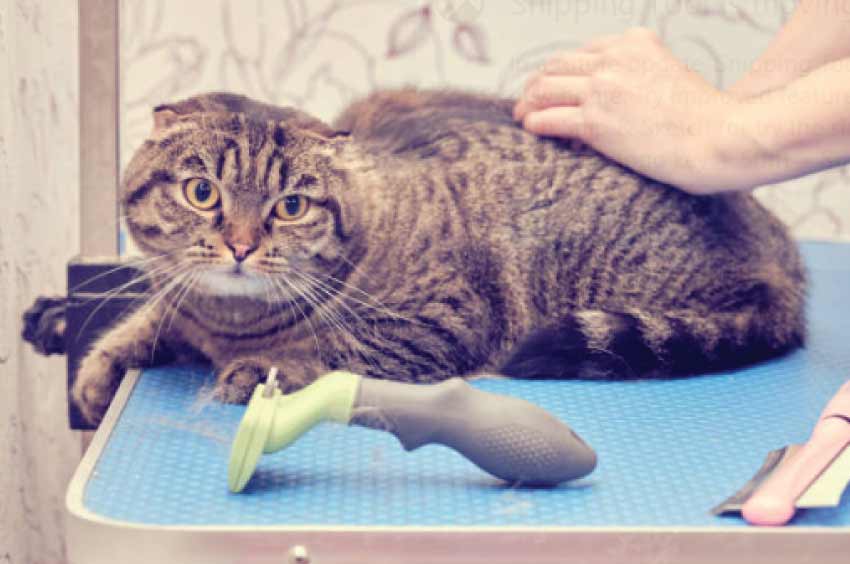
Does FURminator Cut Hair? How It Works, When It Harms the Coat and How to Use It Safely
Does FURminator cut hair? No. The FURminator is a deshedding tool, not a trimmer. Its fine stainless-steel edge slips through the topcoat and pulls out loose undercoat that your dog or cat is already shedding. Too much pressure, too many strokes on one spot, or use on the wrong coat type can still thin the coat or irritate the skin.
The tool’s sharp-looking metal edge is what makes people worry about cutting. This guide explains how the edge works, which coats it suits, when it can damage hair, and a simple routine that removes shedding fur without causing bald patches.
When to call your vet: new bald patches, red or broken skin, scabs, or a sudden jump in shedding aren’t grooming problems. Stop using the tool and have your veterinarian check your pet, since allergies, parasites and thyroid disease can all cause hair loss.
Key takeaways
- A FURminator removes loose undercoat; it isn’t designed to cut or trim the coat.
- The maker advises 10 to 20 minutes, once or twice a week, on a completely dry coat.
- Pressing hard or overworking one spot can irritate skin and thin the coat.
- Non-shedding coats, such as Poodles, Bichons and Maltese, aren’t suited to it.
- Remove mats first; the tool isn’t a dematting comb.
In this guide
Does FURminator Cut Hair? The Short Answer
The manufacturer’s FURminator FAQ says the tool is designed to remove undercoat and loose hair without cutting or damaging the topcoat. In practice, the hair you see piling up in the tool is fur that was already loose and would have ended up on your couch anyway.
So, does FURminator cut hair when used as directed? No. It doesn’t slice through healthy hair the way scissors or clipper blades do. The edge is a row of very fine, closely spaced teeth, not a cutting blade. Healthy hairs anchored in the skin mostly slide between the teeth, and loose undercoat gets caught and pulled free.
How the FURminator Edge Works on Undercoat and Topcoat
Many dogs and cats have two layers of fur. The topcoat is made of longer, coarser guard hairs that shed water and dirt. Underneath is a soft, dense undercoat that insulates. VCA Animal Hospitals notes that heavy-coated breeds often go through two heavy shedding cycles a year, in late spring and late fall, when they drop much of their undercoat in clumps.
A regular brush mostly smooths the topcoat. A deshedding edge reaches below it, which is why it collects so much more fur. Here’s how the FURminator compares with tools that do cut hair:
| Tool | Cuts hair? | What it does |
|---|---|---|
| FURminator deShedding tool | No, when used as directed | Pulls loose undercoat through the topcoat |
| Clippers | Yes | Shortens the whole coat to a set length |
| Grooming scissors | Yes | Trims and shapes specific areas |
| Undercoat rake | No | Longer pins that drag out loose undercoat |
| Slicker brush | No | Removes tangles and surface loose hair |

When a FURminator Can Damage Hair or Skin
Does FURminator cut hair when something goes wrong? Still no, but the tool isn’t foolproof. The American Kennel Club advises using gentle pressure, especially with tools that have blades, and FURminator’s own guidance warns that too much pressure can irritate the skin. Most of the damage owners describe comes from how the tool is used, not from the tool itself.
| Common mistake | What can happen | How to avoid it |
|---|---|---|
| Pressing hard | Red, scraped skin (“brush burn”) | Let the tool glide; use the weight of your hand only |
| Many strokes on one spot | Thinned or patchy coat | Keep moving; stop when little fur comes out |
| Using it on a wet coat | Pulling and skin irritation | Only groom a completely dry coat |
| Dragging it through mats | Pain and broken hair | Work mats out first or ask a groomer |
| Daily use outside shedding season | Coat may look thin or dull | Stick to once or twice a week |
Does FURminator cut hair if you press too hard?
Pressing harder doesn’t turn it into a clipper, but it changes what the edge does. Heavy pressure drags the teeth across the skin and can snap or pull out healthy guard hairs along with the loose undercoat. Some owners report a thin, “scraped” look on the back or flanks after long sessions. If you see that, cut the sessions shorter and lighten your touch.
Coats That Shouldn’t Get a FURminator
Before you ask “does FURminator cut hair?”, check whether your pet has an undercoat at all, because the tool needs one to work on. FURminator says its deShedding tool shouldn’t be used on non-shedding breeds or pets with especially sensitive skin. Its list includes the Poodle, Bichon Frise, Maltese, Shih Tzu, Havanese, Portuguese Water Dog, Chinese Crested, Greyhound, Whippet, Vizsla and Great Dane.
Some breeds on that list, such as the French Bulldog, Boxer and Dalmatian, are marked as “it depends.” Individual dogs in those breeds vary, so the tool may suit a dog that sheds a lot. If you aren’t sure whether your pet has an undercoat, ask your vet or groomer before you buy one.
Pet care tip: Part your pet’s fur with your fingers. If you see a soft, fuzzy layer close to the skin under the longer hair, there’s an undercoat. If the hair looks the same all the way down, or it’s curly and keeps growing, a slicker brush and regular haircuts are a better fit.

How to Use a FURminator Without Damaging the Coat
Once you know the answer to “does FURminator cut hair?”, the next step is using it correctly. FURminator’s guidance calls for a completely dry coat, light pressure, and 10 to 20 minutes once or twice a week, with more frequent sessions during heavy shedding. Here’s the routine step by step:
- Pick the right size. Match the edge width and tooth length to your pet’s size and hair length (short or long hair).
- Check for mats. Feel behind the ears, under the legs and around the tail. Work tangles out with a comb or have a groomer remove them.
- Make sure the coat is dry. Never use the tool right after a bath or a rainy walk.
- Brush in the direction the hair grows. Use long, light strokes, angled slightly so the edge doesn’t dig into the skin.
- Keep moving. Work in sections and don’t go back over one area again and again.
- Go easy on ears, tail, belly and legs. The skin there is thinner, so use short strokes or switch to a soft brush.
- Stop at 20 minutes, or sooner if your pet is restless. Finish with praise and a treat.
How often should you use a FURminator?
For most double-coated pets, once or twice a week is plenty. During spring and fall shedding you can add a session or two, but watch the skin. The AKC notes that heavy shedders may need brushing several times a week or even daily during peak shedding. That doesn’t have to mean the deshedding tool every time; a regular brush or comb works between sessions.
Using a FURminator on Cats
Many cats are more sensitive to grooming than dogs, so use a cat-sized tool and an even lighter touch. Regular grooming helps cut down on hairballs. The Cornell Feline Health Center recommends that owners get into the habit of brushing and combing their cats daily to reduce hairballs and their complications.
A FURminator isn’t meant for daily use, though. Many owners use a cat deshedding brush once a week and a soft brush or comb on the other days. Cornell advises a vet visit if a cat keeps retching without bringing anything up, seems lethargic, or refuses food for more than a day or two.
Example scenario (illustrative)
Marisol in Tucson noticed a thin patch on her Husky’s back after a long spring grooming session. She searched “does FURminator cut hair?” and realized the tool hadn’t cut anything. She’d pressed too hard and gone over the same spot for 40 minutes. Her vet found no skin problem, so she switched to 15-minute sessions twice a week with a light touch, and the coat grew back evenly over the next few weeks.
FURminator vs. Shaving, Clippers and Other Deshedding Tools
If shedding is the problem, shaving a double-coated dog isn’t the fix. In AKC’s guide to grooming double-coated dogs, a professional groomer explains that shaving doesn’t stop shedding but does damage the topcoat. The undercoat also helps keep a dog warm in winter and its skin cool in summer.
If you’re asking “does FURminator cut hair?” because you want shorter fur, it’s the wrong tool. A deshedding tool removes the loose layer and leaves both coats in place, which suits heavy shedders with a thick undercoat, such as many Huskies, Golden Retrievers and German Shepherds. Clippers and scissors are the right tools when you actually want shorter hair, such as a sanitary trim or tidying long feathering.
Post-grooming coat check (30 seconds)
- Run your hand against the hair growth. Does the coat feel even, with no thin spots?
- Part the fur on the back and flanks. Is the skin pale pink, not red or scraped?
- Look at the fur in the tool. Is it mostly soft, fuzzy undercoat, not long, coarse guard hairs?
- Watch your pet for an hour. Is there no licking, scratching or flinching where you groomed?
If any answer is no, shorten the next session and use less pressure.
Does FURminator Cut Hair? FAQs
Does the FURminator cut the topcoat?
Not when used as directed. The maker says it removes loose undercoat without cutting or damaging the topcoat, but heavy pressure can pull out healthy guard hairs.
Can a FURminator cause bald spots?
It can thin the coat if you press hard or go over one spot for too long. Bald patches with red or scaly skin need a vet check, since medical problems can also cause hair loss.
How often should I use a FURminator on my dog?
FURminator recommends 10 to 20 minutes, once or twice a week, on a dry coat. You can add sessions during heavy spring and fall shedding.
Is the FURminator bad for dogs?
No, not for dogs with an undercoat. It isn’t recommended for non-shedding breeds like Poodles or for pets with very sensitive skin.
Does a FURminator hurt dogs?
It shouldn’t when used gently on a dry, mat-free coat. If your dog flinches, pulls away or shows red skin, stop, lighten your pressure and keep the next session short.
Can you use a FURminator on a wet dog?
No. Use it only on a completely dry coat. Wet hair pulls more easily and the skin is more likely to get irritated.
Does the FURminator work on cats?
Yes, cat-sized models work on cats with an undercoat. Use a very light touch, and brush or comb on the other days to help reduce hairballs.
Final Verdict: Does FURminator Cut Hair?
Does FURminator cut hair? No. It pulls out loose undercoat that’s already shedding and leaves the topcoat in place. Problems usually come from heavy pressure, long sessions, wet fur, mats or using it on a coat with no undercoat. Keep sessions to 10 to 20 minutes once or twice a week with a light hand, and see your vet if you notice bald patches or sore skin.
Your next steps
- Check whether your pet has an undercoat using the finger-part test above.
- Learn what to expect from a heavy shedder in our guide to how much Golden Retrievers shed.
- For areas a deshedding tool can’t handle, see our guide to trimming the hair around a dog’s privates.
- Browse more grooming guides in our pet accessories section.
Share your grooming tips with other owners in our Facebook community.
About the author — Written and reviewed by the Pets Store Home Editorial Team: pet owners and animal lovers who check every guide against trusted US veterinary and animal-welfare sources. This article is general information, not a substitute for professional veterinary advice. Always talk to your veterinarian about your own pet’s skin and coat.
How we checked this guide: Tool directions and breed exclusions come from FURminator’s own guidance; shedding and grooming advice from the American Kennel Club and VCA Animal Hospitals; and cat hairball guidance from the Cornell Feline Health Center. We review this guide every 12 months.
Last reviewed: October 2026.
Sources
- FURminator, Frequently Asked Questions (accessed October 2026)
- FURminator, Does the FURminator Damage the Fur? (accessed October 2026)
- FURminator, Dog Breeds Not Recommended for a deShedding Tool (accessed October 2026)
- American Kennel Club, Dog Shedding: What to Expect and How to Manage It (updated August 2026) (accessed October 2026)
- American Kennel Club, How to Groom a Double-Coated Dog (accessed October 2026)
- VCA Animal Hospitals, Grooming and Coat Care for Your Dog (accessed October 2026)
- Cornell Feline Health Center, The Danger of Hairballs (accessed October 2026)
[…] Which foreign pets are legal in Washington State? […]