
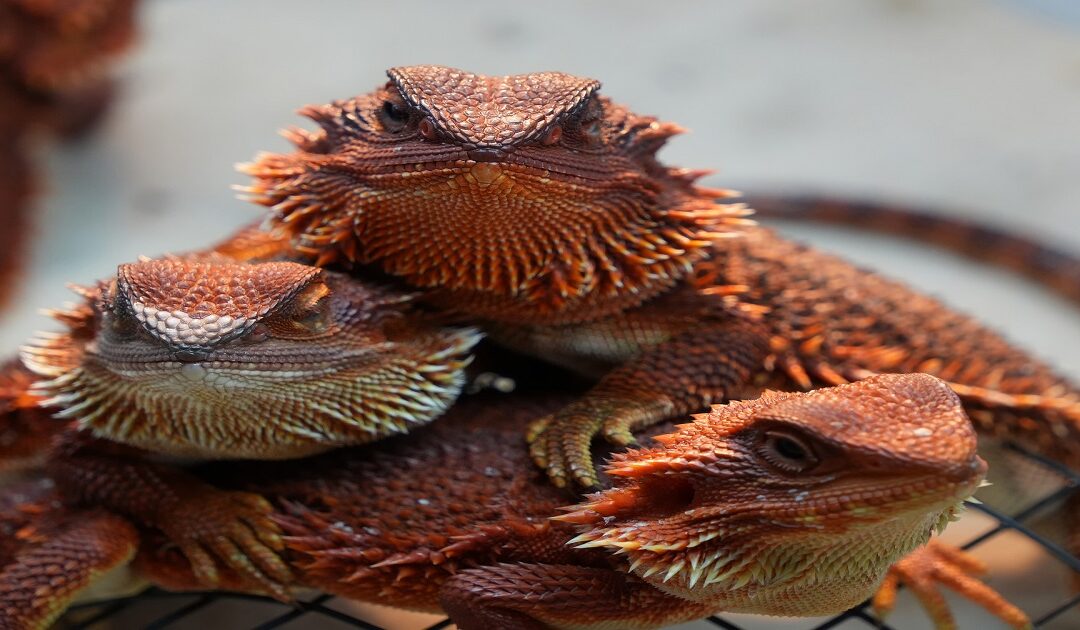
You walk over expecting to see your bearded dragon lounging under the basking light — instead, he’s plastered against the glass, legs paddling frantically like he’s trying to climb straight through it. Bearded dragon glass surfing looks almost comical the first time you see it, but it’s not play, and it’s not a quirky personality trait — it’s your dragon communicating that something in his environment isn’t right. The good news: once you know what’s actually driving it, this is one of the most fixable reptile behaviors out there. Here’s how to read what your bearded dragon is telling you, and exactly what to check first.
⚡ Quick Answer
Bearded dragon glass surfing — repeatedly pressing against and pawing at the enclosure glass — is a stress response most commonly caused by an undersized enclosure, temperature or lighting issues, boredom, hunger before feeding time, or the perceived presence of a rival reptile through the glass. A newly settled dragon glass surfing for a week or two is normal adjustment; if it continues daily beyond that, it points to a genuine husbandry problem that needs fixing, most often starting with enclosure size and lighting.
Key Takeaways
- Glass surfing is a stress-communication behavior, not play or personality — treat it as a signal, not a quirk.
- A newly rehomed dragon glass surfing for one to two weeks is normal settling-in behavior; beyond that, it signals an environmental problem.
- Reflective glass can make a dragon perceive a rival reptile in the tank, triggering territorial stress even when they’re completely alone.
- Glass surfing right before feeding time, stopping once fed, is usually just hunger-driven anticipation rather than distress.
- Most causes are fixable through enclosure size, temperature, lighting, and enrichment adjustments — few cases require anything more.
Table of Contents
- What Is Glass Surfing?
- Why Trust This Guide
- How Long Has It Been Happening?
- Common Causes
- Real Case Study
- Step-by-Step Fixes
- Common Mistakes
- Checklists
- FAQ
🐾 Why Trust This Guide
This guide was researched and written by the Pets Store Home editorial team against reptile-husbandry and exotic-vet sources. See our full Editorial Standards. This article is educational and not a substitute for guidance from an exotic-animal vet — persistent glass surfing alongside any illness signs warrants professional evaluation.
What Is Glass Surfing?
Glass surfing (also called glass dancing) is when a bearded dragon repeatedly presses its body against the enclosure glass, scratching or “paddling” its front legs as if trying to climb through it. Some dragons do it for a minute or two occasionally; others pace the glass for hours until they exhaust themselves. It’s frequently paired with other stress signals — a darkened “black beard,” rapid head bobbing, or frantic running around the enclosure — all pointing in the same direction: something needs attention.
How Long Has It Been Happening?
🟢 New Dragon, Under 2 Weeks — Likely Normal
Newly rehomed dragons commonly glass surf while adjusting to a new environment. Give them time, avoid handling during this window, and make sure two hides (warm side and cool side) are available so they can retreat and feel secure.
🟠 Occasional, Around Feeding Time — Usually Hunger
If it happens mainly in the morning or right before meals and stops once fed, this is typically learned anticipation rather than distress — your dragon has simply figured out that a person appearing means food is coming.
🔴 Daily, Ongoing Past 2-3 Weeks — Husbandry Problem
Persistent, frequent glass surfing beyond the settling-in window points to a genuine environmental issue — enclosure size, temperature, lighting, or stress from a perceived threat. This is the point to start working through fixes systematically.
Pet Care Tip: Watch for a darkened “black beard” alongside the glass surfing — this combination is a stronger stress signal than glass surfing alone and means the underlying cause needs attention sooner rather than later.
Common Causes
- Undersized enclosure — adult bearded dragons generally need at least a 50-gallon (roughly 90x45cm) tank; anything smaller can drive frustration-based glass surfing.
- Reflective glass — reflections can make a dragon perceive a rival reptile in the tank, triggering territorial stress even when completely alone.
- Temperature or lighting problems — incorrect basking temperature, insufficient UVB, or poor light positioning can all contribute.
- A new object or rearranged decor — sudden changes disrupt the consistency bearded dragons rely on, temporarily triggering stress behavior.
- Boredom or lack of enrichment — an under-stimulating enclosure with little to explore or climb.
- Outgrowing the current enclosure — a tank that was fine for a juvenile can become too small as the dragon matures into adulthood.
Real Case Study: Solved by Fixing Light Reflection
Example Scenario: An adult bearded dragon in a properly sized 50-gallon enclosure began glass surfing daily, digging frantically at one specific corner of the glass. The owner had already checked temperature and humidity, both within normal range, and was stumped. A reptile-savvy vet asked about lighting placement — it turned out a recently repositioned lamp was creating a strong reflection in that exact corner of the glass during certain hours of the day. The dragon was reacting to what looked like another bearded dragon staring back at him. After repositioning the light to reduce the reflection and adding a background poster to the back panel to cut glare further, the glass surfing dropped to almost nothing within a few days. The lesson: even when the basics check out, small details like light angle and reflection deserve a close look before assuming a bigger fix is needed.
Common Mistakes Owners Make
- Assuming it’s just a funny quirk. Why it happens: the behavior looks amusing at first glance. Consequence: an underlying stressor goes unaddressed and worsens. Fix: treat it as communication, not entertainment.
- Handling a newly rehomed dragon during the settling-in period. Why it happens: wanting to bond quickly. Consequence: extends the adjustment stress and the glass surfing that comes with it. Fix: give a new dragon one to two weeks of minimal handling first.
- Overlooking reflections as a trigger. Why it happens: it’s not an obvious first suspect. Consequence: other fixes get tried while the real cause remains. Fix: check for reflective glare at different times of day.
- Not upgrading the enclosure as the dragon grows. Why it happens: the original tank seemed adequate at first. Consequence: an outgrown space drives ongoing stress. Fix: plan for a 50-gallon-plus enclosure by adulthood.
- Ignoring persistent glass surfing paired with illness signs. Why it happens: assuming it’s purely behavioral. Consequence: missing an underlying health issue. Fix: see an exotic vet if lethargy, appetite loss, or reduced shedding accompany the behavior.
Step-by-Step Fixes
- Check enclosure size first. Confirm it’s at least 50 gallons (roughly 90x45cm floor space) for an adult bearded dragon.
- Verify temperatures and lighting. Basking spot, cool zone, and UVB should all fall within recommended ranges for your dragon’s age.
- Check for glass reflections at different times of day. Reposition lighting or add a background to reduce glare that could mimic a rival reptile.
- Revert any recent decor changes. If glass surfing started after adding or moving something, put it back and reassess.
- Add enrichment. Climbing branches, varied substrate depth, and rearranged (stable) decor give your dragon more to engage with.
- Rule out hunger-driven surfing. If it happens specifically before feeding and stops after, this likely isn’t a welfare concern.
- See an exotic vet if it persists despite fixes, or if illness signs appear. Lethargy, appetite loss, or reduced shedding alongside glass surfing needs professional evaluation.
Pet Care Tip: Make one change at a time and give it several days before judging its effect — bearded dragons can take a little while to settle after any adjustment, and changing everything at once makes it hard to know what actually worked.
Practical Checklists
Enclosure Audit Checklist
- ☐ At least 50 gallons / 90x45cm floor space for an adult dragon
- ☐ Correct basking and cool-zone temperatures verified
- ☐ Adequate UVB lighting, correctly positioned
- ☐ Glass checked for reflections at different times of day
- ☐ Two hides available (warm side and cool side)
- ☐ Climbing branches and enrichment items present
When-to-See-a-Vet Checklist
- ☐ Glass surfing continues daily past 2-3 weeks despite fixes
- ☐ Lethargy or reduced activity alongside the behavior
- ☐ Appetite loss or reduced shedding
- ☐ Persistent darkened “black beard” stress coloring
Cause Quick Comparison
| Cause | Key Sign | Best First Step |
|---|---|---|
| Settling in (new dragon) | Started right after rehoming | Give 1-2 weeks, minimal handling |
| Hunger | Only before feeding, stops after | No action needed |
| Enclosure/lighting issue | Daily, ongoing past 2-3 weeks | Full husbandry audit |
Frequently Asked Questions
Is glass surfing dangerous for my bearded dragon?
It can cause injury over time — nose rubbing, claw damage, or exhaustion from prolonged episodes — so while an occasional short bout isn’t an emergency, frequent or lengthy surfing is worth addressing for both stress and physical safety reasons.
Can two bearded dragons live together without triggering this?
Bearded dragons are generally solitary and often don’t do well cohabitating, so housing them separately is usually recommended regardless of glass surfing, as it also prevents resource competition and stress.
My dragon only glass surfs when I walk by — is that normal?
This is often learned association, especially if it stops once you feed them or leave, and isn’t usually a sign of ongoing distress on its own.
Should I cover the glass to stop reflections?
Yes, a background poster or non-reflective backing on at least the back and sides of the enclosure is a simple, effective way to reduce perceived-rival triggers.
How big should an enclosure be for a baby vs. adult bearded dragon?
Juveniles can start smaller, but plan to upgrade to at least 50 gallons (roughly 90x45cm) by adulthood, since an outgrown enclosure is a common, easily overlooked glass-surfing trigger.
Sources & References
- Reptile Direct — Bearded Dragon Glass Surfing: Why They Do It
- ExoticReptileCare — Bearded Dragon Glass Surfing: Why and How to Stop It
- MyPetReptiles — Bearded Dragon Glass Surfing: Causes and How to Stop It
- JustAnswer Reptile Vet Consultations — Glass Surfing: Causes and Solutions
- Exotic-animal veterinary and reptile husbandry resources on stress behavior
About the Author & Editorial Process
This guide was researched and written by the Pets Store Home editorial team — pet owners and researchers who verify every claim against trusted sources before publishing.
This content is for general educational purposes and is not a substitute for individualized veterinary advice. Always consult a qualified exotic-animal vet for concerns specific to your bearded dragon.
Last reviewed: September 2026 | Read our Editorial Standards
Final Thoughts
Glass surfing looks dramatic, but it’s rarely a mystery once you work through the checklist — enclosure size, lighting, reflections, and routine cover the vast majority of cases. Give a newly settled dragon time, watch for the hunger-only pattern that needs no fix at all, and work through the environmental basics for anything more persistent. Most bearded dragons settle right down once their real need is finally met.
[…] Which foreign pets are legal in Washington State? […]