
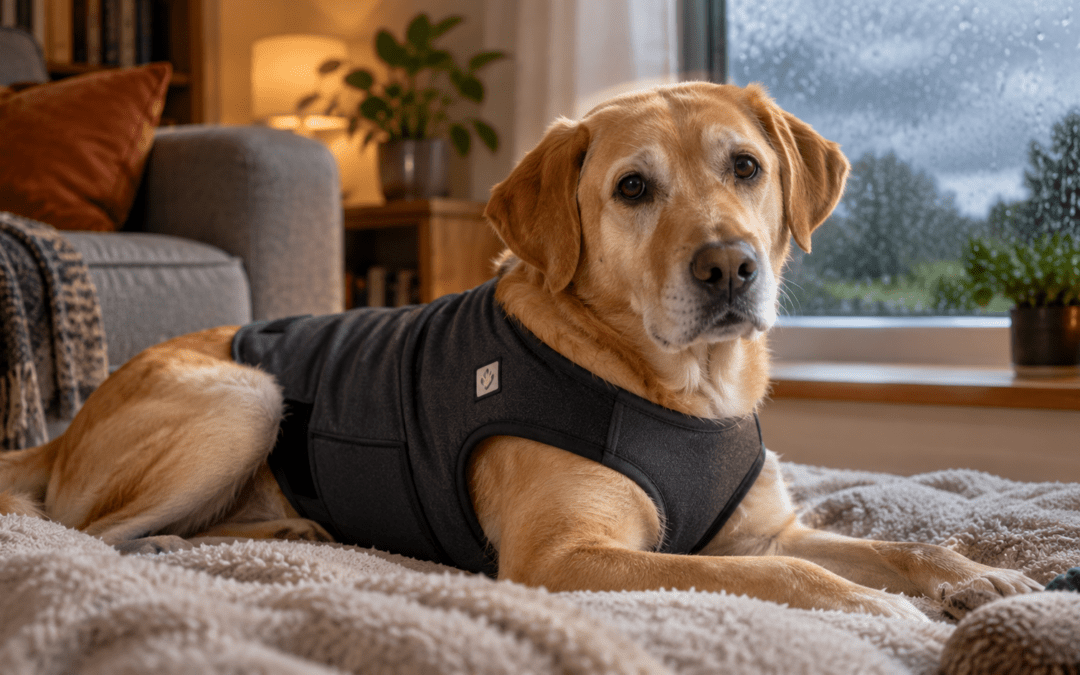
Do Dog Anxiety Vests Actually Work
Dog anxiety vests like ThunderShirt show small, inconsistent benefits in the controlled studies that have tested them — not the “80% effective” figure often quoted in marketing. The best available evidence review, which pooled the controlled studies done so far, rates the overall evidence as low to very low quality, while still finding that some dogs in snug-fitting vests show real, measurable drops in stress signals during things like fireworks or kennel stress.
That’s a more useful answer than a flat yes or no, because it explains why so many owners report completely different experiences with the same product: fit, timing, and the type of anxiety involved all change the odds of it doing anything at all. This guide walks through what the actual studies found, where the evidence is strongest and weakest, and how to give a vest a fair test on your own dog without over-relying on it.
Quick Answer: Dog anxiety vests show small, inconsistent effects in controlled studies — reduced heart-rate spikes and stress behaviours in some dogs wearing snug-fitting vests, but no significant change in stress hormones in others. They work best as a complementary tool for situational anxiety (storms, fireworks, car travel, vet visits), and the evidence is weakest for separation anxiety or severe, chronic anxiety, where veterinary-guided treatment matters more.
Key Takeaways
- The only systematic review of pressure-vest studies rates the evidence as low to very low quality — a real signal exists, but it’s not strong or consistent.
- Fit is the single biggest factor: studies found benefits with snug, firmly-fitted vests, not loose ones.
- Evidence is strongest for situational triggers (storms, fireworks, travel, vet visits) and weakest for separation anxiety and generalized anxiety disorder.
- Timing matters — putting a vest on 15–30 minutes before a known trigger works better than applying it once panic has already started.
- A vest is a reasonable low-risk experiment to try, but it isn’t a substitute for veterinary-guided treatment in moderate-to-severe cases.
In this guide: What the studies actually found · Where the evidence is strongest and weakest · Why fit changes the outcome · Timing before vs. during panic · What a vest can’t fix · How to test one properly · Comparison table · Checklists · FAQ
What the Studies Actually Found
The proposed mechanism behind anxiety vests is a form of sustained, even pressure across the torso, thought to have a calming effect on the nervous system — similar to swaddling an infant or a weighted blanket in humans. It’s a plausible hypothesis, but it’s still a hypothesis rather than a proven mechanism in dogs.
A 2014 controlled study (published via the Journal of Veterinary Behavior/ScienceDirect) found dogs wearing a properly-fitted pressure wrap had a smaller heart-rate increase and less tongue-flicking and yawning — both recognised canine stress behaviours — during a stressful event, compared to dogs without one. A separate, smaller 2013 study found 89% of owners felt the vest was at least partially effective during thunderstorms, though that trial involved only 18 dogs and relied on owner impression rather than blinded measurement.
The most useful single source here is a 2023 veterinary evidence review that pooled four controlled studies on pressure vests. Its conclusion: pressure vests “may have small but beneficial effects” on canine anxiety, but the overall evidence quality is low to very low, due to small sample sizes, unblinded observers, and in some cases commercially-funded research.
One study in the pool found reduced lying-down behaviour (a stress indicator) during fireworks noise specifically in firmly-fitted vests — but physiological markers like cortisol and oxytocin showed no significant change. VCA Animal Hospitals similarly notes that veterinary behaviourists are “somewhat divided” on compression garments, acknowledging they may help in some cases while cautioning that a calmer-looking dog isn’t necessarily a less anxious one internally.
Pet Care Tip: Treat manufacturer effectiveness claims (commonly “80%”) as marketing, not clinical data — the actual controlled research supports a real but modest effect, not a near-universal fix.
Where the Evidence Is Strongest — and Where It’s Weakest
Not all anxiety is the same, and the evidence doesn’t support treating a vest as equally useful across every situation:
- Strongest evidence: situational, predictable triggers — thunderstorm and fireworks phobia, car travel, and short-term stressors like vet or grooming visits. These are the scenarios the actual studies tested.
- Weaker evidence: separation anxiety. A pressure garment doesn’t address the root cause of distress from a dog’s owner being absent, and there’s little study evidence specifically supporting vest use for this.
- Not appropriate alone: severe, chronic, or generalized anxiety disorders, or active panic/crisis episodes — these need a veterinary behavioural assessment, and possibly medication, rather than a garment as the primary intervention.
Why Fit Is the Variable That Decides Whether It Works
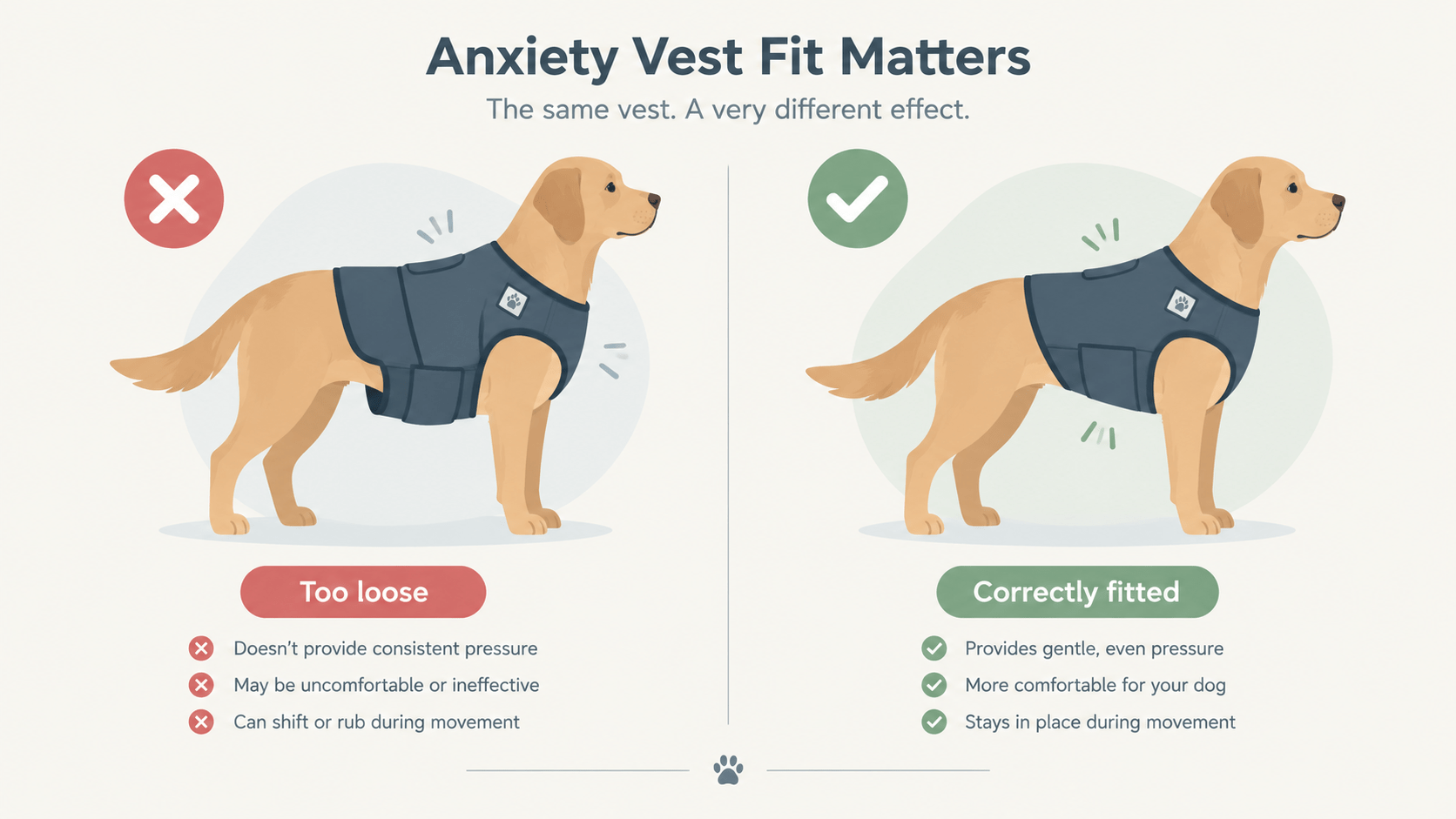
Across the studies reviewed, the physiological signal (lower heart-rate spikes, reduced stress behaviours) showed up specifically with a snug, firm fit — not a loose one. This matches the sustained-pressure mechanism proponents describe: a loose vest simply isn’t applying the pressure the hypothesis depends on.
Practical fitting guidance that follows from this:
- Measure chest girth rather than relying on weight-based sizing alone.
- If your dog is between sizes, size down for a snugger fit rather than up.
- The vest should feel firm without restricting breathing or movement — check your dog can walk, sit, and lie down normally after fitting.
Pet Care Tip: A vest that’s “just there” rather than snug is unlikely to reproduce the effect seen in the studies — a poor fit is one of the most common reasons owners report no benefit at all.
Timing: Before the Trigger, Not During Panic
Vet-informed guidance consistently points to applying a vest 15–30 minutes before a known trigger — a scheduled car trip, an anticipated storm, or before leaving for the vet — rather than reaching for it once a dog is already in visible distress. Once a dog is deep into a panic response, a garment introduced for the first time in that moment is unlikely to have much calming effect, and may even add to the dog’s stress if putting it on involves restraint.
This timing gap is a commonly reported reason for wildly different reviews of the same product: an owner who introduces the vest calmly, in advance, tends to report a different result than one reaching for it mid-crisis.
What a Vest Can’t Fix
- Habituation with constant wear. Leaving a vest on all day, every day, risks the dog’s nervous system adjusting to the pressure so it stops registering as anything unusual — intermittent, trigger-specific use is more consistent with how the studies applied it.
- Underlying medical causes of restlessness. Pain, gastrointestinal discomfort, or other medical issues can look like anxiety-driven pacing or distress. A vest won’t address a medical cause, and ruling this out with a vet matters before assuming it’s purely behavioural.
- Moderate-to-severe or multi-trigger anxiety. These cases generally need a structured behavioural plan, and sometimes vet-prescribed medication, with a vest — if used at all — as one small part of a broader plan rather than the plan itself.
How to Actually Test One on Your Dog
Rather than judging a vest after one use, a short structured trial gives a fairer read on whether it helps your specific dog:
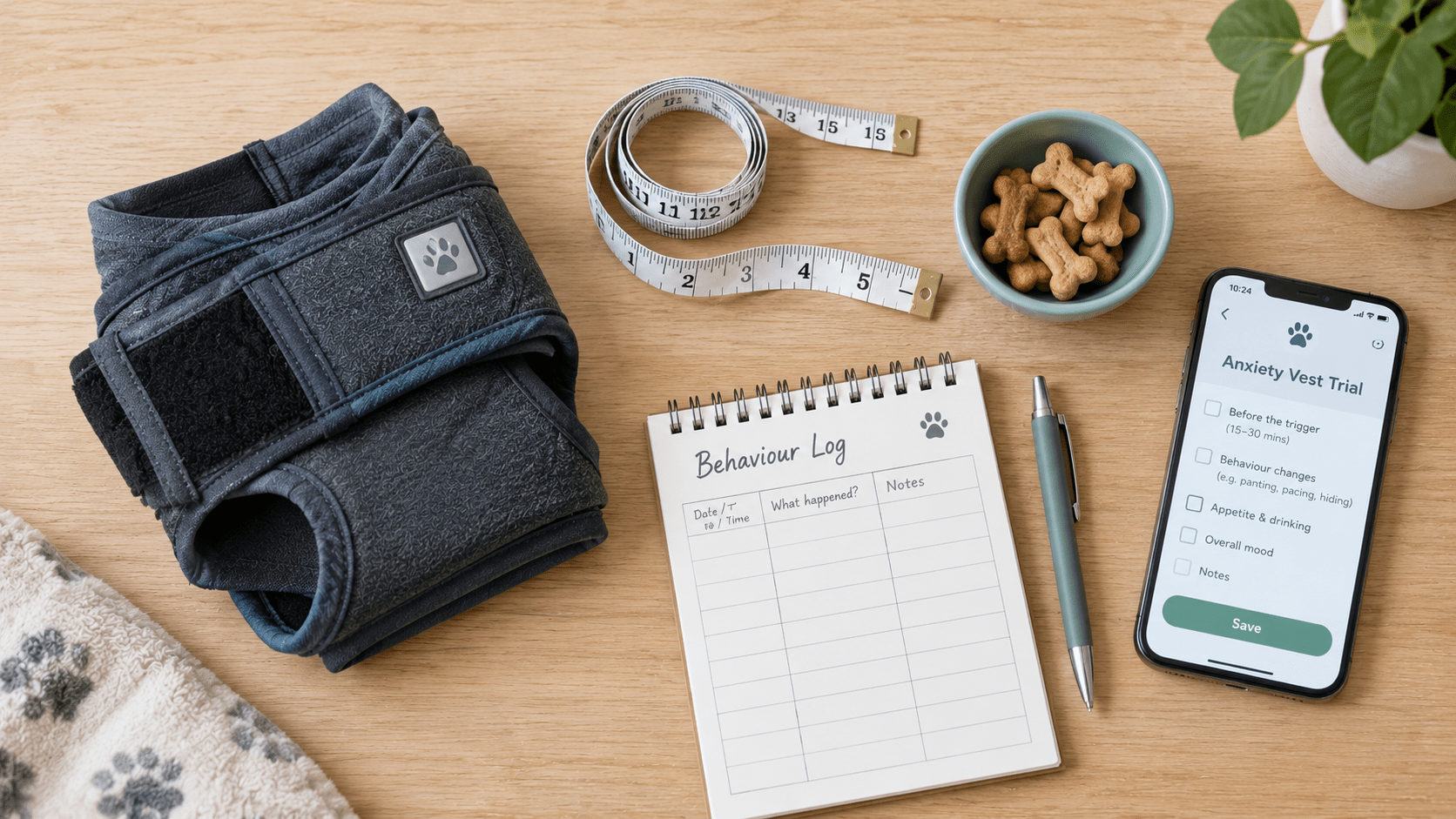
- Introduce it in a calm, low-stakes moment first — a few minutes at home with treats, not during an actual trigger.
- Build up wear time gradually over several days so the vest itself isn’t a new source of stress.
- Test it on a smaller trigger before a big one — a short car ride before a fireworks night, for example.
- Apply it ahead of the trigger, not during it, and track what you actually observe (heart rate is hard to judge at home, but panting, pacing, hiding, and vocalising are all visible signs worth noting before and after).
- If you see no change across a few genuine trials, it’s reasonable to conclude this particular dog isn’t a responder — that’s consistent with the evidence, not a sign you did it wrong.
Practical Examples
A noise-phobic dog during fireworks: this is the scenario the evidence supports best — a snug vest applied 20–30 minutes before fireworks are expected, alongside a safe, quiet space, is a reasonable low-risk thing to try.
A dog with separation anxiety left alone: evidence for this specific use is weak, since the vest doesn’t address the absence-driven cause of distress — a vest here is more likely to be one small piece of a broader plan (which may include a vet consultation) than a fix on its own.
A vest introduced only after panic has already started: a common real-world mistake — putting a vest on for the first time mid-meltdown is a very different test than the calm, pre-trigger application the studies describe, and predictably tends to disappoint.
Common Mistakes
- Trusting the manufacturer’s effectiveness percentage over what the actual controlled studies found.
- Using a loose-fitting vest — the studies’ physiological signal was tied specifically to a snug, firm fit.
- Applying it during a panic episode instead of ahead of a known trigger.
- Relying on it alone for moderate-to-severe or separation anxiety, instead of combining it with — or replacing it with — a vet-guided plan.
- Leaving it on all day, risking habituation to the pressure.
Editor’s Insights
- Treat a vest as a low-cost, low-risk experiment with a realistic ceiling on what it can do — not a guaranteed fix.
- Owner-reported “it works” claims are genuinely useful anecdotal data, but they aren’t blinded, so weigh them alongside the more modest controlled-study findings rather than instead of them.
- Pairing a vest with other tools — a safe quiet space, white noise, and a vet-guided plan for anything beyond mild situational anxiety — is more consistent with how the evidence actually supports its use than expecting it to work alone.
Decision Framework: Is a Vest Worth Trying for My Dog?
- Is the anxiety tied to a specific, predictable trigger (storms, travel, vet visits) rather than your dog’s general temperament or your absence?
- Is the anxiety mild-to-moderate rather than severe or panic-level?
- Have you ruled out a medical cause for the restlessness with a vet?
- Are you able to fit it snugly and apply it ahead of the trigger, not during it?
If you answered yes to all four, a vest is a reasonable low-risk thing to trial. If your answers point toward severe, chronic, or separation-driven anxiety, a vet consultation is the more evidence-backed next step.
Where the Evidence Supports Use: Quick Comparison
|
Trigger type |
Evidence strength |
Practical note |
|
Thunderstorms / fireworks |
Strongest |
Directly tested in the available controlled studies |
|
Car travel |
Moderate-strong |
Situational and predictable, similar profile to noise phobia |
|
Vet or grooming visits |
Moderate |
Short-term, predictable stressor; apply well before arrival |
|
Generalized anxiety |
Weak |
Not the scenario the studies were designed around |
|
Separation anxiety |
Weakest |
Doesn’t address the absence-driven cause of distress |
|
Severe panic/crisis episodes |
Not appropriate alone |
Needs veterinary behavioural assessment |
Fitting Checklist
- Measured chest girth rather than relying on weight alone
- Sized down rather than up if between sizes
- Confirmed a snug, firm fit that still allows normal breathing and movement
- Checked your dog can walk, sit, and lie down comfortably after fitting
Trial-Run Checklist
- Introduced the vest calmly at home before using it during a real trigger
- Built up wear time gradually over several days
- Tested on a smaller trigger before a bigger one
- Applied 15–30 minutes ahead of the known trigger, not during panic
- Tracked visible signs (panting, pacing, hiding, vocalising) before and after across a few genuine trials
FAQ
Do dog anxiety vests work for separation anxiety?
The evidence here is weak — a pressure vest doesn’t address the underlying cause of distress from a dog’s owner being absent, so it’s unlikely to be an effective standalone solution for true separation anxiety.
How long can a dog wear an anxiety vest?
Intermittent, trigger-specific use is more consistent with how the studies applied it than all-day wear, which risks the dog habituating to the pressure and losing any calming effect.
Is a dog anxiety vest the same as a weighted blanket for dogs?
They’re based on a similar sustained-pressure concept, but a fitted vest applies pressure differently than a weighted blanket, and the two haven’t been directly compared in the available studies.
Can I use an anxiety vest alongside anxiety medication?
Many vets are comfortable with combining the two, but this should be confirmed with your own vet, especially for a dog already on a prescribed treatment plan.
What if my dog hates wearing the vest?
Some dogs resist wearing anything at all, and forcing it on can add stress rather than reduce it — a gradual, treat-paired introduction helps, but if resistance continues, it’s reasonable to conclude this isn’t the right tool for that dog.
Do cheaper anxiety-vest alternatives work as well as ThunderShirt?
The controlled studies were done on specific branded products, not on every alternative on the market — a snug, well-fitted generic compression vest follows the same fit principle, but hasn’t been independently tested to the same degree.
Is there real science behind dog anxiety vests, or is it just marketing?
Both — the sustained-pressure concept has some genuine, if modest, support from a handful of controlled studies, but the overall evidence quality is rated low to very low, so it sits well short of a proven treatment.
Written and reviewed by the Pets Store Home editorial team. This article is for general information only, has not been reviewed by a licensed veterinarian, and is not a substitute for veterinary or veterinary behavioural advice. If your dog’s anxiety is severe, worsening, or affecting their quality of life, consult a vet or veterinary behaviourist. Last reviewed: September 2026.
Conclusion
Dog anxiety vests aren’t a myth, but they’re not the near-universal fix the marketing suggests either — the honest answer sits in between. The controlled evidence shows a real, if modest and inconsistent, calming effect, concentrated in dogs wearing snug vests for predictable, situational triggers like storms or travel.
Fit and timing explain much of the gap between owners who swear by them and owners who see nothing at all. Used as a low-risk complementary tool, alongside — not instead of — proper veterinary guidance for anything more serious, a vest is a reasonable thing to try for the right dog and the right situation.
[…] Which foreign pets are legal in Washington State? […]