
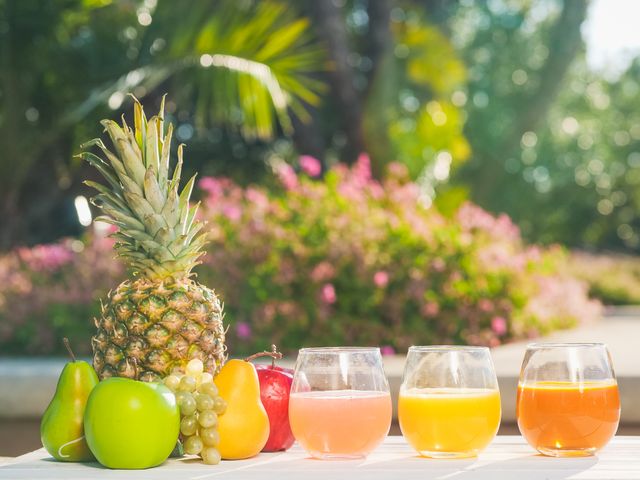
Can dogs have pineapple juice? Yes, but only a small splash of fresh, unsweetened juice you squeeze yourself. Bottled and canned pineapple juice is usually high in sugar, and some versions add even more, so it’s a poor pick for dogs. Fresh pineapple flesh, cut into small pieces, is the better treat because it keeps the fiber that juice leaves behind.
If your dog has diabetes, carries extra weight, or has a sensitive stomach, skip the juice and ask your vet before offering any pineapple. This guide covers safe amounts, the best way to serve pineapple for dogs, which products to avoid, and the warning signs that mean it’s time to call your vet.
Key takeaways
- Fresh-squeezed pineapple juice is OK in tiny amounts; PetMD’s vet-reviewed guide suggests about 1–2 tablespoons.
- Store-bought and canned juice often has added sugar, so it’s best avoided.
- Fresh pineapple chunks are a better choice than juice because they keep their fiber.
- Never feed the core, skin, or crown, which can cause choking or a blockage.
- Dogs with diabetes, weight problems, or tummy troubles should only have pineapple if their vet agrees.
- All treats, pineapple included, should stay within about 10% of daily calories.
In this guide
Can Dogs Have Pineapple Juice? The Short Answer
So, can dogs have pineapple juice? A little fresh juice won’t harm most healthy adult dogs. PetMD’s veterinarian-reviewed guide says small amounts of fresh-squeezed juice are acceptable, at roughly 1–2 tablespoons, and it discourages canned or bottled juice because these often contain added sugar.
The type of juice matters more than the fruit itself. Here’s how the common options compare:
| Type of juice | OK for dogs? | Why |
|---|---|---|
| Fresh-squeezed, nothing added | Yes, a small splash | Only pineapple, and you control the amount |
| Bottled or boxed juice | Best avoided | Often has added sugar; even “100% juice” is concentrated sugar with little fiber |
| Juice from a can of pineapple | No | Packing syrup and juice add sugar dogs don’t need |
| Juice drinks, cocktails, or “light” blends | No | May include sweeteners, other fruits, or alcohol |
One label check matters more than any other. Some “sugar-free” products use xylitol, which the ASPCA warns can cause low blood sugar and possible liver damage in dogs. If your dog drinks something containing xylitol, call your vet right away.
Is Pineapple Good for Dogs? What the Fruit Offers
Is pineapple good for dogs? In moderation, yes. The American Kennel Club calls raw pineapple, in small amounts, an excellent snack for dogs. The AKC notes that ripe pineapple is high in vitamin C and also supplies several B vitamins and minerals such as manganese, potassium, and magnesium.
Pineapple also contains bromelain, an enzyme the AKC says is thought to help dogs absorb proteins. Treat that as a nice extra rather than a health fix. Your dog already gets complete nutrition from a balanced dog food, so pineapple is a treat, not a supplement.
You may have read that pineapple stops dogs from eating poop. PetMD reports there’s no strong scientific evidence for this, so talk to your vet about stool eating instead of relying on fruit.

Fresh Pineapple vs. Pineapple Juice: Why Whole Fruit Wins
If you’re wondering whether dogs can have pineapple juice or whole fruit, the fruit comes out ahead. When pineapple is juiced, much of its fiber stays behind in the pulp. What’s left is mostly water and natural sugar, which is easy to lap up in large amounts and offers less of the chewing satisfaction dogs enjoy.
Whole pieces are also easier to portion. You can count three small chunks; it’s harder to judge a “splash” when a dog is drinking eagerly. The AKC suggests that a few chunks of raw pineapple are usually enough for most dogs, and it reminds owners that pineapple is high in fiber and sugar, so too much can upset the digestive system.
| Feature | Fresh pineapple chunks | Fresh pineapple juice |
|---|---|---|
| Fiber | Kept | Mostly removed |
| Easy to portion | Yes, count the pieces | Harder; measure with a spoon |
| Sugar per serving | Moderate in small amounts | Concentrated and quick to add up |
| Best use | Occasional hand-fed treat | A spoonful over food or frozen into small cubes |
Fresh water should always be your dog’s main drink. Juice is a flavor treat, not a way to keep a dog hydrated, even on a hot summer day.
How Much Pineapple Juice Can a Dog Have?
Portion size is the key part of answering “can dogs have pineapple juice?” For fresh-squeezed juice, PetMD’s vet-reviewed guidance is roughly 1–2 tablespoons. Start at the low end, especially for small dogs, and see how your dog’s stomach handles it.
For fresh pineapple chunks, PetMD offers this starting guide by body weight:
| Dog size (weight) | Fresh pineapple, per treat |
|---|---|
| Extra small (2–20 lbs) | 1–2 small pieces |
| Small (21–30 lbs) | 2–3 small pieces |
| Medium (31–50 lbs) | 5–6 small pieces |
| Large (51–90 lbs) | A handful |
| Extra large (91+ lbs) | A large handful |
Source: PetMD (reviewed by Molly Price, DVM). Pick juice or chunks on a given day, not both.
Whatever you offer counts toward your dog’s treat allowance. VCA Animal Hospitals advises that treats be limited to 10% of your dog’s daily calories, with the rest coming from complete and balanced food.
Can dogs have pineapple juice every day?
It’s better not to make it a daily habit. Pineapple is an occasional treat, and PetMD notes that regular excess can contribute to weight gain and dental problems. Keep it to an occasional spoonful, and ask your vet how often suits your dog’s age, weight, and diet.
Pet Care Tip: Freeze fresh-squeezed juice in an ice cube tray, then offer one small cube (about a tablespoon) on a warm afternoon. It’s portion-controlled, lasts longer than a lick from a bowl, and keeps the treat small. For more frozen-fruit ideas, see our guide on whether dogs can eat watermelon skin.
Which Dogs Should Skip Pineapple Juice?
For some dogs, the answer to “can dogs have pineapple juice?” is “not without your vet’s OK.” Natural sugar and acidity are harmless in a spoonful for most dogs, but they can matter a lot for others.
- Dogs with diabetes: PetMD advises that dogs needing sugar management should only have pineapple if a vet approves. VCA explains that diabetic dogs should be fed the same food in the same amount on the same schedule every day, so unplanned sugary extras can upset that routine.
- Overweight dogs: The AKC warns against sweetened pineapple, especially for dogs prone to obesity. Juice adds calories fast without filling your dog up. Our guide to helping your dog lose weight explains how treat calories creep up.
- Dogs with sensitive stomachs: PetMD notes that pineapple’s fiber and acidity can cause stomach upset, diarrhea, or acid reflux in some dogs. If your dog has a history of tummy trouble or pancreatitis, ask your vet first.
- Dogs on prescription diets: Therapeutic diets are carefully balanced. Check with your vet before adding any fruit or juice.
- Young puppies: PetMD says puppies can try pineapple once they eat solid food, starting with one small piece. Nursing puppies, or those on milk replacer, shouldn’t have it unless a vet directs.
Canned Pineapple, Syrup, and Other Pineapple Products
Can dogs eat pineapple from a can? It isn’t toxic, but it’s not a good choice. And can dogs have pineapple juice from the can? No, for the same reason. The AKC advises avoiding canned pineapple because the syrup has too much sugar for most dogs. Even fruit “in its own juice” carries more sugar than a dog needs, the AKC notes in its guide to fruits dogs can and can’t eat.
| Pineapple product | Verdict | Notes |
|---|---|---|
| Fresh, peeled flesh | Best choice | Cut into bite-size pieces |
| Frozen fresh chunks | OK in moderation | PetMD suggests letting them soften slightly to protect teeth |
| Canned in syrup | Avoid | Too much sugar, per the AKC |
| Canned in juice | Not recommended | Still more sugar than dogs need |
| Store-bought dried pineapple | Not recommended | PetMD notes drying concentrates sugar, and some brands add more |
| Core, skin, crown, leaves | Never | Hard to digest; choking and blockage risk |
If your dog gets into the core or spiky skin, PetMD advises contacting your veterinarian right away, because these tough parts can cause choking or an intestinal blockage. Keep pineapple scraps in a closed trash can, the same way you would with other kitchen leftovers.
How to Serve Pineapple for Dogs Safely
Once you’ve decided your dog can have pineapple juice or fruit, preparation keeps the treat safe. Follow these steps:
- Choose ripe, fresh pineapple. Skip anything sweetened, canned, or flavored.
- Remove the skin, crown, and core. Feed only the soft yellow flesh.
- Cut to size. Bite-size pieces suit most dogs; mash or finely chop for small dogs.
- For juice, squeeze your own. Press fresh pieces through a strainer and measure 1–2 tablespoons.
- Start small and watch. The AKC recommends watching your dog the first time it eats pineapple for diarrhea or an upset stomach.
- Count it as a treat. Trim other snacks that day to stay within the 10% guideline.
Want to compare pineapple with other fruit-and-veg options? Our guide to what pumpkin does for dogs covers another popular add-on many vets discuss.
Signs of a Bad Reaction (and When to Call Your Vet)
Even when the answer to “can dogs have pineapple juice?” is yes for your dog, any new food can disagree with a stomach. PetMD lists these signs to watch for after your dog eats pineapple:
- Vomiting
- Diarrhea
- Gas
- Constipation
- Reduced appetite
- Lethargy (unusual tiredness)
Stop the pineapple and contact your vet if these signs appear. Call your vet or a 24/7 emergency animal hospital right away if your dog swallowed the core or skin, keeps vomiting, seems in pain, or drank a product that might contain xylitol or alcohol. You can also reach the ASPCA Animal Poison Control Center at (888) 426-4435 or the Pet Poison Helpline at (855) 764-7661; a consultation fee may apply.
What most owners get wrong
| Mistake | Why it’s a problem | Better approach |
|---|---|---|
| Pouring juice into the water bowl | Your dog may drink far more than intended | Measure a spoonful and offer it separately |
| Sharing the juice from canned fruit | Packing liquid adds sugar | Use fresh fruit only |
| Tossing the core as a “chew” | Choking and blockage risk | Throw away the core, skin, and crown |
| Using pineapple to stop poop eating | No strong evidence it works | Ask your vet about the cause |
Example Scenario (illustrative)
Marcus in Phoenix is making fresh pineapple juice when his 45-lb mixed-breed dog, Juniper, sits by the counter. He wonders, “Can dogs have pineapple juice?” He checks that Juniper has no health conditions, offers one tablespoon over her kibble, and watches her stool the next day. All is well, so he keeps it to a small spoonful now and then and trims her biscuits that day.
Questions to ask your vet before adding pineapple
- Is fruit sugar a concern for my dog’s weight or blood sugar?
- How many treat calories does my dog have room for each day?
- Could pineapple’s acidity bother my dog’s stomach?
- Does it fit with my dog’s current diet or medications?
Can Dogs Have Pineapple Juice? FAQs
Can dogs have pineapple juice from the store?
It’s best to avoid it. Bottled and canned pineapple juice often has added sugar. If you want to share juice, squeeze a small amount of fresh pineapple yourself and keep it to about 1–2 tablespoons.
Can dogs eat pineapple?
Yes. Most healthy dogs can eat small amounts of fresh, peeled pineapple. Remove the skin, crown, and core, cut the flesh into bite-size pieces, and offer it as an occasional treat.
Is pineapple good for dogs?
In moderation, it can be. Pineapple provides vitamin C, B vitamins, and minerals such as manganese and potassium. It’s also high in natural sugar and fiber, so small portions are key.
Can dogs eat canned pineapple?
It isn’t recommended. Canned pineapple isn’t toxic, but the syrup or packing juice adds sugar dogs don’t need. Choose fresh pineapple instead.
Can puppies have pineapple?
Puppies eating solid food can try one small piece of fresh pineapple. Nursing puppies or those on milk replacer shouldn’t have it unless your vet directs. Ask your vet first if you’re unsure.
Does pineapple stop dogs from eating poop?
There’s no strong scientific evidence that it does. If your dog eats stool, talk to your vet, who can check for medical or behavioral causes.
What should I do if my dog ate a pineapple core?
Contact your veterinarian right away. The core is tough and hard to digest, and it can cause choking or an intestinal blockage.
Final Verdict: Can Dogs Have Pineapple Juice?
Can dogs have pineapple juice? A spoonful or two of fresh, unsweetened juice is fine for most healthy adult dogs, but store-bought and canned juice is too sugary. Fresh pineapple chunks are the smarter treat. Skip it entirely for diabetic or overweight dogs unless your vet agrees, and stop if you notice tummy trouble.
Your next steps
- Ask your vet the four questions above at your dog’s next checkup.
- Work out your dog’s daily treat budget with our guide to how much home-cooked food to feed a dog.
- Browse more food safety guides in our Pet Food Center and dog care section.
Does your dog love pineapple? Tell us on Facebook.
About the author
Written and reviewed by the Pets Store Home Editorial Team: pet owners and animal lovers who check every guide against trusted US veterinary and animal-welfare sources. This article is general information, not a substitute for professional veterinary advice. Always talk to your veterinarian about your own pet’s health.
How we checked this guide: We used the American Kennel Club, VCA Animal Hospitals, the ASPCA, and PetMD’s veterinarian-reviewed pineapple guide for serving sizes, risks, and warning signs. We review this article every 12 months, or sooner if guidance changes.
Last reviewed: October 2026
Sources
- PetMD – Can Dogs Eat Pineapple? (reviewed by Molly Price, DVM) (accessed Oct 2026)
- American Kennel Club – Can Dogs Eat Pineapple? (accessed Oct 2026)
- American Kennel Club – Fruits and Vegetables Dogs Can and Can’t Eat (accessed Oct 2026)
- VCA Animal Hospitals – Dog Treats (accessed Oct 2026)
- VCA Animal Hospitals – Diabetes Mellitus in Dogs (accessed Oct 2026)
- ASPCA – People Foods to Avoid Feeding Your Pets (accessed Oct 2026)
- ASPCA Animal Poison Control Center (accessed Oct 2026)
[…] Which foreign pets are legal in Washington State? […]