
Types of Ferrets: Colors, Patterns & What “Type” Really Means
Search for “types of ferrets” and you’ll find lists that treat coat colors like they’re separate breeds, complete with made-up names and contradictory descriptions. The reality is simpler and more interesting: nearly every pet ferret on the planet is the same domesticated species, and what people call “types” almost always refers to coat color, pattern, or coat length — not breed. This guide sorts out the real classification system, corrects some persistent myths, and covers what actually matters when choosing and caring for a ferret.
Quick Answer
Nearly all pet ferrets are the same domesticated species, Mustela putorius furo, not separate breeds. What people call “types” of ferrets almost always refers to coat color (like sable, albino, or chocolate), pattern (like panda, blaze, or roan), or coat length (standard vs. the longer-haired Angora). Color and pattern don’t affect temperament or care needs, and none of this should be confused with the black-footed ferret, an endangered wild species that is illegal to keep as a pet.
Key Takeaways
- Pet ferrets are one domesticated species (Mustela putorius furo), not multiple breeds.
- The American Ferret Association recognizes eight official coat colors and around nine patterns — these describe appearance, not breed.
- Angora ferrets are a coat-length variation with noticeably longer fur, requiring extra grooming.
- Average lifespan is 6 to 10 years; adrenal disease and insulinoma are the two most common serious health issues.
- Ferrets are illegal to own as pets in California and Hawaii, and banned within New York City despite being legal elsewhere in New York State.
In this article: One Species, Not Several Breeds · Official Colors and Patterns · Coat Length: Standard vs. Angora · Size, Lifespan & Physical Traits · A Brief History of the Domestic Ferret · Don’t Confuse Pet Ferrets With Black-Footed Ferrets · Where Ferrets Are (and Aren’t) Legal · Diet, Care & Common Health Issues · Choosing a Ferret · Common Mistakes · FAQ
Why Trust This Guide?
This guide is researched and written by the Pets Store Home editorial team, drawing on sources including the American Ferret Association, VCA Animal Hospitals, PetMD, and the Merck Veterinary Manual. It’s intended as general information; consult an exotic-animal veterinarian for advice specific to your ferret.
One Species, Not Several Breeds
Virtually every ferret sold as a pet in the United States belongs to a single domesticated species, Mustela putorius furo, descended from the European polecat. Unlike dogs, where centuries of selective breeding produced genuinely distinct breeds with different sizes, skull shapes, and temperaments, pet ferrets aren’t divided into recognized breeds by any major organization. What varies between individual ferrets is coat color, coat pattern, and coat length — cosmetic traits that don’t correspond to different breeds any more than a black Labrador and a yellow Labrador are different breeds of dog.
This matters because a lot of casual “types of ferrets” content treats color names and coat-length variations as if they were breeds with different origins, personalities, or care needs. They aren’t. A sable ferret and an albino ferret raised in similar conditions will, on average, need the same diet, the same veterinary care, and the same amount of playtime and socialization.
Official Colors and Patterns
The American Ferret Association (AFA), the primary breed and show organization for domestic ferrets in the US, recognizes eight official base coat colors and around nine patterns, used for show classification rather than breed distinction.
The eight recognized colors:
- Sable — the most common pet ferret color: rich brown guard hairs over a lighter undercoat, often with a dark mask.
- Black Sable — darker, blackish-brown guard hairs with a white or light undercoat.
- Chocolate — warm brown fur, lighter than black sable, with brown eyes.
- Cinnamon — a lighter reddish-brown, less common and harder to find than sable or chocolate.
- Champagne — a diluted, pale version of chocolate, with a cream or white undercoat.
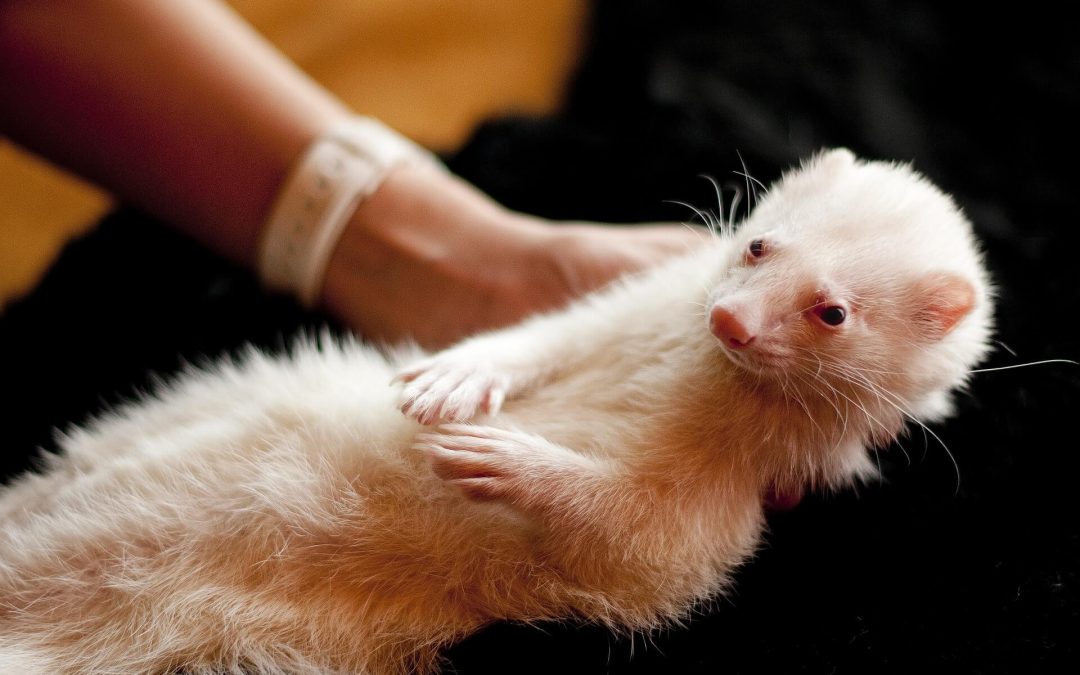
- Albino — a true absence of pigment: solid white coat with pink or red eyes and a pink nose.
- Dark-Eyed White (DEW) — white coat like an albino, but with dark eyes rather than pink or red ones.
- Black — the darkest of the recognized colors, with jet-black guard hairs over a white or cream undercoat.
Common patterns layer on top of these base colors and describe how color and white fur are distributed, including panda (a fully white head with color elsewhere on the body), blaze (a white stripe running down the top of the head), roan (40–60% white guard hairs mixed through the coat), mitt (white feet, like a cat’s mitted pattern), and point or Siamese-style patterns (darker points on the face, feet, and tail against a lighter body).
Pet Care Tip: Coat color can shift somewhat with the seasons and as a ferret ages — a sable ferret’s coat is often noticeably darker in winter than in summer. This is normal and not a sign of a health problem.
Coat Length: Standard vs. Angora Ferrets
Nearly all pet ferrets have a “standard” short coat. Angora ferrets are a naturally occurring, recessive-gene variation with noticeably longer guard hairs, sometimes long enough to partially obscure the face, along with a longer-haired tail. Angoras are less common in the general pet trade and typically need more frequent brushing to prevent matting, but otherwise share the same care requirements as standard-coated ferrets. Coat length, like color, is not a breed distinction.
Size, Lifespan & Physical Traits
Ferrets are sexually dimorphic: adult males (hobs) typically weigh 2 to 4 pounds and measure around 15 to 20 inches including the tail, while females (jills) are noticeably smaller, usually 0.75 to 2 pounds and somewhat shorter in length. Both sexes have long, low-slung bodies, short legs, and a flexible spine that lets them turn around in tight spaces — a trait inherited from their polecat ancestors’ burrowing and hunting behavior.
The average pet ferret lives 6 to 10 years with good care. Spaying or neutering, along with regular veterinary checkups starting around age 2 to 3, meaningfully improves the odds of catching common age-related conditions early, since ferrets are prone to a handful of specific health problems covered in more detail below.
A Brief History of the Domestic Ferret
Ferrets were likely domesticated from the European polecat roughly 2,500 years ago, making them one of the older domesticated companion species, alongside dogs and cats. Historically, their primary job was “ferreting” — being sent down rabbit burrows to flush rabbits out for hunters, a practice that continued in parts of Europe well into the 20th century and gave the ferret its lasting reputation as a working animal rather than purely a companion pet. Modern pet ferrets in the US are almost universally captive-bred and sold already spayed or neutered and descented by the breeder, a departure from their working-animal origins that has shaped them into the companion animals seen in homes today.
Don’t Confuse Pet Ferrets With Black-Footed Ferrets
This is one of the more important distinctions missing from most casual ferret guides. The black-footed ferret (Mustela nigripes) is a separate species entirely — a wild North American animal, not a color variety of the domestic pet ferret. Black-footed ferrets are endangered, were once believed extinct in the wild, and exist today only through an intensive captive-breeding and reintroduction program run by the U.S. Fish and Wildlife Service. They are illegal to own as pets under federal law, and confusing them with domestic ferrets (which are legal in most US states) is a common source of misinformation online.
Where Ferrets Are (and Aren’t) Legal
Before bringing home a ferret of any color or pattern, it’s worth checking local law, since legality varies more than most new owners expect:
- California — pet ferrets are illegal to import or possess, a law dating back to 1933, citing risk to native wildlife and agriculture.
- Hawaii — pet ferrets are banned due to rabies and invasive-species concerns; penalties for illegal possession can include significant fines and jail time.
- New York City — all five boroughs ban pet ferrets, even though they’re legal throughout the rest of New York State.
- Other states and cities — most of the US allows pet ferrets without a permit, but some cities and counties have local restrictions or require licensing, so it’s worth checking municipal code in addition to state law.
Diet, Care & Common Health Issues
Ferrets are obligate carnivores with a short digestive tract, meaning they need a high-protein, high-fat, low-fiber diet — commercial ferret-specific kibble is the standard recommendation, since dog and cat food don’t match a ferret’s nutritional needs closely enough for regular feeding. Fresh water should always be available, and most ferrets do well with food accessible throughout the day given their fast metabolism.
Two conditions account for a large share of ferret veterinary visits in adulthood. Adrenal disease, caused by overproduction of sex hormones from the adrenal glands, affects a large proportion of ferrets by around age three and typically shows up as symmetrical hair loss, an itchy or thinning coat, and behavioral changes; it’s treatable with medication or surgery depending on severity. Insulinoma, a pancreatic tumor that overproduces insulin and causes dangerously low blood sugar, is also common in ferrets over two to three years old, with symptoms including lethargy, weakness, drooling, and in severe cases seizures. Both conditions are manageable with early veterinary intervention, which is the main reason regular checkups matter more for ferrets than their small size might suggest. Dental disease and heart disease round out the other conditions worth monitoring for as ferrets age.
Choosing a Ferret: What Color and Pattern Actually Mean for You
If you’re picking a ferret based on the guides that treat color as a personality trait, it’s worth resetting expectations: coat color and pattern are cosmetic, not behavioral. A sable ferret is not inherently calmer than an albino one, and a panda-patterned ferret isn’t rarer in temperament, only in coat appearance. What actually varies between individual ferrets is closer to what varies between individual dogs or cats of the same breed — personality shaped by early socialization, handling, and environment, not fur color. Choose based on which ferret you connect with in person, a reputable breeder or shelter’s health disclosures, and your own ability to meet a ferret’s care needs, rather than chasing a specific color as though it were a distinct type of pet.
Housing, Enrichment & Socialization
Ferrets are highly active and curious, and a cramped cage with little enrichment is one of the most common gaps between a ferret’s needs and how new owners actually set up their home. A multi-level cage with solid (not wire) flooring, hammocks, and tunnels gives a ferret room to climb and burrow, both natural behaviors carried over from their polecat ancestry. Daily supervised playtime outside the cage matters just as much as the cage setup itself — ferrets are social, playful animals that can become bored, destructive, or withdrawn without regular interaction and mental stimulation.
Ferret-proofing a play area is a real chore worth taking seriously: ferrets are notorious for squeezing into small gaps, chewing on soft rubber and foam (which can cause a life-threatening intestinal blockage if swallowed), and pulling small objects into hiding spots. Most experienced owners recommend keeping at least two ferrets together where possible, since they’re a highly social species that generally does better with companionship than living alone, though this depends on individual temperament and introduction process.
Common Mistakes New Ferret Owners Make
- Assuming color or pattern indicates a separate breed. It doesn’t — all standard pet ferrets are the same species regardless of coat appearance.
- Feeding dog or cat food as a regular diet. Ferrets need ferret-specific, high-protein food; other pet foods don’t meet their nutritional needs long-term.
- Skipping veterinary checkups because a ferret “seems fine.” Adrenal disease and insulinoma often progress silently before symptoms become obvious.
- Not checking local law before bringing a ferret home. California, Hawaii, and New York City all restrict or ban pet ferrets.
- Confusing domestic ferrets with black-footed ferrets. They’re different species with entirely different legal status and conservation needs.
Editor’s Insights
- If a ferret care guide lists “Whippet” or similarly invented names as ferret breeds, treat it skeptically — no major ferret organization recognizes breeds in the way dog kennel clubs do.
- Angora ferrets, while uncommon, are a good option for owners who specifically want a longer coat and don’t mind the extra grooming time.
- Pet insurance or a dedicated vet savings fund is worth considering given how common adrenal disease and insulinoma are in ferrets over three years old.
Frequently Asked Questions
How many types of ferrets are there?
There’s effectively one species of pet ferret, with eight officially recognized coat colors and around nine patterns describing appearance, plus a coat-length variation (Angora). These aren’t separate breeds.
Do different ferret colors have different personalities?
No. Coat color and pattern are cosmetic traits and don’t correlate with temperament, energy level, or care needs.
What is an Angora ferret?
An Angora is a domestic ferret with a naturally longer coat due to a recessive gene, requiring more frequent brushing than standard-coated ferrets but otherwise identical care.
Is a black-footed ferret the same as a pet ferret?
No. The black-footed ferret is a separate, endangered wild species native to North America and is illegal to keep as a pet. Pet ferrets are a different species entirely.
Where are ferrets illegal to own?
California and Hawaii ban pet ferrets statewide, and New York City bans them in all five boroughs despite ferrets being legal elsewhere in New York State.
How long do ferrets live?
The average pet ferret lives 6 to 10 years with proper diet, veterinary care, and spay/neuter.
What health problems are common in ferrets?
Adrenal disease and insulinoma are the two most common serious conditions in adult ferrets, both of which are more manageable with early detection through regular vet visits.
Can ferrets eat the same food as cats or dogs?
Not as a regular diet. Ferrets are obligate carnivores with different nutritional needs and should be fed a ferret-specific food.
For more on ferret care and choosing the right exotic pet, our guide to how long ferrets live as pets covers lifespan and cost in more depth, and our roundup of cuddly exotic pets can help you compare ferrets against other affectionate small pets. If you’re weighing legality before adopting, our guide to pets that are illegal in California covers ferrets and other restricted species in more detail.
Sources & References
- American Ferret Association, “Ferret Color and Pattern Standards” — official color and pattern classifications
- PetMD, “Ferret Colors, Markings, and Patterns” and “Adrenal Disease in Ferrets” — color standards, adrenal disease details
- VCA Animal Hospitals, “Ferrets: Health Problems” — common ferret health conditions
- Merck Veterinary Manual, “Endocrine Disorders of Ferrets” — adrenal disease and insulinoma clinical information
- U.S. Fish and Wildlife Service, black-footed ferret recovery program information — distinction from domestic ferrets, conservation status
- American Ferret Association, state-by-state legal status summary — California, Hawaii, and New York City restrictions
Written by the Pets Store Home editorial team and fact-checked against the veterinary and breed-association sources cited above. This article is for general educational information only and is not a substitute for professional veterinary advice. Consult an exotic-animal veterinarian for guidance specific to your ferret.
Last fact-checked: September 2026 — color and pattern standards, lifespan, health conditions, and state legality were checked against the published sources listed above.
[…] Which foreign pets are legal in Washington State? […]