
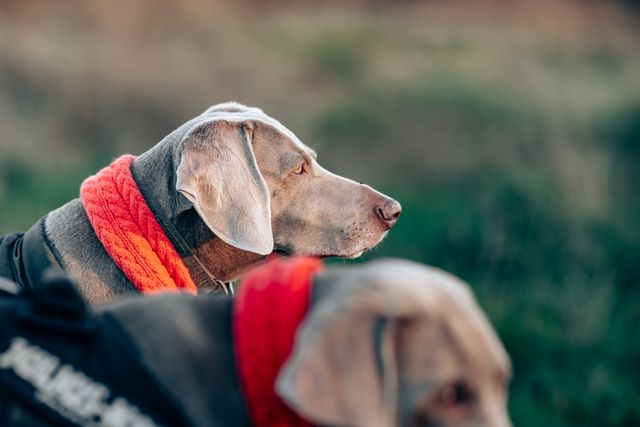
Hairless Dog Breeds: A UK Owner’s Guide to Bald Dogs, Skin Care and Health
A hairless dog is a dog born with little or no coat because of an inherited gene, not because of illness. The best-known hairless dog breeds are the Chinese Crested, the Xoloitzcuintle (Mexican Hairless), the Peruvian Hairless Dog and the American Hairless Terrier. All four need daily skin care, protection from sun and cold, and none is truly allergy-free.
If you have fallen for a bald dog at a show or online, you are probably wondering what life with one actually involves. Bare skin changes almost everything about care: what you put on it, when you walk, what your dog wears in January and how you look after its teeth. This guide covers each breed, the genetics behind the naked look, and a UK season-by-season care plan you can follow from day one.
Is your dog going bald? A normally furry dog that starts losing hair is not turning into a hairless breed. Fur loss has medical causes such as fleas, mites, allergies, infections and hormone problems. PDSA advises contacting your vet as soon as you notice fur loss, and sooner if it comes with itching, scabs, weight change or excessive licking.
What Counts as a Hairless Dog?
“Hairless dog”, “bald dog” and “naked dog” all describe the same thing: a breed in which hairlessness is a fixed, inherited trait. Most of these dogs are not completely bare. Many grow wisps of hair on the head, feet and tail tip, and the Chinese Crested is famous for its silky crest.
Almost every hairless breed also produces fully coated puppies. In the Chinese Crested, the coated version is called the Powder Puff, and the Royal Kennel Club lets breeders record “Powder Puff” on registration certificates. Coated and hairless pups can arrive in the same litter, which surprises many first-time buyers.
Hairless Dog Breeds at a Glance
Here is how the four main breeds compare. Heights are taken from official breed standards; individual dogs can fall outside these ranges.
| Breed | Size (height at withers) | Hairless gene | Teeth | Coated form |
|---|---|---|---|---|
| Chinese Crested | Dogs 28–33 cm, bitches 23–30 cm; no more than 5.4 kg | Dominant (FOXI3) | Often incomplete | Powder Puff |
| Xoloitzcuintle (Mexican Hairless) | Miniature 25–35 cm, Intermediate 36–45 cm, Standard 46–60 cm | Dominant (FOXI3) | Some may be missing or rotated | Yes, more rarely seen |
| Peruvian Hairless Dog | Small 25–40 cm, Medium 41–50 cm, Large 51–65 cm | Dominant (FOXI3) | Often incomplete | Yes, short smooth coat |
| American Hairless Terrier | Small terrier | Recessive (SGK3) | Not affected | Yes |
The Four Main Hairless Dog Breeds Explained
Chinese Crested
The smallest and most familiar hairless dog in Britain sits in the Royal Kennel Club’s Toy group. Its official breed profile lists up to 30 minutes of exercise a day and a lifespan of over 12 years. The breed copes well in a flat or a town house with a modest garden. The RKC recommends DNA tests for two inherited eye conditions, primary lens luxation (PLL) and progressive retinal atrophy (prcd-PRA), so ask to see the parents’ results before you agree to anything. If you like the idea of a tiny companion but are still comparing options, our round-up of small dog breeds that make loyal companions gives you a wider view.
Xoloitzcuintle (Mexican Hairless Dog)
You say it “show-low-eets-queent-lee”, though most owners simply call it a Xolo. This ancient breed comes in Miniature, Intermediate and Standard sizes, so it suits a wider range of homes than many people expect. The Royal Kennel Club lists the Standard Xolo in its Utility group on the imported register, with up to an hour of exercise daily and a lifespan of over 10 years. For the Standard size, the RKC recommends the BVA/KC hip, elbow and eye schemes as best practice.
Peruvian Hairless Dog
Sometimes sold as the Peruvian Inca Orchid, this slim, long-legged dog is rarely seen in UK parks. The international FCI breed standard places it among primitive-type breeds and describes three sizes, from 25 cm at the shoulder up to 65 cm. The same standard accepts missing teeth in hairless dogs but expects a complete set in coated ones. That single rule tells you a lot about how the hairless gene works.
American Hairless Terrier
This terrier breaks the pattern. Its puppies arrive wearing a thin layer of fuzz that falls out during the first few months, leaving smooth skin behind. Its bare coat comes from a completely separate gene, and that difference shows up in the mouth, as the next section explains.
Why Are Some Dogs Born Without Hair? The Genetics Made Simple
Three of the four bald dog breeds share one change in a gene called FOXI3. Researchers writing in Scientific Reports in 2017 found that dogs carrying it lost permanent canines and premolars, and in some cases incisors, alongside their sparse coat. Put simply, the gene that strips away the fur also changes how the teeth grow.
A hairless Crested, Xolo or Peruvian carries just one copy of this gene. Two copies are lethal, according to the UC Davis Veterinary Genetics Laboratory, so breeders can never create a line where every puppy is hairless. That is why coated pups keep turning up in hairless litters.
The American Hairless Terrier works the opposite way. Its hairlessness is recessive and comes from a change in a gene called SGK3. A puppy must inherit a copy from each parent to be born bald. UC Davis notes this form has “no adverse effects on dentition or fecundity”, so these dogs usually keep a normal set of teeth.
Pet Care Tip: Choosing between a hairless and a coated puppy from the same Crested, Xolo or Peruvian litter? The coated pup is likely to have a fuller set of teeth and an easier skin routine, while both share the same parents and upbringing.
How to Care for a Hairless Dog’s Skin Through a UK Year
Without fur, a dog’s skin has nothing to block UV light, hold in body heat or absorb natural oils. A hairless dog’s routine therefore shifts with the British seasons. Treat this plan as a starting point and fine-tune it with your vet.
| Season | Main risk | What to do |
|---|---|---|
| Spring (Mar–May) | First strong sunshine after months indoors | Begin pet-safe sun cream on bright days; keep a light jumper for cool mornings |
| Summer (Jun–Aug) | Sunburn, overheating, sun through glass | Walk early and late; offer shade at all times; reapply sun cream; try a thin cotton top |
| Autumn (Sep–Nov) | Rain, wind and dropping temperatures | Switch to a waterproof coat; towel the skin dry after wet walks |
| Winter (Dec–Feb) | Cold outdoors, dry air from central heating | Use a warm coat outside; keep walks shorter; ask your vet about a suitable moisturiser |
Sun protection for bald dogs
Sunburn is the most common everyday danger for a bald dog. PDSA explains that pets with thin fur or bare patches face the highest risk, and that repeated burns can lead to a skin cancer called squamous cell carcinoma. On a hairless dog, the whole body is effectively one large bare patch.
- Choose a pet-safe, waterproof sun cream rated SPF 30 or above, and apply it at least 15 minutes before heading out.
- Keep human products containing zinc oxide or PABA well away; PDSA warns both are toxic to pets.
- Try any new cream on a small area first and wait 24 hours to check for a reaction.
- Glass does not stop UV, so a dog that dozes in a sunny window needs protecting too.
Keeping a naked dog warm
A damp British winter is tough on a naked dog. PDSA vets advise that dogs with fine or thin coats lose heat much faster, so they need a warm coat outdoors and shorter outings when it is cold. Shivering or a slowing pace are signs to turn for home. Our pet accessories guides can help you compare fabrics and fit.
Bathing and moisturising
Bare skin can swing from greasy to dry within days. Many owners settle on a gentle wash every week or two, followed by a light, fragrance-free moisturiser. Products differ widely, so let your vet recommend one. If spots, blackheads or a rash appear, leave them alone and book a check-up rather than squeezing.
Pet Care Tip: Hang a soft cotton T-shirt by the front door. Popping it on before a sunny walk reduces how much skin needs sun cream, and it goes straight in the wash after a muddy outing.
Dental Care for Dogs with No Hair
The gene behind the bare coat also affects the teeth, so many hairless Cresteds, Xolos and Peruvians have gaps or unusually shaped teeth. The Chinese Crested breed standard even states that the hairless variety “should not be penalised for absence of full dentition”. Gaps can trap food, so plaque may build up in unexpected spots.
PDSA suggests looking at your dog’s teeth every day while brushing, or at least every week or two. Gums should be salmon pink, teeth should feel firm, and breath should not smell foul. Red gums, loose teeth or a bad smell all mean it is time to see your vet.
Are Hairless Dogs Hypoallergenic?
Not entirely. Hairless dogs drop far less hair, but that does not make them safe for everyone with allergies. Allergy UK states that “there is no such thing as a truly non-allergic dog or cat”, and that dog allergen comes mainly from hair, dander and saliva. A dog without hair still licks and still sheds tiny skin flakes.
If allergies run in your household, spend real time around the breed first and talk to your GP. Our guide on whether Maltese dogs are hypoallergenic looks at the same myth from a coated breed’s side.
Is a Hairless Dog Right for You? A Quick Checklist
No-hair dogs reward owners who enjoy a daily routine. Tick each line that is true for you. If most stay blank, a coated breed may fit your life better.
- ☐ I can set aside five to ten minutes a day for skin checks and care.
- ☐ I am happy to buy, wash and replace coats and jumpers.
- ☐ I can walk early in the morning or late in the evening on hot days.
- ☐ I will budget for regular dental checks at the vet.
- ☐ I accept that a hairless dog is not guaranteed to suit allergy sufferers.
- ☐ I am ready for a commitment that can last well over a decade.
Questions to ask a breeder or rescue
- Can I meet both parents, and are either of them coated?
- Which health tests have the parents had, and may I see the certificates?
- How many teeth does this puppy have, and are dental problems known in the line?
- Which skin products have you used, and has the puppy had rashes or sunburn?
- Is the puppy hairless or coated, and is that shown on the registration?
Hairless and coated Cresteds, Xolos and terriers do come into rescue. Contacting breed rescues and rehoming charities first is a kind way to begin your search.
Example Scenario: A First Summer with a Bald Dog
This is an illustrative example, not a real owner.
Priya rehomes a two-year-old hairless Chinese Crested in May. On the first warm Saturday she takes him to the park at lunchtime for an hour. By evening his back looks pink and feels hot to the touch. She keeps him cool indoors and phones her vet, who examines the skin and suggests a pet-safe SPF 30 cream. From then on, Priya walks him before 10am and after 6pm, dresses him in a light cotton top, covers his head, ears and belly with cream, and moves his bed away from the sunny patio door. He gets through the rest of the summer without another burn.
What Most Hairless Dog Owners Get Wrong
The biggest error is treating a dog’s bare skin like our own. It reacts differently to products, and your dog cannot tell you it is starting to burn. The second is assuming a dog that barely sheds will never trigger allergies. Reaching for the family sun cream is a common example; PDSA advises using pet-specific sun cream instead.
| Mistake | Why it happens | Effect on the dog | How to avoid it |
|---|---|---|---|
| Using family sun cream | It is already in the cupboard | Zinc oxide or PABA can be toxic if licked | Buy a pet-specific SPF 30+ |
| Skipping a coat on mild days | The weather does not feel cold to us | Chilling, shivering, reluctance to walk | Use a coat whenever it is damp, windy or cold |
| Over-bathing with strong shampoo | Trying to clear oily skin | Dry, irritated or flaky skin | Ask your vet for a gentle product and routine |
| Overlooking the teeth | Gaps seem “normal” for the breed | Plaque build-up and gum disease | Brush and check teeth regularly |
Hairless Dog FAQs
What is the most common hairless dog breed in the UK?
The Chinese Crested is the hairless breed UK owners are most likely to meet. It is a small Toy breed recognised by the Royal Kennel Club, with a hairless variety and a fully coated variety called the Powder Puff.
Do hairless dogs get cold?
Yes. With no fur to trap heat, hairless dogs lose warmth quickly. In the UK they usually need a warm coat outdoors for much of the year, and shorter walks in cold or wet weather.
Do hairless dogs need sun cream?
Yes. Bare skin burns easily, and repeated sunburn is linked to skin cancer. Use a pet-safe, waterproof sun cream of SPF 30 or higher, and avoid products containing zinc oxide or PABA.
Why do hairless dogs have missing teeth?
In the Chinese Crested, Xolo and Peruvian Hairless, the gene that causes hairlessness (FOXI3) also affects tooth development, so permanent canines and premolars are often missing. The American Hairless Terrier uses a different gene and its teeth are not affected.
Are hairless dogs good for people with allergies?
Not reliably. Allergy UK says no dog is truly non-allergic, because allergens are also found in saliva and dander. Some sufferers cope better with low-shedding dogs, but test this before committing.
Can a hairless dog have hairy puppies?
Yes. In the Crested, Xolo and Peruvian, coated puppies regularly appear in litters from hairless parents. Coated Chinese Cresteds are known as Powder Puffs.
Related reading
About the author
Written and reviewed by the Pets Store Home Editorial Team: pet owners and animal lovers who check every guide against trusted UK animal-welfare and veterinary sources. This article is general information, not a substitute for professional veterinary advice. Always speak to your vet about your own pet’s health. Last reviewed: October 2026. Sources: Royal Kennel Club, PDSA, Allergy UK, FCI, UC Davis Veterinary Genetics Laboratory, Scientific Reports.
Sources (accessed 4 October 2026)
- Royal Kennel Club – Chinese Crested breed profile
- Royal Kennel Club – Chinese Crested breed standard
- Royal Kennel Club – Xoloitzcuintle (Mex Hairless) Std
- FCI – Peruvian Hairless Dog standard No. 310
- Scientific Reports (2017) – The dental phenotype of hairless dogs with FOXI3 haploinsufficiency
- UC Davis Veterinary Genetics Laboratory – Hairlessness in Terriers
- PDSA – Sunburn in pets
- PDSA – Does my pet need to wear sun cream?
- PDSA – Does my dog need a coat on winter walks?
- PDSA – How to check your dog’s teeth
- PDSA – Hair loss (alopecia) in dogs
- Allergy UK – Pet allergy factsheet
[…] Which foreign pets are legal in Washington State? […]