
Hard Plastic Pool for Dogs: How to Choose, Set Up and Use One Safely
Is a hard plastic pool for dogs a good idea? Yes, for most dogs. A rigid, shallow plastic pool gives your dog a cool spot to splash, and firm walls resist claws better than an inflatable. Pick one your dog can lie down in, keep the water shallow and fresh, and always supervise, as the ASPCA advises.
A backyard dog pool is one of the simplest ways to help a dog beat the summer heat. This guide explains how to pick the right hard plastic pool for dogs, how to set it up and keep it clean, and the safety rules vets and animal welfare groups recommend.
Key takeaways
- Hard plastic pools are shallow, rigid tubs that suit splashing and cooling off rather than real swimming.
- Pick a pool your dog can lie down and turn around in, with a smooth, rounded rim.
- Keep water shallow, change it often, and empty it at least every 5 to 7 days to stop mosquitoes breeding.
- Never leave a dog alone with a pool; the ASPCA notes not all dogs are strong swimmers.
- Run the hose first, because Texas A&M warns water sitting in a hose can get hot enough to burn.
- Provide shade and fresh drinking water, and stop play at the first sign of overheating.
In this guide
What Is a Hard Plastic Pool for Dogs?
A hard plastic pool for dogs is a molded, rigid tub, often sold as a kiddie pool, that holds a few inches of water. Unlike an inflatable, it has no air chambers to puncture, and unlike a foldable PVC pet pool, its walls stay upright on their own. Dogs use it to wade, lie down and cool off, so think of it as a splash pool rather than a swimming pool.
Each style has trade-offs. The comparison below is our general guide based on how these pool types are built, so check the product details before you buy.
| Pool type | Strengths | Drawbacks |
|---|---|---|
| Hard plastic | No air to leak, stands on its own, easy to scrub | Bulky to store; can crack if bent in cold weather |
| Foldable PVC pet pool | Folds flat, often larger sizes, may have a drain | Soft walls can be scratched or chewed |
| Inflatable | Cheap and light | Claws and teeth puncture it easily |
Our general comparison; features vary by brand and model.
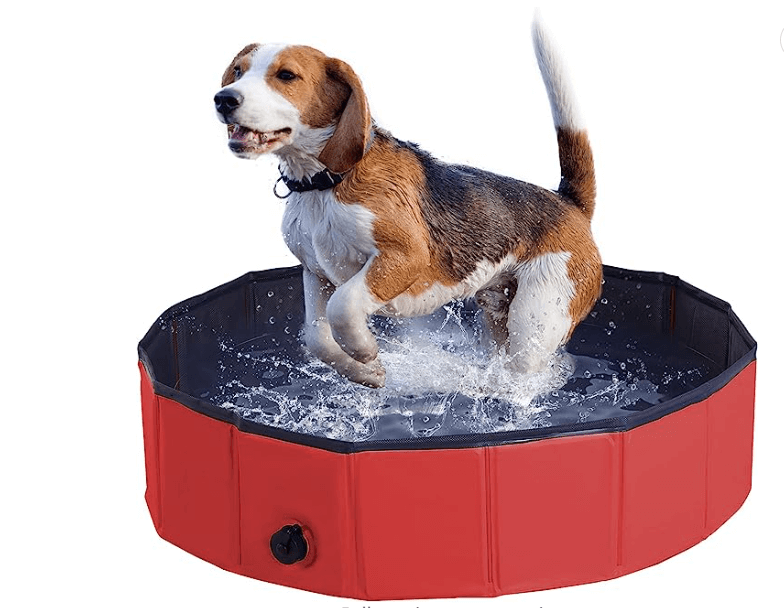
How to Choose the Best Hard Plastic Pool for Dogs
Start with size when choosing a hard plastic pool for dogs. Your dog should be able to step in, turn around and lie down without touching the sides. As a simple rule of thumb, measure your dog from nose to tail base and choose a pool wider than that length. Shallow water is safer for small or older dogs, while bigger dogs may enjoy a deeper tub.
| Dog size | Suggested pool width | Suggested water depth |
|---|---|---|
| Small (under 25 lb) | About 3 feet | Below elbow height |
| Medium (25 to 60 lb) | About 4 feet | Below chest height |
| Large (over 60 lb) | 5 feet or more | Below chest height |
Our rule-of-thumb guide; your dog’s comfort and confidence matter most.
Toy and small breeds, like those in our cute small dog breeds list, usually do best in a low-sided plastic dog pool with only an inch or two of water. Large dogs may need two pools side by side or a wide livestock-style tub.
Features worth paying for
- Smooth, rolled rim: protects paws and bellies when your dog climbs in and out.
- Low wall height: makes entry easy for puppies, seniors and short-legged breeds.
- Textured floor: gives better grip than a glossy surface.
- Drain plug: makes emptying and cleaning faster.
- Thick, sturdy plastic: resists claws and is less likely to crack.
- Light color: may heat up less in direct sun than a dark pool.
Shopping in person? Press firmly on the rim of a hard plastic dog pool to see if it flexes or creaks, run your hand along the edge for sharp seams, and check that the floor has some texture rather than a slick finish.
Do dog pools have health benefits?
Water play is mainly about cooling off and fun, but water itself can help some dogs. Penn Vet’s Ryan Hospital explains that buoyancy and water resistance make hydrotherapy a low-impact way to build strength, and lists arthritis, hip dysplasia and weight gain among the conditions it can help. A shallow backyard pool is not a substitute for vet-guided hydrotherapy, but gentle wading can be a pleasant extra for active dogs. For weight goals, see our guide to helping your dog lose weight.
Hard plastic pool for dogs vs a real swimming pool
A hard plastic pool is for wading, not swimming laps. If your dog loves to swim, a lake or a dog-friendly pool with you beside it is a better fit. Not every dog can swim, though. Dr. Lori Teller of Texas A&M’s veterinary college says flat-faced breeds have the most trouble, and recommends a flotation vest, or dog swim vest, for dogs that want to swim but struggle. Read our guide on whether French bulldogs can swim for an example.
Backyard Dog Pool Ideas and DIY Options
You do not need a fancy setup to build a great backyard dog pool. A few simple dog pool ideas can make a basic tub safer and more fun.
Simple backyard dog pool ideas
- Place the pool in the shade, or rig a patio umbrella or shade sail over it.
- Set it on grass or a rubber mat, not hot concrete or asphalt.
- Add a sturdy step or ramp for small, senior or short-legged dogs.
- Float a dog-safe toy to encourage a shy dog to step in.
- Put a towel and a fresh water bowl nearby.
Cheap DIY dog pool options
For a cheap DIY dog pool, or a first DIY dog swimming pool on a budget, a large, sturdy plastic storage tub or a livestock-style trough can work for small and medium dogs, as long as the edges are smooth and the sides are low enough to step over. Avoid anything with sharp lips, wobbly sides or leftover chemicals. Inground dog pools and natural dog ponds are bigger projects that need careful planning for drainage, depth and fencing.

How to Set Up a Hard Plastic Pool for Dogs
Setting up a hard plastic pool for dogs takes only a few minutes and prevents most problems. Follow these steps the first time, then turn them into a routine.
| Step | What to do |
|---|---|
| 1. Pick the spot | Choose flat, shaded ground away from steps and hot pavement |
| 2. Check the pool | Look for cracks or rough edges before each use |
| 3. Run the hose first | Let hot water clear before filling |
| 4. Fill shallow | A few inches is enough for most dogs |
| 5. Introduce slowly | Let your dog sniff and step in on its own |
| 6. Empty and dry | Tip out the water and store the pool upside down |
Based on advice from Texas A&M, the ASPCA and the New Jersey Department of Health.
Watch the hose and water temperature
Many owners skip this step. Texas A&M warns that water left sitting in a garden hose can get very hot in the sun and cause second- or third-degree burns, so run the hose for a few minutes before filling. Feel the water with your hand before your dog steps in.
Cleaning and mosquito control
Any standing water can become a mosquito nursery. The New Jersey Department of Health advises emptying or changing kiddie pool water every 5 to 7 days, because larvae can become adult mosquitoes in about a week, and storing pools indoors or upside down when not in use. For a dog pool, we suggest fresh water daily on hot days, since dogs bring in dirt, hair and saliva. Scrub with mild soap, rinse thoroughly and let the pool dry in the sun.
Hard Plastic Pool for Dogs Safety Tips
Even a shallow hard plastic pool for dogs needs a watchful owner. The ASPCA says not to leave pets unsupervised near a pool, since not all dogs are good swimmers, and to introduce them to water gradually. It also advises rinsing dogs after a swim to remove chlorine or salt, and stopping them from drinking pool water.
- Supervise every session: stay close, especially with puppies and senior dogs.
- Never force it: Texas A&M says never to throw a dog into water or push an uninterested one.
- Offer fresh drinking water: the AVMA says pets need unlimited fresh water and shade outdoors.
- Take extra care with at-risk dogs: the AVMA and ASPCA flag short-nosed breeds, overweight pets and older pets as higher risk in the heat.
- Dry ears and skin folds: Texas A&M recommends drying well after water play to help prevent infection.
- Protect paws: the AVMA warns hot surfaces like asphalt can burn paws.

Pet Care Tip: Let a nervous dog meet the pool dry. Scatter a few treats inside the empty tub, then add an inch of water the next day. A calm, rewarding first visit tends to build confidence faster than a full pool.
When to call a vet right away: The AVMA lists heavy panting, restlessness, excessive drooling, unsteadiness, abnormal gum or tongue color and collapse as signs of heat stress, and says to seek emergency care if you see them. The ASPCA adds that seizures, bloody vomit or diarrhea and a temperature above 104°F are severe signs. Go to a 24/7 emergency animal hospital after hours.
7 questions to ask before you buy a dog pool
- Is the pool wider than my dog’s body length?
- Are the rim and sides smooth and low enough to step over?
- Is the floor textured for grip?
- Does it have a drain plug?
- Is the plastic thick enough to resist claws?
- Do I have a shaded, flat spot for it?
- Where will I store it when it is empty?
Example Scenario (illustrative)
Tanya in Austin bought a 4-foot hard plastic pool for her Labrador mix, Rio. She set it under a shade sail on the lawn, ran the hose for a few minutes before filling, and changed the water every morning. Rio now cools off after walks, and Tanya tips the pool over each night so mosquitoes cannot breed.
| Myth | Fact |
|---|---|
| “All dogs can swim, so supervision isn’t needed.” | The ASPCA says not all dogs are good swimmers; always supervise. |
| “Hose water is always cool.” | Texas A&M warns water in a sunny hose can burn. |
| “You can leave the water in all week.” | Mosquito larvae can mature in about 7 days; change water often. |
| “A pool replaces shade and drinking water.” | The AVMA says dogs still need shade and unlimited fresh water. |
What most owners get wrong
A common mistake is to fill a hard plastic pool for dogs once and leave it baking in full sun. Within days, the water turns warm and murky and can start hosting mosquito larvae. Keep the pool shaded, swap the water often, and tip it out after each play session when you can.
Hard Plastic Pool for Dogs: FAQs
Is a hard plastic pool better than an inflatable for dogs?
For most dogs, yes. Rigid plastic has no air chambers, so a claw scratch will not deflate it the way it can an inflatable.
What size dog pool do I need?
Choose a pool wider than your dog’s length from nose to tail base, so it can turn and lie down.
How deep should a dog pool be?
A few inches is enough for most dogs; keep water below chest height, and lower for small or senior dogs.
How often should I change the water?
Daily on hot days is best; at minimum, empty it every 5 to 7 days to prevent mosquitoes.
Can I add chlorine to a dog pool?
It is not needed for a small pool; change the water instead. The ASPCA advises keeping dogs from drinking chlorinated pool water.
Can puppies use a dog pool?
Yes, with very shallow water, a low rim and constant supervision.
Where should I put a backyard dog pool?
On flat, shaded grass or a mat, away from hot pavement and steps.
Final Verdict on a Hard Plastic Pool for Dogs
A hard plastic pool for dogs is an affordable, durable way to keep your dog cool. Choose one wider than your dog, with a smooth rim and textured floor. Place it in shade, run the hose first, keep water shallow and fresh, and never leave your dog alone with it.
Your next steps
- Measure your dog from nose to tail base before you shop.
- Pick a shaded, flat spot on grass for the pool.
- Set a reminder to change the water and tip the pool over each night.
Join our community on the Pets Store Home Facebook page, and explore more dog care in our Dogs section. If your dog seems sluggish in the heat, read our guide on why a dog may be walking slowly and look weak.
About the author: Written and reviewed by the Pets Store Home Editorial Team, pet owners who check every guide against trusted sources.
How we checked this guide: Swimming, hose and drying advice come from Texas A&M College of Veterinary Medicine. Water therapy benefits come from Penn Vet’s Ryan Hospital. Pool supervision and overheating signs come from the ASPCA, heat stress signs from the AVMA, and mosquito guidance from the New Jersey Department of Health.
Pool size, depth and pool-type comparisons are our own general guide, not vet rules, and we do not recommend specific brands. This guide was fully rewritten in October 2026, and we review it every 12 months.
Last reviewed: October 2026.
Sources (accessed October 31, 2026)
- Texas A&M College of Veterinary Medicine: Tips for Taking Dogs Swimming (Dr. Lori Teller)
- Penn Vet Ryan Hospital: Canine Hydrotherapy Services (2024)
- ASPCA: Hot Weather Safety Tips for Your Pets
- American Veterinary Medical Association: Warm Weather Pet Safety
- New Jersey Department of Health: Mosquito-Proof Your Yard (PDF)
[…] Which foreign pets are legal in Washington State? […]