
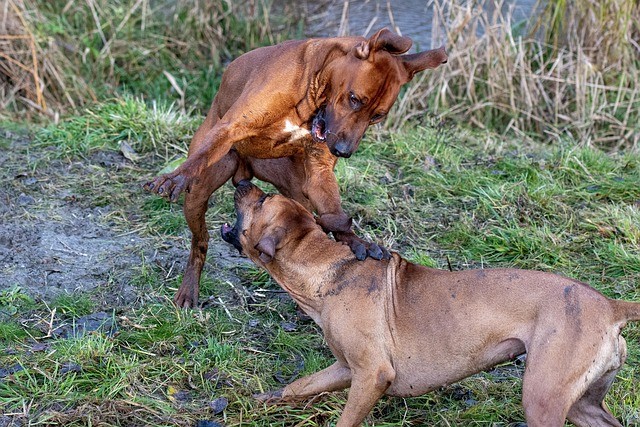
A dog that lunges, growls, or snaps at other dogs isn’t necessarily “bad with dogs” for life, they’re usually reacting out of fear, poor early socialization, frustration, or a specific negative experience, and dog-on-dog aggression is one of the more manageable behavior problems when it’s understood correctly and addressed with a structured plan. It’s also one of the more stressful problems for owners, since it can limit walks, dog park visits, and multi-dog households, which makes a calm, methodical approach especially valuable.
This guide explains the common types and causes of dog-on-dog aggression, how to read the warning signs before a conflict escalates, and a step-by-step approach to reducing reactivity safely.
Quick Answer: Reduce dog-on-dog aggression by identifying the specific trigger (fear, frustration, resource guarding, or poor socialization), managing exposure with distance and a secure leash while training is underway, and using gradual counter-conditioning to change the dog’s emotional response to seeing other dogs. Avoid forcing interactions or punishing growls, and bring in a certified trainer for cases involving bites or serious aggression.
Key Takeaways
- Dog-on-dog aggression is usually rooted in fear, frustration, or poor socialization rather than genuine dominance or “hating other dogs.”
- Body language like stiffening, a hard stare, raised hackles, or a tucked tail often precedes an outburst and is worth learning to recognize early.
- Management, including distance, a secure leash, and avoiding known trigger situations, keeps everyone safe while training progresses.
- Counter-conditioning, pairing the sight of other dogs with something positive at a safe distance, is the core evidence-based technique.
- Forced interactions, dog parks, and punishment-based corrections tend to worsen reactivity rather than resolve it.
Why Trust This Guide?
This guide is written and researched by the Pets Store Home editorial team. We cross-check our dog behavior guidance against established veterinary and force-free training sources, and this article is reviewed periodically to keep it accurate and current. It’s intended as general information; dogs with a bite history or severe reactivity benefit from working directly with a certified professional trainer or veterinary behaviorist.
Understanding the Different Types of Dog-on-Dog Aggression
Not all dog-on-dog aggression looks the same or stems from the same root cause, and identifying the type at play makes a real difference in choosing the right approach. Fear-based aggression is the most common form, where a dog reacts defensively to another dog they perceive as threatening, often due to limited or negative early experiences with other dogs. Frustration-based aggression, sometimes called “barrier frustration,” develops in dogs that are highly social but repeatedly prevented from greeting other dogs, such as while leashed, and the resulting frustration can look identical to genuine aggression from a distance. Resource-based aggression occurs around food, toys, or a specific person, while territorial aggression is triggered by another dog entering a space the dog considers their own, such as a yard or home.
Why Some Dogs Develop Reactivity
Poor or limited socialization during the critical developmental window, roughly three to fourteen weeks of age, is one of the strongest predictors of later dog-on-dog reactivity, since puppies that don’t get positive, varied exposure to other dogs during this period often struggle to read canine social cues confidently as adults. A single frightening or painful experience with another dog, even just one bad encounter, can also create a lasting fear response that generalizes to dogs in general rather than staying specific to the dog involved. Genetics play a role too, with some breeds and individual dogs naturally more prone to a lower threshold for reactivity, though this is a predisposition rather than a fixed outcome, and environment and training still meaningfully shape how it develops.
Reading the Warning Signs
Recognizing the early, subtle signals that precede an aggressive outburst gives an owner the chance to intervene calmly before a situation escalates. Early signs often include a sudden stillness or freezing, a hard, fixed stare directed at the other dog, raised hackles along the back, a stiff and forward-leaning body posture, or conversely a lowered body and tucked tail in fear-based cases. Lip licking, yawning out of context, and turning the head away are subtler stress signals that can precede reactivity in more anxious dogs. Waiting for a growl or lunge before responding means missing the earlier, easier opportunities to create distance and prevent the behavior from being rehearsed and reinforced.
Management First: Keeping Everyone Safe
While training is underway, consistent management is what actually prevents incidents and keeps both dogs and people safe. This means using a secure, well-fitted harness or collar and a sturdy leash on walks, maintaining enough distance from other dogs that the dog stays calm and responsive, and avoiding known high-risk situations like dog parks, off-leash trails with unpredictable traffic, or crowded pet-friendly events until reactivity has meaningfully improved. A physical barrier such as a visual screen at a fence line, if territorial reactivity is an issue at home, can also reduce daily rehearsal of the behavior while training progresses.
Step-by-Step: Counter-Conditioning to Other Dogs
Step 1: Find the trigger distance. Identify the distance at which the dog notices another dog but remains calm enough to eat treats and respond to cues, even if that distance is quite large initially.
Step 2: Pair the sight of another dog with something great. At that safe distance, the moment the dog notices another dog, immediately begin feeding a stream of high-value treats, stopping when the other dog is no longer visible, so the dog starts to associate seeing other dogs with something good happening.
Step 3: Repeat consistently across multiple sessions. Practice this pairing regularly across different dogs and settings at the current safe distance until the dog shows a relaxed, even anticipatory response to spotting another dog.
Step 4: Decrease distance gradually. Once relaxed at the current distance over several sessions, decrease the distance slightly and repeat the same process, always watching closely for stress signals before progressing further.
Step 5: Add a “look at that” or engage-disengage cue. Teach the dog to glance at another dog and then look back to you for a reward, building a reliable pattern of checking in rather than fixating or escalating.
Step 6: Progress slowly and expect setbacks. Reactivity training is rarely linear; an occasional bad day doesn’t mean training has failed, and simply returning to a safe distance and continuing consistently is the appropriate response.
Why Forced Introductions Backfire
Forcing two reactive or unfamiliar dogs to meet, on the assumption that “they’ll work it out,” is one of the most common and most damaging mistakes owners make, since it can trigger a fight, reinforce fear, and set training back significantly. Dog parks in particular are a poor training tool for reactive dogs, since the unpredictable, high-arousal environment removes the controlled distance and gradual exposure that effective counter-conditioning depends on. Introductions between specific dogs, such as a resident dog and a new addition to the household, should always be done gradually, on neutral territory, and with both dogs on leash initially, rather than as a single unsupervised meeting.
Resource Guarding Between Dogs
When aggression is specifically triggered by food, toys, or a favored resting spot, feeding dogs separately, picking up high-value chews when dogs aren’t directly supervised, and giving each dog their own space are often more practical and effective than attempting to train dogs to fully share contested resources. This kind of management-first approach is particularly important in multi-dog households, where the goal is usually reducing the opportunities for conflict rather than eliminating the underlying guarding instinct entirely.
Territorial Aggression at Home or in the Yard
A dog that’s calm on neutral ground but aggressive toward other dogs passing the home or yard is likely displaying territorial aggression, which often responds well to reducing visual triggers, such as blocking a direct sightline to the street through a fence, alongside teaching an alternative behavior, like going to a mat, when a trigger appears. Consistently interrupting rehearsal of barking and lunging at a fence line, rather than allowing it to continue unaddressed, is an important part of preventing the behavior from becoming more deeply ingrained over time.
Multi-Dog Households
Introducing dog-on-dog aggression management into a household with multiple resident dogs requires extra care, since ongoing tension between dogs living together is more disruptive than reactivity toward unfamiliar dogs on walks. Separating dogs during high-value activities, ensuring each dog has individual attention and resources, and working with a trainer on structured, supervised interactions can help resolve tension between dogs that share a home, though persistent aggression between resident dogs often benefits from professional guidance given the daily proximity involved.
When to Bring in a Professional
Any case involving an actual bite, aggression that’s escalating despite consistent management and training, or a household with multiple dogs in ongoing conflict benefits from professional support rather than a purely self-directed plan. A certified professional dog trainer with specific experience in reactivity, or a veterinary behaviorist for more severe cases, can assess the specific triggers accurately, rule out contributing medical factors like pain, and build a structured plan suited to the individual dog and household.
Common Mistakes That Make Reactivity Worse
Punishing growling, lunging, or barking at other dogs tends to suppress the warning signal without addressing the underlying fear or frustration, which can produce a dog that skips straight to a bite with less warning in the future. Flooding a dog with exposure, such as repeated dog park visits in the hope they’ll “get used to it,” usually reinforces the fear response rather than resolving it, since the dog isn’t given the chance to stay under threshold and build a genuinely positive association. Progressing too quickly through distance-reduction steps before a dog is consistently relaxed at the current distance is another common setback.
The Role of Confidence-Building
Alongside direct counter-conditioning to other dogs, general confidence-building activities, such as gentle training in new low-pressure environments, nose work games, and consistent, predictable handling, can help a fearful or anxious dog build overall resilience that supports the specific reactivity work. A dog with greater baseline confidence often shows a higher threshold before reacting, meaning the same distance from another dog is more likely to remain comfortable, which can meaningfully speed up progress through the counter-conditioning steps described above.
Exercise, Enrichment, and Overall Calmness
While exercise and mental enrichment alone won’t resolve dog-on-dog aggression, a dog that’s under-exercised or under-stimulated often has a lower threshold for reactivity in general, so ensuring adequate daily physical activity and mental engagement, through activities like scent work or puzzle feeders, supports the specific counter-conditioning work rather than replacing it. A tired, mentally satisfied dog typically has more capacity to stay calm and responsive during training sessions.
How Long Progress Typically Takes
Mild reactivity, especially when caught early and addressed consistently, can show meaningful improvement within a few weeks of regular counter-conditioning practice. Moderate to more established reactivity more commonly takes several months of consistent work, and severe cases, particularly those with a bite history, should be guided by a professional and may take considerably longer, since trust and a new emotional association need to be built gradually rather than rushed.
Muzzle Training for Extra Safety
For dogs with a bite history or a high risk of escalation, teaching a comfortable, well-fitted basket muzzle isn’t a sign of a “dangerous” dog, it’s a responsible safety tool that allows training and management to continue with reduced risk to people and other dogs. Muzzle training should be done gradually and positively, building a association between the muzzle and good things like treats and favorite activities, well before it’s actually needed in a real trigger situation, so the dog associates it with calm, positive experiences rather than only wearing it during already-stressful encounters. A basket-style muzzle, which allows panting, drinking, and treat delivery, is generally preferable to a fabric muzzle for anything beyond very brief use.
Choosing Walking Routes and Times Strategically
While training progresses, deliberately choosing quieter walking routes and times, such as early morning or late evening when fewer dogs are out, can significantly reduce the number of unplanned encounters a reactive dog has to manage. Scouting a route in advance, having an exit plan if another dog appears unexpectedly, and carrying high-value treats at all times to support in-the-moment counter-conditioning all help make walks calmer and more productive for both dog and owner during the training process.
Tracking Progress With a Training Log
Keeping a simple record of each training session, noting the distance used, the specific trigger dog’s behavior, and your own dog’s reaction, makes it far easier to see genuine progress over time rather than relying on impressions that can be skewed by a single particularly good or bad session. A pattern of gradually decreasing reactivity at a given distance, even with occasional off days, is the trend worth watching for, and a log that shows no improvement over several consistent weeks is a useful, objective signal that it may be time to adjust the approach or bring in professional support.
Related Reading
Frequently Asked Questions
Is my dog aggressive because they’re trying to be dominant over other dogs?
No, modern behavioral science doesn’t support the dominance explanation for most reactivity; fear, frustration, and poor socialization are far more common underlying causes.
Will taking my reactive dog to the dog park help them get used to other dogs?
No, dog parks are generally a poor training environment for reactive dogs due to the unpredictable, high-arousal setting; structured, gradual exposure works much better.
Can an adult dog with a history of reactivity ever be fully comfortable around other dogs?
Many dogs show substantial improvement with consistent training, though the realistic goal for some dogs is better management and calmer responses rather than complete comfort with all other dogs.
Should I let my dogs “fight it out” to establish who’s in charge?
No, this approach isn’t supported by current behavioral science and significantly increases the risk of injury and lasting fear or aggression.
My dog is fine with dogs they know but reactive to strangers’ dogs. Is that normal?
Yes, this pattern is common and usually reflects a fear-based response to unfamiliar dogs specifically, which responds well to the same gradual counter-conditioning approach.
How can I tell if my dog’s aggression is fear-based or something else?
Fear-based aggression typically involves a lowered body, tucked tail, and retreat when possible, while frustration-based aggression often involves a forward, high-energy posture toward a barrier; a professional assessment can help clarify ambiguous cases.
Is it too late to help an older dog that’s always been reactive?
No, while earlier intervention tends to progress faster, older dogs with long-standing reactivity can still show meaningful improvement with consistent, patient counter-conditioning work.
Final Thoughts
Dog-on-dog aggression is a manageable behavior problem rooted in identifiable causes like fear, frustration, or limited socialization, not a fixed character trait, and a combination of careful management and gradual, positive counter-conditioning gives most dogs a real path toward calmer, safer interactions with other dogs. Patience, consistency, and professional support for more serious cases are what make lasting progress possible.
Reactive barking at other dogs is closely related to the general nuisance barking neighbours complain about. Our guide on stopping constant dog barking covers that side of the problem.
[…] Which foreign pets are legal in Washington State? […]