
How to trim a bird’s beak at home
You looked at your bird today and something about the beak seemed off — longer than you remember, a little uneven, maybe curving in a way that looks wrong. The instinct to search for how to fix it yourself makes sense. Here’s the reassuring part: a healthy beak essentially never needs a full trim, so if yours looks overgrown, that’s useful information pointing you toward a clear next step, not a grooming job waiting on you.
This guide walks through what a normal beak actually looks like, why overgrowth happens, how to judge whether it’s urgent, and what really happens at a vet visit. It also covers the one narrow thing that’s reasonable to handle at home. It won’t walk you through performing a full trim yourself — every avian-veterinary source we could find agrees that’s genuinely risky to the bird, for reasons explained below.
Quick Answer
A healthy bird’s beak wears down naturally through normal eating, chewing, and use, and rarely needs trimming. If yours looks overgrown, it’s usually a sign of an underlying issue — diet, liver health, infection, or an old injury — rather than something to simply file down. Light filing of an already-sharp tip is reasonable at home; anything beyond that should be handled by an avian veterinarian, since the beak has a live blood supply.
Key Takeaways
- A truly healthy beak almost never needs a full trim — overgrowth is a symptom worth investigating, not a routine grooming task.
- Common causes include diet-related liver strain, infections, old injuries, genetic issues, and mites — a vet visit identifies which one applies.
- The beak’s blood supply makes a full DIY trim genuinely risky, not just old-fashioned advice to be cautious.
- Some species naturally have longer or more curved beaks than others — what looks “overgrown” may just be normal for that bird.
In this article: What a Healthy Beak Looks Like · Why Beaks Become Overgrown · Is This an Emergency? · What Happens at the Vet · What’s Reasonable at Home · Why Not to DIY a Full Trim · Prevention · Species Notes · FAQ
What a Healthy Beak Actually Looks Like
A bird’s beak is made of bone covered by a layer of keratin, the same protein in human nails, and it grows continuously throughout life. In a healthy bird, normal eating, chewing, and preening wear it down at roughly the same pace it grows, so it stays a stable, functional length without any intervention.
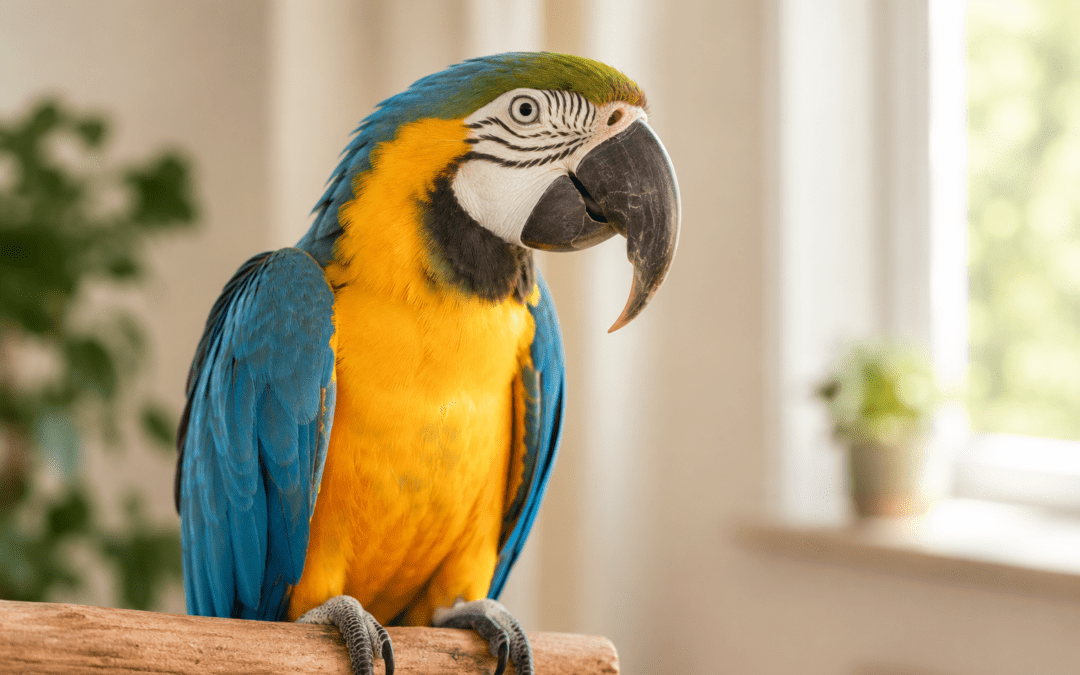
Beak shape and length also vary a lot by species, and that normal variation gets mistaken for overgrowth more often than you’d think. Macaws and pionus parrots, for example, are commonly flagged by worried owners as having an overgrown beak when the length and curve are simply typical for that species.
Pet Care Tip: Before assuming something’s wrong, look up reference photos of healthy adult beaks for your specific species. A shape that looks unusual to you may be completely normal for your bird.
Why Beaks Become Overgrown: The Real Causes
Because a healthy beak self-maintains, visible overgrowth is a sign that something is interfering with that natural balance. The most common causes are:
- Diet-related liver strain. A diet too high in fat can contribute to chronic liver disease, which is one of the more frequent underlying causes of beak overgrowth.
- Infectious disease, including viral infections like PBFD (psittacine beak and feather disease), which can affect beak growth and structure.
- Trauma to the base of the beak, which can disrupt normal growth patterns even after the injury itself has healed.
- Genetic or developmental issues, more often seen in young birds whose beaks didn’t develop or align normally.
- Parasitic or fungal infections, including mites such as Knemidocoptes, which can cause a crusty, overgrown appearance.
Pet Care Tip: Because the cause matters as much as the trim itself, a vet visit for an overgrown beak is really a diagnostic visit — treating the underlying issue is what prevents the overgrowth from simply coming back.
Is This an Emergency? A Simple Decision Framework
Not every overgrown-looking beak needs same-day attention, but some situations do. Use this to sort out how quickly to act:
- Schedule a routine avian vet visit if the beak looks longer or uneven but your bird is eating, drinking, and behaving normally, with no bleeding or visible injury.
- Seek same-day or emergency care if there’s bleeding, an obvious injury, or your bird is struggling to eat.
- Compare against normal species variation first if the beak looks fine otherwise and your bird seems completely normal — then book a routine check if you’re still unsure.
Pet Care Tip: When in doubt, a routine vet visit costs you far less than waiting through uncertainty. Avian vets see this exact question often and can usually resolve the worry in one appointment.
What Actually Happens at an Avian Vet Beak Appointment
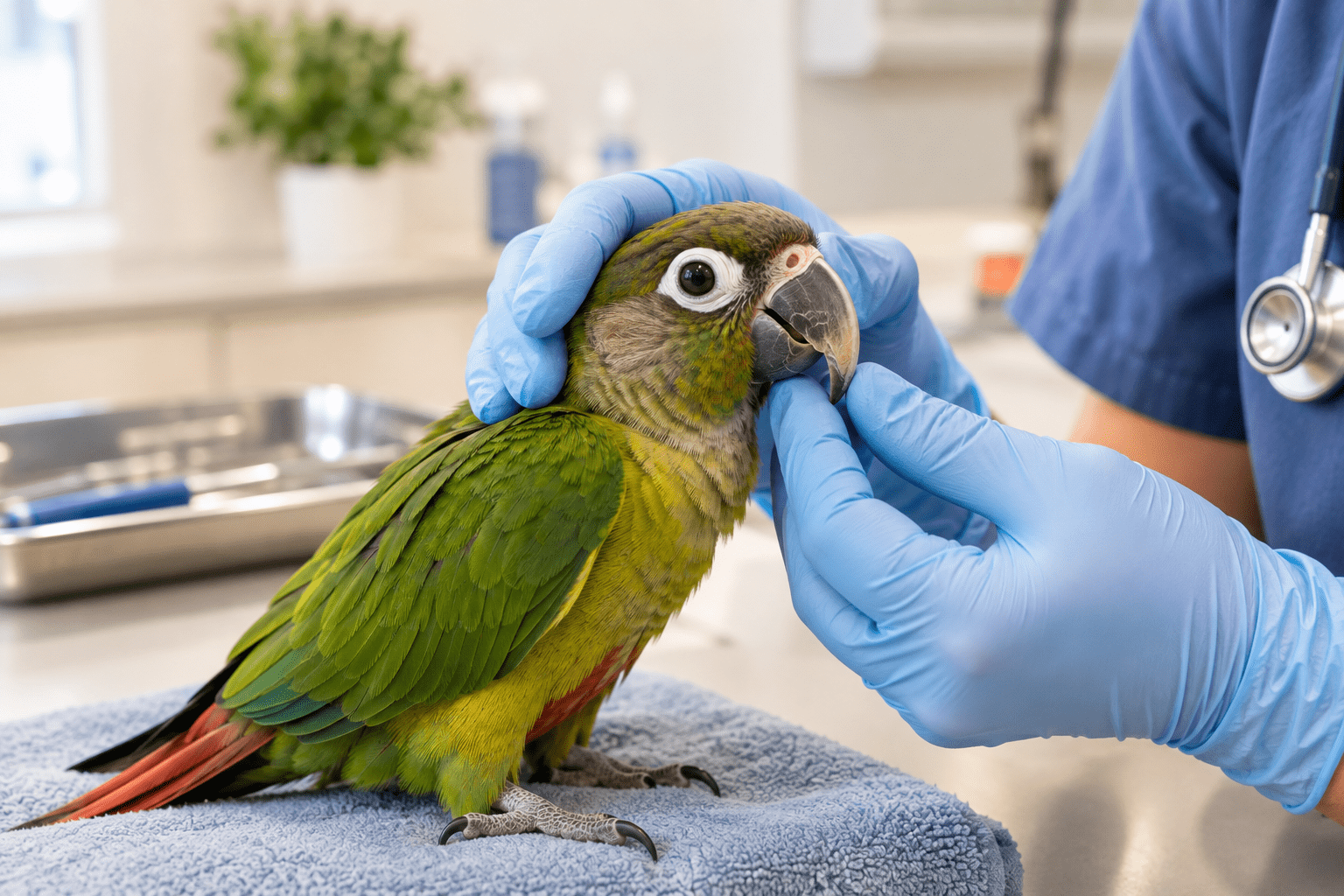
An avian vet’s exam typically starts with a look at the whole bird, not just the beak, since overgrowth is so often tied to something systemic like liver health. Bloodwork or other diagnostics are common, aimed at finding the actual cause rather than just addressing the symptom.
If a trim is needed, vets use tools most households don’t have on hand and aren’t trained to use safely — including Dremel-style rotary tools and cautery pens, which allow precise shaping with far less bleeding risk than clippers or files in inexperienced hands.
Pet Care Tip: Ask your vet to show or explain what they found and why, not just to perform the trim. Understanding the cause helps you prevent a repeat visit.
The One Thing That’s Reasonable to Do at Home
There’s a real difference between correcting genuine overgrowth and simply softening an already-healthy beak’s sharp tip — and only the second one is reasonable for an owner to handle. If your bird‘s beak is otherwise normal but has developed a slightly sharp point, some bird owners lightly file just that point with a fine-grit file, using a few gentle strokes at most, gripping near the base to avoid stressing the beak’s attachment.
This is not a substitute for addressing an actually overgrown, uneven, or misshapen beak — that always calls for a vet. Stop well short of anything that looks like reshaping; a sharp tip is a quick, low-risk touch-up, not a project.
Pet Care Tip: If you’re ever unsure whether what you’re looking at is “a bit sharp” or “actually overgrown,” treat it as the latter and check with a vet. The downside of an unnecessary vet visit is far smaller than the downside of a home trim gone wrong.
Why a Full Trim Should Never Be DIY
The beak isn’t inert material — it’s living tissue with a blood supply and nerve endings running through it, similar in principle to a nail’s quick. Veterinary sources are consistent that trimming it incorrectly can cause real bleeding, and that risk is often greater in an already-overgrown beak, where the blood supply tends to extend further than in a normal one.
Beyond bleeding, an improper trim can split or crack the beak, jar its base, or lead to a permanent deformity if the wrong tools or technique are used. These aren’t rare edge cases — they’re the specific reasons every veterinary source we reviewed advises against attempting a structural trim without training and the right equipment.
Pet Care Tip: If you ever feel tempted to “just trim it a little” yourself, treat that urge as a sign to book a vet visit instead — the risk isn’t proportional to how small the trim feels going in.
Preventing Overgrowth: Diet, Perches, and Enrichment
Since diet-related liver strain is one of the more common underlying causes, a balanced diet appropriate for your species — rather than a fatty, seed-heavy one — supports both general health and normal beak wear. Varied perch textures give your bird more natural opportunities to wear the beak down through everyday activity, and offering a rotation of safe chew materials (rather than just one toy) does the same.
Pet Care Tip: If you’re not sure your bird’s diet is well-balanced for its species, ask your avian vet to review it at your next visit — this is a quick check that can head off a much bigger issue later.
Species Notes
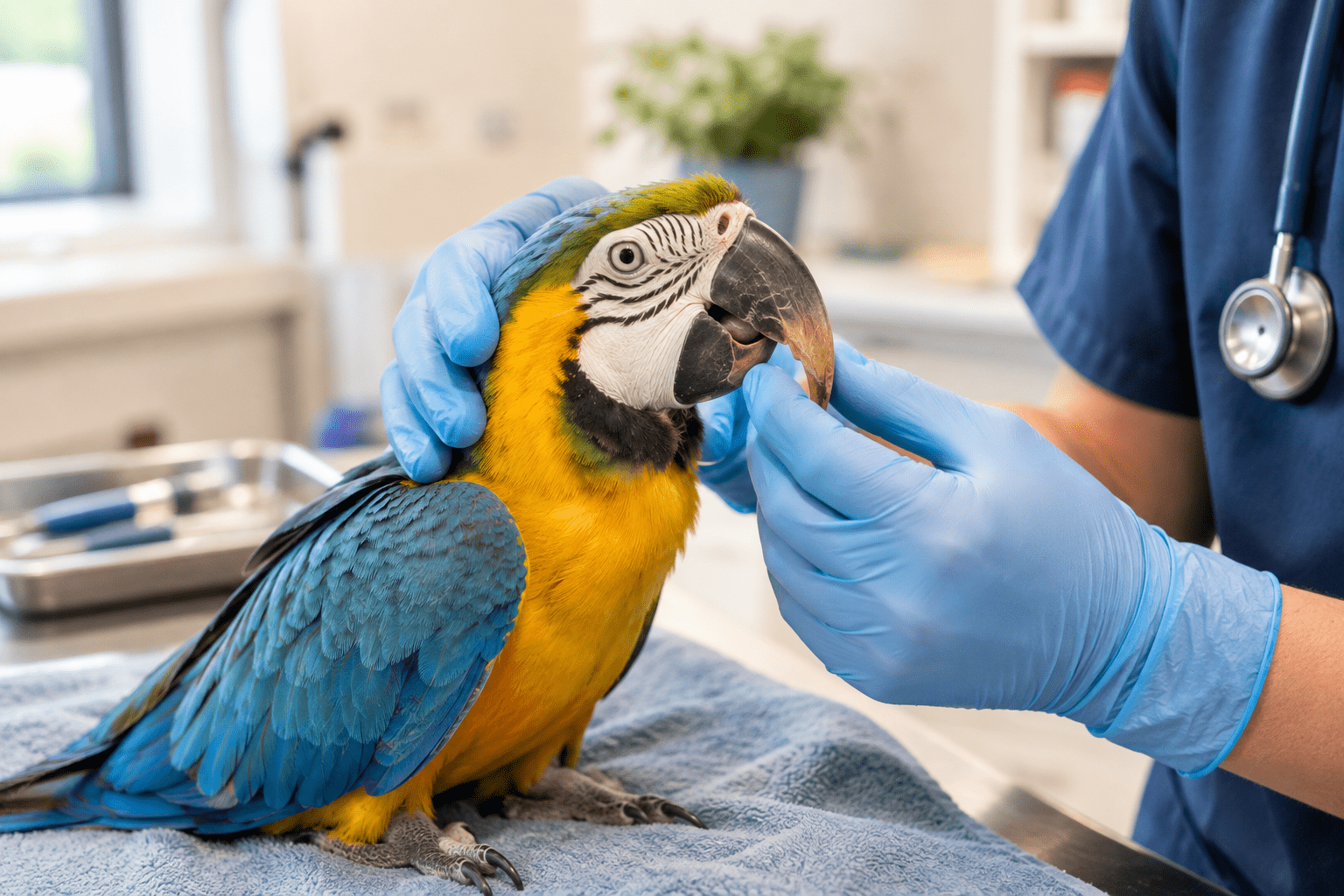
Beak size and curve vary meaningfully across species — a macaw’s substantial hooked beak and a budgie’s small, neat one are both completely normal for their respective birds. Rather than comparing your bird’s beak to a different species’ shape, use reference images specific to your own bird’s breed as your baseline, and treat a genuine change from that baseline — not just an unfamiliar shape — as the signal worth investigating.
Pet Care Tip: When you search for reference photos, look specifically for adult birds of your exact species and, if possible, your bird’s subspecies or color mutation — even close relatives can have meaningfully different beak shapes.
Practical Examples
An owner who worried over a normal macaw beak. The beak’s length and hook looked dramatic compared to smaller birds the owner had previously kept, but a vet visit confirmed it was entirely typical for the species, with no trim needed.
Overgrowth traced back to diet. A bird’s beak had grown visibly uneven over several months; bloodwork pointed to early liver strain linked to a high-fat diet. Dietary changes alongside a couple of vet-guided trims during recovery resolved the underlying issue.
A young bird with a developmental misalignment. A cockatiel chick’s beak didn’t align normally from an early age. Rather than a one-time fix, the vet set up an ongoing care plan, since this kind of issue typically needs periodic management rather than a single trim.
Common Mistakes to Avoid
- Assuming any long-looking beak is automatically overgrown, without checking what’s normal for that species first.
- Attempting to correct real overgrowth with clippers or heavy filing at home. This is the specific scenario every vet source warns against.
- Treating overgrowth as cosmetic instead of investigating why it’s happening.
- Delaying a vet visit because the bird is “still eating okay.” Some underlying causes progress even while a bird seems otherwise fine.
- Skipping the diet and enrichment side of prevention after a vet-corrected trim, which lets the original cause simply cause it again.
Editor’s Insights
- Photograph your bird’s beak periodically. A simple photo record makes it much easier to tell whether something has actually changed versus just catching your attention differently today.
- Ask your vet what caused the overgrowth, not only for the trim — the cause is what determines whether it’s likely to recur.
- Offer a genuine variety of chew-safe textures rather than a single toy, since variety is what supports natural wear.
- If you do lightly file a sharp tip yourself, keep it to a light touch-up only — anything more belongs with a vet.
Which Situation Applies to You?
- Is your bird eating, drinking, and behaving normally with no bleeding or visible injury? → Schedule a routine avian vet visit to check the beak.
- Is there bleeding, an obvious injury, or difficulty eating? → Seek same-day or emergency avian vet care.
- Does the beak look longer but your bird seems completely normal otherwise? → Compare against normal photos for your species first, then book a routine check if you’re still unsure.
When to Act: A Quick Reference
|
Situation |
What it usually means |
What to do |
|
Beak looks long but bird eats and behaves normally |
Possibly normal species variation, or early overgrowth |
Compare to normal species reference photos; schedule a routine vet check if unsure |
|
Beak visibly uneven, flaking, or growing unevenly |
Possible malocclusion, old injury, or nutritional issue |
Routine avian vet visit for diagnosis |
|
Sudden change, bleeding, or bird stops eating |
Possible injury or acute illness |
Same-day or emergency avian vet care |
|
Sharp tip catching on things, beak otherwise healthy |
Normal minor sharpness |
Light filing at home is reasonable, or a quick vet check if unsure |
Checklists
Before You Worry Checklist
- Compare your bird’s beak to reference photos of healthy adults of the same species
- Confirm your bird is eating and preening normally
- Check for any bleeding, swelling, or visible asymmetry
- Note any recent diet or environment changes
When You See the Vet Checklist
- Bring a list of any recent diet changes
- Note how long the beak has looked different
- Mention any other behavior changes (appetite, energy, droppings)
- Ask what likely caused it, not just for the trim itself
Frequently Asked Questions
Why does my bird’s beak look overgrown?
Usually because something is interfering with the beak’s natural wear — common causes include diet-related liver strain, infections, old injuries, genetic issues, or mites. A vet visit identifies the actual cause.
Is it safe to trim my bird’s beak myself?
A full, structural trim isn’t safe to do at home — the beak has a live blood supply, and improper trimming risks bleeding, splitting, or permanent deformity. Lightly filing an already-sharp tip on an otherwise healthy beak is the one exception generally considered reasonable.
What causes a bird’s beak to grow unevenly?
Uneven growth is often linked to an old injury to the beak’s base, a genetic or developmental issue, or an underlying illness affecting overall growth.
How do I know if my bird’s beak length is actually normal for its species?
Compare it to reference photos of healthy adults of your specific species — beak size and curve vary a lot between species, and what looks unusual for one bird may be completely normal for another.
Can diet really affect beak health?
Yes. A diet too high in fat is a common contributor to liver strain, which is one of the more frequent underlying causes of beak overgrowth.
What happens if an overgrown beak isn’t treated?
The underlying cause can progress, and an increasingly overgrown or misshapen beak can eventually interfere with normal eating.
How often do birds need professional beak trims?
A healthy bird typically needs none at all. If your bird needs recurring trims, that’s a sign worth discussing with your vet, since it usually points to an ongoing underlying cause rather than something to just keep trimming around.
Is filing a bird’s beak at home ever okay?
Yes, in one narrow case: lightly softening an already-sharp tip on an otherwise healthy beak. Anything beyond that — correcting real overgrowth or reshaping — should be done by an avian vet.
Related Reading
- Bird Diet and Nutrition Basics
- Choosing the Right Perches and Enrichment for Your Bird
- Recognizing Signs of Illness in Birds
- How to Find and Choose an Avian Vet
Related Reading
- Bird Diet and Nutrition Basics
- Choosing the Right Perches and Enrichment for Your Bird
- Recognizing Signs of Illness in Birds
- How to Find and Choose an Avian Vet
Sources & References
- PetMD, “What to Do if Your Bird’s Beak is Overgrown”
- VCA Animal Hospitals, “Beak and Nail Care in Birds”
- Melbourne Bird Vet, “Abnormal and Overgrown Beaks in Birds”
- Lovebird Care, “Beak Trimming” — cited only for the narrow, bounded light-filing guidance, separate from any structural trim advice
Written and reviewed by the Pets Store Home editorial team. This article is not a substitute for professional veterinary advice — if you’re concerned about your bird’s beak, please consult an avian veterinarian.
Last reviewed: September 2026
Where to Go From Here
Noticing a change in your bird’s beak and looking into it is exactly the right first step — in almost every case, the path forward is a straightforward vet visit rather than anything you need to handle alone. Since diet plays such a large role in beak and overall health, our guide to bird diet and nutrition basics is a good next read, especially if you’re working through an overgrowth issue tied to what your bird’s been eating.
[…] Which foreign pets are legal in Washington State? […]