
Colorful Pet Birds: 8 Beautiful Small Species to Love (2026)
The best colorful pet birds for most US homes are small, captive-bred species: the budgie, cockatiel, lovebird, green-cheeked conure, sun conure, parrotlet, canary and Gouldian finch. They differ a lot in noise, lifespan and how much they like to be handled, so the right choice depends on your home as much as on the colors you love.
Bright feathers are what first catch your eye, but a bird can live for decades. This guide ranks eight beautiful small birds, compares them side by side, and explains the care each one needs, so the bird you bring home is a good match for years to come.
Key takeaways
- Budgies, parrotlets and canaries suit apartments; sun conures can be very loud.
- Small parrots can live 20 years or more, so plan for the long term.
- Canaries and Gouldian finches are beautiful to watch but don’t like being held.
- Buy captive-bred birds only, and have an avian vet check any new bird.
- Seeds alone aren’t a complete diet; pellets plus fresh vegetables work better.
In this guide
Colorful Pet Birds at a Glance
Use this table to compare all eight birds quickly. Lifespans and temperament notes come from the Merck Veterinary Manual’s table of popular pet birds; individual birds vary.
| Bird | Typical colors | Average lifespan | Noise | Hands-on? |
|---|---|---|---|---|
| Budgie | Green, blue, yellow, white | 5–10 years | Low | Yes, when tamed |
| Cockatiel | Gray, white, yellow, orange cheeks | Up to 20 years | Moderate | Yes |
| Lovebird | Green with peach, red or black face | Up to 20 years | Low to moderate | Yes, with work |
| Green-cheeked conure | Green, maroon, blue | Up to 25 years | Relatively quiet | Yes |
| Sun conure | Yellow, orange, green, blue | Up to 30 years | High | Yes |
| Parrotlet | Green, blue, yellow | Up to 20 years | Low | Yes, if tamed young |
| Canary | Yellow, red-orange, white | Up to 15 years | Low (males sing) | No |
| Gouldian finch | Purple, yellow, green, black or red head | About 5–10 years | Low (frequent peeps) | No |

Top 8 Colorful Pet Birds for US Homes
These eight birds are listed from easiest for most first-time owners to most specialized. Together they cover the main types of pet birds kept for their color: small parrots like budgies, cockatiels, lovebirds, conures and parrotlets, and songbirds like canaries and finches. All eight are widely bred in captivity in the US.
1. Budgie (budgerigar)
The budgie is a single species with dozens of color varieties, from classic green and yellow to sky blue, white and violet. Merck notes that budgies are not usually loud, suit apartment living and can learn to talk. With an average lifespan of 5–10 years, they’re a good first bird, especially kept in pairs if you can’t spend hours with them every day.
2. Cockatiel
Cockatiels wear a jaunty crest and bright orange cheek patches, with color mutations such as lutino (yellow-white), pied and pearl. They’re affectionate, whistle well and can live up to 20 years. Merck points out that some rarer color mutations may be more fragile, so ask the breeder about the parents’ health.
3. Lovebird
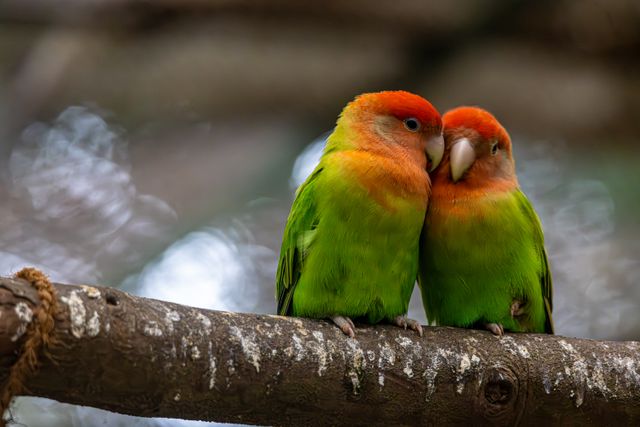
Lovebirds pack a lot of color into a small body: green with a peach, red or black face, plus blue and yellow mutations. Merck describes them as having a sweet, not usually loud voice, but notes they can be moody during breeding season. A single, well-socialized lovebird can bond strongly with its person; a pair will often bond more with each other.
4. Green-cheeked conure
About 10 inches (26 cm) long and 2–3 ounces (60–80 g), according to the World Parrot Trust, the green-cheeked conure is green with a maroon tail and blue wing feathers. Merck calls these birds charming and relatively quiet, and they’re smaller than most cockatiels. They’re playful and cuddly, and can live up to 25 years.
5. Sun conure
Few colorful pet birds are as dazzling as the sun conure, a blaze of yellow and orange with green and blue in the wings. The catch is volume: Merck warns of a piercing voice when screaming, so it isn’t an apartment bird. In the wild, the World Parrot Trust lists the species as Endangered after heavy trapping, so only buy captive-bred birds.
6. Parrotlet
Often called a “pocket parrot,” the parrotlet is one of the smallest parrots kept as a pet. Pacific parrotlets are usually green, with blue, yellow and other color mutations available. Merck notes they’re quiet compared with other parrots and relatively easy to tame when young, but they have big personalities and need daily handling to stay friendly.
7. Canary
Canaries are bred in sunny yellow, red-factor orange and white, and male canaries are prized for their song. They suit most apartments, but Merck notes they don’t enjoy being held and are territorial, so they do best alone or as a mated pair. Think of a canary as a beautiful songbird to enjoy rather than a bird to cuddle.
8. Gouldian finch
The Gouldian finch may be the most colorful of all small pet birds, with a purple chest, yellow belly, green back and black, red or yellow head. Lafeber’s avian experts tag it “hands off” and note it’s sensitive to stress and temperature extremes, so it isn’t recommended for first-time owners. Gouldians do best in a roomy flight cage or aviary.

How to Choose the Right Colorful Pet Bird
There’s no single list of best pet birds for everyone, so pick colorful pet birds for your lifestyle first and their colors second. The Merck Veterinary Manual’s advice on choosing a pet bird boils down to three questions: how much time you have, how much noise your home can take, and how long you can commit.
| If you… | Consider |
|---|---|
| Live in an apartment with close neighbors | Budgie, parrotlet, canary, green-cheeked conure |
| Want a bird to hold and cuddle | Cockatiel, green-cheeked conure, budgie |
| Prefer to watch and listen | Canary, Gouldian finch |
| Have bird experience and a house | Sun conure, lovebird |
| Can only commit for under a decade | Budgie, finch (still 5–10 years) |
Buy captive-bred, then see an avian vet
Merck advises making sure a bird was raised in captivity, not taken from the wild, and having an avian veterinarian examine it before or right after you bring it home. Ask the seller for written health records and a return policy. Bird rescues and humane societies also rehome budgies, cockatiels and conures, which is a good way to adopt an adult bird whose personality you can see first. Still deciding between a bird and another kind of pet? Browse our general pet care guides.
Questions to ask before you bring a bird home
- Was this bird hand-raised and captive-bred?
- How old is it, and what has it been eating?
- Has an avian vet examined it, and can I see the records?
- How loud is this species at dawn and dusk?
- Who will care for it if I travel or move?
Caring for Colorful Pet Birds
Healthy birds keep their bright feathers through good food, a safe home and regular checkups.
- Diet: Merck says seeds shouldn’t make up most of a bird’s diet because they’re high in fat and not very nutritious. Offer a pellet suited to your species, plus small amounts of fresh vegetables and fruit daily and clean water.
- Cage and flight: buy the largest cage you can fit, with bar spacing safe for small birds and room to flap. Finches need horizontal space to fly.
- Daily time: parrots need social time every day; boredom can lead to screaming and feather damage. Our guide to bird feather plucking causes explains what to watch for.
- Checkups: see an avian vet yearly. The Association of Avian Veterinarians runs a find-a-vet directory to help you locate one.
Household dangers for pet birds
Birds’ lungs are extremely sensitive. The University of Illinois College of Veterinary Medicine warns that fumes from overheated nonstick (PTFE) coatings can kill birds, and that avocado, lead and zinc are also toxic. Keep birds out of the kitchen, use ceramic or stainless cookware where you can, and never feed avocado. If your bird has trouble breathing or collapses, go to an emergency vet right away.

Common Mistakes With Colorful Pet Birds
- Choosing by color alone: a stunning sun conure can be too loud for a shared wall.
- Underestimating lifespan: a lovebird or cockatiel can live up to 20 years.
- Feeding only seed: it’s tasty but incomplete.
- Handling hands-off species: canaries and finches don’t enjoy being held.
- Cooking with nonstick pans near the cage: PTFE fumes can be deadly.
- Skipping the vet: birds often hide illness until it’s advanced.
Example Scenario (illustrative): Priya in Portland, Oregon, wanted the most eye-catching bird she’d seen online, a sun conure. Her apartment shared walls on both sides, so she spent an afternoon at a local bird rescue instead. She came home with a pair of blue and yellow budgies, a pellet diet and an appointment with an avian vet, and she swapped her nonstick skillet for stainless steel the same week.
Colorful Pet Birds FAQs
What are the most colorful pet birds?
Among small species, the Gouldian finch, sun conure, lovebird and budgie are some of the most colorful pet birds. Gouldians show purple, yellow and green together, while sun conures are bright yellow and orange.
What is the best colorful bird for a beginner?
The budgie is a strong first choice. It’s small, colorful, usually quiet and easy to care for. Cockatiels and green-cheeked conures are good next steps for owners with more time.
Which small pet birds are the quietest?
Merck describes budgies, parrotlets, canaries and green-cheeked conures as relatively quiet. Finches peep often but softly. Sun conures are among the loudest small parrots.
What is the cutest small bird to keep as a pet?
Cuteness is personal, but parrotlets, budgies and green-cheeked conures are often picked for their tiny size and playful personalities. Choose the one whose noise, lifespan and care fit your home.
Do colorful pet birds talk?
Some do. Merck notes budgies can learn to talk, and cockatiels are known whistlers. Sun conures aren’t known for talking, lovebirds rarely say much, and canaries and finches sing or peep instead.
How long do small pet birds live?
It varies by species. Merck lists 5–10 years for budgies and finches, up to 15 for canaries, up to 20 for cockatiels, lovebirds and parrotlets, and up to 30 for sun conures.
Final Verdict: The Best Colorful Pet Birds
The best colorful pet birds for most beginners are budgies, cockatiels and green-cheeked conures, while canaries and Gouldian finches suit owners who prefer to watch. Sun conures are stunning but loud. Whichever you choose, buy captive-bred, feed pellets and fresh vegetables, keep nonstick fumes away, and plan for a long, happy life together.
Your next steps
- Use the “If you… / Consider” table above to shortlist two species.
- Visit a local bird rescue and find an avian vet before you bring a bird home.
- Browse more bird care guides in our birds section.
Have a colorful bird at home? Share a photo with other pet parents on our Facebook community.
About the author — Written and reviewed by the Pets Store Home Editorial Team: pet owners and animal lovers who check every guide against trusted US veterinary and animal-welfare sources. This article is general information, not a substitute for professional veterinary advice. Always talk to your veterinarian about your own pet’s health.
How we checked this guide: We used the Merck Veterinary Manual’s pet bird guidance, the World Parrot Trust, Lafeber’s avian species profiles, the University of Illinois College of Veterinary Medicine and the Association of Avian Veterinarians. We review this article every 12 months, or sooner if guidance changes.
Last reviewed: October 2026.
Sources
- Merck Veterinary Manual, Popular Pet Birds (table) (accessed October 2026)
- Merck Veterinary Manual, Choosing a Pet Bird (accessed October 2026)
- Merck Veterinary Manual, Feeding a Pet Bird (accessed October 2026)
- World Parrot Trust, Green-cheeked Conure (accessed October 2026)
- World Parrot Trust, Sun Conure Project (accessed October 2026)
- Lafeber, Gouldian Finch Species Profile (accessed October 2026)
- University of Illinois College of Veterinary Medicine, Keep Teflon, Avocado, Lead, and Zinc Away From Pet Birds (accessed October 2026)
- Association of Avian Veterinarians (accessed October 2026)
[…] Which foreign pets are legal in Washington State? […]