
Red Heeler: Australian Cattle Dog Size, Temperament, Health and Care (2026)
What is a red heeler? A red heeler is an Australian Cattle Dog with a red speckled coat. It is the same breed as the blue heeler, just a different color. The AKC lists the breed at 17 to 20 inches and 35 to 50 pounds. Expect a smart, loyal, high-energy herding dog that needs daily exercise and a job.
The red heeler was bred to move cattle across tough Australian country, and it still has the stamina, brains and drive to prove it. It can be a brilliant partner for an active owner, but it is not a casual pet. This guide covers history, looks, red vs blue, temperament, exercise, health, grooming and cost, with each fact linked to its source.
Key takeaways
- Red and blue coats belong to one breed, the Australian Cattle Dog, per PetMD.
- Adults stand 17 to 20 inches and weigh 35 to 50 pounds (AKC).
- Puppies are born white and develop their color later.
- PetMD recommends at least 45 minutes of running or jogging a day.
- Ask breeders about PRA eye testing and BAER hearing tests.
In this guide
What Is a Red Heeler?
“Red heeler” is a nickname, not a separate breed. The AKC breed page describes the Australian Cattle Dog as related to Australia’s wild dingo and notes it is also called the Blue Heeler or Queensland Heeler. PetMD, in a profile by Veronica Higgs, DVM, confirms that blue and red heelers are the same dogs in different colors.
The “heeler” part comes from how these dogs work: an American Kennel Club (AKC) article by Micaela Erickson notes that some instinctively nip at heels to move animals. On paper, it is simply an Australian Cattle Dog in the red color.
History of the Breed
Trupanion says Thomas Hall of New South Wales crossed tamed dingoes with smooth-coated merle collies in the late 1820s, producing “Hall’s Heelers,” and that the AKC recognized the breed in 1980.
Dogz Online dates Hall’s cross to 1840 and adds that later breeders mixed in the Dalmatian and the black-and-tan Kelpie. Sources differ on the exact year, but all agree the breed was built for hard cattle work in Australia.

Red Heeler Size, Coat and Colors
The AKC article lists Australian Cattle Dogs at 17 to 20 inches tall and 35 to 50 pounds, and PetMD gives the same range, noting adults should not exceed 50 pounds or 20 inches. The AKC calls the breed compact and muscular, with a smooth double coat, and notes it was bred to work outdoors herding livestock.
| Trait | Australian Cattle Dog | Source |
|---|---|---|
| Height | 17 to 20 inches | AKC, PetMD |
| Weight | 35 to 50 pounds | AKC, PetMD |
| Lifespan | 12 to 16 years on average | Trupanion |
| Coat | Smooth double coat | AKC |
| Colors | Red speckled or blue (blue-gray) | AKC, PetMD |
| Breed group | Herding | AKC |
| AKC recognition | 1980 | Trupanion |
The Red Speckle Coat
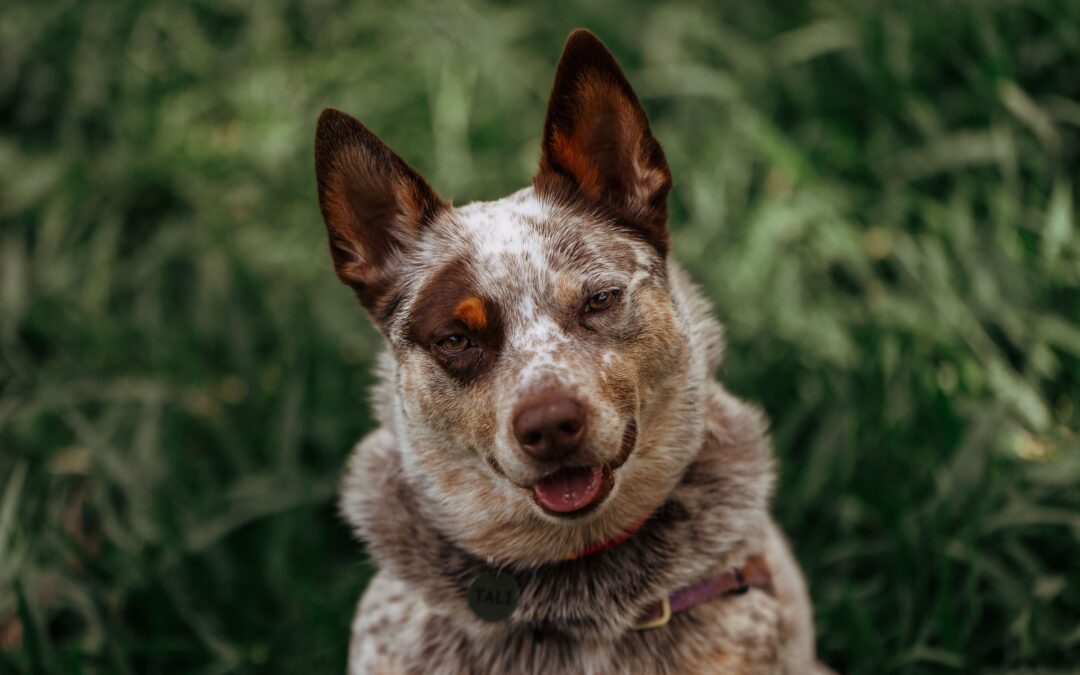
Dogz Online says the red speckle variety should be evenly speckled all over but may have darker red markings on the head. In our experience, many of these dogs also show red patches around one or both eyes and on the ears. The AKC notes that puppies are born white, and Trupanion says the adult color starts to appear at around four weeks.

Red Heeler vs Blue Heeler
The only real difference is color. PetMD states plainly that the two colors are the same breed, and the AKC says adult coats turn blue-gray or red. As general advice, do not choose a red dog expecting a different temperament or size, and do not pay a premium just for the color.
| Feature | Red heeler | Blue heeler |
|---|---|---|
| Breed | Australian Cattle Dog | Australian Cattle Dog |
| Coat color | Red speckled, may have darker red head markings | Blue-gray, sometimes speckled |
| Size | 17 to 20 inches, 35 to 50 pounds | 17 to 20 inches, 35 to 50 pounds |
| Temperament | Same breed traits | Same breed traits |
Sources: AKC, PetMD and Dogz Online.
Like heeler crosses too? Read our guides to the blue heeler and Corgi mix and the blue heeler German Shepherd mix.
Red Heeler Temperament and Personality
PetMD describes Australian Cattle Dogs as highly intelligent and protective dogs that bond strongly to their owner and are curious but wary of strangers. The AKC article adds that they are alert, very loyal and quite independent. In our experience, a red heeler often attaches closely to one person.
Nipping and Herding
PetMD notes that the breed tends to be “mouthy,” nipping or biting, and that training can redirect it. The AKC says herding instincts can lead them to nip at or round up children, so they suit families with older kids. As general advice, give your dog a toy to carry when it gets excited and never punish herding instincts harshly.
Getting Along With Other Pets
The AKC article warns that Australian Cattle Dogs may be aggressive with unfamiliar dogs. As general advice, introduce new dogs slowly on neutral ground, raise a puppy alongside the other pets in your home, and supervise early meetings with cats or small animals, since a strong herding and chase drive can make play too rough.
Training Tips
PetMD calls the breed highly trainable but stubborn, and says it responds best to positive reinforcement. The American Veterinary Society of Animal Behavior (AVSAB) says puppy classes can start at 7 to 8 weeks, after a first set of vaccines. As general advice, start training and socialization early and keep lessons short and varied.
How Much Exercise Does a Cattle Dog Need?
A red heeler needs a lot of activity. PetMD recommends running or jogging for at least 45 minutes daily, plus activities like agility, fetch and frisbee, and says the breed is not well suited to apartments or small yards. The AKC adds that these dogs are happiest when challenged both mentally and physically.

| Activity | Why it helps | Source |
|---|---|---|
| Running or jogging | At least 45 minutes a day | PetMD |
| Agility, fetch, frisbee | Burns energy and builds focus | PetMD; benefit is general advice |
| Herding or farm work | What the breed was built for | PetMD, AKC |
| Puzzle toys and training games | Mental challenge | AKC, general advice |
Pet Care Tip: Our suggestion is to give your heeler a daily “job,” such as finding hidden toys, carrying a backpack on hikes or learning a new trick. In our experience, a herding dog with a purpose is calmer at home.
Active dogs need the right food. See our guide on how to build muscle on a dog with food.
Red Heeler Health and Lifespan
PetMD calls the Australian Cattle Dog a generally healthy, hardy breed, but lists heart conditions, eye defects, deafness and hip dysplasia as concerns. Trupanion puts the average lifespan at 12 to 16 years and notes that Bluey, an Australian Cattle Dog, lived 29 years and five months.
| Health issue | What it is | Source |
|---|---|---|
| Progressive retinal atrophy | Inherited eye disease; night blindness, then vision loss | PetMD, UC Davis |
| Congenital deafness | Inherited; confirmed by BAER test | PetMD, OFA |
| Hip dysplasia | Infrequent, but can cause pain and arthritis | PetMD |
| Heart conditions | Listed as a breed concern | PetMD |
| Elbow dysplasia, hypothyroidism, dental disease | Also listed by an insurer | Trupanion |
A dog may have some, all or none of these.
Health Tests to Ask About
The UC Davis Veterinary Genetics Laboratory says the PRCD form of progressive retinal atrophy usually causes noticeable vision loss by about 4 years of age, and lists the Australian Cattle Dog for testing.
The Orthopedic Foundation for Animals (OFA) says the BAER test is the only accepted way to diagnose congenital deafness, can be done from 35 days of age and only needs doing once. As general advice, ask to see both results for each parent and the puppy’s BAER result.

A lean dog has healthier joints. If your dog needs to slim down, see our guide on how to help your dog lose weight.
When to call a vet right away: As general advice, call your vet or a 24/7 emergency animal hospital if your dog collapses during exercise, pants heavily and will not cool down, has trouble breathing, or suddenly seems unable to see or hear. Book a prompt visit for limping that lasts more than a day.
Red Heeler Grooming and Cost
The AKC says the smooth double coat is low maintenance, needing weekly brushing and occasional baths, but that it sheds heavily twice a year, when brushing every few days helps. PetMD adds that the breed sheds a moderate to high amount and benefits from a professional blowout about twice a year. The AKC also advises regular nail trims.
iHeartDogs estimates Australian Cattle Dog puppies at about $500 to $1,200 depending on the US region, with top bloodlines reaching $2,000 or more, and rescue adoption fees of about $150 to $400. Adopt-a-Pet gives a similar $500 to $1,500 breeder range and about $300 to adopt. Neither lists a different price for red coats.
As general advice, budget for the puppy, a crate, training classes, quality food and yearly vet care, and check breed rescues too. Not sure about a rescue’s mix? A dog DNA test can help.
7 questions to ask a breeder or rescue
- Can I meet the puppy’s mother, and the father if possible?
- Do the parents have PRA (PRCD) DNA results?
- Does the puppy have a BAER hearing test result?
- Have the parents had hip screening?
- How does the dog react to strangers, kids and other dogs?
- How much exercise has the dog been getting?
- Will you take the dog back if it does not work out?
Example Scenario (illustrative)
Jake in Tulsa adopted a two-year-old heeler who nipped at his niece’s ankles in the yard. He started a daily 45-minute run, added fetch and a weekly agility class, and taught a “carry your toy” game for exciting moments. Within weeks, the nipping eased and the dog settled calmly in the evenings.
| Myth | Fact |
|---|---|
| “Reds are a different breed from blues.” | They are the same breed in different colors (PetMD). |
| “A big yard is enough exercise.” | PetMD recommends at least 45 minutes of running daily. |
| “Heelers are born red or blue.” | Puppies are born white (AKC). |
| “Short coats barely shed.” | They shed heavily twice a year (AKC). |
What most owners get wrong
In our experience, many owners give a heeler plenty of running but no brain work. A tired body with a bored mind can still chew, herd and nip. Mix exercise with training, puzzles and short jobs every day.
Red Heeler: FAQs
Is a red heeler the same as an Australian Cattle Dog?
Yes. It is an Australian Cattle Dog in the red speckled color.
What is the difference between a red heeler and a blue heeler?
Only the coat color. PetMD says they are the same breed.
How big do these dogs get?
The AKC and PetMD list 17 to 20 inches and 35 to 50 pounds.
How long do red heelers live?
Trupanion gives an average of 12 to 16 years.
Are red heelers good family dogs?
They can be with active owners and older kids. The AKC notes they may nip at or herd children.
Do heelers shed a lot?
Yes. The AKC says they shed heavily twice a year.
Why are heeler puppies born white?
The AKC notes puppies are born white; Trupanion says color starts to show at about four weeks.
Final Verdict: Is a Red Heeler Right for You?
A red heeler is a loyal, brilliant and tireless dog for an owner who loves the outdoors and has time to train. It needs at least 45 minutes of hard exercise a day, daily brain work and early socialization to manage nipping and wariness of strangers. Ask for eye and hearing test results, and you can enjoy a devoted partner for many years.
Your next steps
- Meet adult Australian Cattle Dogs before you commit.
- Ask for PRA and BAER results.
- Plan daily exercise and a training class.
Share your heeler on the Pets Store Home Facebook page, and find more breed guides in our Dogs section.
About the author: Written and reviewed by the Pets Store Home Editorial Team, pet owners who check every guide against trusted sources.
How we checked this guide: Size, color, temperament, exercise and grooming come from the AKC (Micaela Erickson) and PetMD (Veronica Higgs, DVM). History and lifespan come from Trupanion and Dogz Online, eye testing from UC Davis, hearing tests from the OFA, prices from iHeartDogs and Adopt-a-Pet, and socialization timing from AVSAB.
Where sources differ, such as the year the breed began, we show each one. This guide was written in November 2026 and is reviewed every 12 months.
Last reviewed: November 2026.
Sources (accessed November 7, 2026)
- AKC: Australian Cattle Dog
- AKC: Is the Australian Cattle Dog Right for Your Lifestyle?
- PetMD: Australian Cattle Dog
- Trupanion: A Guide to the Australian Cattle Dog
- Dogz Online: The Australian Cattle Dog
- UC Davis Veterinary Genetics Laboratory: PRA-prcd
- OFA: Congenital Deafness
- iHeartDogs: Cost of an Australian Cattle Dog Puppy by US Region
- Adopt-a-Pet: How Much Do Australian Cattle Dogs Cost?
- AVMA News: Behavior society supports early puppy socialization
[…] Which foreign pets are legal in Washington State? […]