
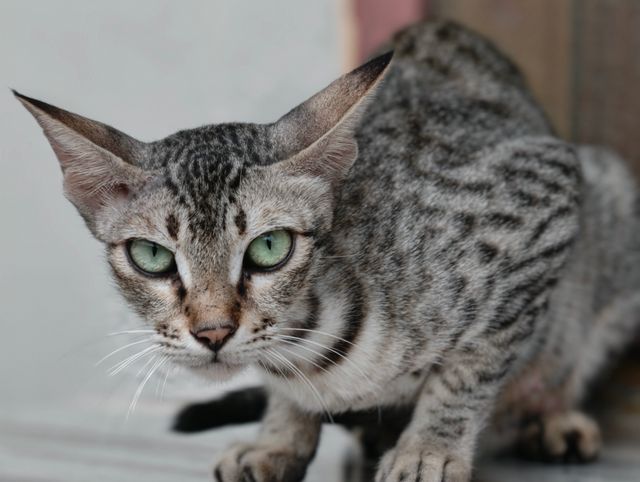
A rusty spotted cat is the tiny wild feline that people search for as a pet, often after seeing a viral video. The short version: you cannot legally or ethically buy one as a pet in the US. It weighs about 2 to 4 pounds, roughly a quarter to a third of a typical house cat, and it is a protected wild species, not a breed.
That answer disappoints a lot of cat lovers, so this guide explains why. You will find a side-by-side size comparison with a house cat, what US and international law says, why “for sale” listings with a price are a warning sign, and the legal spotted cats you can bring home instead.
Scam warning: If you have already sent money to someone selling a wild cat kitten, stop all further payments, contact your bank or card issuer, and report the seller to the Federal Trade Commission at ReportFraud.ftc.gov. Never pay extra “shipping,” “insurance” or “permit” fees to release an animal.
Key takeaways
- The rusty spotted cat is a wild species from India, Nepal and Sri Lanka, not a domestic breed.
- Adults weigh about 2.2 to 4.4 lb (1 to 2 kg); most house cats weigh 8 to 12 lb.
- India’s population is on CITES Appendix I, which bans commercial international trade.
- There is no legitimate US pet price; online listings are very likely scams or illegal trade.
- Spotted domestic breeds such as the Egyptian Mau and Ocicat give a wild look without a wild animal.
In this guide
Rusty Spotted Cat: The Short Answer
The rusty spotted cat (Prionailurus rubiginosus) is often called the world’s smallest wild cat. According to the IUCN Species Survival Commission’s Cat Specialist Group, it lives only in India, Nepal and Sri Lanka and is listed as Near Threatened on the IUCN Red List. No pet trade exists for it in the United States, and no reputable breeder sells one.
So if you hoped to keep one as a pet, the realistic options are to admire one at a zoo, support conservation work, or choose a domestic cat with a similar spotted coat.
What Is a Rusty Spotted Cat?
It is a small, nocturnal hunter with a grayish to reddish-brown coat, rows of rust-colored spots and a fairly short tail. The Cat Specialist Group notes that it lives in moist and dry forests, scrub, grassland and rocky areas, and can turn up near farms and villages. It mainly hunts rodents and birds, and also takes insects, lizards and frogs.
In other words, it looks like a kitten but lives like a miniature leopard. Every instinct it has is tuned for life in the wild, not on a sofa.

Rusty Spotted Cat Size Comparison to a House Cat
Size is the reason most people fall for this species. The Cat Specialist Group gives an adult head-and-body length of 35 to 48 cm and a weight of 1 to 2 kg. PetMD, in an article written and reviewed by veterinarians, puts the average house cat at 8 to 12 pounds. Here is how they line up in US units:
| Measure | Rusty spotted cat | Typical house cat |
|---|---|---|
| Adult weight | 2.2 to 4.4 lb (1 to 2 kg) | 8 to 12 lb (3.6 to 5.4 kg) |
| Head and body length | About 14 to 19 in (35 to 48 cm) | Varies by breed |
| Tail length | About 8 to 10 in (20 to 25 cm) | Varies by breed |
| Lifespan | Up to 18 years | Often mid-teens with good care |
| Litter size | 1 to 3 kittens | Varies |
| Daily life | Nocturnal, solitary hunter | Domesticated companion |
Wild-cat figures are from the Cat Specialist Group; house cat weight is from PetMD. House cat lifespan varies widely, so treat that row as a rough guide.
How Small Is It, Really?
Picture a healthy 10-pound house cat. A 3-pound rusty-spotted cat is about a third of that, closer to the weight of a young domestic kitten than a grown cat. Newborns are tinier still: zoo-reporting site ZooBorns noted that kittens of this species typically weigh just 2.0 to 2.7 ounces at birth, when it covered the Berlin Zoo’s first births of the species in 168 years.
That small frame fools people. Adults are fully grown wild predators with sharp claws and teeth, fast reflexes and a strong drive to hunt at night. For a deeper look at measurements, read our guide to how big a rusty-spotted cat gets.

Rusty Spotted Cat Pet for Sale: Is It Legal?
Searching “rusty spotted cat pet for sale” leads into a legal maze. Three layers of rules matter for a US buyer.
1. International trade. The Cat Specialist Group reports that India’s population is listed in CITES Appendix I, while the Nepal and Sri Lanka populations are in Appendix II. For Appendix I species, CITES prohibits international trade except when the import is not commercial, such as approved research. A pet sale is commercial. In the US, the Fish and Wildlife Service carries out CITES under the authority of the Endangered Species Act.
2. Federal wildlife law. The Lacey Act prohibits buying, selling or transporting wildlife that was taken, possessed or sold in violation of the law. An animal smuggled out of its home country can put the buyer at legal risk too, because the law covers receiving and purchasing as well as selling.
3. State and local rules. The federal Big Cat Public Safety Act covers lions, tigers, leopards, snow leopards, clouded leopards, jaguars, cheetahs and cougars, according to the US Fish and Wildlife Service. Small wild cats are left to state, county and city law, which ranges from outright bans to permit systems. Check with your state wildlife agency before assuming anything.
Why This Wild Cat Is Not a Good Pet
Legality aside, US veterinary groups are clear. The American Animal Hospital Association opposes keeping wild animals as pets and names wild carnivores among inherently dangerous animals. The AVMA asks anyone caring for exotic species to learn their husbandry and welfare needs and never release them. For this cat, those needs include:
- A night-time schedule and a strong instinct to hunt live prey.
- A diet built around whole prey such as rodents and birds.
- Secure, enriched enclosures rather than open rooms.
- A vet with exotic-feline experience, which few areas have.
- A commitment of up to 18 years.
Rusty Spotted Cat Price: Why Listings Are a Red Flag
There is no legitimate pet price for this species in the US, because there is no legal pet supply. Any website, social account or classified ad quoting a price is, in practice, a scam or an illegal wildlife sale. The Federal Trade Commission warns that pet scammers vanish once you pay and often use stock or stolen photos.
| Red flag in a listing | What it usually means |
|---|---|
| Payment by gift card, wire transfer or crypto | The FTC says no legitimate seller requires these |
| Seller refuses a video call or visit | The animal likely doesn’t exist |
| “CITES papers included” for a pet sale | Appendix I rules do not allow commercial trade |
| Surprise fees for shipping, crates or permits | Often a tactic to pull more money from you |
| Photos that appear on other websites | Run a reverse image search before anything else |
Legal Alternatives to a Rusty Spotted Cat
If this little wild cat caught your eye because of the spotted coat and wild look, several fully domestic options deliver that style legally:
- Egyptian Mau: The Cat Fanciers’ Association describes it as the only natural domesticated breed of spotted cat, devoted to its people and often reserved with strangers.
- Ocicat: bred to look like a spotted wild cat, yet the CFA calls it a 100% domestic breed that tends to welcome visitors.
- A spotted or tabby shelter cat: many mixed-breed cats have bold spots or stripes and need homes now. Our cat care guides can help you prepare.
Before choosing any pedigree breed, meet the cattery in person, ask about health testing and expect a long-term commitment. If you love small, cuddly animals in general, see our list of small pets that enjoy cuddling.
How to Help Wild Rusty-Spotted Cats Instead
- Share sightings and photos only from reputable wildlife sources, not sales pages.
- Report suspicious wildlife ads to the platform and to ReportFraud.ftc.gov.
- Support conservation groups and accredited zoos that work on small wild cats.
Common Mistakes People Make
- Thinking “small” means “safe”: a 3-pound wild predator still bites, scratches and stresses easily.
- Trusting “captive-bred” claims: without verifiable permits, the label proves nothing.
- Paying a deposit to hold a kitten: this is the classic opening move of a pet scam.
- Assuming federal law is the only test: state and city rules often apply too.
Example Scenario (illustrative): Marcus in Phoenix, Arizona, found an online ad for a “rusty spotted cat” kitten with a $3,000 price and “CITES papers.” The seller wanted a gift card deposit and refused a video call. Marcus ran a reverse image search, found the photo on a zoo news site, reported the ad and adopted a spotted tabby from a local shelter instead.
Rusty Spotted Cat FAQs
Can you own a rusty spotted cat in the US?
In practice, no. Commercial international trade in India’s population is banned under CITES Appendix I, federal law penalizes illegally traded wildlife, and many states restrict wild cats. There is no legal pet supply.
How much does a rusty-spotted kitten cost?
There is no legitimate price for a pet. Any listing asking for money is very likely a scam or illegal wildlife trade, so do not pay a deposit or fees.
How big is a rusty spotted cat compared to a house cat?
An adult weighs about 2.2 to 4.4 pounds, while most house cats weigh 8 to 12 pounds. That makes it roughly a quarter to a third the weight of a typical pet cat.
Is the rusty-spotted cat the smallest cat in the world?
It is widely described as the world’s smallest wild cat, and an adult weighs only a fraction of a typical domestic cat.
How long does a rusty-spotted cat live?
The IUCN Cat Specialist Group gives a lifespan of up to 18 years, which is one more reason it is a huge commitment that no pet owner should take on.
Is the rusty-spotted cat endangered?
It is listed as Near Threatened on the IUCN Red List and as Endangered on Sri Lanka’s national red list, according to the Cat Specialist Group.
Where can I see a rusty-spotted cat in captivity?
Only a few zoos display this species. Berlin Zoo, for example, celebrated its first births in 168 years in 2012. Visiting an accredited zoo, or watching footage from one, is the responsible way to enjoy these cats up close.
Final Verdict: Rusty Spotted Cat as a Pet
The rusty spotted cat is a remarkable, tiny wild feline that weighs about a third of a house cat, but it is not a pet and has no legal US price. Treat any “for sale” listing as a scam or illegal trade. For the same spotted look, adopt a shelter cat or choose a domestic breed like the Egyptian Mau or Ocicat.
Your next steps
- Report any wild cat sales ad you have seen to the platform and to ReportFraud.ftc.gov.
- Check your local shelter for a spotted or tabby cat that needs a home.
- Read our guide to cuddly exotic pets before considering any unusual animal.
Love small wild cats? Share sightings and questions with other pet parents on our Facebook community.
About the author — Written and reviewed by the Pets Store Home Editorial Team: pet owners and animal lovers who check every guide against trusted US veterinary and animal-welfare sources. This article is general information, not a substitute for professional veterinary or legal advice. Always check your state and local wildlife rules.
How we checked this guide: We used the IUCN SSC Cat Specialist Group species profile, CITES, the US Fish and Wildlife Service, the Federal Trade Commission, the American Animal Hospital Association, the AVMA, the Cat Fanciers’ Association and PetMD. We review this article every 12 months, or sooner if guidance changes.
Last reviewed: October 2026.
Sources
- IUCN SSC Cat Specialist Group, Rusty-spotted Cat (accessed October 2026)
- CITES, The CITES Appendices (accessed October 2026)
- US Fish and Wildlife Service, Lacey Act (accessed October 2026)
- US Fish and Wildlife Service, Big Cat Public Safety Act (accessed October 2026)
- US Fish and Wildlife Service, CITES (accessed October 2026)
- Federal Trade Commission, Get a Dog or Cat Instead of a Scam (accessed October 2026)
- AAHA, Dangerous Animal Legislation Position Statement (accessed October 2026)
- AVMA, Ownership of Wild and Exotic Pet Species Policy (accessed October 2026)
- PetMD, Average Cat Weight (accessed October 2026)
- Cat Fanciers’ Association, Egyptian Mau and Ocicat (accessed October 2026)
- ZooBorns, First Rusty-Spotted Cats in 168 Years at the Berlin Zoo (accessed October 2026)
[…] Which foreign pets are legal in Washington State? […]