
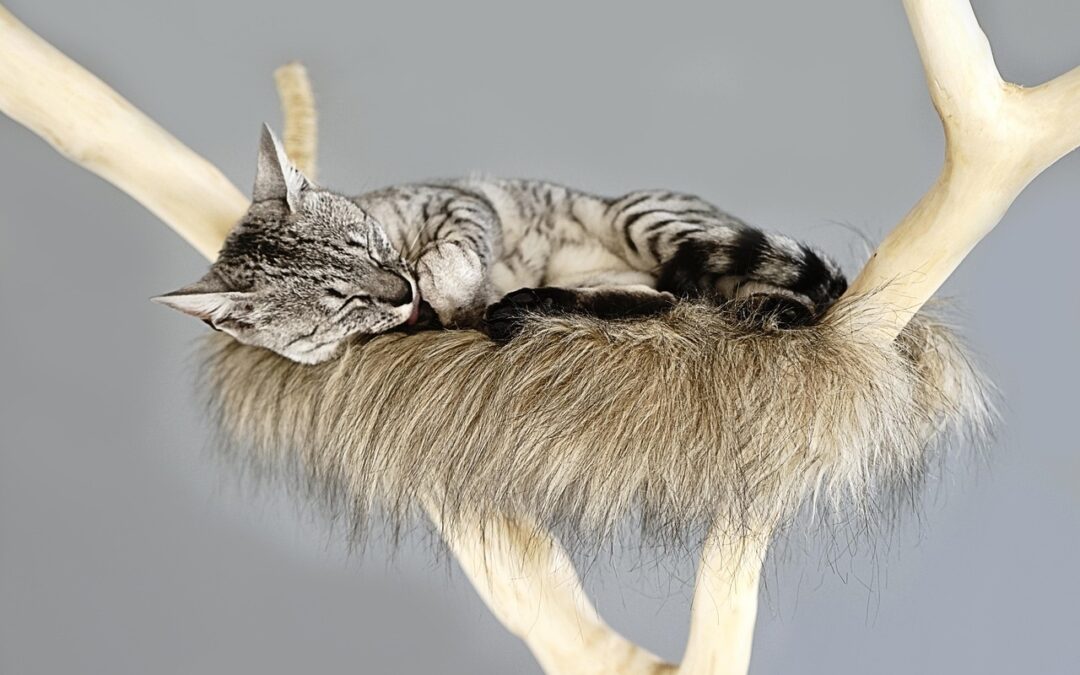
Scratching isn’t bad behavior from a cat’s point of view. It’s grooming, marking, and stretching all rolled into one instinctive act, and no amount of scolding is going to talk a cat out of doing it. The good news is that you don’t need to stop the scratching itself, just redirect where it happens. Cats that shred the sofa arm aren’t being spiteful or untrainable; they’re usually just doing the only scratching option available to them in a spot that happens to feel good and smell like the rest of the household.
This guide covers why cats scratch in the first place, how to set up scratching posts they’ll actually use, and the specific steps for protecting furniture while your cat makes the switch. None of it involves punishment, and most households see a real change within a few weeks of applying it consistently.
Quick Answer: Cats scratch furniture because it’s the most available, stable surface, not out of spite. Fix it by placing a tall, sturdy scratching post directly next to the targeted furniture, making the post appealing with catnip, and temporarily covering the furniture with a texture cats dislike. Never punish scratching — redirect it instead.
Key Takeaways
- Scratching is instinctive grooming, stretching, and marking behavior — it can’t be trained away, only redirected.
- Post material and placement matter most: sisal or cardboard, positioned right where the cat already scratches.
- A wobbly or short post gets ignored; choose one at least 28 to 32 inches tall that feels stable under weight.
- Temporarily cover furniture with foil, a plastic runner, or double-sided tape while the new post gets established.
- Most cats switch to an appropriate post within two to four weeks of consistent redirection.
Why Trust This Guide?
This guide is written and researched by the Pets Store Home editorial team. We cross-check our behavior guidance against established feline behavior sources, and this article is reviewed periodically to keep it accurate and current. It’s intended as general information; a certified cat behaviorist can help if scratching persists despite consistent redirection.
Why Cats Scratch in the First Place
Scratching serves several purposes for a cat, none of which have anything to do with your furniture personally. It removes the dead outer layer of their claw sheaths, keeping the claw underneath sharp and healthy. It stretches the muscles in their shoulders, back, and legs, similar to how a person might stretch before exercise. And it deposits scent from glands in their paw pads, marking territory in a way that’s largely invisible and odorless to humans but very meaningful to cats.
Because scratching is instinctive rather than a behavior problem, the goal isn’t elimination, it’s redirection. A cat that has a scratching post it genuinely likes, placed somewhere it actually wants to scratch, will almost always choose that post over the sofa once the setup is right.
Why Cats Choose Furniture Over a Scratching Post
Most furniture-scratching comes down to one of a few common mismatches: the scratching post is in the wrong location, made of the wrong material, the wrong height or angle, or too wobbly to feel stable. Cats want to scratch somewhere central to their territory, not tucked away in a spare room they rarely visit, and if a post wobbles or tips when they use it, they’ll quickly decide it’s not worth the effort and go back to the stable, sturdy arm of the couch instead.
Choosing the Right Scratching Post
Material matters more than most owners expect. Sisal rope or sisal fabric tends to be the most universally popular material among cats, offering a satisfying texture that shreds in a way carpet-covered posts don’t. Cardboard scratchers are also popular, particularly for cats who prefer horizontal scratching. Carpet-covered posts can work, but some cats generalize the texture to household carpet and start scratching the floor instead.
Height and stability are non-negotiable. A vertical post should be tall enough for your cat to fully extend its body while scratching, generally at least 28 to 32 inches, and it needs to be heavy or well-anchored enough that it doesn’t wobble or tip during use. A post that moves under a cat’s weight will usually be abandoned within days.
Offer both vertical and horizontal options. Some cats strongly prefer scratching on an angle or flat on the ground rather than standing up on a vertical post. A cardboard scratcher pad on the floor, alongside a vertical post, covers both preferences until you learn which your cat favors.
Placement: The Single Biggest Factor
Location matters more than any other variable in whether a cat adopts a scratching post. Put new posts in the exact spots your cat has already been scratching, or as close to them as possible, rather than in a low-traffic corner or spare room. Cats also like to scratch first thing after waking up, so a post near a favorite sleeping spot tends to get used heavily. Once the post has been established as a habit for several weeks, it can sometimes be gradually moved a few inches at a time to a more convenient location, but don’t attempt this in the first month.
Step-by-Step: Redirecting an Established Furniture Scratcher
Step 1: Place a post directly next to the furniture being scratched. Put it as close as physically possible to the exact spot, even if that means an odd-looking arrangement for a few weeks.
Step 2: Make the post irresistible. Rub a small amount of catnip or silvervine into the post’s texture, or use a cat-safe scratching spray designed to attract cats to the material.
Step 3: Make the furniture temporarily unappealing. Cover the previously scratched area with a smooth, slippery material like a plastic carpet runner (nub-side up), aluminum foil, or double-sided tape designed for this purpose. Cats generally dislike the texture and will avoid it.
Step 4: Reward use of the post immediately. Any time you see your cat sniffing, pawing at, or scratching the new post, offer a treat or calm praise right away. Timing matters; the reward needs to happen within a couple of seconds of the behavior to connect in the cat’s mind.
Step 5: Never punish scratching on furniture. Yelling, spraying with water, or any other punishment-based approach tends to make cats anxious and secretive rather than teaching them where to scratch instead. It can also damage trust between you and your cat without solving the underlying behavior.
Step 6: Gradually remove the deterrent. Once your cat is consistently using the new post for a couple of weeks, the furniture deterrent can usually be removed, though many owners find it easier to just leave a thin strip in place indefinitely as insurance.
Using Positive Reinforcement Effectively
Cats respond far better to reward-based training than correction-based training, and scratching redirection is a good example of why. Keep a small container of treats near the new scratching post for the first few weeks and reward generously any time the post gets used, even briefly. Play sessions that end near the post, using a wand toy to draw the cat toward the post and encourage a scratch at the end of play, can also help build a positive association quickly.
Trimming Claws to Reduce Damage
Regular claw trimming, roughly every two to three weeks, blunts the sharp tip of the claw and significantly reduces the damage done by any incidental scratching that does happen on furniture. It’s not a substitute for providing appropriate scratching outlets, but it’s a useful piece of the overall approach, especially during the transition period while a cat is still learning where to scratch.
Most cats tolerate trims better when introduced gradually, starting with simply handling and pressing on the paws to get them used to the sensation before ever bringing out clippers, then trimming one or two claws at a time rather than attempting all of them in a single session with a cat that isn’t used to the process.
Nail Caps and Other Alternatives
Soft vinyl nail caps, applied over trimmed claws with pet-safe adhesive, are an option some owners use to reduce scratching damage, particularly for indoor cats in households with valuable furniture. They typically need reapplication every four to six weeks as claws grow and caps shed naturally. They’re not a substitute for a scratching post, since a cat still needs the physical and behavioral outlet of scratching, but they can reduce damage during the redirection process.
Multi-Cat Households
In homes with more than one cat, provide more scratching posts than you think you need, ideally one per cat plus at least one extra, spread across different rooms rather than clustered in one spot. Cats can be possessive about scratching posts the same way they can about litter boxes or food bowls, and a shortage of options often shows up as furniture damage even when a post technically exists somewhere in the house.
Comparing Common Scratching Post Types
Sisal rope posts hold up well over time and give a satisfying resistance most cats respond to strongly, though they’re often pricier than other options and can loosen at the base if not well constructed.
Sisal fabric (woven) posts offer a similar texture with a smoother finish, and tend to shred less messily than rope, though some cats show a mild preference for one over the other.
Cardboard scratchers are inexpensive, replaceable, and popular with cats who like horizontal or angled scratching, but they wear out faster and need periodic replacement, usually every few months with regular use.
Carpet-covered posts are common in big-box pet stores and can work fine for some cats, but because the texture closely matches household carpet, they carry a higher risk of a cat generalizing the habit to the floor itself.
Wood or bark-covered posts mimic the texture of a tree and appeal to cats with a strong preference for natural surfaces, particularly useful for cats that show interest in scratching outdoor structures like fence posts or decking when given the chance.
Signs a Cat Has Genuinely Adopted a New Post
A few reliable signs indicate a scratching post redirection is working: visible shredding or fraying on the new post within the first week or two, the cat rubbing its cheeks or body against the post (a scent-marking behavior separate from scratching itself), reduced or stalled damage to the previously targeted furniture, and the cat returning to the post repeatedly over several days rather than a single one-off use. If none of these signs appear after two to three weeks, it’s usually a signal to reassess placement, material, or stability rather than simply waiting longer.
Do Indoor-Outdoor Cats Scratch Furniture Less?
Cats with regular outdoor access often have more natural scratching outlets available, like tree bark and fence posts, and some owners find this reduces indoor furniture damage somewhat. That said, outdoor access doesn’t eliminate the need for indoor scratching options, since cats still want to mark and stretch inside the home regardless of what’s available outside, and many indoor-outdoor cats scratch both environments without one substituting for the other.
Cost Considerations
Scratching posts range widely in price, from a few pounds or dollars for a basic cardboard scratcher to well over a hundred for a large, multi-level cat tree. In general, spending a bit more on a genuinely stable, tall vertical post pays off compared to repeatedly replacing cheaper posts a cat has rejected for wobbling or tipping. A single well-chosen post is almost always a better investment than several poorly matched ones bought in an attempt to find the right fit through trial and error.
When Scratching Increases Suddenly
Beyond the redirection steps above, it’s worth tracking when and how often increased scratching happens. Keeping a brief note of the time of day, what happened just before, and which surfaces are targeted can help identify a pattern, whether that’s a stress trigger, a specific texture preference, or simply a post that needs to be moved closer to a favored spot.
A cat that suddenly starts scratching more than usual, especially if it’s paired with other behavior changes, is sometimes signaling stress rather than simply needing a better post. Common triggers include a new pet or person in the household, a recent move, changes to the litter box setup, or conflict with another cat in a multi-cat home. If increased scratching appears alongside other signs like hiding, changes in appetite, or new litter box issues, it’s worth considering environmental stress as a contributing factor alongside the physical redirection steps.
Cat Trees and Vertical Territory
A cat tree that combines scratching posts with perches and hiding spots offers scratching outlets alongside other behavioral benefits, giving a cat vertical territory to survey its environment from, which many cats find inherently calming. For households dealing with persistent furniture scratching, investing in a taller, multi-level cat tree placed in a central living area often outperforms a single freestanding post, simply because it becomes a genuine hub of activity rather than an isolated object.
How Long Redirection Usually Takes
Most cats shift their scratching habits to an appropriately placed, appropriately textured post within two to four weeks of consistent redirection. Kittens tend to adapt fastest, since they haven’t built up months or years of habit around a particular piece of furniture. Older cats with a long-established scratching spot can take longer, sometimes six to eight weeks, but the process almost always works with enough consistency.
When to Talk to a Vet or Behaviorist
If furniture scratching is paired with visible changes to the claws or paws, excessive licking or biting at the feet, or if the redirection steps above haven’t produced any improvement after two months of consistent effort, it’s worth ruling out a medical cause or bringing in a certified cat behaviorist for a more tailored plan.
Related Reading
Frequently Asked Questions
Should I declaw my cat instead of dealing with scratching?
Declawing is a major surgical procedure that removes part of the toe bone, not just the nail, and is discouraged or banned in many places due to long-term pain and behavioral side effects. Redirection is a far safer and more effective solution.
Why does my cat scratch right after waking up?
It’s a natural stretching behavior, similar to a person stretching after a nap. A post placed near a favorite sleeping spot takes advantage of this habit.
Will trimming claws stop scratching completely?
No. Trimming reduces damage but doesn’t remove the instinct to scratch. A cat still needs an appropriate outlet for the behavior itself.
Is catnip necessary for a scratching post to work?
No, but it can speed up adoption of a new post, especially for cats who are hesitant to try something unfamiliar.
Can double-sided tape damage furniture?
Products designed specifically for this purpose are generally safe on most upholstery, but it’s worth testing on a small hidden area first, particularly on delicate fabrics or finishes.
How many scratching posts does one cat actually need?
A single cat typically does well with two or three posts placed in different rooms, especially near sleeping areas and main living spaces.
Final Thoughts
Furniture scratching almost always has a practical fix rather than a behavioral one that requires retraining a cat’s instincts. The right post, in the right place, with the right texture, redirects the behavior naturally in most households within a few weeks. Combine that with regular claw trims and a temporary deterrent on the furniture itself, and the vast majority of cats make the switch without any punishment or ongoing conflict between cat and owner.
[…] Which foreign pets are legal in Washington State? […]