
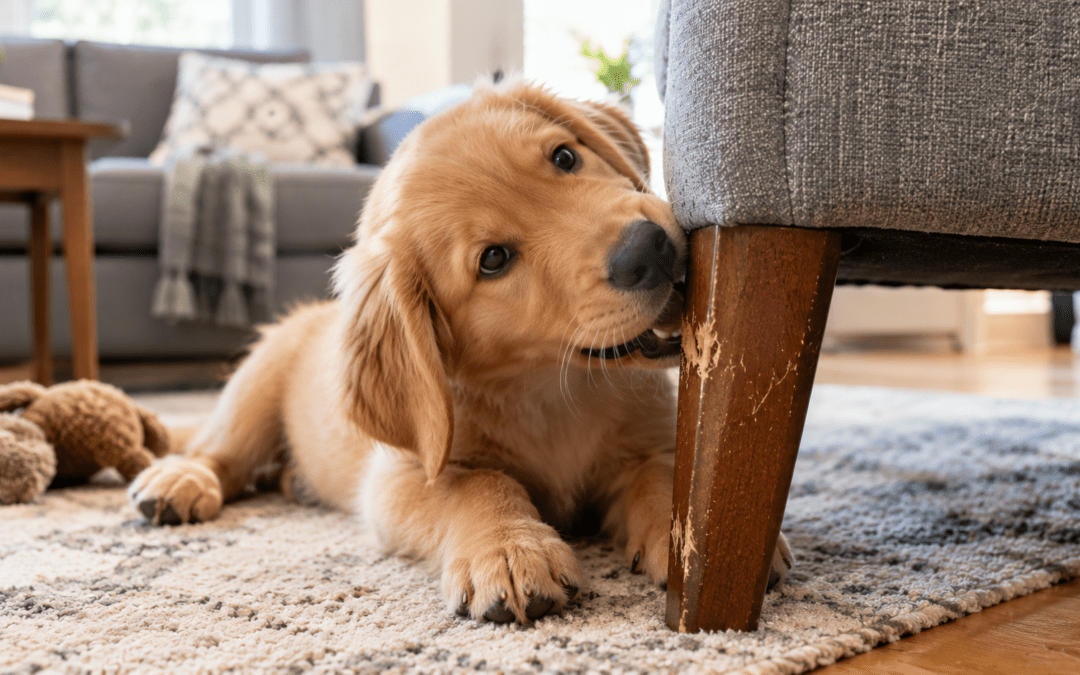
How to Stop a Puppy From Biting Furniture
Furniture chewing isn’t really one problem — it’s teething, boredom, separation anxiety, or dental pain, all wearing the same disguise. The fix that works for a 4-month-old puppy losing baby teeth is not the fix that works for a bored adolescent, and neither of those is the fix for a dog with separation anxiety. Most advice treats furniture chewing as a single issue with one universal answer (more toys, a bitter spray), which is why so many owners try “everything” and still don’t see results.
This guide gives you the real, age-specific teething timeline from AKC, a straightforward way to tell teething apart from boredom or anxiety using ASPCA’s own diagnostic distinction, and the parts most guides skip entirely — crate management done properly, furniture-specific protection, and when chewing behavior actually needs a vet rather than another toy.
Quick Answer: Redirect, don’t punish — the moment you catch your puppy chewing furniture, calmly remove them from it and offer an appropriate chew item instead. Manage unsupervised time with a crate or gated area during the peak teething window (roughly 12–24 weeks, per AKC’s timeline). If the chewing happens only when your puppy is left alone, per ASPCA’s guidance that’s a sign of separation anxiety rather than ordinary teething or boredom, and needs a different approach.
Key Takeaways
- Furniture chewing has distinct causes — teething, boredom, separation anxiety, dental pain, and occasionally pica — and each needs a different fix, not one universal tactic.
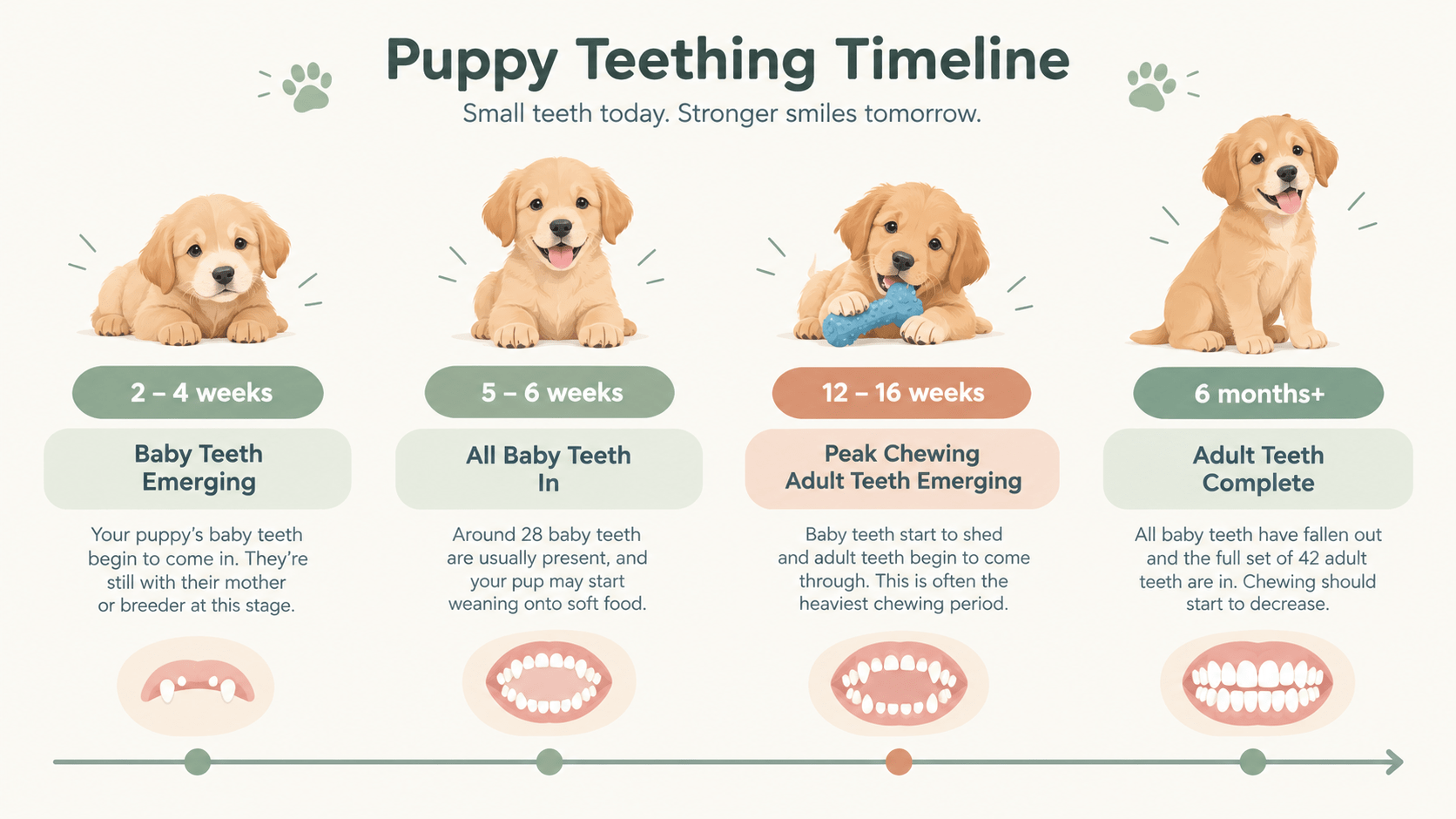
- AKC’s teething timeline is specific: baby teeth finish coming in by 5–6 weeks, shedding and adult-teeth eruption run roughly 12–16 weeks onward, and all 42 adult teeth are typically in by 6 months.
- ASPCA’s key diagnostic distinction: chewing that happens only when your dog is alone points to separation anxiety; chewing that happens whether you’re home or not is ordinary developmental chewing or boredom.
- Deterrent sprays work best as one tool among several, not a standalone fix — ASPCA recommends daily application for 2–4 weeks alongside redirection and management.
- Chewing non-food items specifically (not wood or toys) can signal pica, which AKC notes may have a nutritional or medical cause and warrants a vet visit.
In this guide: Why puppies actually chew furniture · The real teething timeline · Teething vs. boredom vs. anxiety vs. pain · Redirect instead of punish · Matching toys to stage and breed · Crate and space management · Furniture-specific protection · Exercise and enrichment · When to see a vet or trainer · Comparison table · Checklists · FAQ
Why Puppies Actually Chew Furniture
There are several distinct drivers behind furniture chewing, and treating them as one problem is the most common reason fixes don’t stick:
- Teething discomfort — the dominant cause in puppies under 6–7 months, as baby teeth loosen and adult teeth push through.
- Boredom or excess energy — chewing that happens regardless of whether you’re home, often in dogs past the peak teething window.
- Separation anxiety — chewing (and often other signs like whining, pacing, or accidents) that occurs specifically when the dog is left alone, per ASPCA.
- Dental or oral pain — a newer or sudden chewing habit in an adult dog can signal a dental problem rather than a behavioral one.
- Pica — AKC defines this as repeated consumption of non-food items, which can have medical roots including nutritional deficiency, anemia, or parasites, alongside behavioral causes like boredom or compulsive disorder.
The Real Teething Timeline, Stage by Stage
Most advice says “puppies teethe for a few months” without specifics. AKC’s actual timeline is more useful for planning:
- Weeks 2–4: Baby teeth begin emerging (your puppy is still with its mother/breeder at this stage).
- Weeks 5–6: All baby teeth — around 28 of them — have typically come in, and breeders begin weaning onto soft food.
- Weeks 12–16: This usually overlaps with when a puppy comes home with a new owner. Baby teeth start shedding and adult teeth emerge — this is generally the heaviest chewing window, and you may find small, rice-sized teeth around the house.
- 6 months and older: All baby teeth should have fallen out and the full set of roughly 42 adult teeth should be in. If any baby teeth remain past this point, a vet may need to remove them.
Pet Care Tip: The 12–16 week window is when chew-toy needs change fastest — a toy your puppy happily gnawed at 10 weeks may be too soft to matter by 15 weeks as adult teeth come in with more force.
Is It Teething, Boredom, Anxiety, or Pain?
ASPCA’s guidance offers a genuinely useful diagnostic shortcut: does the chewing happen only when your dog is alone, or does it happen whether you’re home or not?
- Happens whether you’re home or away, and your puppy is under ~7 months: almost certainly ordinary developmental chewing — teething or general puppy exploration.
- Happens whether you’re home or away, in an older puppy or adult dog: more likely boredom or insufficient exercise/mental stimulation.
- Happens specifically, or most intensely, when your dog is left alone, often alongside whining, pacing, drooling, or accidents: ASPCA identifies this pattern as characteristic of separation anxiety, not ordinary chewing.
- Sudden new chewing habit in an adult dog, especially paired with bad breath, drooling, or favoring one side of the mouth: possible dental pain — see a vet before assuming it’s behavioral.
- Chewing/eating non-food items specifically (fabric, plastic, drywall, dirt) rather than wood or toys: AKC flags this pattern as possible pica, which can have a medical cause and merits veterinary evaluation.
Redirect, Don’t Punish
Punishing furniture chewing after the fact doesn’t work, because your puppy can’t connect a delayed correction to something they did minutes ago — they just learn that you’re unpredictable. ASPCA’s recommended approach is simpler and more effective: say a calm interrupt word, remove your puppy from the item, and immediately hand them something they CAN chew, praising them once they take it.
Pet Care Tip: The swap has to be immediate — if there’s a gap between removing the furniture item and offering the toy, you lose the association your puppy needs to make.
Matching Chew Toys to Stage — and to Your Puppy’s Breed
Early teething (12–16 weeks) calls for softer rubber or rope toys that don’t hurt sore gums; as adult teeth finish coming in past 4–5 months, firmer rubber or frozen options hold up better to a stronger bite. Breed also matters more than most guides acknowledge: dogs bred for retrieving, high drive, or working roles (Labradors, terriers, herding breeds) are often more mouth-driven by temperament and typically need more frequent toy rotation and tougher, more engaging chew options — not just “a toy,” but enough variety to hold their interest.
A quick safety note: size toys to avoid choking risk, supervise anything like rawhide, and don’t assume a “durable” label on packaging matches your specific puppy’s chewing strength.
Crate and Space Management
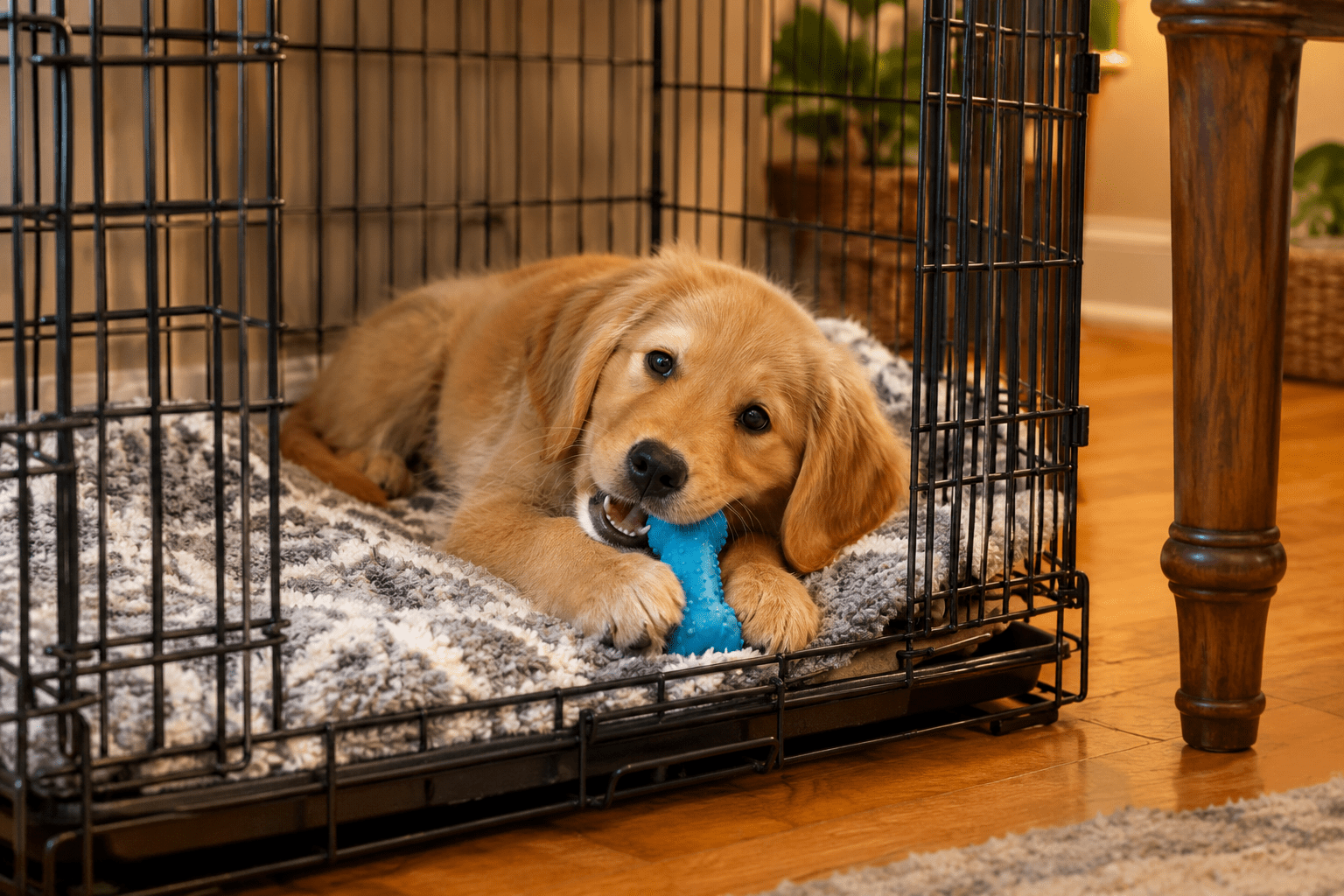
This is the single most effective piece of furniture protection during peak teething, and it’s underused compared to deterrent sprays. ASPCA specifically recommends confining a dog to a small, safe space — a crate or puppy-proofed area — for periods when you can’t supervise, with appropriate chew toys provided inside. This isn’t punishment; it’s removing the opportunity for furniture damage during the exact window (roughly 12–24 weeks) when the urge is strongest and judgment is weakest.
Furniture-Specific Protection
Generic “keep them away from furniture” advice misses that different materials need different handling:
- Wood legs and corners: furniture leg guards, or a cloth wrap lightly treated with a chewing deterrent.
- Fabric/upholstery: washable throws or slipcovers over the arms and cushions most within reach during the peak chewing window.
- Leather: test any bitter-tasting deterrent on a hidden patch first, since some formulations can stain or discolor leather.
ASPCA notes deterrent sprays work best applied daily for about 2–4 weeks alongside redirection and management — not as a standalone fix on their own.
Exercise and Mental Stimulation
Physical exercise addresses boredom-driven chewing by burning excess energy; puzzle feeders, short training sessions, and new experiences address the mental side specifically, which plain physical tiredness doesn’t always cover. ASPCA lists both physical exercise and mental stimulation (training, social visits) as core parts of managing destructive chewing.
When to See a Vet or Trainer
A general expectation: the chewing urge should noticeably decline as your puppy’s adult teeth finish coming in, around 6 months per AKC’s timeline. Reasonable reasons to get professional input sooner:
- Destructive chewing hasn’t improved despite consistent redirection and management over several weeks.
- Chewing happens specifically when your dog is left alone, alongside other stress signs — a trainer experienced with separation anxiety can help.
- Chewing targets non-food items like fabric, plastic, or dirt — AKC recommends a full veterinary workup (physical exam, bloodwork, sometimes imaging) to rule out nutritional deficiency, anemia, parasites, or pain before treating it as purely behavioral.
- Any baby teeth appear to still be present past 6 months — these sometimes need veterinary removal.
Practical Examples
A 4-month-old chewing table legs while you’re home: squarely in AKC’s 12–16 week peak-teething window — the fix is toy redirection plus crate management, not a behavioral intervention.
A puppy that only destroys furniture when left alone: matches ASPCA’s separation-anxiety pattern rather than ordinary teething, and calls for a different approach — often with a trainer’s input — rather than more chew toys.
An adult dog suddenly chewing furniture with noticeably bad breath: a pattern worth taking to a vet first, since AKC and general veterinary guidance both flag sudden behavior changes with physical symptoms as a possible medical issue rather than a training gap.
Common Mistakes
- Punishing after the fact instead of redirecting in the moment, which doesn’t teach anything and can damage trust.
- Relying on deterrent spray alone without also managing access — ASPCA frames spray as one tool among several, not a fix by itself.
- Assuming it’s “just teething” past 7–8 months, when AKC’s timeline suggests the urge should already be declining by then.
- Leaving a puppy loose and unsupervised during the 12–24 week peak window instead of using a crate or gated space.
- Ignoring a pattern where chewing only happens when alone, missing an early separation-anxiety signal.
Editor’s Insights
- The toy that worked at 10 weeks may not hold up by 15 weeks — plan to size up as adult teeth come in, not just when the old toy falls apart.
- A crate used for management isn’t a punishment tool — per ASPCA, it’s a standard, recommended part of preventing destructive chewing.
- If your puppy is going after non-wood, non-toy objects specifically, that’s worth mentioning to your vet by name (not just “chewing a lot”) — AKC notes this pattern can point toward pica with an underlying medical cause.
Decision Framework: Which Fix Matches Your Puppy’s Chewing?
- Under ~7 months, chewing whether you’re home or away → teething protocol (toys matched to stage + crate management).
- Older puppy/adult, chewing whether you’re home or away, seems restless → exercise and enrichment focus.
- Chewing only or mostly when left alone, with other stress signs → possible separation anxiety — consider a trainer.
- Sudden onset in an adult dog, or targeting non-toy/non-wood objects → vet visit first, before assuming it’s behavioral.
Teething Stage Reference Table
|
Stage |
Approximate age |
What’s happening |
Best toy type |
|
Early |
2–6 weeks |
Baby teeth emerging and finishing (~28 total) |
N/A — still with breeder |
|
Peak |
12–16 weeks |
Baby teeth shedding, adult teeth emerging — heaviest chewing urge |
Soft rubber, rope, frozen options for sore gums |
|
Late |
4–6 months |
Adult teeth continuing to come in, bite force increasing |
Firmer rubber, more durable chews |
|
Settled |
6 months+ |
All ~42 adult teeth typically in; urge declining |
Standard durable toys, rotation less critical |
Puppy-Proofing Checklist
- Crate or gated puppy-safe area set up for unsupervised periods
- Furniture leg guards on exposed wood legs/corners
- Washable throws or slipcovers on vulnerable upholstery
- Chewing deterrent tested on a hidden patch before full application
- Toy rotation stocked for current teething stage
“Is This Normal?” Checklist
- Puppy is under 7 months (teething is a reasonable default explanation)
- Chewing happens whether you’re home or away (points away from separation anxiety)
- Target items are wood/toys, not fabric, plastic, or dirt specifically (points away from pica)
- No bad breath, drooling, or sudden onset in an adult dog (points away from dental pain)
If any of these don’t check out, that’s a reasonable moment to involve a vet or trainer rather than continuing with toys and sprays alone.
FAQ
At what age do puppies stop chewing furniture?
Per AKC’s timeline, the heaviest chewing urge runs roughly 12–16 weeks as adult teeth emerge, and it should noticeably decline once all adult teeth are in, around 6 months — though individual puppies vary.
How can I tell if it’s teething or separation anxiety?
ASPCA’s distinction is whether chewing happens regardless of your presence (teething/boredom) or specifically when your dog is left alone (separation anxiety), often alongside whining, pacing, or accidents.
Do bitter sprays actually work?
They’re one useful tool, not a standalone fix — ASPCA recommends daily application for 2–4 weeks combined with redirection and management, not spray alone.
Is crate training necessary to stop furniture chewing?
It’s one of the most effective tools during peak teething — ASPCA recommends confining a dog to a safe space with appropriate toys during unsupervised time, rather than leaving them loose near furniture.
Can diet affect a puppy’s chewing behavior?
Chewing wood and toys is normal development, but chewing non-food items specifically (pica) can have a nutritional or medical cause according to AKC, and is worth a vet visit if you notice this pattern.
Are some breeds worse chewers than others?
Breeds bred for retrieving, working, or herding roles tend to be more mouth-driven and often need more frequent toy rotation and tougher options to stay satisfied.
What if my adult dog suddenly starts chewing furniture?
A new chewing habit in an adult dog, especially with bad breath or drooling, is worth a vet visit to rule out dental pain before assuming it’s behavioral.
Is it safe to give my puppy frozen chew toys?
Frozen rubber or rope toys are commonly used to soothe sore gums during peak teething — just supervise use and size the toy appropriately to avoid choking risk.
Individual puppies vary in teething pace and temperament; treat the timeline and diagnostic patterns above as general guidance, not a substitute for a vet or certified trainer’s assessment of your specific dog.
Written and reviewed by the Pets Store Home editorial team. This article is for general information only and is not a substitute for veterinary or professional training advice. If chewing is sudden, targets non-toy objects, or occurs alongside other stress signs, consult a vet or certified trainer. Last reviewed: September 2026.
Conclusion
Furniture chewing responds to the right diagnosis, not the most toys. A puppy in AKC’s 12–16 week teething peak needs redirection and crate management; a dog that only chews when left alone, per ASPCA’s guidance, needs a different plan entirely; and a sudden change in an adult dog’s chewing habits deserves a vet visit before anything else. Match your approach to which of these is actually happening, and give the fix a few consistent weeks — most puppies show real improvement well before their adult teeth are fully in at 6 months.
[…] Which foreign pets are legal in Washington State? […]