

Quick Answer: Thumping is a rabbit’s built-in alarm and communication signal — most often fear, annoyance, or territorial hormones. A single thump followed by normal behavior is usually just alertness. Repeated or sustained thumping combined with reduced appetite, hiding, or a hunched posture is different — it can point to pain, and in rabbits, pain-related appetite loss can progress toward a genuine emergency (gut stasis) faster than most owners expect.
Why Is My Rabbit Thumping Its Foot?
Nearly every guide to rabbit thumping gives you the same three categories — fear, annoyance, hormones — and stops there. What’s missing is a way to actually tell them apart in the moment, and a clear sense of when thumping is nothing to worry about versus when it’s an early signal worth acting on quickly. This guide builds that framework, then goes deeper into the two causes most competitor guides only mention in passing: gut stasis and sore hocks.
Key Takeaways
- A single thump is usually just alertness; repeated or sustained thumping paired with appetite changes or hiding is worth taking more seriously.
- Rabbits are prey animals whose ancestors thumped to warn the warren of danger — domestic rabbits keep this instinct even in a safe home.
- Pain-driven thumping matters more than it might seem, because pain and stress are known triggers for gut stasis, a rabbit digestive emergency that can turn dangerous within hours.
- Sore hocks (pododermatitis) can be both a cause of pain-thumping and made worse by frequent thumping — flooring and substrate are the fix.
- Thumping between bonded or newly introduced rabbits often reflects normal hierarchy-establishing behavior, not necessarily a failing introduction.
What Thumping Actually Is
Foot thumping is rooted in wild rabbit survival behavior. Rabbits are prey animals that historically avoided predators by freezing, hiding, and retreating underground, and thumping evolved as a warning signal within their social groups — other rabbits in the warren watch for danger while some feed, and a thump alerts the group to a possible threat. Domestic rabbits retain this instinct fully intact, even in a home with no actual predators around. Understanding thumping as an alarm-and-communication behavior — rather than a random quirk — is what makes the categories below make sense.
Reading the Pattern: A Simple Way to Tell What’s Going On
Instead of memorizing a list of possible causes, it helps to read the pattern alongside what else your rabbit is doing.
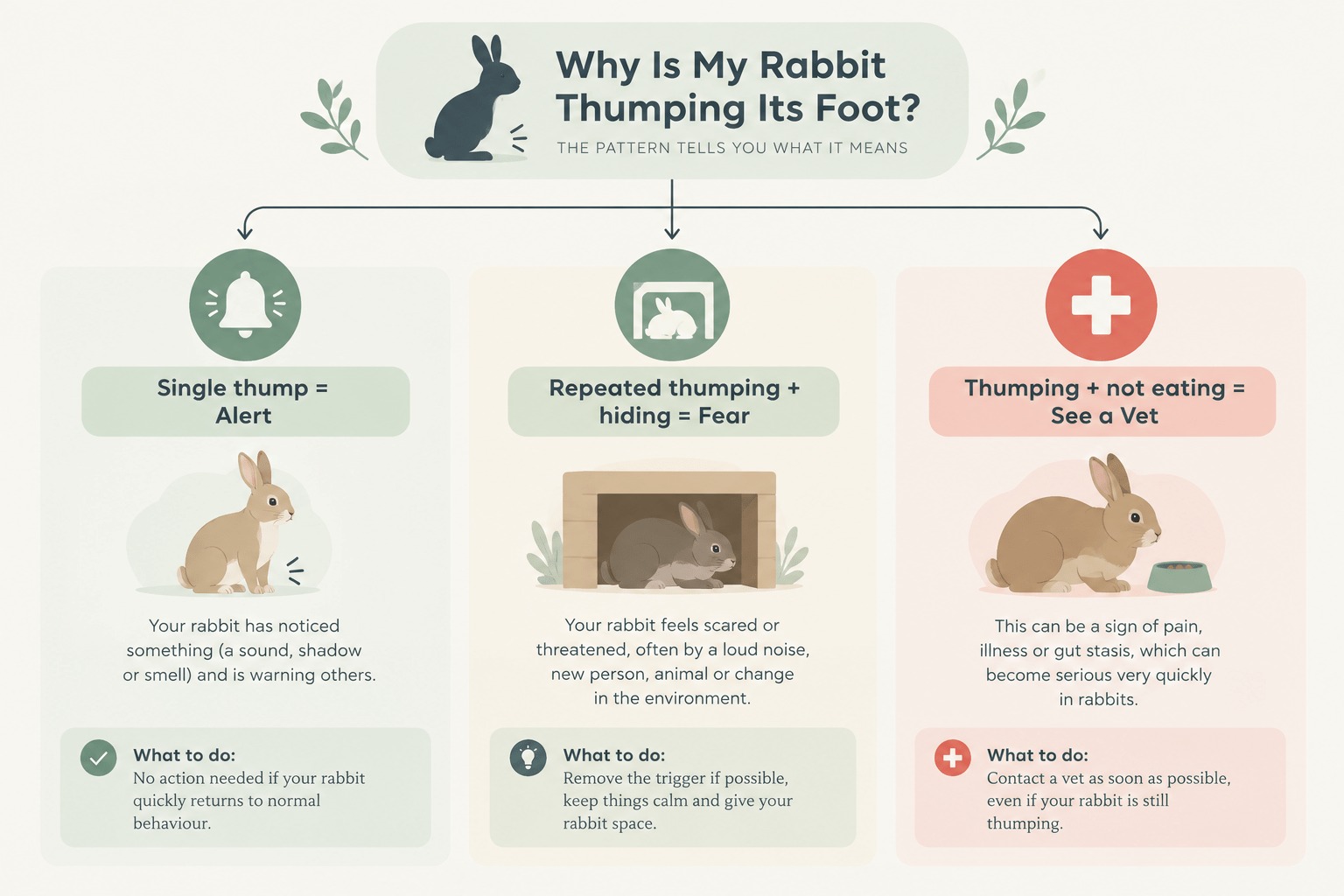
A single thump, then back to normal — This is typically just alertness: your rabbit noticed something (a sound, a shadow, a smell) and flagged it, then moved on. No action needed.
Repeated or rapid thumping with fleeing or hiding — This points to genuine fear. Look for what triggered it (a loud noise, an unfamiliar animal or person, a sudden environmental change) and address that specific trigger.
Thumping that’s stationary, with upright ears, often right after handling — This usually reads as annoyance or protest rather than fear — a rabbit expressing displeasure about being picked up, having a toy removed, or another disruption it didn’t want.
Thumping combined with reduced appetite, a hunched posture, grinding teeth, or reluctance to move — This combination is different from the others. It’s worth treating as a possible pain signal and moving toward the next section rather than waiting to see if it passes.
When Thumping Signals a Real Emergency: Gut Stasis
This is the piece most guides to rabbit thumping skip almost entirely, and it’s the most important one. According to VCA Animal Hospitals, gut stasis develops when a rabbit stops eating — for any underlying reason, including pain, stress, dental problems, or infection — and the resulting change in gut chemistry favors gas-producing bacteria, which can spiral into a genuinely dangerous condition. VCA is direct about the timeline: “A rabbit that is not eating can progress from just feeling poorly to developing a life-threatening illness in a matter of hours.”
The Royal Veterinary College identifies pain and stress specifically as gut stasis triggers, noting that “any painful condition can lead to gut stasis,” alongside more familiar risk factors like obesity, insufficient dietary fiber, ingested hair during molting, and dehydration. Early warning signs to watch for, per the RVC, include reduced appetite, decreased and smaller or drier droppings, and a rabbit withdrawing or hiding even when offered food or treats.
The connection to thumping is this: if your rabbit is thumping alongside any of these appetite or stool changes, that’s not a moment to wait and observe — it’s a same-day veterinary conversation, given how quickly the condition can progress.
Sore Hocks: A Cause and a Consequence
Pododermatitis, commonly called sore hocks, is worth understanding because it works in both directions with thumping. According to guidance from Companion Animals Extension, the condition develops from a combination of factors: being overweight and putting excess pressure on the hind feet, inadequate flooring (wire flooring without a solid resting area causes ongoing pressure and discomfort), cramped housing that limits movement, poor hygiene, and overly long nails that create pressure imbalances or even puncture the pads.
Sore hocks cause real pain, which can be a source of pain-related thumping. But the relationship runs the other way too — a rabbit thumping frequently on already-tender feet, especially on a hard or wire surface, can worsen existing hock irritation. Breaking this cycle comes down to housing: ensuring your rabbit has a solid, cushioned resting area (not just wire or hard flooring), enough space to move normally, clean bedding, a healthy weight, and regularly trimmed nails. If you notice redness, swelling, or reluctance to put weight on the feet, that’s worth a vet visit rather than a wait-and-see approach.
Fear-Based Thumping and Common Triggers
Fear-driven thumping responds to whatever your rabbit perceives as a threat — loud or sudden noises, unfamiliar people or animals, a strong new scent, or a change in the environment like moved furniture. Individual rabbits vary in sensitivity partly based on prior experience and temperament, and some owners notice their rabbit’s ear position or type seems to correlate with how easily they startle, though this is more anecdotal than formally studied. The response that helps most is identifying the specific trigger and reducing exposure gradually, along with making sure your rabbit always has an accessible hiding spot to retreat to rather than forcing exposure to whatever startled it.
Annoyance, Protest, and Territorial Thumping
Not all thumping is fear. A rabbit that thumps immediately after being picked up, having something taken away, or being disturbed during rest is usually expressing protest rather than alarm — the body language (staying in place, upright ears, direct posture) looks different from a fear response, which typically involves fleeing or hiding. Unneutered rabbits, particularly as they reach sexual maturity, often show increased territorial thumping tied to hormonal changes; spaying or neutering commonly reduces this over time, alongside general benefits for health and behavior.
Thumping Between Bonded or Introduced Rabbits
Rabbits establishing a social hierarchy — whether during a structured introduction or as an already-bonded pair working out day-to-day dynamics — will sometimes thump at each other. This is often a normal part of establishing who defers to whom, rather than a sign the bonding process is failing. What’s worth watching for during an active introduction is whether the thumping is paired with actual aggression (biting, prolonged chasing, fur pulling) versus brief posturing followed by the rabbits settling back into calm proximity — the former is a sign to slow down or separate and consult an experienced rabbit-savvy resource, while the latter is typically just part of the process.
Does Age Change the Picture?
Younger rabbits, especially those newly settling into a home, tend to thump more frequently simply because they’re still learning what in their environment is safe — this generally decreases as they become familiar with their surroundings and routine. In senior rabbits, a new or increased pattern of thumping is more likely to reflect pain from arthritis or dental disease than fear of something new, since an older rabbit’s environment is usually already well known to them. A sudden change in an older rabbit’s thumping frequency is worth a veterinary conversation rather than being written off as personality.
Know Your Rabbit’s Baseline
Because normal thumping frequency genuinely varies between individual rabbits, the most useful thing you can do is get familiar with what’s typical for yours specifically — how often it thumps in a normal week, in what contexts, and what its body language looks like when it does. With that baseline established, a real change (more frequent thumping, a different accompanying posture, or thumping paired with appetite shifts) becomes something you’ll actually notice, rather than blending into “rabbits just do this sometimes.”
How to Respond to a Thumping Rabbit
Start by identifying which category above the pattern fits, since the right response differs. For fear-based thumping, stay calm, avoid forcing your rabbit toward whatever startled it, and make sure a hiding spot is available. For protest thumping, respect what your rabbit is communicating rather than punishing the behavior. For anything paired with appetite or behavior changes, move straight to contacting your vet rather than trying home remedies first, given how quickly gut stasis in particular can progress.
Common Mistakes Owners Make
Assuming every thump means fear, when context (stationary posture, timing right after handling) often points to annoyance instead. Dismissing thumping paired with reduced appetite as “being dramatic” rather than recognizing it as a possible early gut stasis warning sign. Overlooking hock condition and flooring as a contributing cause of pain-driven thumping. And treating brief thumping between bonding rabbits as a failed introduction when it’s often normal hierarchy behavior.
Practical Examples
A rabbit thumps once at a delivery truck outside, then goes back to grazing normally: ordinary alertness, no action needed.
A rabbit thumps repeatedly over an afternoon and is eating less than usual, with smaller droppings than normal: this fits the gut-stasis warning pattern above and is worth a same-day call to your vet rather than waiting to see if appetite returns on its own.
Two newly introduced rabbits thump at each other during supervised time together, then settle a few feet apart and start grooming: typical hierarchy-establishing behavior, not a sign the introduction is failing.
FAQ
Is it normal for rabbits to thump every day?
Some rabbits thump occasionally as part of normal alertness or personality; what matters more than daily frequency is whether the pattern is consistent with your specific rabbit’s usual baseline.
How do I know if my rabbit’s thumping means pain?
Pain-related thumping usually comes with other signs — reduced appetite, a hunched posture, reluctance to move, or smaller/fewer droppings — rather than appearing on its own.
Why does my rabbit thump at night?
Rabbits are naturally most active at dawn and dusk and have sensitive hearing, so nighttime sounds an owner might not notice can still trigger an alert thump.
Do rabbits thump when they’re happy or excited?
Thumping is generally an alarm or protest signal rather than an expression of happiness — excitement in rabbits is more commonly shown through behaviors like running and jumping (binkying).
Should I comfort my rabbit when it thumps?
Calm, non-forceful reassurance and access to a hiding spot are more helpful than trying to physically soothe a frightened rabbit, which can add to its stress in the moment.
Can thumping hurt my rabbit’s feet?
Yes, particularly on hard or wire flooring — frequent thumping on an inadequate surface can contribute to or worsen sore hocks (pododermatitis).
Why do my bonded rabbits thump at each other?
This is often normal hierarchy-establishing behavior; it’s worth more attention only if it’s paired with real aggression like biting or prolonged chasing rather than brief posturing.
When should I take a thumping rabbit to the vet?
When thumping is paired with reduced appetite, changed droppings, hiding, or reluctance to move — these combinations can signal pain or early gut stasis, both of which warrant prompt veterinary attention.
Sources & References
- VCA Animal Hospitals — Gastrointestinal Stasis in Rabbits
- Royal Veterinary College — Reducing the Risk of Gut Stasis in Rabbits
- Companion Animals Extension — Pododermatitis (Sore Hocks) in Rabbits
- dvm360 — Understanding Rabbit Behavior and Preventing and Treating Behavior Problems
Written by the Pets Store Home Team — pet care writers and researchers who cross-check every behavioral and health claim against the veterinary and academic sources cited above, rather than other blogs. This article has not yet been reviewed by a named, credentialed rabbit-savvy veterinarian; add one here before publishing if genuinely available. Last reviewed: September 2026
Conclusion
A thump on its own doesn’t tell you much — it’s the pattern and what comes with it that matters. A single alert thump is nothing to worry about; thumping paired with appetite loss, hiding, or a change in droppings is worth same-day veterinary attention given how quickly gut stasis can progress in rabbits. Get to know what’s normal for your own rabbit, keep an eye on housing and hock health, and read the accompanying signs rather than the thump alone.
[…] Which foreign pets are legal in Washington State? […]