
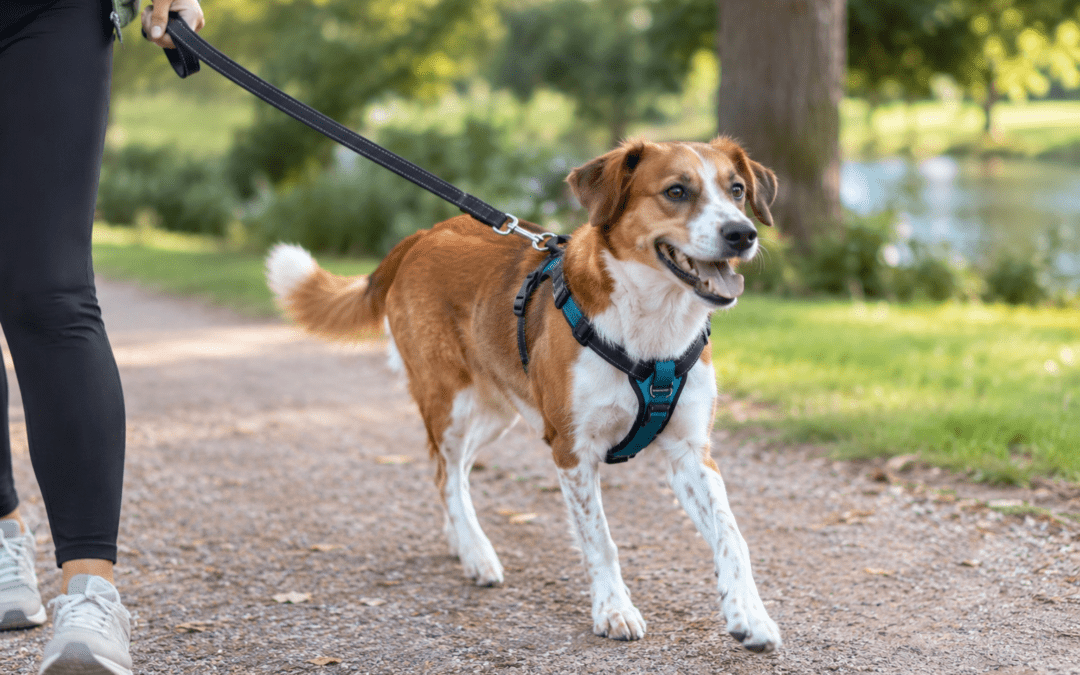
Quick Answer: A front-clip harness is usually the best starting point for a dog that pulls, because it interrupts the instinct to lean into pressure rather than reinforcing it the way a back-clip harness or collar can. From there, the right choice depends on your dog’s size and breed (small dogs prone to tracheal issues need pressure off the neck entirely), how well the harness actually fits, and whether you’re using it as a permanent fix or a bridge while leash training progresses.
Best harness for dogs that pull on walks
Most “best harness” roundups hand you a ranked list of products and a two-finger fit test, then move on. What they skip is the actual reasoning: why front-clip designs work at all, what a bad-fitting harness does to your dog’s movement over time, which dogs face a genuinely higher safety stake than others, and what to do when the harness alone isn’t solving the pulling. This guide is built around that reasoning rather than a product ranking, so you can apply it to whatever’s actually available to you.
Key Takeaways
- Front-clip harnesses work by interrupting a dog’s instinct to lean into pressure — a well-documented behavioral pattern often called the opposition reflex — rather than by physical restraint alone.
- Harness shape affects shoulder movement, but recent gait research complicates the common “Y-shaped is more shoulder-friendly” assumption — no single design has been shown to be universally better.
- Small and toy breeds prone to tracheal collapse have a genuinely higher stake in getting neck pressure off entirely, not just a general preference for harnesses.
- A harness is a tool to make walks manageable, not necessarily a permanent fix — pairing it with leash training gives you somewhere to go if pulling doesn’t improve.
- “Escape-proof” is a marketing term more often than a guarantee — fit and design details determine whether a dog can actually back out of a harness.
Why Dogs Pull, and Why Harness Design Actually Matters
Dogs have a well-documented instinct to lean into steady pressure rather than away from it — commonly referred to as the opposition reflex. When a collar or back-clip harness applies pressure to a dog’s neck or back as it pulls forward, that pressure can trigger more pulling rather than less, since the dog’s instinct is to push back against whatever’s resisting it.
A front-clip harness changes the physics of that interaction: pressure from the leash comes from the front and pulls the dog sideways rather than adding resistance in the direction it’s already moving. According to VCA Animal Hospitals, this lets an owner use “gentle leash pressure to turn the dog away from a distraction or back toward the handler” — redirecting rather than fighting the pull. That’s the actual mechanism behind why front-clip designs tend to outperform back-clip ones for a dog that pulls, not just a manufacturer’s design choice.
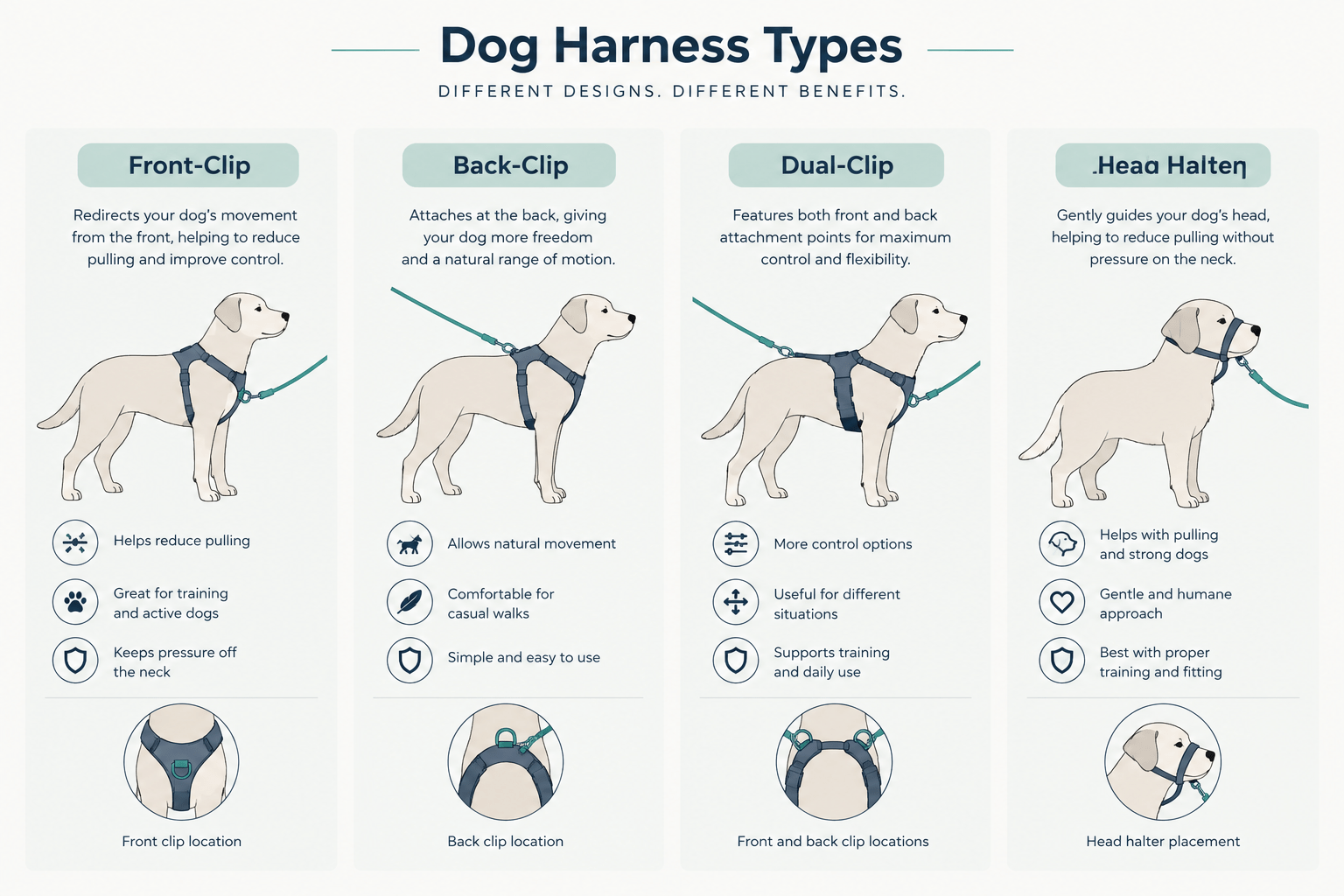
The Main Harness Types, Compared
|
Type |
How it works |
Best fit for |
|
Back-clip |
Leash attaches at the shoulders; simple, comfortable for non-pullers |
Dogs that already walk well on a loose leash |
|
Front-clip |
Leash attaches at the chest; redirects a pulling dog sideways |
Most dogs that pull, as a starting point |
|
Dual-clip |
Offers both front and back attachment points |
Dogs needing more control than front-clip alone, or transitioning between training stages |
|
Head halter |
Fits around the muzzle and behind the ears; controls head direction |
Strong pullers needing more control than a harness provides, used alongside training |
Per VCA Animal Hospitals, head halters carry their own escape consideration — some dogs can back out of them, so a head halter is generally recommended in combination with a harness or buckle collar rather than as the sole attachment point.
Fit Isn’t Just Comfort — It’s About Movement, Too
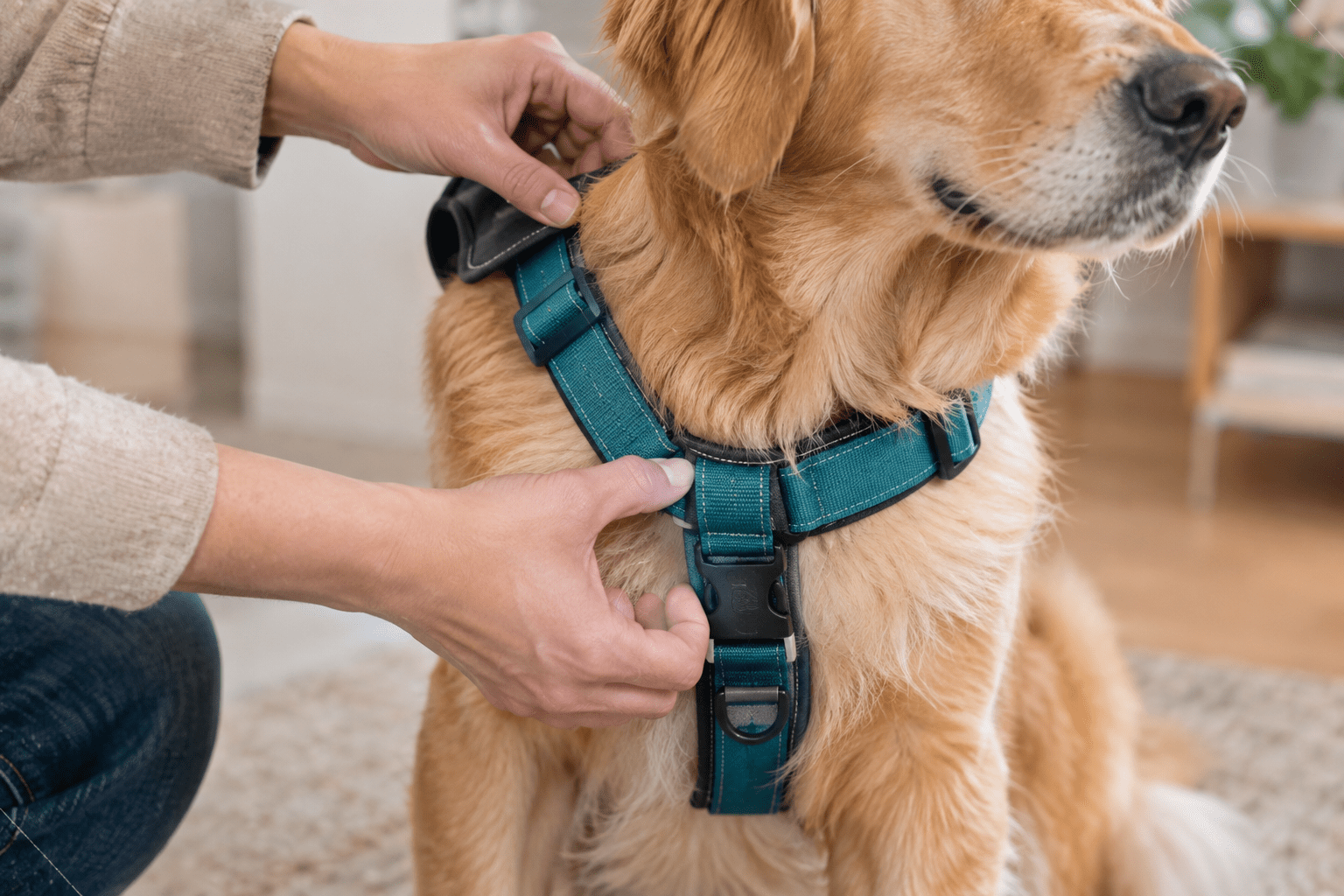
A harness that doesn’t fit correctly can restrict how freely a dog moves its front legs, and recent veterinary gait research shows this is more complicated than the common wisdom suggests. A detailed 3D motion-capture study of dogs wearing different harness designs found that harnesses altered gait parameters in roughly two-thirds of measurements taken, with the front legs’ movement affected most. Notably, the research found that so-called “non-restrictive” Y-shaped harnesses were not consistently more shoulder-friendly than straight-chest designs — in some conditions, the Y-shaped design actually showed more shoulder restriction, contradicting the common assumption that shape alone determines freedom of movement. The researchers found no single harness design that was universally superior across dogs.
The practical takeaway isn’t “avoid a specific shape” — it’s that proper fit and your individual dog’s build matter more than a harness’s marketing description. Watch your dog’s front leg during a walk: it should be able to extend forward freely without the harness’s chest strap visibly catching or limiting that motion. If a harness looks like it’s stopping the leg partway through its natural stride, that’s a fit or design problem worth addressing regardless of what the harness is labeled.
Collars, Harnesses, and the Trachea: What the Risk Actually Is
The “harnesses are safer than collars” advice you’ll see everywhere has real anatomical grounding, but it matters more for some dogs than others. According to Cornell University’s College of Veterinary Medicine, tracheal collapse — a weakening of the cartilage rings that hold the airway open — is common in toy and small breeds such as Yorkshire Terriers, Pomeranians, and Toy Poodles, particularly as they reach middle age. Pressure on the neck is specifically listed among the factors that can worsen symptoms in affected dogs, alongside stress, heat, and physical exertion.
VCA Animal Hospitals recommends a body harness specifically for dogs with tracheal disease or neck pain, since it “puts minimal pressure on delicate tissue.” For a small-breed puller — especially one from a breed prone to tracheal issues — getting pressure off the neck entirely isn’t just a comfort preference, it’s a genuine risk-reduction step. For larger, sturdier breeds without this predisposition, the case for a harness is still strong for pulling control, just without the same anatomical urgency.
Fit Troubleshooting: Beyond the Two-Finger Test
The standard “two fingers should fit under the strap” test catches harnesses that are obviously too tight or loose, but it doesn’t diagnose most real-world fit problems.
Chafing near the front legs usually means the chest strap sits too low or the harness is a size too small, putting pressure directly on the armpit area during movement.
Twisting during walks typically points to a harness that’s too loose overall, or one with a back-clip design on a dog that pulls hard enough to rotate it out of position.
Riding up over the shoulders often means the girth strap (the one running under the belly) isn’t snug enough to hold the harness in its intended position, or the harness is sized too large for the dog’s chest depth.
Rechecking fit after the first few walks — not just at purchase — catches problems that only show up once a harness has been worn during actual movement.
The Harness Is a Bridge, Not a Fix
A front-clip or dual-clip harness makes walks manageable, but it’s worth thinking of it as a tool that supports leash training rather than a permanent substitute for it. As a dog’s leash manners improve, many owners find they need less correction from the harness’s redirect mechanism — loose-leash walking starts happening because the dog has learned it, not just because the harness is preventing forward pulling in the moment.
There’s no fixed timeline for this, and plenty of dogs do fine on a front-clip harness indefinitely without it being a problem. The distinction matters mainly if pulling isn’t improving at all over time despite consistent walks — that’s a sign to look at training technique or professional help, rather than simply concluding a stronger harness is needed.
What “Escape-Proof” Actually Means
Per VCA Animal Hospitals, a dog can back out of a body harness “if the harness is not correctly fitted” — meaning escape resistance comes down to fit and design details, not a label. Features that genuinely reduce escape risk include a martingale-style loop that tightens slightly under leash tension, a properly snug girth strap, and sizing that keeps some adjustment room rather than maxing out the smallest or largest setting. A harness marketed as “escape-proof” without these features, fitted loosely, offers the same escape risk as any other loose harness — the marketing claim doesn’t override fit.
Special Situations
Senior dogs with joint issues: A harness that puts pressure across the chest and shoulders can be more comfortable than neck pressure for a senior dog with arthritis, but check that the fit doesn’t restrict the same joints that are already compromised.
Dogs recovering from surgery: Depending on the procedure and location, some harness designs may need to be avoided entirely during recovery — this is a case where checking with your vet about specific pressure points is worth doing before choosing equipment.
Brachycephalic breeds: Short-nosed breeds already carry breathing considerations independent of the trachea-specific risk covered above, making pressure-free harness options a sensible default rather than a collar.
When to Escalate: A Simple Decision Path
If a front-clip harness alone isn’t reducing pulling after consistent use alongside basic leash training, a dual-clip design gives you a second attachment point for more control without switching equipment entirely. If pulling remains difficult to manage even with a dual-clip harness, a head halter (used alongside a harness or collar per the escape-risk guidance above) offers more direct control over head direction. If none of these are making a meaningful difference, or if pulling comes with other behavioral concerns like reactivity or lunging, that’s a reasonable point to bring in a professional trainer rather than continuing to cycle through equipment.
Common Mistakes Owners Make
Choosing a harness based on marketing terms like “escape-proof” or “no-pull” without checking the actual design features behind the claim. Treating a harness as a permanent solution and never addressing the underlying leash-training gap. Not rechecking fit after the first few real walks, when problems like chafing or twisting actually show up. And using a standard flat collar on a strong-pulling small breed without factoring in tracheal risk.
Practical Examples
A Yorkshire Terrier that pulls hard on walks: given the breed’s documented tracheal-collapse risk, a well-fitted front-clip harness that keeps pressure entirely off the neck is the more urgent choice here, not just a preference.
A dog whose “non-restrictive” Y-shaped harness is causing visible shoulder chafing: per the gait research above, shape alone doesn’t guarantee shoulder freedom — this is a fit and individual-conformation issue worth addressing directly rather than assuming the harness type is automatically fine because of its label.
A dog that’s stopped improving on a front-clip harness despite months of consistent walks: this fits the escalation path above — time to consider a dual-clip design, a head halter, or a session with a professional trainer rather than simply trying another front-clip product.
FAQ
Do no-pull harnesses actually work?
Front-clip designs generally help by redirecting a dog sideways instead of adding to the pressure it’s pulling against, which is a real behavioral mechanism — but they work best paired with leash training rather than as a standalone fix.
Front-clip or back-clip — which is better for pulling?
Front-clip is generally the better starting point for a dog that pulls, since back-clip designs can reinforce the instinct to lean into pressure; back-clip works fine for dogs that already walk well on a loose leash.
Can a harness hurt my dog’s shoulders?
A poorly fitted harness can restrict natural shoulder movement regardless of its shape — recent gait research found no single design is universally shoulder-friendly, so fit and checking your dog’s actual leg extension matter more than the label.
Is a collar ever safer than a harness for a dog that pulls?
Generally no for a dog that pulls — a harness distributes pressure away from the neck, which matters most for small and toy breeds prone to tracheal collapse, per veterinary guidance.
What’s the difference between a harness and a head halter?
A harness distributes pressure across the chest and shoulders; a head halter controls direction via the head and muzzle and generally offers more control for strong pullers, but should be used alongside a harness or collar since some dogs can back out of it.
How do I know if my harness fits correctly?
Beyond the two-finger test, watch for chafing near the front legs, twisting during walks, or the harness riding up over the shoulders — each points to a specific, fixable fit issue.
Will my dog need this harness forever?
Not necessarily — many dogs need less correction from the harness as leash training improves, though plenty of dogs also do fine on a front-clip harness long-term without it being a problem.
What does “escape-proof” actually mean on a harness?
It’s often a marketing term rather than a guarantee — actual escape resistance comes from a properly snug girth strap, a martingale-style tightening loop, and correct sizing, not the label alone.
Sources & References
- Cornell University College of Veterinary Medicine — Tracheal Collapse
- VCA Animal Hospitals — Collar and Harness Options for Dogs
- PLOS ONE — Development of a Detailed Canine Gait Analysis Method for Evaluating Harnesses: A Pilot Study
- Mobility Dog Resource Group — Harness Research Summary (Lafuente et al.)
- How to Stop a Dog From Pulling on the Leash
Written by the Pets Store Home Team — pet care writers and researchers who cross-check every behavioral and health claim against the veterinary and research sources cited above, rather than other blogs. This article has not yet been reviewed by a named, credentialed veterinary or canine-behavior professional; add one here before publishing if genuinely available. Last reviewed: September 2026
Conclusion
The right harness for a dog that pulls isn’t the one at the top of a review list — it’s the one matched to why your dog pulls, how urgent the anatomical stakes are for their size and breed, and whether it actually fits their individual build. Start with a front-clip design for the behavioral mechanism, take breed-specific tracheal risk seriously if it applies, check fit against your dog’s real movement rather than a label, and treat the harness as one part of a plan that includes training — not the whole plan by itself.
[…] Which foreign pets are legal in Washington State? […]