
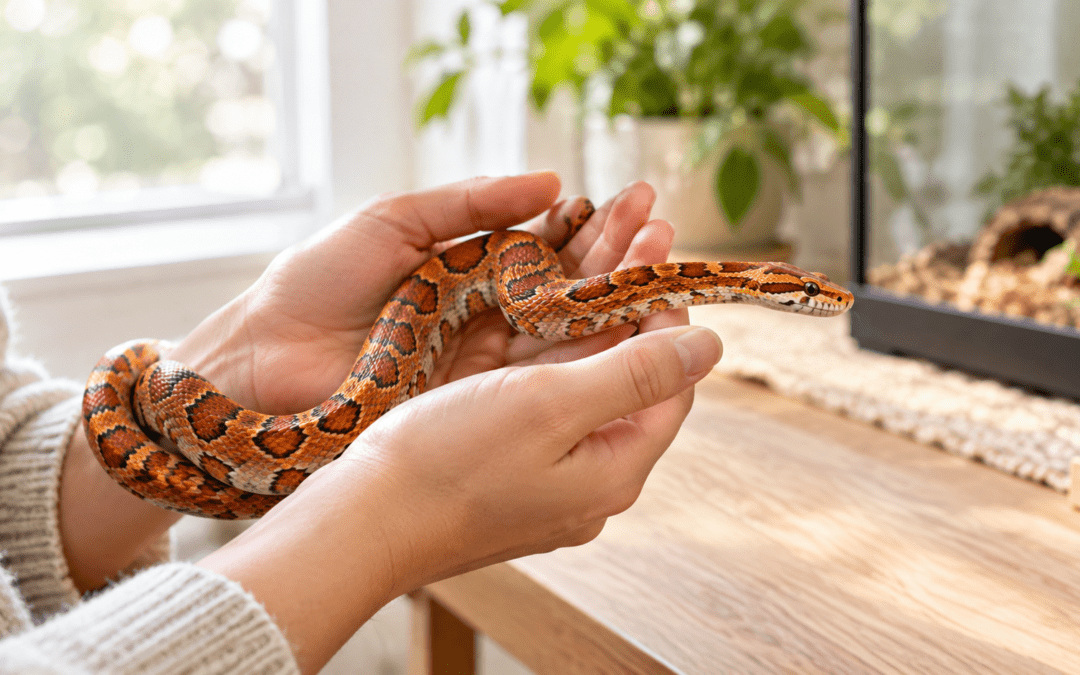
Best beginner pet snake for first-time owners
If you’re researching the best beginner pet snake for first-time owners, you’ve probably already pictured one curled up in a warm enclosure somewhere in your home. That’s a great place to start — but before any species name gets picked, it’s worth answering a harder question: is a snake actually the right first pet for you, and are you ready for what that really involves? This guide covers both. You’ll get the species most commonly suggested for beginners across reptile-care sources, and just as importantly, the real lifespan, cost, feeding, and legal details that most “best beginner snake” lists skip entirely.
A note on scope: this guide is written for readers in the United States — cost figures are in U.S. dollars, and the legal information covers U.S. federal and state law. The species and care guidance below applies anywhere, but if you’re outside the U.S., check your own country’s supply pricing and exotic-pet ownership rules separately, since both vary widely.
Quick Answer
Corn snakes, ball pythons, and kingsnakes are the beginner snakes most commonly suggested across reptile-care sources — but each asks something different of a new owner: corn snakes are generally the most forgiving starting point, ball pythons need more precise, consistent husbandry to keep feeding reliably, and kingsnakes must always be housed alone. Species choice matters less than being honest about the commitment first: most beginner snakes live 15 to 30 years and eat frozen-thawed rodents rather than live prey. (This guide is written for U.S. readers — see the note above.)
Key Takeaways
- A pet snake is a 15–30 year commitment for most beginner species — often longer than a dog’s lifespan.
- Corn snakes, ball pythons, and kingsnakes are commonly suggested beginner species across reptile-care sources — but they’re not interchangeable; each has different husbandry demands (see the species breakdown below).
- Frozen-thawed feeding is generally preferred over live prey for most captive-kept snakes — follow your species’ own care sheet for exact frequency and method.
- Captive-bred snakes are, as a group, often better adjusted than wild-caught ones — though individual health and temperament still vary, and a few species carry real legal restrictions worth checking first.
In this article: Is a Snake Right for You? · Realistic Setup Cost · Best Beginner Species · Live vs. Frozen-Thawed Feeding · Captive-Bred vs. Wild-Caught · Common Mistakes · Day-to-Day Life With a Snake · Species to Approach With Caution · FAQ
What Actually Makes a Snake “Beginner-Friendly”
Across the care sheets and species guides reviewed for this article, four qualities come up repeatedly: a calm temperament that rarely bites, a manageable adult size, a reliable feeding response to frozen-thawed prey, and comparatively simpler housing needs. That’s the easy part to research. The part almost every list skips is what owning any pet snake is actually like day to day — and that matters more than which species you pick. Not every beginner-recommended species hits all four qualities equally well, either — the species breakdown further down covers exactly where each one is more forgiving and where it asks more of you.
A snake won’t cuddle up on the couch or greet you at the door. It needs far less frequent physical interaction than a dog or cat, and its idea of a good day looks nothing like theirs. None of that makes a snake a worse pet — for the right owner, the quiet relationship is exactly the appeal. But it’s worth being honest about before you fall for a species based on its colors alone.
Is a Snake Actually the Right First Pet for You?
Start here, because it’s the section every competitor guide skips. Corn snakes commonly live over 20 years, and ball pythons can live up to 30 — a commitment that will likely outlast your current job, home, or relationship status. That’s not a reason to say no; it’s a reason to say yes deliberately.
The other honest gut-check is feeding. Beginner snakes eat pre-killed, frozen-then-thawed rodents, not live prey — and if that idea makes you squeamish now, it’s worth sitting with before you commit, since it’s a permanent part of ownership, not a phase.
Pet Care Tip: If you’re not sure a snake is right for you yet, ask a local reptile rescue or exotic vet clinic if you can observe a feeding or handling session before buying. Seeing the real routine firsthand is more useful than any care sheet.
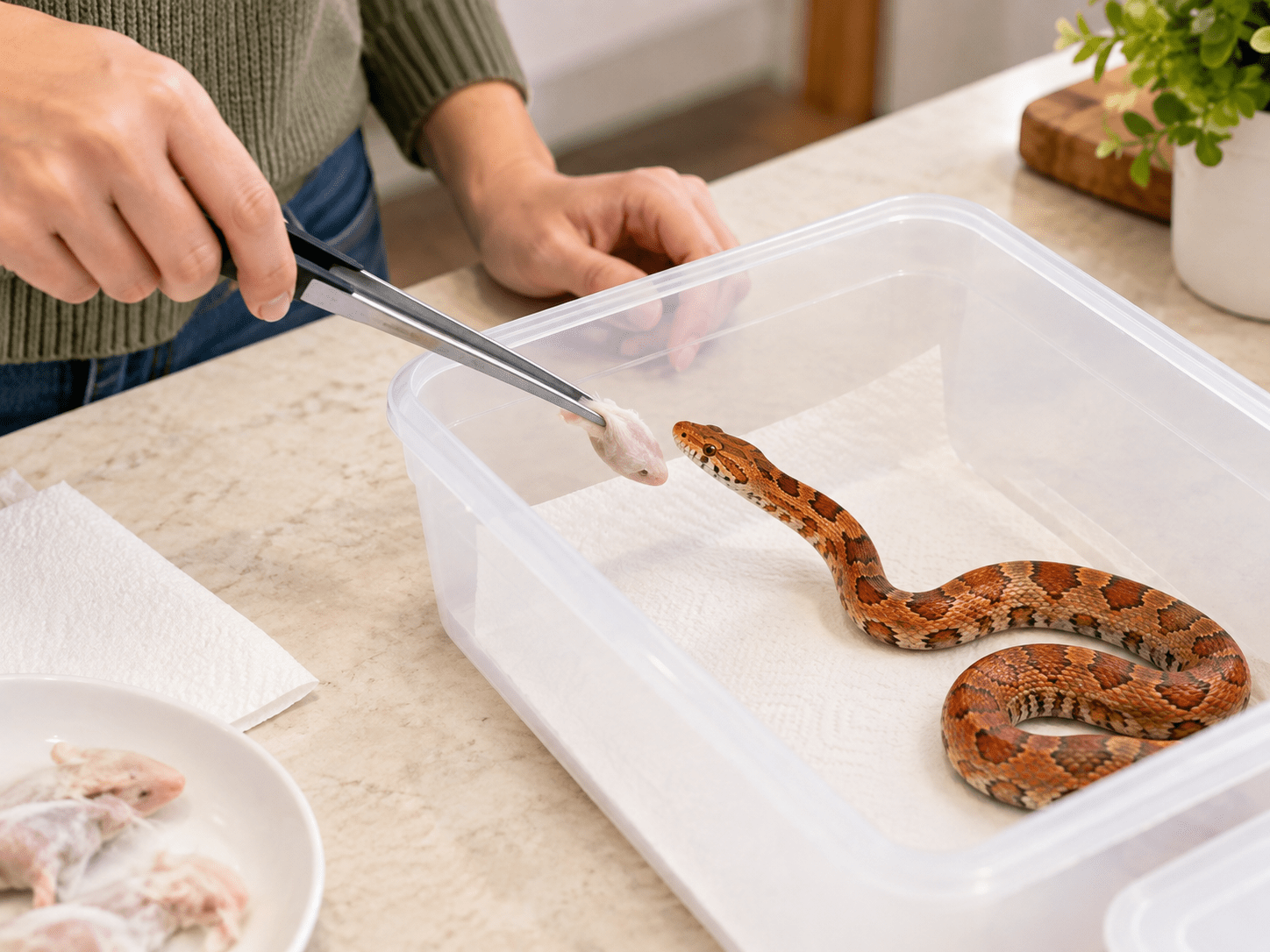
The Realistic Cost of Getting Started
Budget before you shop, not after. These are itemized U.S.-dollar estimates for a corn snake — the most commonly chosen first species — as of 2026, based on the cost breakdown published by ExoPetGuides. They come from a single guide source, so treat them as a planning range, not a quote, and check current prices with your own local or online suppliers before buying.
Getting started (one-time costs):
|
Item |
Estimated cost |
|
Enclosure and equipment (tank, thermostat, heat source, thermometer/hygrometer, substrate, hides, water bowl) |
$165–$540 |
|
The snake itself (captive-bred corn snake) |
$20–$60 |
|
First checkup with an exotic-animal vet |
$80–$200 |
|
Total to get started |
$265–$800 |
Ongoing costs, per year, once established:
|
Item |
Estimated cost |
|
Food (feeder rodents) |
$60–$200 |
|
Substrate replacement |
$30–$80 |
|
Electricity (heating/lighting) |
$60–$180 |
|
Routine vet care |
$50–$150 |
|
Total ongoing, per year |
$200–$610 |
Separately, it’s worth setting aside a one-time emergency fund of roughly $200–$600 for an unplanned vet visit — this is not part of the routine annual total above, since a healthy snake in a given year may need none of it, but exotic-animal care isn’t cheap when something does come up. None of these figures include a possible enclosure upgrade as a juvenile grows into an adult — budget for that separately (see Editor’s Insights below). Other beginner species follow a broadly similar cost shape, though exact figures vary by species and by how much equipment you already own.
Pet Care Tip: Price out the full setup — enclosure included — before you fall in love with a specific snake at a pet store or expo. It’s much easier to walk away from an impulse buy than an enclosure you’ve already paid for.
The Best Beginner Snake Species (and Why)
These three come up most often across the reptile-care sources reviewed for this guide, for genuinely different reasons — not just “docile and easy” repeated three times.
Corn snake. Widely considered a top choice for a first snake. Adults reach 4–6 feet, live 20+ years, and are docile enough that most owners handle them confidently within weeks. They tolerate a somewhat wider temperature range than many species, which gives a beginner more margin for error — though temperature should still be measured and maintained correctly with a real thermometer, not assumed.
Ball python. Calm and famously shy — many curl into a tight ball when startled, which is where the name comes from. Adults reach 4–5 feet and can live up to 30 years. The tradeoff for that long lifespan is a lower tolerance for husbandry errors: ball pythons are prone to stress-related feeding refusal if temperature, humidity, or handling frequency isn’t dialed in, so they reward an owner willing to be more precise and consistent.
Kingsnake (including California kingsnake). Hardy, food-driven, and generally docile once acclimated, though young or wild-natured individuals may hiss or strike defensively at first — regular gentle handling typically settles this. One important note: kingsnakes have a strong cannibalistic instinct and must always be housed and fed individually, never alongside another snake.
Rosy boa, a strong alternative to the top three, deserves a mention: smaller (17–44 inches), exceptionally docile, and rarely bites, with a lifespan that can exceed 30 years. It’s a smaller-bodied alternative to the top three — but it still needs the same species-appropriate temperature, humidity, and feeding care as any of them, not less.
Housing needs differ by species too — one generic setup doesn’t fit all of them. Measure the warm side at the basking spot and the cool side at the far end of the enclosure, using a real thermometer/hygrometer rather than equipment dials:
|
Species |
Adult enclosure |
Warm side |
Cool side |
Humidity |
Source |
|
Corn snake |
40 gal+ |
85°F |
Low 70s°F |
40–60% (~70% at shed) |
PetMD |
|
Ball python |
40 gal+ |
95°F |
78°F |
40–60% (~70% at shed) |
PetMD |
|
California kingsnake |
40 gal equiv. (~48×18×18 in) |
~85°F |
70s°F |
Not specified — use a hygrometer, keep drier |
NAHF |
|
Rosy boa |
L × ½L × ½L |
85–90°F basking |
75–80°F |
Under 60%, humid hide available |
ReptiFiles |
Each row’s enclosure-size rule and figures come from that species’ own source, not a single generic standard — follow the linked care sheet for your specific animal, and confirm figures with your breeder or an exotic vet.
Pet Care Tip: Don’t choose based on color morph alone. Ask specifically about the individual snake’s feeding history and temperament — a calm species can still have an individual that’s had a rough start and needs more patient handling.
Live vs. Frozen-Thawed Feeding, Explained Plainly
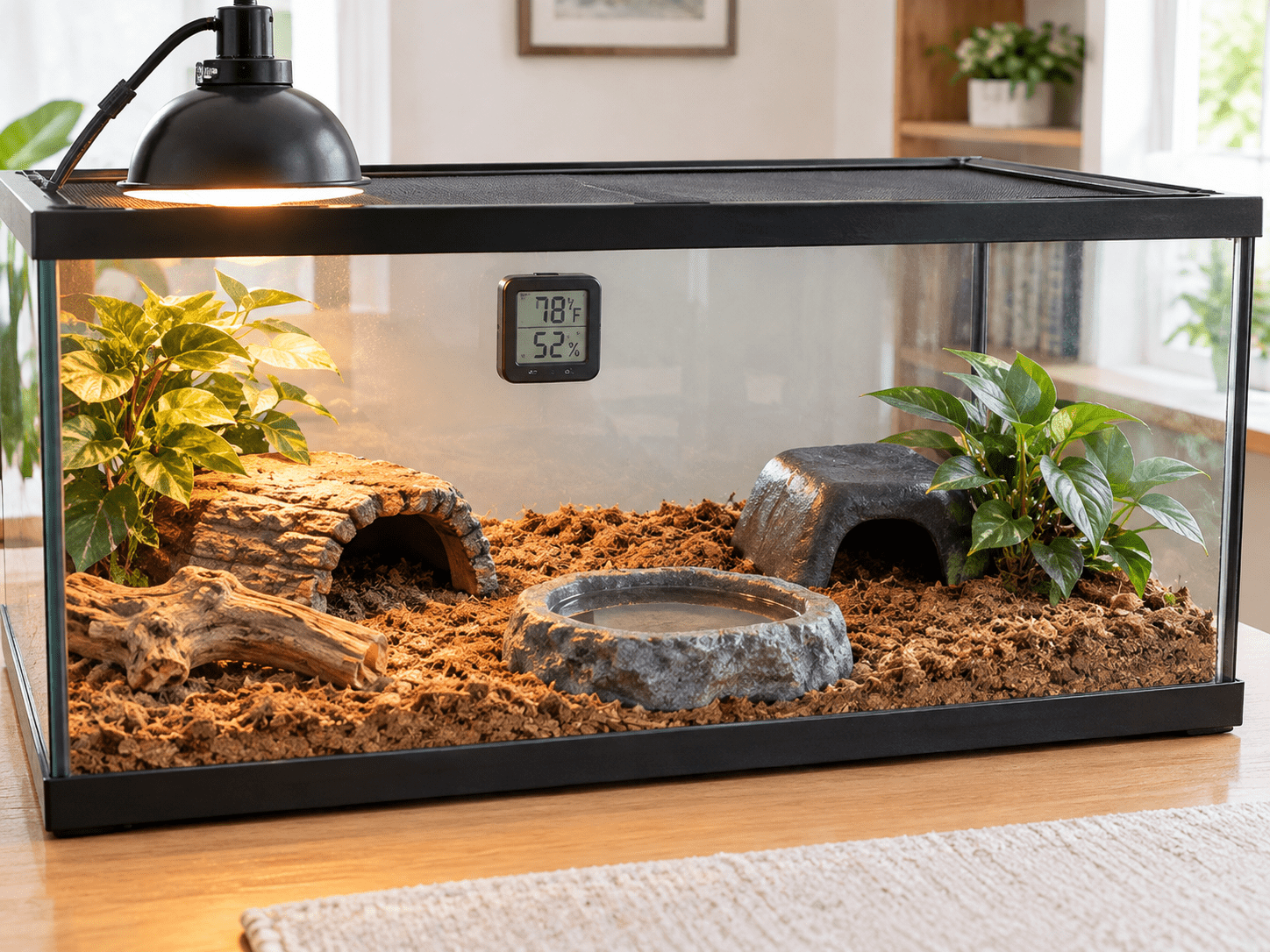
For most healthy, captive-kept individuals, frozen-thawed prey is the generally preferred approach over live prey — it avoids the risk of an unsupervised live rodent injuring a snake that isn’t hungry enough, and it’s considered more humane. The schedule and method still vary by species, so don’t apply one blanket routine to all of them:
- Corn snake: babies every other day, juveniles about once a week, adults every one to two weeks. PetMD’s corn snake care sheet specifically recommends feeding in a separate container away from the home enclosure, so the snake doesn’t learn to associate your hand or the enclosure opening with food (PetMD).
- Ball python: the same age-based schedule — babies every other day, juveniles weekly, adults every one to two weeks — and PetMD’s ball python care sheet gives the same separate-container recommendation, for the same reason (PetMD). Some ball pythons become more feeding-shy after being moved for a meal; if yours repeatedly refuses food after a transfer, ask a vet or experienced keeper whether feeding inside the enclosure works better for that individual.
- California kingsnake: hatchlings roughly every 5–7 days, juveniles about every 7 days, and adults every 7–14 days depending on size, with prey sized to the snake’s own girth rather than a fixed weight (NAHF). This source doesn’t specify a separate-container requirement — follow your breeder’s or vet’s guidance for your individual snake.
- Rosy boa: juveniles every 5–7 days, adults every 10–14 days (ReptiFiles), again without an explicit separate-container recommendation in that source.
Across all four, use feeding tongs rather than bare hands — a snake’s feeding response is a reflex, not a judgment call, and fingers can look like food at close range.
Pet Care Tip: Feed in the evening or at night when possible, matching most snakes’ natural activity pattern, and always use tongs.
Captive-Bred vs. Wild-Caught, and Checking Your Local Laws
Captive-bred is generally the better choice. Wild-caught snakes commonly carry internal and external parasites, and the stress of capture and shipping can suppress their immune system to the point where they get sick, refuse food, or don’t survive the transition to captivity at all (Texas A&M College of Veterinary Medicine).
Captive-bred snakes are, as a group, often better adjusted to life in an enclosure and come from a breeder who can answer real questions about that specific animal’s history — but health and temperament still vary by individual, and a captive-bred label alone isn’t a guarantee. Ask the breeder directly about the animal’s feeding history, general health, and how long they’ve had it, rather than relying on the label by itself.
Legal status has three separate layers worth checking, and this section covers U.S. law only. At the federal level, the U.S. Fish & Wildlife Service restricts interstate transport and import of several large constrictor species — including the Burmese python, reticulated python, and several anaconda species — as injurious wildlife due to invasive-species concerns (USFWS). Separately, individual states, and sometimes individual cities or counties, can add their own restrictions on top of federal law, and these vary and change over time.
Based on the federal listings currently in effect, corn snakes, ball pythons, kingsnakes, and rosy boas are not federally restricted — but confirm your own state and local rules directly before buying, since no single article can track every local ordinance. If you’re outside the U.S., check your own country’s import and ownership rules instead — they’re often entirely different.
Pet Care Tip: Ask any breeder directly: “Is this captive-bred, and how long has it been feeding reliably for you?” A reputable breeder will answer both questions specifically, not vaguely.
Common First-Time-Owner Mistakes
- Buying on impulse without checking real cost, lifespan, and local legal status first.
- Choosing a species based on looks alone, rather than temperament, adult size, and husbandry needs.
- Not escape-proofing the enclosure before bringing the snake home. Snakes are remarkably good at finding small gaps — secure lids and check for gaps before, not after, your first escape.
- Handling too much in the first week. A newly acquired snake needs time to settle before regular handling begins; too much too soon can cause stress and feeding refusal.
- Guessing at temperature and humidity instead of measuring them. Equipment dials aren’t a substitute for an actual thermometer/hygrometer at snake level — check both the warm and cool ends directly, using the species-specific figures above.
- Handling around feeding time. A strike during feeding is a feeding reflex, not aggression — but it still hurts. Keep handling and feeding sessions clearly separated.
- Assuming wild-caught is a cheaper shortcut. It usually isn’t once you account for vet bills, and it’s a worse start for the animal.
- Assuming a seller’s willingness to ship means ownership is legal where you live. Shipping legality and ownership legality aren’t the same thing — confirm your own state and local rules directly.
- Skipping a simple feeding log. Without a record of dates and outcomes, it’s hard to tell a normal pre-shed fast from an actual feeding problem worth calling a vet about.
What Day-to-Day Life With a Pet Snake Is Actually Like
Most beginner snakes need far less daily interaction than people expect: feeding intervals range roughly from every 5 to 14 days depending on species and age (see the feeding breakdown above), and handling frequency has more to do with the individual snake’s temperament and how settled it is than any fixed rule — some snakes tolerate handling several times a week, others do better with less, especially soon after a home change.
What doesn’t go away is the daily maintenance: checking temperature and humidity, spot-cleaning waste, and topping up water are a real, regular routine, not something that runs itself once the equipment is set up. Shedding happens periodically (more often in younger, faster-growing snakes) and is entirely normal — you’ll notice dulled skin and cloudy eyes for a few days beforehand, followed by the snake rubbing off its old skin in one piece if humidity is adequate.
Some species from temperate climates may also go through brumation, a winter slowdown in activity and appetite that mimics hibernation — normal, but worth researching for your specific species so it doesn’t look like illness.
Pet Care Tip: Keep a simple log of feedings, sheds, and any handling — patterns (like a skipped meal right before a shed) are much easier to spot in writing than from memory.
Species to Approach With Caution (Not for Beginners)
Large constrictors demand far more space, strength, and experience than a first snake should require. The U.S. Fish & Wildlife Service has federally listed the Burmese python, reticulated python, and several anaconda species as injurious wildlife due to their impact as invasive species (notably Burmese pythons in Florida), restricting their import and interstate transport (USFWS) — a useful signal, separate from any additional state or local restrictions, that these are not casual first-snake choices regardless of legality.
Beyond the legal angle, their adult size alone (well over 10 feet for several of these species) makes safe solo handling genuinely difficult, even for experienced keepers. (Boa constrictors are commonly grouped with this list informally, but were explicitly excluded from federal injurious-wildlife restrictions — they’re still a demanding, large-bodied snake better suited to an owner with prior experience.)
Practical Examples
The following are illustrative scenarios based on patterns reptile keepers and rescues commonly describe, not documented case studies.
The almost-impulse-buy. At a reptile expo, a first-time visitor was drawn to a striking ball python morph and nearly bought it on the spot. Instead, they spent two weeks pricing out the full setup and confirming their work travel schedule could accommodate biweekly feeding — then returned and bought confidently, with a plan.
The feeding hesitation that faded. A new corn snake owner felt genuinely unsettled by handling frozen-thawed mice for the first feeding. By the third feeding, it had become a routine, unremarkable five minutes of their week.
The legal check that paid off. Before ordering a snake species online, a household checked their state’s exotic pet regulations first and discovered that particular species required a permit they didn’t have — saving them from an expensive and stressful mistake.
Editor’s Insights
- Find and confirm an exotic-animal vet in your area before bringing a snake home — many general veterinary practices don’t treat reptiles, and locating one during an emergency is far harder than checking in advance.
- Rare or specialty color morphs can cost significantly more than standard-pattern animals of the same species — an unusually cheap listing for a sought-after morph is a reason for caution, not excitement.
- Budget for at least one enclosure upgrade. Juveniles of most beginner species outgrow their starter enclosure within the first one to two years — a bigger tank is a predictable cost, not an edge case.
- Don’t judge a new snake’s personality in the first month. Many individuals are more defensive or reluctant to eat right after a home change and settle into calmer, more predictable behavior once fully acclimated.
Which Situation Applies to You?
Can you commit to a pet that may live 15–30+ years? If you’re not sure, spend time with a friend’s snake or visit a reptile rescue before buying rather than deciding from a care sheet alone. Are you comfortable feeding frozen-thawed rodents indefinitely? If the idea still bothers you after sitting with it, a snake likely isn’t the right fit right now. Have you checked your local laws — federal, state, and local — for the specific species you’re considering? Confirm before you purchase, not after. Do you have a realistic budget for the full first year, not just the animal itself? Price out the complete setup before you commit.
Beginner Snake Comparison
|
Species |
Adult Size |
Typical Lifespan |
Temperament |
Beginner Fit |
|
Corn snake |
4–6 ft |
20+ years |
Very docile, tolerates handling well |
Commonly recommended first snake |
|
Ball python |
4–5 ft |
Up to 30 years |
Calm, shy; can refuse food under stress |
Excellent, but rewards precise husbandry |
|
California kingsnake |
~3.5–5 ft |
20+ years |
Hardy, strong feeding response; house alone |
Very forgiving, but never pair with other snakes |
|
Rosy boa |
17–44 in |
30+ years |
Exceptionally docile, rarely bites |
Smaller-bodied alternative to the top three |
Figures above are drawn from the species-specific sources cited throughout this guide (see Sources & References) and are typical ranges — confirm current specifics for your individual animal with your breeder or an exotic vet.
Checklists
Before You Buy Checklist
- Confirm the species is legal to own where you live (federal, state, and local)
- Price out the full first-year setup and ongoing costs
- Confirm you’re genuinely comfortable with frozen-thawed feeding long-term
- Identify a reputable, captive-bred source
- Set up and test the enclosure completely before bringing the snake home
First Week at Home Checklist
- Minimize handling for the first several days
- Expect some hiding and a possible skipped first meal — this is normal settling-in behavior
- Verify temperature and humidity with an actual thermometer/hygrometer, not just equipment dials
- Offer the first feeding only once the snake appears settled and alert
Frequently Asked Questions
What is the best beginner pet snake for a first-time owner?
Corn snakes are the most commonly suggested first snake, with ball pythons and kingsnakes as strong alternatives — though each has different husbandry demands (see the species breakdown above).
How long do pet snakes actually live?
Most beginner species live 15–30 years: corn snakes commonly reach 20+, ball pythons up to 30, and rosy boas 30+ with good care.
Is it safe to feed a pet snake live mice, or should it be frozen-thawed?
Frozen-thawed is generally the preferred, safer approach for beginner species — an unsupervised live rodent can actually injure a snake that isn’t ready to eat.
How much does it really cost to set up a pet snake enclosure?
For a corn snake in the U.S. as of 2026, getting started (enclosure, equipment, the snake, and an initial vet visit) runs roughly $265–$800, with ongoing costs of about $200–$610 a year after that — plus a separate one-time emergency fund of $200–$600 worth setting aside. Treat these as a planning range and get current quotes from your own suppliers.
Is it legal to own a pet snake where I live?
This depends on your country, and in the U.S., on your state and sometimes your city or county too. The beginner species covered in this guide aren’t federally restricted, but state and local rules vary and change — confirm directly before buying any species you’re unsure about.
How often do beginner snakes need to be fed and handled?
It varies by species and age: corn snakes and ball pythons eat every other day as babies, weekly as juveniles, and every one to two weeks as adults; kingsnakes eat roughly every 5–14 days depending on age and size; rosy boas eat every 5–7 days as juveniles and every 10–14 days as adults. Handling frequency depends more on the individual snake than a fixed rule — a few times a week is a reasonable starting point for a settled snake.
What’s the difference between a captive-bred and a wild-caught snake?
Captive-bred snakes are generally better adjusted to life in an enclosure; wild-caught snakes often carry parasites and can struggle with the stress of capture and relocation. Health and temperament still vary by individual either way.
Which snakes should a beginner avoid?
Large constrictors like Burmese pythons, reticulated pythons, and several anaconda species require far more space, strength, and experience than a first snake should — several are also federally restricted in the U.S. due to invasive-species concerns.
Do pet snakes need to be handled every day?
No — most beginner species do fine with handling a few times a week; daily handling isn’t necessary and can even add unneeded stress.
What does it mean when a snake stops eating or “goes off feed”?
It’s a common, usually temporary issue tied to stress, shedding, seasonal brumation, or minor husbandry issues — persistent refusal beyond a few weeks is worth a call to an exotic-animal vet.
Related Reading
- Signs a Bearded Dragon Is Stressed
- Bearded Dragon Glass Surfing: Causes & How to Stop
- Why Is My Turtle Not Eating?
- Best Small Pets That Like to Cuddle: A Real Guide
Sources & References
- PetMD, “Corn Snake Care Sheet” — size, lifespan, housing, temperature, humidity, feeding frequency and method
- PetMD, “Ball Python Care Sheet” — size, lifespan, housing, temperature, humidity, feeding frequency and method, stress-related feeding refusal
- National Antivenom & Herpetological Foundation, “California Kingsnake Care 101” and “California Kingsnake Diet” — size, lifespan, housing, feeding frequency by age, cannibalistic-housing note
- ReptiFiles, “Rosy Boa Care Sheet” — size, lifespan, temperament, feeding frequency, enclosure sizing formula, temperature, humidity
- Texas A&M College of Veterinary Medicine, “Captive Bred vs. Wild Caught” — parasite and stress risks of wild-caught reptiles
- U.S. Fish & Wildlife Service, “Service Lists Four Nonnative, Large Constrictor Snakes as Injurious Wildlife” — federal legal restrictions on large constrictor species; confirms boa constrictor was considered and excluded
- ExoPetGuides, “How Much Does a Corn Snake Cost?” — itemized U.S.-dollar cost estimates for setup, the animal, vet visits, and ongoing care; single-source estimate, used as the basis for the cost breakdown above
- Google Search Central, FAQ structured data documentation — confirms FAQ rich results stopped appearing in Google Search as of May 7, 2026 (referenced for the schema recommendation in the editorial notes)
Written by the Pets Store Home editorial team and fact-checked against the veterinary, herpetological, and government sources cited throughout this article and listed above. No licensed veterinarian has reviewed this draft, and it is not a substitute for professional veterinary or exotic-pet-care advice. This article is for general education only, is written for U.S. readers, and exotic pet ownership laws vary by country, state, and locality — confirm current regulations for your specific location and species before purchasing.
Last fact-checked: September 2026 — species care parameters, lifespan figures, feeding schedules, captive-bred/wild-caught health considerations, and federal legal restrictions were checked against the published sources listed above; cost figures are U.S.-dollar estimates
[…] Which foreign pets are legal in Washington State? […]