
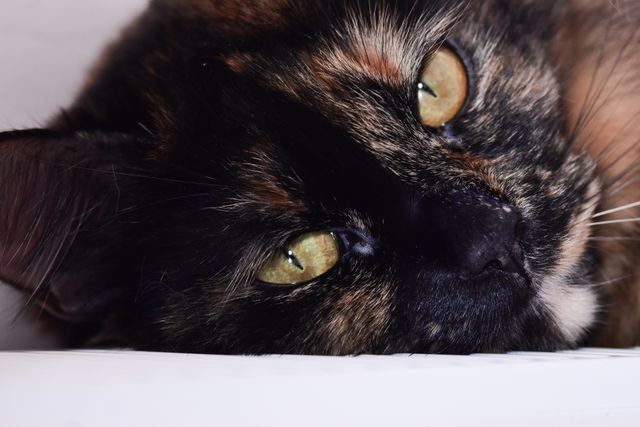
Are tortoiseshell cats rare? Not as a group. Female tortoiseshell cats are a common sight in shelters and homes across the US, and “tortoiseshell” is a coat color pattern, not a breed. What is rare is a male tortoiseshell cat. Because the coat depends on having two X chromosomes, torties are almost always female, and the few males usually carry an extra X and are typically sterile.
This guide explains the genetics behind the tortoiseshell cat coat in plain English, why males are so unusual, how a tortie differs from a calico, which breeds can carry the pattern, and what the evidence says about tortoiseshell cat personality.
Key takeaways
- Tortoiseshell describes a coat pattern of black (or a related color) mixed with orange, not a breed.
- Female torties are common. Male torties are rare because the pattern usually needs two X chromosomes.
- Most male tortoiseshell cats have XXY chromosomes, and VCA notes these males are infertile.
- A calico has the same two colors plus distinct areas of white.
- Many breeds, and plenty of mixed-breed cats, can have a tortoiseshell coat.
- “Tortitude” is a popular idea, but personality depends on the individual cat, not just its coat.
In this guide
Are Tortoiseshell Cats Rare? The Short Answer
So, are tortoiseshell cats rare? For females, no. Torties appear in many breeds and in everyday mixed-breed cats, and adoptable torties are easy to find at shelters. The pattern itself simply isn’t unusual among female cats.
The real rarity is sex. PetMD’s veterinarian-reviewed guide to feline genetics quotes Cornell’s Dr. Bruce Kornreich explaining that torties and calicos are almost always female. A male tortie only happens in very rare cases, which is why people ask “are tortoiseshell cats rare?” and get two different answers.
| Cat | How rare? | Why |
|---|---|---|
| Female tortoiseshell | Common | Two X chromosomes can carry both coat colors |
| Male tortoiseshell | Very rare | Usually needs an extra X chromosome (XXY) |
| Tortoiseshell as a breed | Doesn’t exist | It’s a coat pattern found across breeds |
What Is a Tortoiseshell Cat?
A tortoiseshell cat, often called a “tortie,” has a coat that mixes two color families in patches or swirls. The Cat Fanciers’ Association (CFA) describes a tortoiseshell as a black, chocolate, or seal female cat with patches of red throughout the coat. In everyday terms, that usually looks like black and orange, mottled or brindled together.
Softer versions exist too. A “dilute” tortie shows paler shades, often described as blue (gray) and cream. Every tortoiseshell cat’s pattern is unique, so no two look exactly alike.

The X-Chromosome Genetics Behind the Tortie Coat
The answer to “are tortoiseshell cats rare?” comes down to one chromosome. In cats, the main orange gene sits on the X chromosome. A 2025 study published in Current Biology and reported by Stanford Medicine identified the long-sought mutation behind orange fur: a small deletion on the X chromosome that increases activity of a gene called Arhgap36.
Here’s how that creates a tortie, step by step:
- Females have two X chromosomes (XX). One X can carry the orange version and the other a non-orange version, such as black.
- Each cell switches off one X. Early in development, every cell randomly inactivates one of its two X chromosomes, a process called X inactivation.
- Patches form. Cells using the “orange” X make orange fur, while cells using the other X make black fur. The result is a mosaic of both colors.
- Males usually have one X (XY). With only one X, a typical male is either orange or not orange, but not both.
Because the pattern depends on random X inactivation, even cloned or closely related torties can look different from one another.
Why a Male Tortoiseshell Cat Is So Rare
Are tortoiseshell cats rare when they’re male? Yes, very. A male tortoiseshell cat breaks the usual rule. According to PetMD’s genetics guide, in very rare cases a male is born with an extra X chromosome (XXY), which lets him show the mosaic coat. The same source notes that most of these males are sterile, and Dr. Kornreich adds that many have shorter lifespans than female torties.
VCA Animal Hospitals confirms the fertility link, explaining that male calico and tortoiseshell cats are typically infertile because they carry XXY chromosomes instead of the usual XY.
How rare are male torties?
Exact numbers are hard to pin down. One widely cited estimate, which Vetstreet attributes to research from the University of Missouri College of Veterinary Medicine, is that only about 1 in 3,000 calico cats is male. Male torties are considered similarly uncommon. The CFA also notes that male tortoiseshells do occur occasionally and are not always sterile, so there are exceptions.
Pet Care Tip: If you think you’ve adopted a male tortie, ask your vet to confirm the cat’s sex and discuss neutering and any extra health checks. Don’t assume a rare coat means the cat is worth a high price; adoption is a great way to find one.
Whether male or female, every tortie needs the same core care as any cat: regular vet visits, vaccinations, a complete diet, and spaying or neutering. The ASPCA notes that spaying female cats prevents uterine infections and decreases the incidence of breast tumors.
Tortie vs. Calico: What’s the Difference?
Whether you search “calico vs tortie” or “tortie vs calico,” the answer starts with genetics. Torties and calicos share the same X-chromosome color genetics, which is why both are nearly always female. The difference is white. The CFA describes a calico as a female cat with white and large solid areas of black and red, or of the dilute versions. A tortoiseshell cat has little or no white, and its colors are usually more mixed together. If you’re still asking “are tortoiseshell cats rare compared with calicos?”, neither is rare in females.
| Feature | Tortoiseshell | Calico |
|---|---|---|
| Colors | Black (or chocolate) and orange, or blue and cream | The same colors plus white |
| Pattern | Mottled, brindled, or patched | Larger, more distinct patches |
| White | Little or none | Clear white areas from a separate white-spotting gene |
| Sex | Almost always female | Almost always female |
| Breed? | No, a coat pattern | No, a coat pattern |
You may also hear “torbie,” a tortie with tabby striping, and “caliby,” a calico with tabby markings. These are variations of the same underlying genetics. For more color-pattern guides, see our article on orange and white cats.
Which Breeds Can Be Tortoiseshell?
Because tortoiseshell is a pattern rather than a breed, it shows up wherever a breed’s genetics allow the orange gene alongside black or its dilutes. The CFA’s color guide gives examples such as a tortoiseshell Persian or Cornish Rex, a blue-cream American Curl, and tortie-point Colorpoint Shorthairs. So, are tortoiseshell cats rare within a single breed? Not usually, though a tortie of one specific pedigreed breed may take longer to find, since most torties you’ll meet are mixed-breed cats.
- Persian: long-coated torties and blue-creams, which need daily grooming. See our guide to how much a Persian cat costs.
- Cornish Rex: a curly, short coat that can show the tortie mix.
- American Curl: listed by the CFA in blue-cream examples.
- Colorpoint Shorthair: tortie colors appear on the points, such as the face, ears, legs, and tail.
- Domestic shorthair and longhair cats: most torties in US shelters are mixed-breed cats.
What about dilute tortoiseshell cats? A dilute tortie, often called a blue-cream, carries the same genetics with softer blue-gray and cream shades. It can appear in many of the breeds above, as well as in mixed-breed cats.
Breed standards differ between registries, so if you’re considering a pedigreed cat, check the specific breed’s accepted colors. Cornell’s Feline Health Center notes that with a pedigreed cat, size, appearance, and to some extent personality are likely to fit the breed profile, while mixed-breed cats are less predictable.
Tortoiseshell Cat Personality: “Tortitude” Myths vs. Facts
Many owners swear their tortie is sassy, vocal, or strong-willed, and the nickname “tortitude” has stuck as shorthand for tortoiseshell cat personality. Is there anything to it? One study offers a little support, with important limits.
Researchers at the University of California, Davis, led by veterinary behaviorist Dr. Elizabeth Stelow, surveyed more than 1,200 cat owners. According to Veterinary Practice News, owners reported that calico and tortoiseshell cats were more likely to hiss, chase, bite, swat, or scratch during interactions with people. But the cats weren’t observed directly, and Stelow stressed that most of these cats make lovely pets.
| Myth | What the evidence suggests |
|---|---|
| Every tortie has an attitude | Personality varies widely; many torties are calm and affectionate |
| Coat color controls behavior | One owner survey found a weak link, but it didn’t prove cause and effect |
| Torties make poor pets | The UC Davis lead researcher said most make lovely pets |
| A rare coat means a rare cat | Female torties are common; only males are rare |
When you meet a tortie for adoption, judge the individual. Cornell advises looking for a cat that’s friendly and comfortable with people, and notes an adult cat’s personality is already established. If a cat’s behavior changes suddenly, check with your vet first; our guide to cat behavior disorders explains common causes.
Example Scenario (illustrative)
Priya visits a shelter in Colorado and asks, “Are tortoiseshell cats rare?” after falling for a 3-year-old black-and-orange female. Staff explain that female torties are common and that this one has a gentle, lap-loving temperament. Priya adopts her based on how she behaves, not her coat, and schedules a vet checkup for the first week.
Are Tortoiseshell Cats Rare? FAQs
Are tortoiseshell cats rare?
Female tortoiseshell cats are common. Male torties are very rare because the coat usually requires two X chromosomes, so most males with the pattern have an extra X (XXY).
Is a tortoiseshell cat a breed?
No. Tortoiseshell is a coat color pattern, not a breed. It appears in many pedigreed breeds, such as Persians and Cornish Rex, and in mixed-breed cats.
Can a male tortoiseshell cat have kittens?
Usually not. VCA notes male tortoiseshell and calico cats typically carry XXY chromosomes and are infertile, though the CFA says rare exceptions occur.
What is the difference between a tortie and a calico?
Both mix black and orange or their dilute shades. A calico also has distinct areas of white, while a tortoiseshell has little or no white.
Do tortoiseshell cats have a special personality?
Not necessarily. One UC Davis owner survey linked tortie and calico coats to more feisty behavior, but personality varies by individual, and most torties make lovely pets.
How much is a tortoiseshell cat worth?
Female torties aren’t rare, so the pattern alone doesn’t add value. Cost depends on breed and source, and many wonderful torties are available for adoption at shelters.
Do male tortoiseshell cats have health problems?
Some may. PetMD’s genetics guide notes many male torties have shorter lifespans than females. Ask your vet about checkups and care for an XXY cat.
Final Verdict: Are Tortoiseshell Cats Rare?
Are tortoiseshell cats rare? Female torties are common, and tortoiseshell is a pattern rather than a breed. The rare one is the male tortoiseshell cat, who usually has an extra X chromosome and is typically sterile. When choosing a tortie, focus on the individual cat’s health and temperament rather than coat-color myths.
Your next steps
- Visit a local shelter or rescue and meet adult torties in person.
- Book a vet checkup within the first week of bringing a new cat home.
- Explore more coat and breed guides in our cat care section, including black cats with green eyes.
Share a photo of your tortie with our community on Facebook.
About the author
Written and reviewed by the Pets Store Home Editorial Team: pet owners and animal lovers who check every guide against trusted US veterinary and animal-welfare sources. This article is general information, not a substitute for professional veterinary advice. Always talk to your veterinarian about your own pet’s health.
How we checked this guide: We used VCA Animal Hospitals, the ASPCA, Cornell University’s Feline Health Center, PetMD (veterinarian-reviewed), the Cat Fanciers’ Association, Stanford Medicine’s report on 2025 research in Current Biology, and reporting on the UC Davis coat-color study. We review this article every 12 months, or sooner if research changes.
Last reviewed: October 2026
Sources
- PetMD – 9 Fascinating Genetic Anomalies in Cats (reviewed by Jo Cornett, DVM) (accessed Oct 2026)
- VCA Animal Hospitals – Infertility in Male Cats (accessed Oct 2026)
- Stanford Medicine – Genetic Mystery of Orange Cats Solved (Current Biology, 2025) (accessed Oct 2026)
- Cat Fanciers’ Association – Coat & Color Descriptions (accessed Oct 2026)
- Cat Fanciers’ Association – Basic Feline Genetics (accessed Oct 2026)
- Vetstreet – Can Calico Cats Be Male? (accessed Oct 2026)
- Veterinary Practice News – UC Davis Study on Cat Coat Patterns and Behavior (accessed Oct 2026)
- Cornell Feline Health Center – Choosing and Caring for Your New Cat (accessed Oct 2026)
- ASPCA – Spay/Neuter Your Pet (accessed Oct 2026)
[…] Which foreign pets are legal in Washington State? […]