
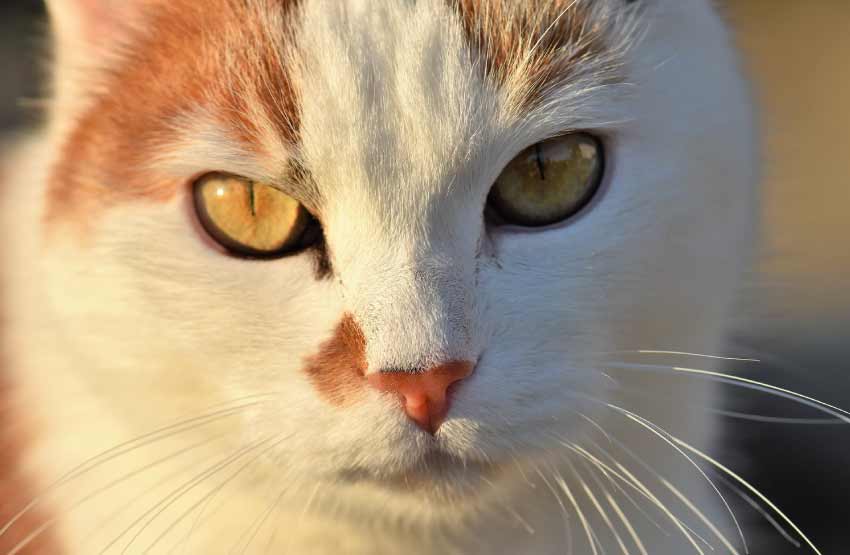
Orange and White Cat Breed Guide: Plus Black, Grey and Fluffy Long-Haired Breeds (2026)
There’s no single orange and white cat breed. Orange and white is a coat color and pattern that shows up in many breeds, including the Turkish Van, Maine Coon, Persian, Norwegian Forest Cat, and American and British Shorthairs, as well as in countless mixed-breed domestic cats. About 80% of orange cats are male, but orange and white females are common too.
So if you’ve fallen for a ginger and white cat at a shelter, its breed is more likely “domestic shorthair” than anything rare. This guide explains which breeds come in orange and white, the genetics behind the colors, and the black, gray and fluffy long-haired breeds people often compare them with.
Good to know: color doesn’t tell you a cat’s breed, health or personality. If a seller charges a premium for an “orange and white breed,” ask for registration papers from a cat registry such as the CFA or TICA. Many orange and white cats are waiting in US shelters.
Key takeaways
- Orange and white is a pattern, not a breed; many orange and white cats are mixed-breed domestic cats.
- The Turkish Van’s classic look is a white body with color on the head and tail, and red is one of its accepted colors.
- Orange comes from a gene on the X chromosome, so about 80% of orange cats are male.
- White patches come from a separate spotting gene, not from the orange gene.
- About 80% of white cats with two blue eyes start to show signs of deafness.
In this guide
Is There an Orange and White Cat Breed?
No. Cat breeds are defined by registries such as the Cat Fanciers’ Association (CFA) and The International Cat Association (TICA) by body type, head shape, coat length and ancestry. Color is only one part of a breed standard, and most breeds allow many colors. When people search for an orange and white cat breed, they’re usually looking at a pattern called red and white bicolor, or “ginger and white.”
Most orange and white cats in US homes are domestic shorthairs or domestic longhairs, meaning mixed-breed cats with no registered pedigree. They’re just as lovable as purebreds, and they’re far easier to find at shelters. The same goes for any white and orange cat, and for black and white cats: color alone never identifies a breed, which is also why there are many white cat breeds rather than one.
Breeds That Come in the Orange and White Cat Breed Pattern
Many pedigreed breeds include red (orange) and white among their accepted colors. These are some of the best known:
| Breed | Coat | What to know |
|---|---|---|
| Turkish Van | Semi-long, no undercoat | White body with color mainly on the head and tail; many enjoy water |
| Maine Coon | Long, shaggy | Large; 8 to 20 pounds; many colors and patterns |
| Persian | Long, very full | Bicolor Persians include red and white; heavy grooming |
| Norwegian Forest Cat | Long, water-resistant double coat | Most colors allowed, including red and white |
| American and British Shorthair | Short, dense | Both come in red and white bicolor |
| Domestic shorthair or longhair | Any | Mixed breed; the most common orange and white cat |
The CFA’s Turkish Van profile describes the preferred look as a chalk-white body with colored markings confined to the head and tail. Males can weigh about 20 pounds, and the breed keeps growing until about age five.
The Genetics Behind the Orange and White Cat Breed Look
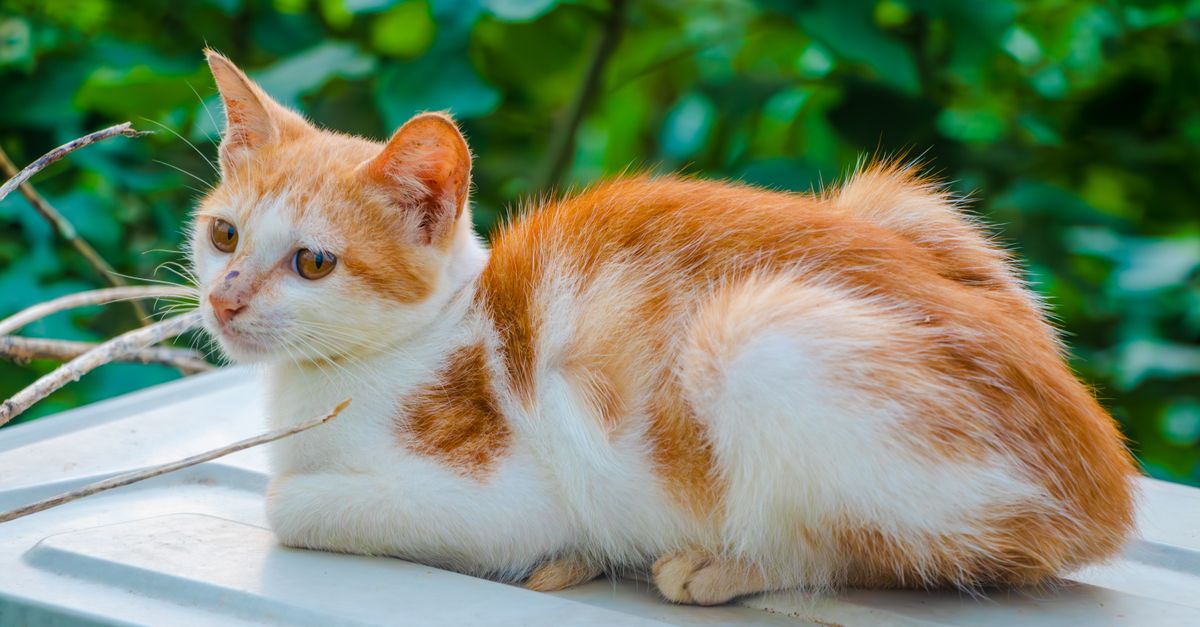
Two separate genes create an orange and white coat: one for orange color and one for white spotting.
The orange gene. In 2025, two research teams at Stanford University and Kyushu University in Japan identified the mutation behind orange fur. NPR reported that the mutation increases the activity of a gene called Arhgap36 in pigment cells. It sits on the X chromosome, which is why orange shows up differently in males and females.
The white spotting gene. White patches come from a different gene. A CFA article on bicolor Persians describes the piebald spotting gene as one of the most common natural mutations in cats. It controls where pigment appears, from a little white on the chest and paws to the mostly white “van” pattern.
| Pattern | What it looks like |
|---|---|
| Orange with white “mittens” | Mostly orange with white paws, chest or chin |
| Red and white bicolor | Roughly a third to half white, with orange patches |
| Van pattern | Mostly white, with orange on the head and tail |
| Calico | White plus both orange and black (or their diluted forms) |
What is an orange and white tabby cat?
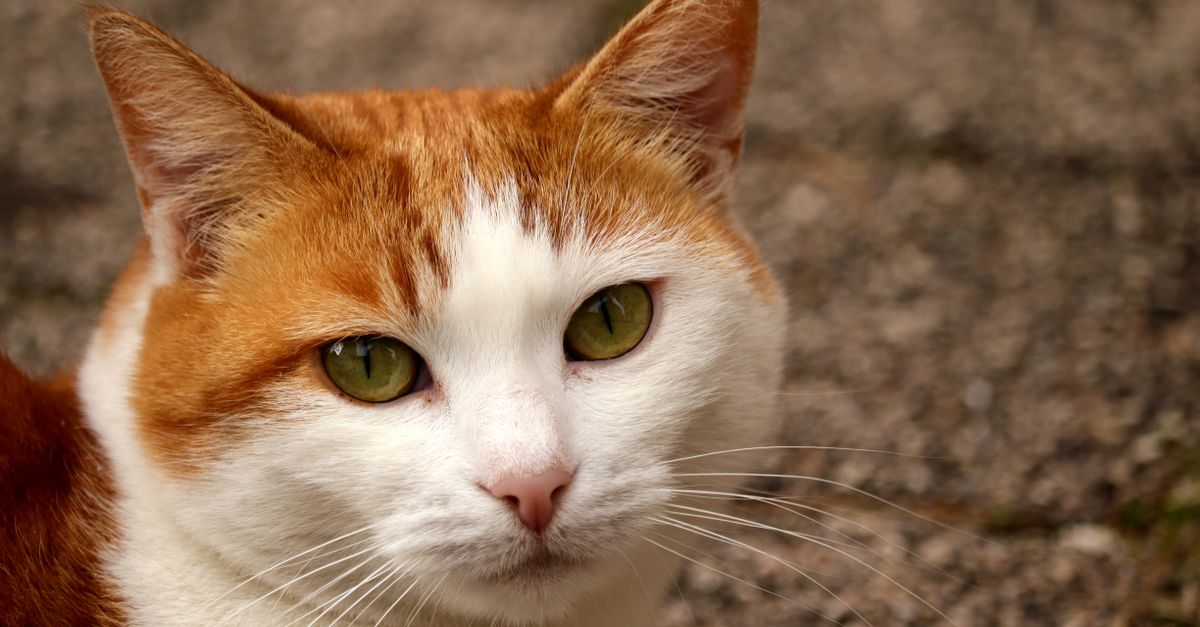
Orange cats usually show tabby striping, even when it’s faint, so most cats sold as an orange and white cat breed are technically orange and white tabbies. Look for an “M” shape on the forehead and stripes on the legs and tail. The orange and white striped cat people describe is the same thing: a red tabby with white spotting.
Is an Orange and White Cat Always Male?
No, but males are more common. NPR reports that approximately 80% of orange cats are male. A male needs only one copy of the orange gene on his single X chromosome to be orange. A female needs it on both X chromosomes, which happens less often.
A female with orange on one X chromosome and black on the other becomes a tortoiseshell, or a calico if she also has white spotting. The Merck Veterinary Manual explains that almost all calico and tortoiseshell cats are female. The rare males have an extra X chromosome (XXY) and are usually sterile.
Black, Gray and Fluffy Long-Haired Cat Breeds
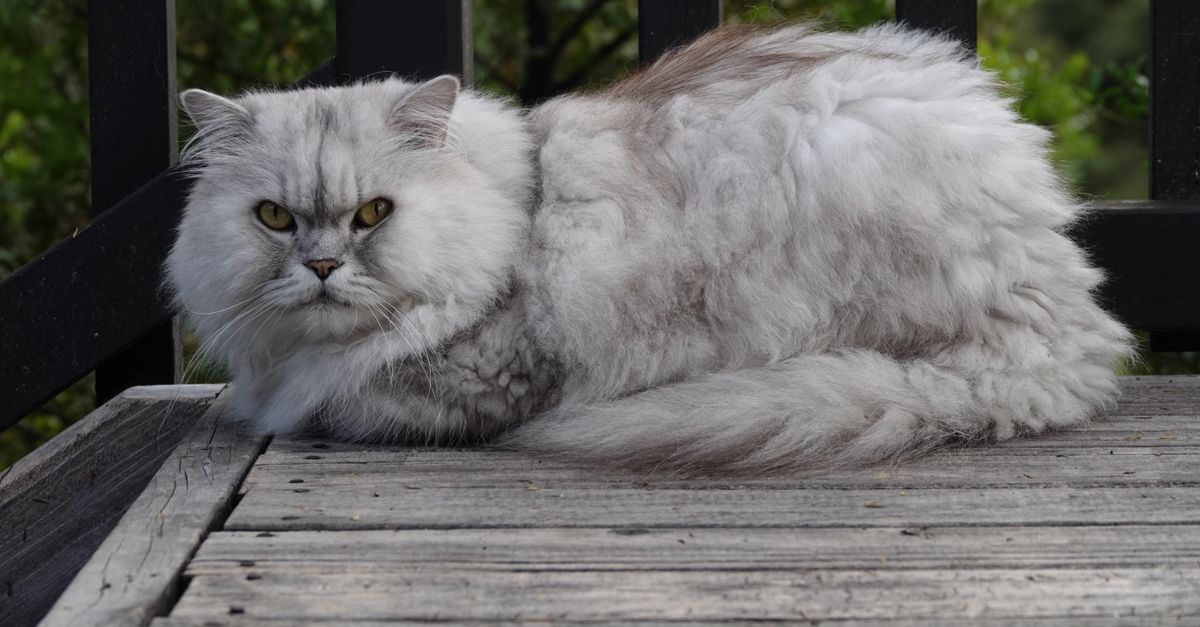
Many people searching for an orange and white cat breed also compare fluffy long-haired breeds in black and gray. Black and gray (spelled “grey” in the UK, and called “blue” by breeders) are colors, not breeds, just like orange. These long-haired breeds come in black, gray or both:
| Breed | Colors | Grooming |
|---|---|---|
| Persian | Black, blue (gray), red, white and many more | High; long, full coat mats easily |
| Maine Coon | Many colors, including black and gray | Moderate; weekly combing |
| Norwegian Forest Cat | Most colors, including black and gray | Moderate; heavy spring shed |
| Nebelung | Blue-gray only, sometimes silver-tipped | Low; weekly brushing |
The CFA’s Norwegian Forest Cat profile describes a dense undercoat under long, glossy, water-resistant guard hairs, with males weighing 12 to 16 pounds. PetMD describes the Nebelung as a calm, medium-sized cat with a silky blue-gray coat that doesn’t tend to mat. It’s rare in the US, so look-alikes often turn up at shelters. For a gray cat with white, see our guide to the gray and white breed of cat.
How much grooming does a fluffy long-haired cat need?
More than a shorthair. VCA notes a Maine Coon’s coat stays tangle-free with weekly combing, while Persians usually need much more frequent attention to prevent mats. Brushing also helps with hairballs: the Cornell Feline Health Center encourages owners to brush and comb cats daily to reduce hairballs. Our Persian cat cost guide covers grooming expenses.
Example scenario (illustrative)
Lauren in Milwaukee saw a fluffy orange and white cat online listed as a “rare orange and white cat breed” for $1,200. She asked for registration papers, and the seller had none. She visited her local shelter instead and adopted a long-haired orange and white domestic cat for a small adoption fee. She budgets 10 minutes a day for brushing.
White Cats, Blue Eyes and Deafness
Mostly white cats deserve a hearing check. Cornell’s College of Veterinary Medicine reports that about 80 percent of white cats with two blue eyes start to show signs of deafness, beginning a few days after birth. If you’re adopting a mostly white or van-pattern cat with blue eyes, ask your vet to test its hearing. Deaf cats can live happy lives indoors with a few adjustments.
Does Coat Color Affect Personality?
Many owners describe orange cats as friendly and outgoing, but there’s little strong evidence that coat color drives personality. Upbringing, socialization and the individual cat matter far more. Breed can make some difference: Persians are often described as calm, and the CFA describes Turkish Vans as sweet, interested and fond of water. Meet the cat before you decide, and ask the shelter or breeder how it behaves with people and other pets.
How to Find an Orange and White Cat
Start with local shelters and rescue groups, where orange and white domestic cats are common. If you want a specific pedigreed breed, look for a breeder registered with the CFA or TICA who can show papers, health records and the kittens’ parents.
“What breed is my orange and white cat?” checklist
- Do you have registration papers? If not, it’s most likely a domestic shorthair or longhair.
- Is the coat long and shaggy with a big ruff and tufted ears? Maine Coon or Norwegian Forest Cat traits.
- Is the face flat with a very full coat? Persian or Exotic traits.
- Is the body mostly white, with orange only on the head and tail? That’s the van pattern.
- Want certainty? A cat DNA test can estimate ancestry, but only papers prove a pedigree.
Orange and White Cat Breed: FAQs
What breed is an orange and white cat?
Usually a domestic shorthair or longhair. Pedigreed breeds that come in orange and white include the Turkish Van, Maine Coon, Persian, Norwegian Forest Cat and American and British Shorthairs.
What breed is an orange cat?
Orange is a color, not a breed. Most orange cats are domestic shorthairs, but types of orange cats also include red Maine Coons, Persians, British and American Shorthairs and other pedigreed breeds.
Are orange and white cats rare?
No. Orange and white is a common coat pattern, especially among mixed-breed cats. Be wary of sellers who charge extra for the color alone.
Are all orange cats male?
No. About 80% of orange cats are male, because the orange gene is on the X chromosome. Females need the gene on both X chromosomes to be fully orange.
What is the difference between calico and orange and white?
An orange and white cat has orange and white only. A calico has white plus both orange and black, or their diluted forms, and is almost always female.
What long-haired cat breeds are gray?
The Nebelung is always blue-gray. Persians, Maine Coons and Norwegian Forest Cats also come in gray, which breeders call blue.
Are white cats with blue eyes deaf?
Many are. Cornell reports that about 80 percent of white cats with two blue eyes show signs of deafness. A vet can test hearing.
Do orange and white cats have a special personality?
Not reliably. Many owners describe them as friendly, but socialization and the individual cat matter more than coat color.
Final Verdict: Is There an Orange and White Cat Breed?
There’s no single orange and white cat breed; it’s a coat pattern created by an orange gene and a white spotting gene. You’ll see it in Turkish Vans, Maine Coons, Persians, Norwegian Forest Cats and shorthair breeds, but most often in mixed-breed cats. Choose a cat for its health and personality, check hearing in blue-eyed white cats, and consider adopting.
Your next steps
- Search Petfinder or your local shelter for orange and white cats.
- Compare two fluffy breeds in our Norwegian Forest Cat vs Maine Coon guide.
- Considering a high-energy breed? Read our guide to Bengal cat behavior.
- Browse more breed guides in our cats section.
Share a photo of your orange and white cat in our Facebook community.
About the author — Written and reviewed by the Pets Store Home Editorial Team: pet owners and animal lovers who check every guide against trusted US veterinary, breed-registry and scientific sources. This article is general information, not a substitute for professional veterinary advice.
How we checked this guide: Breed details come from the Cat Fanciers’ Association, PetMD and VCA Animal Hospitals; genetics from NPR’s report on 2025 Stanford and Kyushu University research and the Merck Veterinary Manual; and deafness and grooming guidance from Cornell University’s College of Veterinary Medicine. We review this guide every 12 months.
Last reviewed: October 2026.
Sources
- Cat Fanciers’ Association, Turkish Van (accessed October 2026)
- Cat Fanciers’ Association, Bi-Color and Calico Persians (accessed October 2026)
- Cat Fanciers’ Association, Norwegian Forest Cat (accessed October 2026)
- VCA Animal Hospitals, Maine Coon (accessed October 2026)
- PetMD, Nebelung (accessed October 2026)
- NPR, Scientists Find the Mutation Behind Orange Cats (May 2025) (accessed October 2026)
- Merck Veterinary Manual, Calico and Tortoiseshell Cats (accessed October 2026)
- Cornell University College of Veterinary Medicine, Deafness in Cats (accessed October 2026)
- Cornell Feline Health Center, The Danger of Hairballs (accessed October 2026)
It is in point of fact a nice and helpful piece of information. I am happy that you simply shared
this helpful info with us. Please keep us informed like this.
Thank you for sharing. https://Hyatlas.com/wiki/index.php/User:ChristaMillingto