
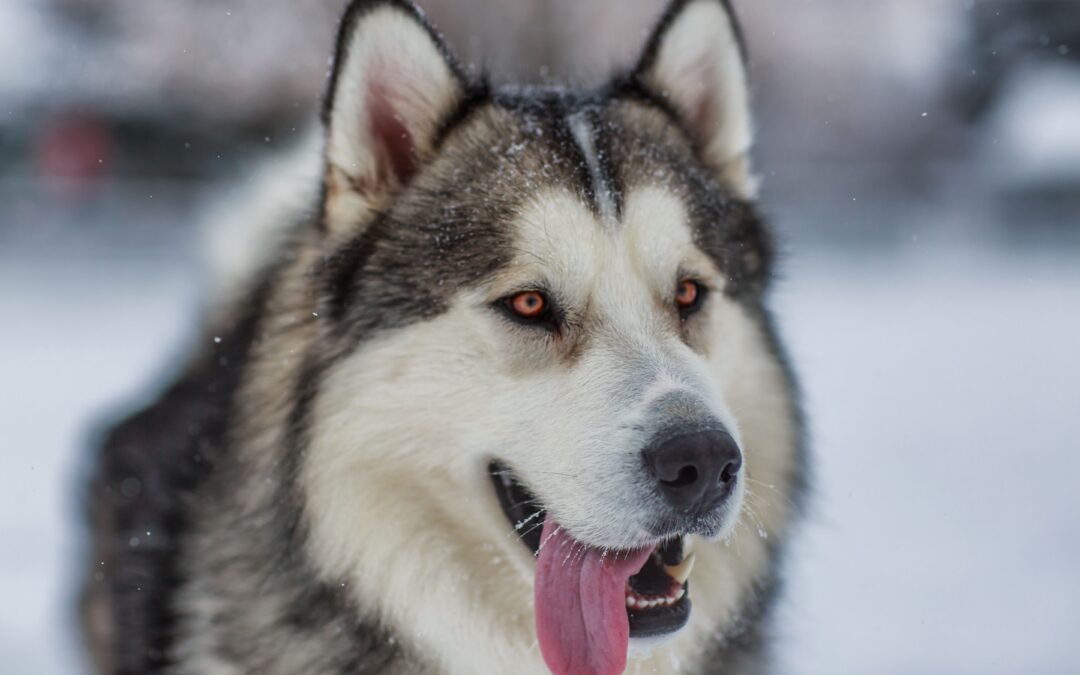
Difference Between Husky and Malamute: Size, Temperament, Health and Care (2026)
What is the difference between husky and malamute dogs? The Alaskan Malamute is bigger and heavier, built to haul freight, with brown eyes only. The Siberian Husky is lighter and faster, built to pull light loads over long distances, and can have blue, brown or mismatched eyes. Both are friendly, high-energy sled dogs with thick coats that shed heavily.
Huskies and malamutes look so alike that many people use the names for the same dog. They are two separate breeds with their own breed clubs, standards and health concerns. This guide explains the difference between husky and malamute breeds in size, looks, temperament, exercise, health and daily care.
Key takeaways
- The biggest difference between husky and malamute dogs is size: malamute males are about 85 lbs, husky males 45 to 60 lbs.
- Malamutes were bred for strength and freight; huskies for speed over distance.
- Blue eyes are allowed in huskies but disqualify a malamute in the show ring.
- Both breeds need lots of exercise, secure fencing and regular brushing.
- Malamute breeders should screen hips and eyes and DNA test for polyneuropathy.
In this guide
Difference Between Husky and Malamute at a Glance
In any Alaskan Malamute vs Siberian Husky comparison, start with their jobs: both are Arctic sled dogs bred for different work. The Alaskan Malamute Club of America (AMCA) breed standard describes the malamute as built “for strength and endurance” to haul freight, and says it is not meant as a racing sled dog. The Siberian Husky Club of America (SHCA) breed standard describes a husky that moves with speed and grace and can carry “a light load at a moderate speed over great distances.”
| Trait | Siberian Husky | Alaskan Malamute |
|---|---|---|
| Original job | Pulling light loads fast over distance | Hauling heavy freight |
| Height (males) | 21 to 23.5 inches | About 25 inches |
| Weight (males) | 45 to 60 lbs | About 85 lbs |
| Height (females) | 20 to 22 inches | About 23 inches |
| Weight (females) | 35 to 50 lbs | About 75 lbs |
| Eye color | Brown, blue, one of each or parti-colored | Brown only (blue disqualifies) |
| Coat | Double, medium length | Thick, coarse outer coat, woolly undercoat |
| Tail | Sickle curve over the back | Plume carried over the back |
| Lifespan | About 12 to 14 years | About 10 to 14 years |
Sources: SHCA and AMCA breed standards (size, eyes, coat, tail); PetMD (lifespan). Malamute figures are the breed club’s “desirable freighting sizes,” not limits.
Is a Malamute a Husky?
No. As general advice, “husky” is often used loosely for many sled dogs, but the Alaskan Malamute and the Siberian Husky are separate breeds. The United Kennel Club (UKC) says the malamute was named after the Mahlemut people, who settled along Kotzebue Sound in northwestern Alaska. The UKC says the Siberian Husky was developed by the Chukchi people of northeastern Siberia, and the dogs later reached Alaska.
Alaskan vs Siberian Husky: Another Common Mix-Up
The Alaskan husky is a third type of dog that adds to the confusion. Wikipedia notes it is “not an officially recognized breed by any kennel club” and has no breed standard, because it is a working crossbreed whose looks vary a lot. So when people ask about the difference between husky and malamute dogs, they usually mean the Siberian Husky and the Alaskan Malamute.

Difference Between Husky and Malamute in Size and Looks
As general advice, size is the easiest way to tell them apart. The SHCA standard gives husky males a height of 21 to 23.5 inches and a weight of 45 to 60 pounds, while females are 20 to 22 inches and 35 to 50 pounds. The AMCA lists desirable freighting sizes of about 25 inches and 85 pounds for malamute males, and 23 inches and 75 pounds for females.
That is the most visible difference between husky and malamute dogs: a malamute male can outweigh a husky male by 25 to 40 pounds. The AMCA describes the malamute as powerful and deep-chested, while huskies look leaner and lighter, with a quicker stride. If you like big dogs, see our guide to the biggest dog in the world.
Eyes, Ears and Tail
Eye color is a clear clue. The SHCA standard says husky eyes may be brown or blue, and one of each or parti-colored eyes are acceptable. The AMCA standard asks for brown, almond-shaped eyes and calls blue eyes a disqualifying fault. Both breeds have triangular ears. The SHCA wants husky ears set high and close-fitting, while the AMCA describes slightly rounded tips and lists high-set ears as a fault in malamutes.

Tails differ too. A husky carries its tail in a graceful sickle curve over the back when alert. A malamute carries a well-furred plume over its back, which the AMCA says should not be a snap tail or curl tightly against the back.
Coat and Colors
The husky has a double coat of medium length in black, gray, agouti, sable, red or white, with no color preferred. The malamute has a thick, coarse outer coat over a dense, woolly undercoat, in shades from light gray through black, sable and red, with white on the underbody, legs, feet and part of the face.
| How to tell them apart | Husky | Malamute |
|---|---|---|
| Build | Lean, light, quick | Powerful, deep-chested |
| Eyes | Any of brown, blue or mixed | Brown only |
| Tail | Sickle curve | Fluffy plume |
| Movement | Smooth and fast | Steady and strong |
Based on the SHCA and AMCA breed standards.
Malamute vs Husky Temperament and Exercise
In personality, the difference between husky and malamute dogs is smaller than in size. The SHCA standard calls the husky friendly, gentle, alert and outgoing, and says it does not show the possessive qualities of a guard dog. The AMCA standard calls the malamute affectionate and friendly, “not a ‘one man’ dog,” and loyal and playful, becoming dignified with age.
Based on those descriptions, neither breed is a natural guard dog. PetMD, in an article written by Tiffany Paul, DVM, and reviewed by Jo Cornett, DVM, describes huskies as smart, outgoing and independent thinkers that need consistent training. PetMD, reviewed by Barri J. Morrison, DVM, says malamutes need early socialization with other pets and can have a high prey drive, so small animals may be chased.
How Much Exercise Do They Need?
Both are working breeds with high energy. PetMD says huskies do best with active families that can give them at least 40 minutes of exercise every day, and that bored huskies may dig and escape yards. PetMD also says malamutes need a lot of exercise and quotes the Alaskan Malamute Rescue of New England: “a tired malamute is a happy malamute!”
As general advice, the difference between husky and malamute exercise styles is speed versus power. Huskies tend to enjoy running and canicross, while malamutes often suit hiking, pulling and backpacking, which match their freighting past. Both need a secure, tall fence and a leash outside it. Both breeds were built for the cold, so in our experience they need shade, water and gentle exercise in hot weather.
| Lifestyle need | Husky | Malamute |
|---|---|---|
| Daily exercise | At least 40 minutes (PetMD) | A lot; tired is happy (PetMD) |
| Best activities | Running, canicross (general advice) | Hiking, pulling, backpacking (general advice) |
| Guard dog? | No (SHCA) | No, friendly to people (AMCA) |
| Other pets | Usually good with training (PetMD) | Needs early socialization; prey drive (PetMD) |
| Escape risk | Bored huskies may dig and escape (PetMD) | Secure fencing advised (general advice) |
Pet Care Tip: Our suggestion is to check your fence before bringing home either breed. Bury wire or pavers along the base to stop digging, and make sure gates latch firmly.
Health, Lifespan and Grooming Differences
PetMD gives the husky a lifespan of about 12 to 14 years and the malamute about 10 to 14 years. For huskies, PetMD lists eye diseases such as cataracts, progressive retinal atrophy and corneal dystrophy, plus hypothyroidism and hip dysplasia, and recommends yearly eye exams. The Siberian Husky Club of America adds that hereditary cataracts can appear as early as 3 months of age.
For malamutes, PetMD lists hip and elbow dysplasia, cataracts, hypothyroidism, chondrodysplasia (a genetic limb deformity) and polyneuropathy, a nerve disorder with no cure. The AMCA health statement published by the AKC requires hip screening, eye screening and a DNA test for polyneuropathy, and recommends elbow, heart and thyroid screening plus DNA tests for cone degeneration and primary ciliary dyskinesia.
| Health topic | Husky | Malamute |
|---|---|---|
| Lifespan | About 12 to 14 years | About 10 to 14 years |
| Main concerns | Eye disease, hip dysplasia, hypothyroidism | Hip and elbow dysplasia, polyneuropathy, chondrodysplasia, hypothyroidism |
| Tests to ask a breeder for | Eye exams and hip screening | Hips, eyes, polyneuropathy DNA; ideally elbows, heart, thyroid |
Sources: PetMD (both breeds), SHCA eye testing guidance, AMCA health statement via the AKC.
Grooming and Shedding
Both breeds shed a lot. PetMD says the husky undercoat sheds about twice a year and suggests a rake-style brush. For the malamute, PetMD advises daily brushing of the thick double coat and a bath every 6 to 8 weeks. As general advice, avoid shaving either breed, since both breed standards limit trimming to small areas such as the feet.
As general advice, a lean weight helps protect the joints of both breeds. If your dog is carrying extra pounds, read our guide on how to help your dog lose weight.
Husky or Malamute: Which Breed Is Right for You?
Knowing the difference between husky and malamute personalities and needs makes the choice easier. As general advice, a husky may suit a runner or an active family that wants a medium-sized dog, while a malamute may suit an experienced owner who wants a large, strong hiking partner.
Curious about mixes? Read our guides to the German Shepherd husky mix, the Siberian pitbull mix and the greyhound husky mix. Not sure what your rescue is? A dog DNA test can help.
When to call a vet right away: As general advice, call your vet or a 24/7 emergency animal hospital if either breed shows sudden limping, weakness or wobbling, cloudy or painful eyes, heavy panting or collapse in heat, or a swollen belly with retching.
7 questions to ask a breeder or rescue
- Is this dog a Siberian Husky, an Alaskan Malamute, or a mix?
- Can I see hip and eye results for both parents?
- For malamutes, is there a polyneuropathy DNA result?
- How does this dog act with cats, small pets and other dogs?
- Has the dog ever escaped a fence or dug out?
- How much exercise does it get now?
- Will you take the dog back if it does not work out?
Example Scenario (illustrative)
Marcus in Denver runs trails three mornings a week and wanted a dog to join him. He met a 50-pound husky and a 90-pound malamute at a rescue. The husky matched his running pace, while the malamute preferred a slower walk. Learning the difference between husky and malamute energy styles helped him choose the husky.
| Myth | Fact |
|---|---|
| “Malamutes are just big huskies.” | They are a separate breed with their own standard and club (AMCA). |
| “Huskies and malamutes make good guard dogs.” | Both are friendly to people; the SHCA says huskies lack guard-dog possessiveness. |
| “Malamutes can have blue eyes like huskies.” | The AMCA standard calls blue eyes a disqualifying fault; the SHCA standard allows them in huskies. |
| “Shaving keeps them cool.” | Their standards discourage trimming; as general advice, keep the double coat and give shade. |
What most owners get wrong
In our experience, many owners choose by looks alone and underestimate the work: both breeds can be independent, energetic and quick to escape. Plan daily exercise, training and a secure yard before you bring one home, whichever breed you choose.
Difference Between Husky and Malamute: FAQs
Which is bigger, a husky or a malamute?
The malamute. Breed club figures put malamute males at about 25 inches and 85 pounds, versus 21 to 23.5 inches and 45 to 60 pounds for husky males.
Can malamutes have blue eyes?
Not in the show ring. The AMCA breed standard calls blue eyes a disqualifying fault, while huskies may have blue, brown or mixed eyes.
Which lives longer, a husky or a malamute?
PetMD gives huskies about 12 to 14 years and malamutes about 10 to 14 years.
Are huskies or malamutes better with kids?
PetMD says huskies are generally good with kids, and the AMCA calls malamutes friendly. As general advice, supervise any large dog with young children.
Do huskies and malamutes shed a lot?
Yes. Both have thick double coats that shed heavily, per PetMD.
Is a husky malamute mix a real breed?
No. As general advice, a husky and malamute cross is a mixed-breed dog, so size and traits can vary widely.
Which is easier to train?
Both are independent and need patient, consistent training. As general advice, neither is a good first choice for a hands-off owner.
Final Verdict: Difference Between Husky and Malamute
The main difference between husky and malamute dogs comes down to their original jobs. Malamutes are larger, heavier freight haulers with brown eyes, while huskies are lighter, faster distance runners that can have blue eyes. Both are friendly, energetic and heavy-shedding, and both need a secure yard. Pick the breed whose size, exercise style and health testing fit your life.
Your next steps
- Meet adult dogs of both breeds before deciding.
- Ask for health test results for both parents.
- Secure your fence and plan daily exercise.
Share your husky or malamute on the Pets Store Home Facebook page, and find more breed guides in our Dogs section.
About the author: Written and reviewed by the Pets Store Home Editorial Team, pet owners who check every guide against trusted sources.
How we checked this guide: Size, eye, coat and temperament details come from the official SHCA and AMCA breed standards. Health and lifespan come from PetMD breed guides reviewed by veterinarians, the AMCA health statement published by the AKC and SHCA eye guidance. Origins come from the UKC breed standards.
Where sources differ, such as lifespan ranges, we give the range and name the source. This guide was written in November 2026 and is reviewed every 12 months.
Last reviewed: November 2026.
Sources (accessed November 5, 2026)
- Alaskan Malamute Club of America: Breed Standard
- Siberian Husky Club of America: AKC Siberian Husky Standard
- PetMD: Alaskan Malamute
- PetMD: Siberian Husky
- AKC: Alaskan Malamute Health Statement 2022
- Siberian Husky Club of America: Eye Testing
- United Kennel Club: Alaskan Malamute Standard
- United Kennel Club: Siberian Husky Standard
- Wikipedia: Alaskan husky
[…] Which foreign pets are legal in Washington State? […]