
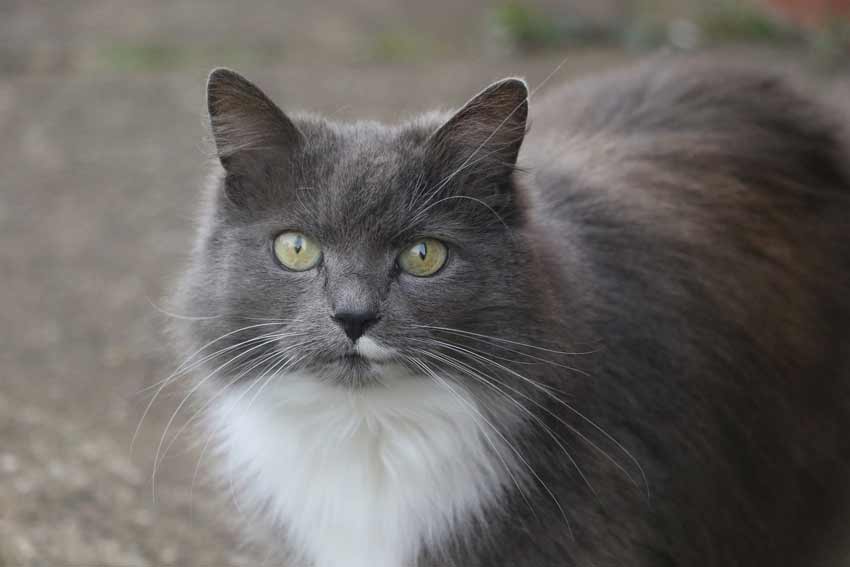
When people search for grey and white cat breeds, they usually want to know which breed their gray-and-white cat might be, or which breeds can come in that look. The short answer: gray and white is a coat color and pattern, not a breed. Several pedigreed breeds can have it, and so can millions of mixed-breed domestic cats.
That means the gray and white kitten at your local shelter may be just as lovely a companion as a pedigreed cat with papers. This guide explains what the coloring really means, which breeds can have it, and how to choose the right cat for your home.
Key takeaways
- Gray and white describes a coat color and pattern. It isn’t a breed.
- Breeds such as the American Shorthair, British Shorthair, Maine Coon, and Persian can have gray-and-white coats.
- Most gray and white cats in US homes and shelters are domestic shorthairs or longhairs, not pedigreed cats.
- Cat breeders often call gray “blue.”
- Coat color doesn’t decide personality or health.
In this guide
- What are grey and white cat breeds?
- Pedigreed cat or domestic shorthair?
- Grey vs. blue
- Can markings tell you the breed?
- Breeds that can be gray and white
- Gray breeds that aren’t gray and white
- Gray-and-white coat patterns
- Grooming and health care
- Choosing a breeder or adopting
- Adoption checklist
- FAQs
- Final verdict
What Are Grey and White Cat Breeds?
Strictly speaking, there are no grey and white cat breeds, only breeds that allow gray-and-white coats. A breed is defined by a written standard covering body type, head shape, coat length, and accepted colors. Color is just one part of that picture.
Quick answer: Gray and white is a color pattern, not a breed. American Shorthairs, British Shorthairs, Maine Coons, Persians, and other breeds can have it, but most gray and white cats in the US are domestic shorthairs or longhairs of mixed ancestry.
Pedigreed Cat or Domestic Shorthair?
A pedigreed cat has documented parents of the same breed, usually registered with a group such as the Cat Fanciers’ Association (CFA) or The International Cat Association (TICA). A domestic shorthair or domestic longhair has no known breed background.
Petfinder describes the domestic shorthair as “a type rather than a breed” and the most common kind of cat in US shelters. So if you adopted a gray and white cat without papers, it’s most likely a domestic shorthair or longhair. That says nothing bad about the cat. It simply means its ancestry is mixed.
Grey vs. Blue: What Cat Fanciers Mean
In everyday speech, Americans say “gray.” Breeders and cat shows usually say “blue.” Both describe the same soft, slate-colored coat. Petfinder explains that gray coats come from a dilution gene that lightens black pigment, which is why cat fanciers call these cats blue. So a “blue and white bi-color” in a breed standard is what most of us would call a gray and white cat.
Can Markings Tell You a Cat’s Breed?
Not reliably. The same gray-and-white pattern appears in many breeds and in mixed-breed cats. Body shape, head type, and coat texture give clues, but only registration papers can confirm a pedigree. A DNA test may suggest breed ancestry, but results vary by company, so treat them as interesting rather than definitive.
For more breed profiles and care tips, browse our cats section.

Breeds That Can Be Gray and White
The pedigreed breeds below all list a blue-and-white (gray-and-white) bi-color in their Cat Fanciers’ Association standards. Temperament notes describe breed tendencies, not guarantees. If you want a specific pattern from a breeder, ask to see the cat’s registration papers, which list its registered color.
American Shorthair
A sturdy, medium-to-large cat with a short, thick coat. CFA says the breed comes in over 100 color combinations, including blue and white. It sheds seasonally, so regular brushing helps. CFA describes an even temperament, often playful but happy to entertain itself.
British Shorthair
Many people picture the solid blue British Shorthair, but CFA’s standard also lists blue and white among its bi-colors. The coat is short, dense, and firm, and a weekly comb usually controls shedding. The breed tends to be calm and quiet, though it may slip away during loud activity.
Maine Coon
If you’re hoping for a fluffy gray and white cat with a big personality, a gray and white Maine Coon may appeal. CFA lists both blue-and-white bi-color and blue tabby-and-white Maine Coons. Their heavy, shaggy coat needs combing two or three times a week. They’re often described as gentle and friendly, and as one of the bigger breeds, they appreciate sturdy cat trees.
Persian
A gray and white Persian cat has one of the most dramatic long coats in the cat world. CFA includes blue and white in the Persian’s calico and bi-color division. CFA says that long, thick coat needs a serious commitment to regular grooming. It also notes that breeders have worked to avoid narrow nostrils that cause breathing problems, so ask about the parents’ breathing and kidney screening. Curious about the budget? See our guide to Persian cat cost.

Scottish Fold
CFA’s Scottish Fold standard includes bi-colors with blue, in both longhair and shorthair coats. There’s an important welfare point here, though. CFA says responsible breeders pair folded cats with straight-eared cats to minimize arthritic and bone conditions that may occur in the breed. Talk to your vet about joint health before choosing this breed.
Domestic shorthair and longhair cats
Domestic cats are the most common cats in US shelters, so many gray and white cats you’ll meet are mixed-breed domestics. They come in every coat length and pattern, from sleek short-haired gray and white cats to fluffy long-haired ones. Grooming depends on coat length, and personality depends on the individual. Many make wonderful companions, no pedigree required.
Gray Breeds That Aren’t Usually Gray and White
Some lists of grey and white cat breeds include cats that are actually solid gray. Two common mix-ups:
- Russian Blue: TICA lists one accepted color, solid blue with silver-tipped fur. A gray and white cat isn’t a Russian Blue.
- Nebelung: a medium-longhaired cat that TICA describes as blue with silver tips, with no white markings in its profile.
If your cat has white patches, it’s far more likely to be a domestic cat or one of the breeds listed above.
Gray-and-White Coat Patterns
Cats from different grey and white cat breeds don’t all look alike. Breed standards and shelters use a few common names for the pattern:
- Bi-color: solid gray with white. CFA’s British Shorthair standard, for example, expects white on the feet, legs, undersides, chest, and muzzle.
- Tabby and white: gray tabby stripes, swirls, or spots combined with white patches. CFA lists blue tabby and white as a Maine Coon color class.
- Mostly white with gray patches: sometimes called a “van” pattern in breed listings, where gray is limited to a few areas.
In shelters, you’ll often see simpler labels such as “gray and white” or “gray tabby and white.” Those describe the look, not the breed.
Grooming and Health Care
Care for grey and white cat breeds depends on coat length and the individual cat, not on color. Here’s what all gray and white cats need.
Brushing and shedding
The ASPCA suggests one or two brushings a week for most cats, while long-haired indoor cats need grooming every few days to prevent tangles. Short-haired gray and white cats still shed, especially in spring and fall, so a rubber brush or grooming mitt helps.
Nails, teeth, and baths
Trim nails every 10 to 14 days, as the ASPCA recommends, and reward your cat afterward. Most cats rarely need baths. Ask your vet how to start brushing your cat’s teeth, since dental care is part of routine health.
Routine veterinary visits
The American Association of Feline Practitioners advises adult cats see a vet at least once a year, and cats aged 10 to 15 at least every six months. Regular checkups help catch problems early, before they become obvious.
Enrichment
Indoor cats need play, climbing space, and scratching posts. Short daily play sessions with a wand toy can help keep a cat fit and content. Pedigreed or not, every cat needs this kind of daily attention.
Pet Care Tip: Coat color doesn’t decide personality or health. A calm gray and white cat and a lively one can sit side by side in the same shelter. Spend time with the cat before deciding.
Choosing a Breeder or Adopting
Start by matching the cat to your life, not the coat. Think about energy level, how much grooming you can manage, who lives in your home, and whether you have other pets. A quiet, adult domestic shorthair may suit a busy apartment better than a kitten of any of the grey and white cat breeds.
If you buy from a breeder
TICA advises buyers to verify the breeder’s legitimacy and ask for references, and to be wary of large upfront deposits. Ask to meet the kitten and its mother, request vet and vaccination records, and ask what health screening the parents have had. Confirm the registration and the cat’s registered color with the registry itself.
Adopting a gray and white cat
Adopting a gray and white cat from a US shelter or rescue is a wonderful option. Adult cats often have known personalities, and some shelters include spay/neuter, vaccines, and microchipping in the adoption fee. Search the ASPCA’s adoption listings, Petfinder, or your local shelter.
Your content goes here. Edit or remove this text inline or in the module Content settings. You can also style every aspect of this content in the module Design settings and even apply custom CSS to this text in the module Advanced settings.
Your Gray and White Cat Adoption Checklist
Before you fall for one of the grey and white cat breeds, run through these questions. They matter far more than color.
Before you bring a cat home
- ☐ Does the cat’s energy level match my daily routine?
- ☐ Can I keep up with its coat: weekly brushing, or grooming every few days for long hair?
- ☐ Have I seen the cat’s vet and vaccination records?
- ☐ Is the cat spayed or neutered and microchipped, or is that planned?
- ☐ How does it react to people, handling, and other pets?
- ☐ If buying, have I verified the breeder and the cat’s registered color?
- ☐ Is my home ready with a litter box, scratching post, and safe hiding spots?
Grey and White Cat Breeds FAQs
Are grey and white cats a specific breed?
No. Gray and white is a coat color and pattern. Several pedigreed breeds allow it, and many mixed-breed domestic cats have it too.
What breeds can have grey and white coats?
The Cat Fanciers’ Association lists blue-and-white coats for the American Shorthair, British Shorthair, Maine Coon, Persian, and Scottish Fold, among others. Domestic shorthair and longhair cats can be gray and white as well.
Are grey and white cats friendly?
Many are, but coat color doesn’t decide personality. A cat’s temperament depends on its genetics, early life, health, and environment. Spend time with an individual cat before adopting.
Do grey and white cats shed a lot?
Shedding depends on coat length and the individual cat, not color. Long-haired cats usually need grooming every few days, while short-haired cats often do well with one or two brushings a week.
Is a grey and white cat the same as a tuxedo cat?
Not usually. “Tuxedo” most often describes a black and white cat with a white chest and paws. Some people use the word loosely for gray and white cats with similar markings, but it isn’t a breed or an official color name.
How can I tell what breed my grey and white cat is?
Without registration papers, you usually can’t be sure. Body shape, head type, and coat texture give clues, and a DNA test may hint at ancestry. Most gray and white cats without papers are domestic shorthairs or longhairs.
Where can I adopt a grey and white kitten in the United States?
Check your local animal shelter, breed or general cat rescues, the ASPCA’s adoption listings, and Petfinder. You can usually filter searches by color, age, and coat length.
Final Verdict: Grey and White Cat Breeds
Grey and white cat breeds share a beautiful coat pattern, not a single bloodline. American Shorthairs, British Shorthairs, Maine Coons, Persians, and countless domestic cats can all wear it. Choose the cat whose energy, grooming needs, and health fit your home, and you’ll gain a loving companion, whatever its paperwork says.
Your next steps
- Use the checklist above whenever you meet a shelter cat or contact a breeder of grey and white cat breeds.
- Explore more breed and care guides in our cats section.
- Love striking eye colors too? Read our guide to black cats with green eyes.
Share a photo of your gray and white cat with our community on Facebook.
About the author
Written and reviewed by the Pets Store Home Editorial Team: pet owners and animal lovers who check every guide against trusted US veterinary and animal-welfare sources. This article is general information, not a substitute for professional veterinary advice. Always talk to your veterinarian about your own pet’s health.
How we checked this guide: We confirmed accepted coat colors in breed profiles from the Cat Fanciers’ Association and The International Cat Association, and used care guidance from the ASPCA and the American Association of Feline Practitioners. We review this article every 12 months, or sooner if guidance changes.
Last reviewed: October 2026
Sources
- CFA – American Shorthair (accessed Oct 2026)
- CFA – British Shorthair (accessed Oct 2026)
- CFA – Maine Coon (accessed Oct 2026)
- CFA – Persian (accessed Oct 2026)
- CFA – Scottish Fold (accessed Oct 2026)
- TICA – Russian Blue (accessed Oct 2026)
- TICA – Nebelung (accessed Oct 2026)
- TICA – Pet Buyer’s Guide (accessed Oct 2026)
- ASPCA – Cat Grooming Tips (accessed Oct 2026)
- AAFP Cat Friendly Homes – Routine Veterinary Care (accessed Oct 2026)
- Petfinder – Domestic Shorthair (accessed Oct 2026)
[…] Which foreign pets are legal in Washington State? […]