
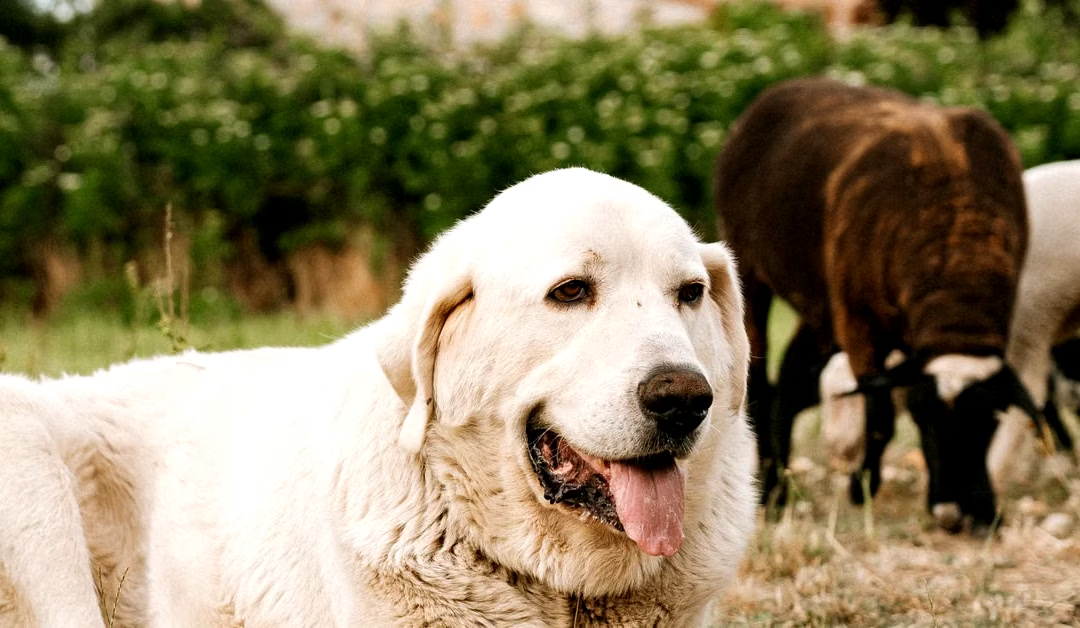
Anatolian Pyrenees: Essential Guide to the Great Pyrenees Anatolian Shepherd Mix (2026)
An Anatolian Pyrenees is a cross between an Anatolian Shepherd Dog and a Great Pyrenees, two ancient livestock guardian breeds. Most adults weigh roughly 80 to 150 pounds and live about 10 to 13 years. Expect a calm, independent and fiercely protective giant that suits rural homes, tall fences and experienced owners.
Thinking about a great Pyrenees Anatolian shepherd mix for your family or farm? This guide compares the parents with AKC data, checks the mix figures from two breed sites, and adds livestock guardian research from Texas A&M AgriLife so you can decide with clear eyes.
Key takeaways
- The Anatolian Pyrenees is a crossbreed, so the AKC does not register it as a breed.
- Both parents are giants; the AKC lists Anatolian males at 110 to 150 pounds.
- The AKC says both parents were bred to work independently, so training takes patience.
- Texas A&M says guardian pups need 18 to 24 months to become effective.
- A tall, secure fence is non-negotiable; Texas A&M links most guardian dog deaths to roaming.
In this guide
Anatolian Pyrenees: The Short Answer
Is an Anatolian Pyrenees the right dog for you? The snapshot below pulls the key figures into one place. Where our two mix sources disagree, we show both ranges and lean on the parent data from the American Kennel Club.
| Trait | What to expect |
|---|---|
| Other names | Anatolian Pyrenees dog, Pyr Anatolian mix, Great Pyrenees Anatolian mix |
| Height | 26 to 28 inches (Dogster) or 29 to 32 inches (Hepper), 66 to 81 cm |
| Weight | 80 to 140 pounds (Hepper) or 90 to 160 pounds (Dogster), 36 to 73 kg |
| Lifespan | 10 to 13 years (Dogster); 12 to 15 years (Hepper) |
| Colors | Cream, white, fawn, brown or black (Hepper); white with markings from the Pyr side (AKC) |
| Coat care | Weekly brushing, more during twice-yearly shedding (AKC) |
| Best for | Farms, acreage and experienced owners with tall, secure fencing |
Sources: Hepper (updated October 2026) and Dogster (updated October 2026), neither with a listed vet reviewer; AKC breed pages, accessed November 2026.
In our experience, Hepper’s 12 to 15 year lifespan looks generous, since the AKC lists shorter spans for both parents. We use the 10 to 13 year range when planning costs.

The Parent Breeds Side by Side
The AKC links the Anatolian Shepherd Dog to bloodlines it dates back about 6,000 years, to the Bronze Age in Anatolia, now part of Turkey. The AKC says the Great Pyrenees was developed to keep wolves and other predators away from sheep in high, snowy mountains. Both were built to think for themselves, and that shapes every part of living with this mix.
| Figure | Anatolian Shepherd Dog (AKC) | Great Pyrenees (AKC) |
|---|---|---|
| Height, male | 29 inches | 27 to 32 inches |
| Height, female | 27 inches | 25 to 29 inches |
| Weight | 110 to 150 lb (male), 80 to 120 lb (female) | 100 lb and up (male), 85 lb and up (female) |
| Life expectancy | 11 to 13 years | 10 to 12 years |
| Coat | Short to long outer coat, thick undercoat | Long outer coat, soft undercoat |
| Breed club health tests | Hip and elbow evaluations | Hips, elbows, eyes, patellas and more |
Source: AKC breed pages, accessed November 2026.
Anatolian Pyrenees Size: How Big Do They Get?
Full-Grown Anatolian Pyrenees Height and Weight
A full-grown Anatolian Pyrenees is a true giant. Hepper lists 29 to 32 inches and 80 to 140 pounds, while Dogster gives 26 to 28 inches and 90 to 160 pounds. Because the AKC puts Anatolian males at up to 150 pounds and Pyr males at 100 pounds and up, the parents themselves are the best clue to a puppy’s adult size.
How Fast Does a Pyr Anatolian Mix Grow?
As general advice, giant puppies grow for longer than small breeds, so ask your vet about large-breed puppy food and safe exercise while the joints develop. In our experience, many owners are surprised by how quickly a fluffy puppy outgrows a crate.
Coat, Colors and Grooming
The AKC says the Great Pyrenees coat is all white or white with gray, tan, reddish-brown or badger markings. Hepper lists cream, white, black, brown and fawn for the mix. Some puppies inherit a short Anatolian-style coat, while others grow a longer, fluffier one. If you are wondering about Anatolian Shepherd long hair, the AKC notes that some purebred Anatolians carry a long outer coat too.
Both parents shed their undercoat heavily. The AKC suggests a weekly brushing for each breed and notes that the Anatolian sheds its undercoat twice a year, when it needs brushing every few days. The AKC adds that the Pyr coat resists dirt and mats, so it needs less grooming than its fluffy look suggests.

Anatolian Pyrenees Temperament and Guardian Instincts
An Anatolian Pyrenees is usually calm and loyal at home and watchful with strangers. The AKC describes Pyrs as showing a “Zen-like calm” that can switch to fast action when a threat appears. It paints the Anatolian as a territorial protector that is also smart, patient and deeply devoted.
Hepper describes the mix as “mellow, gentle, loving, loyal, intelligent.” In our experience, the guarding instinct shows up as barking at night, patrolling the fence line and putting itself between family and visitors. Early socialization teaches the dog which visitors are normal.
Kids and Other Pets
As general advice, an Anatolian Pyrenees raised with children and farm animals tends to treat them as part of its “flock.” The AKC warns that Anatolians can be intense toward small dogs and even cats, so supervise every introduction and never leave young children alone with a giant dog.
Working as a Livestock Guardian
Many owners pick an Anatolian Pyrenees cross to protect goats, sheep or poultry. Texas A&M AgriLife’s 2026 livestock guardian dog overview names the Great Pyrenees and Anatolian Shepherd among the most common guardian breeds in Texas. Its key figures are below.
| Guardian dog factor | Texas A&M AgriLife guidance |
|---|---|
| Best age to start bonding | Between 4 and 8 weeks old; bonding may fail after 16 weeks |
| Time to become effective | 18 to 24 months |
| Dogs per flock | One to two per 100 ewes or nannies; one to two per 50 with large predators |
| Biggest danger | 57% of guardian dog deaths happen after the dog leaves the property |
| Costs | At least $1,800 to start, then about $900 a year |
Source: Texas A&M AgriLife, ANSC-PU-468, January 2026. An earlier AgriLife fact sheet (2015) calls the Great Pyrenees the least aggressive common guardian breed.
Pet Care Tip: Our suggestion is to raise a guardian puppy alongside the animals it will protect, as Texas A&M recommends, and to teach it early that the boundary fence is off-limits. In our experience, a pup that learns fences early is far easier to manage as a 120-pound adult.
Exercise, Training and Fencing
Neither parent is hyperactive. The AKC says Anatolians need a moderate amount of exercise, such as time in a securely fenced yard plus one or two long daily walks, and that Pyrs do well with moderate walks. Hepper adds that fences should be at least 6 feet tall.
Training takes patience. The AKC says obedience training is “a must” for Anatolians and that Pyrs may greet standard obedience with “great indifference.” It also states that an Anatolian should never receive protection or guard-dog training. As general advice, keep sessions short, use rewards, and keep the dog on a leash outside your fence.

Health and Lifespan
The AKC calls the Anatolian a healthy, hardy breed but notes it can be sensitive to anesthesia, so tell your vet before any surgery. The Great Pyrenees Club of America asks breeders to screen for elbow and hip problems, eye disease, kneecap luxation, and nerve and immune conditions. Both breed pages tell owners to learn the signs of bloat, though the AKC calls it uncommon in Anatolians.
| Health concern | Which parent | What to do |
|---|---|---|
| Bloat (GDV) | Both (AKC) | Learn the signs and have an emergency vet plan |
| Anesthesia sensitivity | Anatolian (AKC) | Tell your vet before any procedure |
| Entropion (inward-rolling eyelids) | Anatolian (AKC) | Ask breeders about eye screening |
| Hip and elbow dysplasia | Both (breed clubs) | Check OFA results for both parents |
| Luxating patella, eye disorders | Great Pyrenees (AKC) | Ask for the full Pyr health panel |
Sources: AKC breed pages, accessed November 2026. Look up parent results at the OFA.
When to call the vet: As general advice, treat a swollen belly, unproductive retching, restlessness or sudden weakness as an emergency. VCA Animal Hospitals explains that bloat can become life-threatening quickly, so call your vet or a 24-hour animal hospital right away.
Is This Guardian Mix Right for You?
Ready-for-a-guardian checklist
- I have a large yard or acreage with a fence at least 6 feet tall.
- I can accept some night barking and heavy seasonal shedding.
- I have trained a large, independent dog before.
- I can budget for giant-breed food, vet care and a possible emergency.
- I will socialize the puppy early with people, animals and new places.
In our experience, rescues and farm networks regularly rehome adult guardian mixes, which lets you meet a grown dog first. If a rescue is unsure about ancestry, a dog DNA test can help identify the parent breeds. You can also compare another Turkish guardian breed in our Kangal dog price guide.
| Common mistake | Why it matters | Better approach |
|---|---|---|
| Low or weak fencing | Texas A&M links most guardian deaths to leaving the property | Build 6-foot fencing and check it often |
| Off-leash walks | The AKC says Anatolians should stay on leash outside the home | Use a sturdy leash every time |
| Protection training | The AKC advises against it for Anatolians | Focus on calm manners and socialization |
| Late bonding with livestock | Bonding may fail after 16 weeks (Texas A&M) | Start around 4 to 8 weeks with calm animals |
Example Scenario (illustrative)
Wendell keeps 40 dairy goats in rural Oklahoma and adopted Juniper, an Anatolian Pyrenees, at 7 weeks old. He raised her in a pen beside the goats, raised his fence to 6 feet, and taught a firm “come” at mealtimes. By her second spring, coyote losses had stopped, though Juniper still barks at the tree line most nights.
Anatolian Pyrenees FAQs
How big does a full-grown Anatolian Pyrenees get?
Hepper lists 29 to 32 inches and 80 to 140 pounds, while Dogster gives 26 to 28 inches and 90 to 160 pounds. Expect a giant dog of roughly 80 to 150 pounds, in line with both parents.
How long does a Great Pyrenees and Anatolian Shepherd mix live?
Per the AKC, Anatolian Shepherds live 11 to 13 years and Great Pyrenees 10 to 12 years. Dogster gives the mix 10 to 13 years, which matches the parents best.
Is an Anatolian Pyrenees good with kids?
In our experience, it can be calm and gentle with its own family when raised with children. Because of its size and guarding drive, always supervise it around kids, especially visiting children.
Does an Anatolian Great Pyrenees shed a lot?
Yes. Both parents have a double coat, and the AKC says each sheds its undercoat heavily, so plan on weekly brushing and extra sessions during shedding seasons.
Can a Pyrenees shepherd mix live in an apartment?
It is a poor fit for most apartments. The AKC recommends a yard with a tall, strong fence for the Anatolian parent, and this giant mix needs room to patrol.
Is an Anatolian Pyrenees a good livestock guardian?
Many are. Both parents are common guardian breeds in Texas, according to Texas A&M AgriLife, but each dog still needs early bonding with livestock and 18 to 24 months to mature.

Final Verdict
An Anatolian Pyrenees is a calm, loyal and powerful guardian for owners with space, tall fences and patience for an independent thinker. Meet both parents or a rescue’s adult dog, check health results on the OFA database, socialize early, and plan for a giant dog that will watch over your home or flock for a decade or more.
Your next steps
- Read the AKC pages for the Anatolian Shepherd Dog and the Great Pyrenees.
- Planning a farm guardian? Study the Texas A&M guardian dog overview before you buy.
- Compare other giant breeds in our Tibetan Mastiff puppy price and most expensive dog breeds guides, or browse the Dogs section.
Share your guardian dog photos on the Pets Store Home Facebook page.
About the author: Written and reviewed by the Pets Store Home Editorial Team: pet owners and animal lovers who check every guide against trusted US veterinary and animal-welfare sources. This article is general information, not a substitute for professional veterinary advice. Always talk to your veterinarian about your own pet’s health.
How we checked this guide: Parent sizes, lifespans, coat care, exercise, training and health notes come from AKC breed pages. Mix figures come from Hepper and Dogster, neither of which lists a vet reviewer. Guardian dog figures come from Texas A&M AgriLife (January 2026), and bloat signs from VCA Animal Hospitals. We review this article every 12 months.
Last reviewed: November 2026.
Sources
- AKC: Anatolian Shepherd Dog (accessed November 2026)
- AKC: Great Pyrenees (accessed November 2026)
- Hepper: Anatolian Shepherd Great Pyrenees Mix (updated October 2026)
- Dogster: Anatolian Pyrenees (updated October 2026)
- Texas A&M AgriLife: Livestock Guardian Dogs, An Overview (January 2026)
- Texas A&M AgriLife Extension: Livestock Guardian Dogs (fact sheet)
- VCA Animal Hospitals: Gastric Dilatation and Volvulus in Dogs (accessed November 2026)
- Orthopedic Foundation for Animals (accessed November 2026)
[…] Which foreign pets are legal in Washington State? […]