
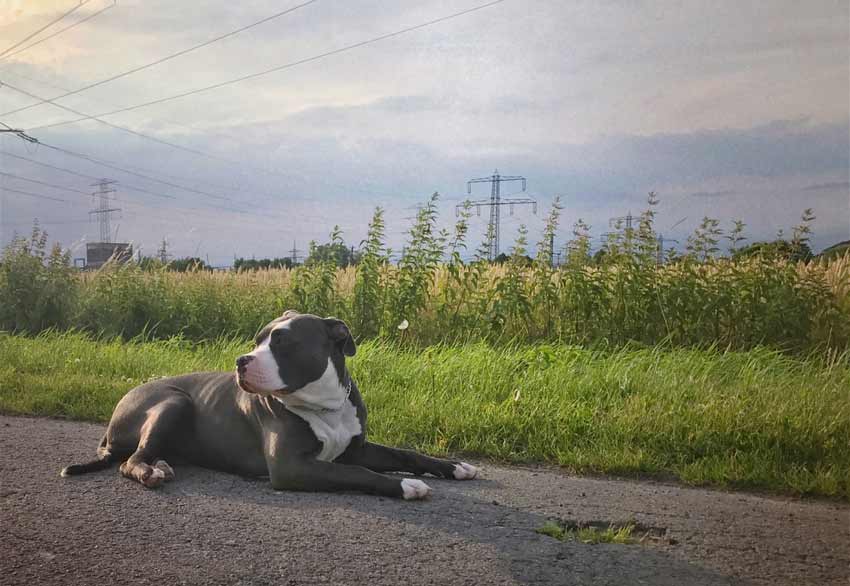
Blue American Bully Puppy Price: Real Costs, Health Checks & Red Flags
The typical blue American Bully puppy price from a US breeder is about $2,000 to $4,500, based on current breeder listings, though some sellers ask $5,000 to $10,000 or more for “premium” bloodlines, XL size or breeding rights. Shelter and rescue fees are far lower. The blue coat alone shouldn’t double the price: blue is a common dilute color, not a rare one, and it comes with a skin condition risk you should ask about.
The puppy is only the first bill. The AKC estimates a large dog’s first year costs over $3,000 in food, vet care, supplies and training on top of the purchase price. This guide breaks down what drives the price, what a fair deal looks like, and how to spot a breeder who’s charging for color instead of health.
Before you pay a deposit: meet the puppy and its mother in person or on a live video call, get registration papers (ABKC or UKC) and vet records in writing, and never pay by wire transfer, gift card or crypto to a seller you can’t verify. Also check your city’s rules, landlord policy and homeowner’s insurance, since some restrict bully breeds.
Key takeaways
- Most breeder puppies list around $2,000 to $4,500; premium claims reach $5,000 to $10,000+.
- Blue is a dilute color, not a rare one, so be wary of large “rare color” markups.
- Blue dogs can develop color dilution alopecia, an inherited hair-loss condition.
- Merle is a disqualifying color in the UKC breed standard, so “blue merle” is not a show color.
- Budget roughly $3,000+ for the first year of care beyond the purchase price.
In this guide
Blue American Bully Puppy Price at a Glance
There’s no official price list, so the best guide is current market asking prices. A July 2026 Petful roundup of American Bully breeder and marketplace listings found these typical asks (asking prices, not confirmed sales):
| Where you get the dog | Typical price |
|---|---|
| Shelter or rescue | Adoption fee set by each organization; usually far less than breeder prices |
| Pet-quality puppy from a breeder | About $1,500 to $3,000 |
| Breeder national range | About $2,000 to $4,500 |
| Entry XL puppy | Around $3,000 |
| “Premium” bloodline or breeding rights | $5,000 to $10,000 or more |
Petful found no fixed “most expensive” color; color premiums shift with seller demand. In practice, a blue American Bully puppy price usually falls inside the same ranges as other colors. When a seller adds thousands just for “rare blue,” that’s a sales pitch, not a market rule.
What Is a Blue American Bully?
The American Bully is a young companion breed developed in the US from the American Pit Bull Terrier, with influence from bulldog-type breeds. The United Kennel Club, which recognized the American Bully in July 2013, describes it as a muscular, compact dog that should be confident and friendly. The American Bully Kennel Club (ABKC), founded in 2004, was the first registry for the breed. The American Kennel Club does not recognize it.
“Blue” isn’t a separate breed. It’s a coat color: a diluted black that looks steel gray to slate blue, often with a gray or blue-gray nose. The UKC standard accepts any color except merle, so a blue dog can be registered and shown like any other color.
Whatever the color, the blue American Bully puppy price should reflect the dog’s health and temperament first. If you’re also looking at patterned coats, our guide to the tri-color American Bully explains that coat.

What Affects the Blue American Bully Puppy Price?
| Factor | Effect on price | Worth paying for? |
|---|---|---|
| Health testing of the parents | Raises cost | Yes, the most valuable extra |
| Registration (ABKC or UKC) | Raises cost slightly | Yes, it confirms parentage |
| Size variety (XL, Pocket) | Often higher for XL | Only if size suits your home |
| Famous bloodline names | Can add thousands | Rarely, for a pet |
| “Rare” color claims | Can add thousands | No; blue is common |
| Breeding rights | Adds to the price | Not needed for a pet |
| Location and demand | Varies by region | Shop around |
“Exotic” and “micro” bullies
Some sellers market “micro” or “exotic” bullies with extreme short legs, huge heads and very flat faces, often at high prices. Petful notes that “micro” is not an official UKC or ABKC variety. Extreme body shapes may bring breathing, joint and birthing problems, so a higher price may buy you more vet bills, not a better dog.
If a listing pushes the blue American Bully puppy price up because of an “exotic” look, ask for the parents’ health records first.
Is a blue merle American Bully worth more?
Be careful here. The UKC standard lists merle as a disqualifying color, and blue eyes are also a disqualification. Because merle sits outside the standard, ask the breeder directly whether another breed was used in the pedigree. Don’t pay a premium for a disqualifying color, and ask hard questions about the parents.
American Bully Sizes and the Breed Standard
Size is one of the biggest swings in a blue American Bully puppy price, and it also changes the space and food you’ll need. The UKC standard groups the breed into three height varieties, measured at the shoulder:
| Variety | Males | Females |
|---|---|---|
| 14 to under 17 in | 13 to under 16 in | |
| Standard / Classic | 17 to 20 in | 16 to 19 in |
| XL | Over 20 to 23 in | Over 19 to 22 in |
The UKC standard sets height, not weight. In the ABKC system, the Classic is generally described as a lighter-framed version of the Standard. Ask to see both parents, because their size is the best clue to how big your puppy will grow. If you’re deciding between sexes too, our guide to the female American Bully puppy has more on choosing a female.

Health Issues That Should Shape the Blue American Bully Puppy Price
A higher price should buy you a healthier puppy, not just a prettier coat. These are the questions worth asking.
Color dilution alopecia
Blue is a dilute color, and dilute dogs can develop color dilution alopecia (CDA). VCA Animal Hospitals explains that CDA is an inherited condition causing patchy hair thinning and loss, most common in blue and fawn dogs. Puppies look normal at birth, and signs usually appear from about six months of age.
CDA can’t be cured, but it’s usually manageable with medicated shampoos and treatment for any skin infections, and it doesn’t affect the dog’s overall health beyond the skin and coat. VCA advises that affected dogs, their parents and their siblings shouldn’t be bred, so ask whether any relatives have had thinning coats.
Joints, breathing and skin
- Hips and elbows: ask whether the parents have hip and elbow evaluations, such as OFA screening.
- Breathing: dogs bred with very short faces can struggle in heat and exercise. Choose a puppy whose parents breathe quietly at rest.
- Skin problems: itchy or irritated skin can show up in any short-coated dog, including bullies; budget for vet visits if it appears.
- Weight: extra pounds add strain to joints, so keep your dog lean.
A breeder who can’t show health results is not offering a bargain, even at a lower price. For more on reading a dog’s body language when something hurts, see our guide to why a dog’s back is arched.
First-Year Costs Beyond the Blue American Bully Puppy Price
The AKC estimates that the first year with a large dog costs about $3,239, and about $23,410 over a dog’s lifetime across all sizes. Those figures date from 2018, so expect higher costs today. Plan for:
| Expense | What it covers |
|---|---|
| Vet care | Puppy vaccines, checkups, spay or neuter, microchip, parasite prevention |
| Food | A large-breed puppy food, measured to keep growth steady |
| Gear | Sturdy crate, harness, leash, bed, chew-proof toys |
| Training | Puppy classes and early socialization |
| Insurance or emergency fund | Skin, joint or injury bills; some insurers limit bully breeds |
Prepare for the “puppy blues”
Many new owners feel overwhelmed, tired or even regretful in the first weeks with a puppy, a feeling often called the “puppy blues.” For many people it eases as routines settle in. Line up help with walks and training before your puppy comes home, and ask your trainer or vet for support if you’re struggling.

How to Find a Fair Blue American Bully Puppy Price
- Start with rescues. Bully-type dogs are often found in US shelters. Search Petfinder, local shelters and breed rescues first; adoption fees are usually much lower than breeder prices.
- Check registration. Ask for the litter registration number and confirm it with the ABKC or UKC.
- Ask for health results. Request hip and elbow evaluations on the parents, and ask about coat problems in blue relatives.
- Meet the dogs. The mother should be friendly and relaxed. The UKC standard calls aggression toward people highly undesirable.
- Get a written contract. It should cover health guarantees, what’s included and a take-back policy.
- Pay safely. Use a traceable method, and never send money before you’ve confirmed the breeder is real.
Red flags that should lower your trust
- “Rare blue” or “exotic” pricing with no health testing.
- Puppies always available, or several litters at once.
- No visits allowed, or a meeting in a parking lot.
- “Blue merle,” “tri merle” or blue-eyed puppies sold as top quality.
- Pressure to pay a deposit today.
Example scenario (illustrative)
Derek in Atlanta found a “rare blue XL” puppy online for $7,500, with a $1,000 deposit due that day by app transfer. Instead of paying, he asked for registration papers and the parents’ hip results. The seller stopped replying. Derek later found a UKC-registered blue Standard puppy for $2,800 from a breeder who showed him both parents’ health records and the mother’s calm temperament in person.
Blue American Bully Puppy Price: FAQs
How much is a blue American Bully puppy?
Most breeder puppies list around $2,000 to $4,500. Premium bloodlines, XL size or breeding rights can push asks to $5,000 to $10,000 or more.
Are blue American Bullies rare?
No. Blue is a dilute color that turns up regularly in the breed and isn’t considered rare. Be cautious of sellers charging extra for “rare” blue.
Do blue American Bullies have health problems?
They can develop color dilution alopecia, an inherited hair-loss condition seen in dilute colors. Ask about coat problems in the puppy’s relatives.
Is the American Bully a pit bull?
It was developed from the American Pit Bull Terrier but is a separate breed recognized by the UKC and ABKC. The AKC doesn’t recognize it.
Why are XL American Bullies more expensive?
Demand and size drive many XL prices. Larger dogs also cost more to feed and may cost more to insure, and some places outside the US, such as the UK, restrict XL bullies.
How much does it cost to own an American Bully per year?
The AKC’s 2018 estimate put a large dog’s first year at about $3,239. Expect higher costs today for food, vet care, training and insurance.
Final Verdict: Is the Blue American Bully Puppy Price Worth It?
A fair blue American Bully puppy price is usually $2,000 to $4,500 from a breeder who health-tests and registers their dogs, and much less through a rescue. Don’t pay thousands extra for “rare blue,” merle or extreme looks. Spend your money on health testing, a good temperament and the first year of care, and you’re far more likely to bring home a happy, healthy companion.
Your next steps
- Check local rescues and Petfinder for bully breeds first.
- Confirm any breeder’s ABKC or UKC registration and health results.
- Check your housing, insurance and local rules for bully breeds.
- Browse more breed guides in our dogs section.
Share your bully’s story with other owners in our Facebook community.
About the author — Written and reviewed by the Pets Store Home Editorial Team: pet owners and animal lovers who check every guide against trusted US veterinary, breed-registry and consumer sources. Prices are market asking prices and change often. This article is general information, not a substitute for professional veterinary advice.
How we checked this guide: Breed details come from the United Kennel Club standard; health information from VCA Animal Hospitals; cost estimates from the American Kennel Club; and current asking prices from Petful’s July 2026 market review. We review it every 12 months.
Last reviewed: October 2026.
Sources
- United Kennel Club, American Bully Breed Standard (accessed October 2026)
- VCA Animal Hospitals, Color Dilution Alopecia in Dogs (accessed October 2026)
- American Kennel Club, The Cost to Raise a Dog (accessed October 2026)
- Petful, American Bully Price (July 2026) (accessed October 2026)
[…] Which foreign pets are legal in Washington State? […]