
Can dogs have tomatoes? Yes, in small amounts. Ripe, red tomato flesh is non-toxic to dogs and can be an occasional treat. Green (unripe) tomatoes and the plant’s stems, leaves, vines, and flowers contain solanine and tomatine, which can make dogs sick. Skip tomato sauce, ketchup, and soup, too, because they often contain salt, garlic, or onion.
Tomatoes show up in salads, sandwiches, pasta, and backyard gardens, so it’s no surprise that dogs find them. Maybe your dog snatched a cherry tomato off the counter, or you caught them chewing a tomato vine in the yard. If you’re asking “can dogs have tomatoes?”, this guide explains which parts of the tomato are safe, how much to give, why sauces and ketchup are a problem, the signs of tomato poisoning, and exactly what to do if your dog eats the plant.
Key takeaways
- Ripe red tomato flesh is non-toxic to dogs, according to the ASPCA and AKC.
- Green tomatoes, stems, leaves, vines, and flowers contain solanine and tomatine and should be avoided.
- A slice of tomato or a few cherry tomatoes is a reasonable amount for most dogs; cut cherry tomatoes for small dogs.
- Tomato sauce, ketchup, soup, and pizza often contain garlic, onion, salt, or sugar, which can harm dogs.
- Serious tomato poisoning is uncommon, but call your vet or a pet poison line if your dog eats the green plant.
- Keep all treats to about 10% of your dog’s daily calories.
In this guide
Can Dogs Have Tomatoes? The Short Answer
Yes, most dogs can have ripe tomatoes as an occasional snack. The American Kennel Club says “ripe tomatoes are considered non-toxic to dogs”, and the ASPCA’s plant database also notes that the ripe fruit is non-toxic. The problem is the rest of the plant.
So, can dogs eat tomatoes from your plate or garden? They can have tomatoes when you follow these rules:
- Ripe and red only: no green, unripe tomatoes.
- Fruit only: remove stems and leaves, and keep dogs away from the vines.
- Plain only: no salt, seasoning, oil, garlic, or onion.
- Small amounts: a treat, not a meal.
- Washed and cut: rinse off dirt and pesticides, and slice into bite-size pieces.
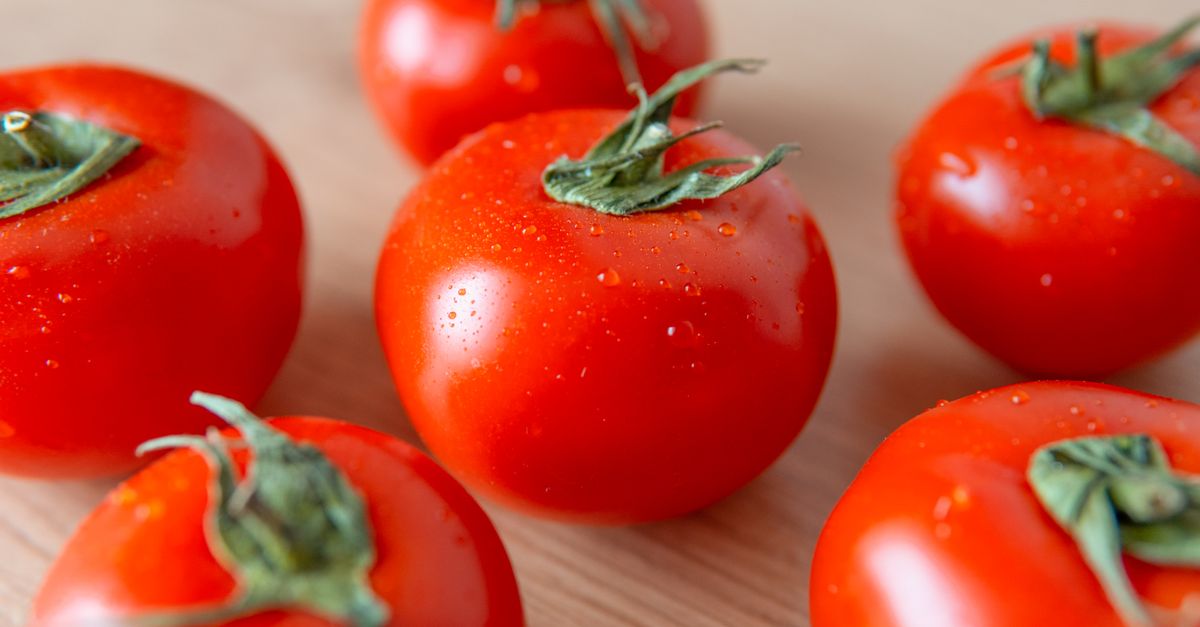
Are Tomatoes Safe for Dogs? Ripe vs Green Parts
To understand why the answer to “can dogs have tomatoes?” depends on ripeness, start with the plant. Tomatoes belong to the nightshade family. The ASPCA lists the tomato plant as toxic to dogs because it contains solanine. The AKC adds that solanine and a related compound, tomatine, are found mostly in the green parts of the plant. According to the Pet Poison Helpline, these compounds (called glycoalkaloids) decrease as the fruit ripens, which is why a red tomato is far safer than a green one.
| Part of the tomato | Safe for dogs? | Why |
|---|---|---|
| Ripe red flesh | Yes, in small amounts | Non-toxic once ripe |
| Green (unripe) tomato | No | Higher levels of solanine and tomatine |
| Stems and leaves | No | Green plant material with glycoalkaloids |
| Vines and flowers | No | Green plant material with glycoalkaloids |
| Seasoned or cooked dishes | Usually no | Often contain garlic, onion, salt, or sugar |
Are tomatoes safe for dogs, then? The ripe fruit is, for most dogs, so dogs can have tomatoes as long as you only share the red flesh. The plant is not. If you grow tomatoes, a garden fence is the simplest way to keep curious dogs away from the vines.
Are Tomatoes Good for Dogs?
Can dogs have tomatoes for their health benefits? Ripe tomatoes aren’t a superfood for dogs, but they do contain some useful nutrients. The AKC lists fiber, antioxidants, potassium, vitamin C, vitamin K, and folate. Tomatoes are also mostly water and low in calories, which makes a small piece a lighter treat than many store-bought biscuits.
So can dogs have tomatoes as a health food? Not really. A dog eating a complete and balanced commercial diet already gets the nutrients it needs. Think of tomatoes as a fun, occasional extra, not a supplement. If you’d like to add more fresh foods to your dog’s bowl, our guide to preparing healthy dog food at home explains how to do it safely.
The AKC also notes that tomatoes are acidic, so some dogs get an upset stomach even from ripe fruit. Allergic reactions are rare, but they can happen. Start with a tiny piece the first time and watch your dog for the next day.
Can Dogs Eat Cherry Tomatoes?
Yes. If you’ve wondered whether dogs can have tomatoes in the cherry size, the answer is the same. Ripe cherry tomatoes are the same fruit in a smaller package, so the same rules apply. The Pet Poison Helpline says a few cherry tomatoes is an appropriate amount for most dogs, and recommends cutting them for small dogs.
Size is the main concern. A whole cherry tomato is round, firm, and slippery, so a small dog that gulps one could choke. Cut each one into halves or quarters before sharing.
- Remove the green stem and any attached leaves.
- Rinse well, especially garden or store-bought tomatoes that may have pesticide residue.
- Cut into halves for medium and large dogs, and quarters for small dogs and puppies.
- Skip any that are still green, yellow-green, or hard.
Pet Care Tip: Grape tomatoes are similar in size to grapes, but they are not the same food. Grapes and raisins can be dangerous for dogs, so never assume one small round fruit is safe because another is.
Can Dogs Have Tomatoes in Sauce, Ketchup, or Soup?
It’s best to avoid them. Can dogs have tomatoes in prepared foods? Rarely, because the tomato itself isn’t the main problem in prepared foods. The added ingredients are. The AKC warns that tomato sauces, ketchup, pizza, and spaghetti often contain garlic, onions, salt, or sugar, and the Pet Poison Helpline advises checking labels for garlic and onion, including powders.
| Tomato food | Common risky ingredients | Verdict |
|---|---|---|
| Pasta or pizza sauce | Garlic, onion, salt, herbs, oil | Avoid |
| Ketchup | Sugar, salt, onion powder | Avoid |
| Tomato soup | Salt, cream, garlic, onion | Avoid |
| Salsa | Onion, garlic, peppers, salt | Avoid |
| Plain fresh ripe tomato | None | OK in small amounts |
Why do these ingredients matter? The ASPCA explains that onions, garlic, and other Allium plants can irritate the stomach and damage red blood cells. Too much salt can cause excessive thirst and urination and, in serious cases, vomiting, diarrhea, tremors, seizures, or even death. Some “sugar-free” products contain xylitol, which the ASPCA also lists as dangerous for pets.
A lick of plain pasta sauce from a plate is unlikely to cause harm in a large dog, but don’t make a habit of it. If your dog eats a large amount of sauce, soup, or anything with garlic or onion, call your vet for advice.
How Many Tomatoes Can Dogs Have? Safe Serving Sizes
Veterinary nutritionists at UC Davis recommend that treats make up no more than 10% of a dog’s daily calories. Tomatoes count toward that limit, along with chews, biscuits, and table scraps.
How much? When dogs can have tomatoes at all, portion size is what keeps the treat safe. The Pet Poison Helpline suggests a slice of tomato or a few cherry tomatoes is appropriate for most dogs. Use these rough guides as a starting point, and scale down if your dog is small, a puppy, or prone to stomach upset:
| Dog size | Occasional treat (ripe, plain) |
|---|---|
| Toy and small (under 20 lb) | 1–2 quartered cherry tomatoes or a few small diced pieces |
| Medium (20–50 lb) | 2–3 halved cherry tomatoes or half a slice |
| Large (over 50 lb) | A few halved cherry tomatoes or one slice |
These amounts are general guidelines, not veterinary advice. Offer tomatoes a few times a week at most, not every day. Puppies and small breeds may be more sensitive, as the AKC notes, so ask your vet before sharing if your dog has a sensitive stomach, kidney disease, or a prescription diet. For more snack ideas, see our pet food center.
Signs of Tomato Poisoning in Dogs
Can dogs have tomatoes without any risk of poisoning? Serious tomato poisoning is uncommon. The AKC says it’s rare and usually not fatal, and the Pet Poison Helpline calls severe poisoning relatively uncommon. Most cases involve dogs that eat green tomatoes or chew on the plant. Signs listed by the ASPCA, AKC, and Pet Poison Helpline include:
| Milder signs | More serious signs |
|---|---|
| Vomiting | Muscle weakness |
| Diarrhea | Tremors or seizures |
| Excess drooling | Loss of coordination |
| Loss of appetite | Slow or irregular heart rate |
| Tiredness or depression | Dilated pupils |
| Belly pain | Severe stomach upset |
A mild stomach upset after eating ripe tomato is usually a sign of acidity or a sudden diet change rather than poisoning. Still, call your vet if symptoms last more than a day, get worse, or include any of the serious signs above.
When to call your vet right away
Call immediately if your dog has tremors, a seizure, collapses, has trouble walking, or seems very weak after eating any part of a tomato plant. These are emergencies. Don’t wait to see if they pass.
What to Do If Your Dog Eats a Tomato Plant
Can dogs have tomatoes from the garden vine? No, and if your dog chewed the leaves, stems, vines, or green tomatoes, stay calm and act quickly:
- Remove your dog from the plant and take away any pieces still in their mouth.
- Note the details: which part was eaten, roughly how much, when it happened, and your dog’s weight. The Pet Poison Helpline says this information helps the vet decide what to do.
- Call your vet or a pet poison line. Reach the ASPCA Animal Poison Control Center at (888) 426-4435 or the Pet Poison Helpline at (855) 764-7661. A consultation fee may apply.
- Don’t make your dog vomit at home unless a vet tells you to. Home remedies can cause more harm.
- Don’t wait for symptoms if your dog ate a lot of green plant material. The Pet Poison Helpline advises calling right away.
- Bring a sample of the plant to the clinic if you can, so the vet knows exactly what was eaten.
Your vet may examine your dog and, depending on the case, run blood work or an ECG, induce vomiting, give fluids or anti-nausea medicine, and monitor your dog. Only your vet can decide on treatment and medication. The Pet Poison Helpline says the outlook is good for most dogs that get prompt care.
Common Mistakes When Sharing Tomatoes
| Mistake | Better choice |
|---|---|
| Letting dogs roam the vegetable garden | Fence off tomato plants or supervise yard time |
| Sharing pizza, pasta, or ketchup | Offer a plain piece of ripe tomato instead |
| Giving whole cherry tomatoes to small dogs | Cut them into halves or quarters |
| Leaving stems attached | Remove every stem and leaf first |
| Feeding green or half-ripe tomatoes | Use only fully ripe, red tomatoes |
| Throwing plant trimmings in an open bin | Use a covered or dog-proof compost bin |
Quick checklist before you share
- Is it fully ripe and red?
- Are the stem and leaves removed?
- Is it plain, with no salt, oil, garlic, or onion?
- Is it washed and cut to a safe size for my dog?
- Does it fit within my dog’s 10% treat allowance today?
Example Scenario (illustrative)
Marcus in Ohio finds his 15-pound terrier mix, Pepper, chewing leaves in the backyard tomato bed. He takes Pepper inside, checks how many leaves are missing, and notes the time and Pepper’s weight. He calls his vet, who asks him to watch for drooling, vomiting, or weakness and to bring Pepper in if any signs appear. Pepper stays well, and Marcus puts a fence around the garden that weekend. From then on, Pepper gets a quartered ripe cherry tomato as a treat instead.
Can Dogs Have Tomatoes? FAQs
Can dogs eat tomatoes every day?
It’s better not to. Dogs can have tomatoes as an occasional treat, and ripe tomatoes are fine in small amounts, but their acidity can upset some stomachs, and all treats should stay within 10% of your dog’s daily calories.
Are tomatoes safe for dogs to eat raw?
Yes, ripe raw tomatoes are safe for most dogs in small amounts. Wash them, remove the stem and leaves, and cut them into bite-size pieces.
Can dogs eat cooked tomatoes?
Plain cooked ripe tomatoes are fine in small amounts. Avoid cooked tomato dishes made with oil, salt, garlic, onion, or seasoning.
Are green tomatoes poisonous to dogs?
Green tomatoes contain more solanine and tomatine than ripe ones and can make dogs sick. Keep them away from your dog and call your vet if your dog eats them.
Can dogs have ketchup or tomato sauce?
No. Ketchup and tomato sauce often contain salt, sugar, garlic, or onion, which can harm dogs. Offer plain ripe tomato instead.
Can puppies eat tomatoes?
Puppies can have a tiny piece of ripe tomato, but the AKC notes that puppies and small breeds are at higher risk if they eat the plant. Ask your vet before adding new foods.
What should I do if my dog ate a tomato plant?
Note what was eaten, how much, and when, then call your vet, the ASPCA Animal Poison Control Center at (888) 426-4435, or the Pet Poison Helpline at (855) 764-7661.
Final Verdict: Can Dogs Have Tomatoes?
Can dogs have tomatoes? Yes, when they’re ripe, red, plain, and served in small pieces. Keep green tomatoes, stems, leaves, and vines out of reach, skip sauces, ketchup, and soup, and call your vet or a pet poison line if your dog gets into the plant. A little ripe tomato now and then is a safe, simple treat for most dogs.
Your next steps
- Save the ASPCA and Pet Poison Helpline numbers in your phone.
- Check your garden and fence off any tomato plants your dog can reach.
- Find more safe snack ideas in our guide to frozen strawberries for dogs and our pet food center.
Share your dog’s favorite healthy snacks with other owners on our Facebook page.
About the author
Written and reviewed by the Pets Store Home Editorial Team: pet owners and animal lovers who check every guide against trusted US veterinary and animal-welfare sources. This article is general information, not a substitute for professional veterinary advice. Always talk to your veterinarian about your own pet’s health.
How we checked this guide: We used the American Kennel Club (AKC), the ASPCA Animal Poison Control Center, the Pet Poison Helpline, and the UC Davis veterinary nutrition service. We review this article every 12 months, or sooner if guidance changes.
Last reviewed: October 2026
Sources
- American Kennel Club – Can Dogs Eat Tomatoes? (accessed Oct 2026)
- ASPCA – Tomato Plant (Toxic and Non-Toxic Plants) (accessed Oct 2026)
- ASPCA – People Foods to Avoid Feeding Your Pets (accessed Oct 2026)
- ASPCA – Animal Poison Control Center (accessed Oct 2026)
- Pet Poison Helpline – Are Tomatoes Poisonous to Dogs? (accessed Oct 2026)
- UC Davis Veterinary Medicine – Treat Guidelines for Dogs (PDF) (accessed Oct 2026)
[…] Which foreign pets are legal in Washington State? […]