
Written by the Pets Store Home Team — pet care writers and researchers focused on practical, well-sourced buying guides for prospective pet owners.
Quick Answer: A dog DNA test kit uses a cheek swab to identify your dog’s breed mix and, with more comprehensive kits, screen for genetic health risks. Top-tier tests from established labs are highly accurate for breed identification, though most companies’ own accuracy claims land around 90% and results for rare or poorly documented breeds are less precise. Expect to pay $70-130 for a basic breed ID test or $160-300+ for a kit that also includes health screening, with results back in 2-6 weeks.
Key Takeaways
- Dog DNA tests work by comparing your dog’s genetic markers against a reference database of known breeds; the size and quality of that database directly affects accuracy.
- Top-tier kits claim 98-99%+ accuracy for well-documented breeds, but most companies’ own figures land closer to 90% overall, meaning roughly one in ten results can be off.
- Basic breed-ID-only kits run $70-130; kits that add health screening for genetic conditions typically cost $160-300+.
- A clean health screening result doesn’t guarantee your dog will never develop a condition — these tests catch known genetic mutations, not every possible risk.
- Swab technique matters: a 30-60 second cheek swab (60 seconds recommended) with no recent food, water, or toy-sharing with other dogs gives the most reliable sample.
Why Trust This Guide
This guide draws on veterinary-reviewed comparisons of leading dog DNA testing companies, manufacturer accuracy and database-size claims, and current 2026 pricing data across the category. Where a company’s own marketing claims outpace independently verifiable accuracy, we’ve noted the gap rather than repeating the claim uncritically.
How Dog DNA Tests Actually Work
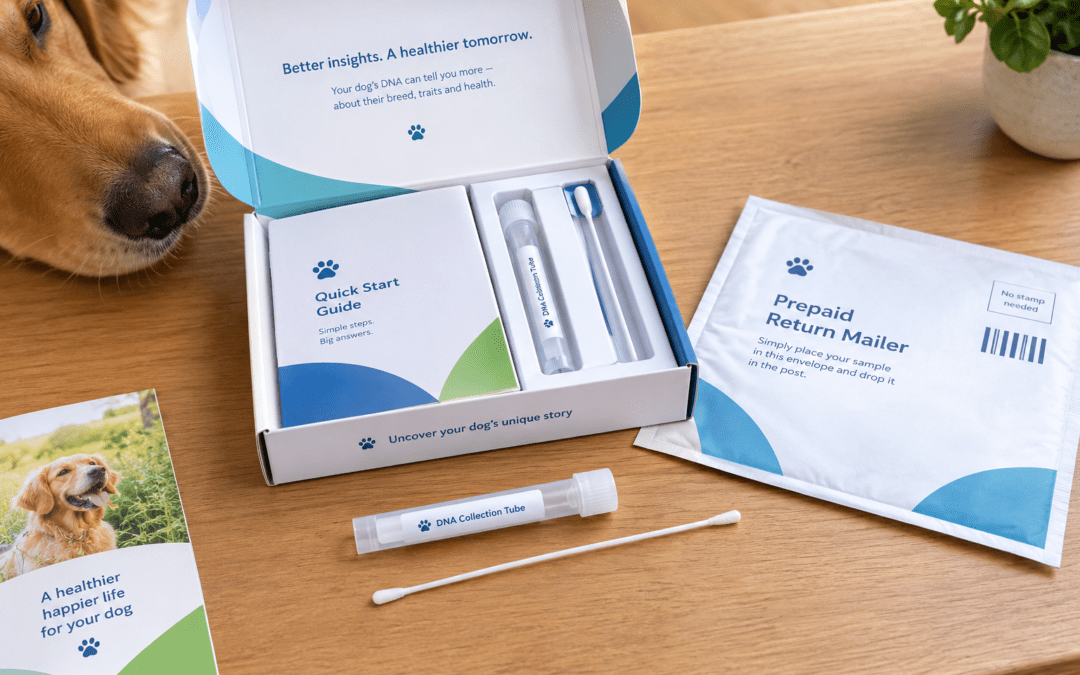
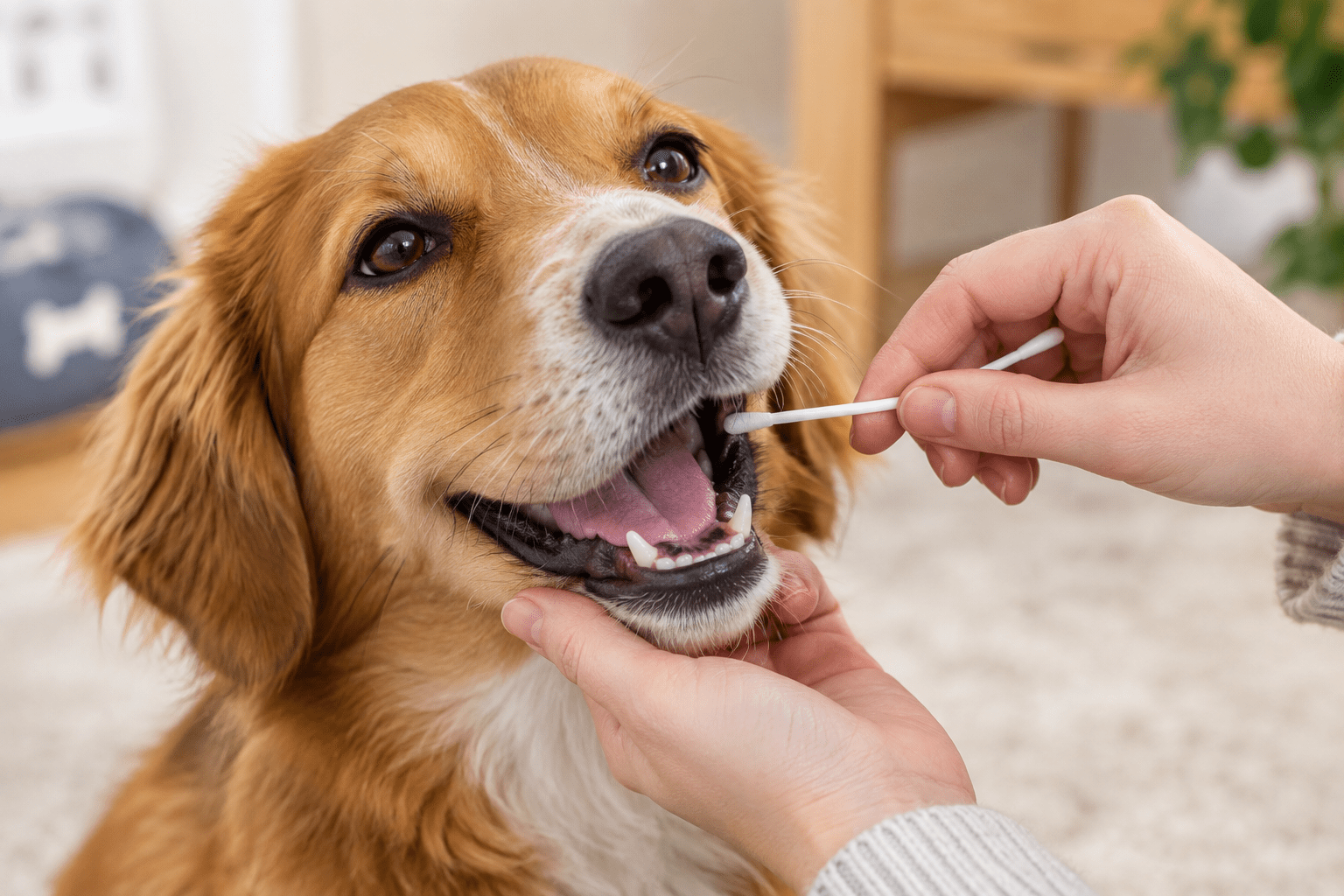
A dog DNA test starts with a cheek swab: you gently rub a cotton swab against the inside of your dog’s cheek pouch and under the tongue for 30 to 60 seconds, then seal it in a tube and mail it to the company’s lab. Sixty seconds is the generally recommended swab time, since the most common reason a test comes back inconclusive is low DNA concentration in the sample, and a longer, more thorough swab reduces that risk substantially.
Once the lab receives the sample, it extracts your dog’s DNA and runs a process called genotyping, scanning for specific genetic markers and chromosomal patterns that correspond to known breeds and, in more comprehensive kits, known disease-linked mutations. Lab analysis and results typically take two to six weeks depending on the company, current lab volume, and how comprehensive the specific test is.
Breed Identification: How Accurate Is It Really?
Breed identification accuracy depends heavily on two things: how large and well-curated the company’s breed reference database is, and how well-documented your dog’s actual breed ancestry happens to be. The two most established names in the category, Wisdom Panel and Embark, claim more than 98% and 99% accuracy respectively for well-documented breeds, with Embark comparing over 200,000 biomarkers against a database of more than 350 breeds, and Wisdom Panel’s premium test screening against more than 430 breeds, the largest reference database currently available to consumers.
That said, it’s worth reading company-wide accuracy claims carefully: many companies in the category report accuracy closer to 90% overall, which still means roughly one in ten results contains an error. Results also tend to be noticeably less precise for rare, regional, or historically under-documented breeds (our guide to rare dog breeds covers several of these harder-to-identify types), sometimes displayed as a percentage range across several possible breeds rather than a single confident match.
The takeaway isn’t that these tests are unreliable, it’s that “accurate” isn’t a single fixed number across the whole category, and a bigger, better-documented reference database generally means a more trustworthy result.
Health Screening: What It Can and Can’t Tell You
Beyond breed identification, many of the more comprehensive kits also screen for genetic health markers, sometimes covering 200 or more known conditions, along with connecting you to genetic relatives of your dog in the company’s database. This can be genuinely useful for flagging inherited conditions common to certain breeds before symptoms appear, giving you and your vet a head start on monitoring or preventive care.
The important caveat is that a health screening result is not a diagnosis or a guarantee. Carrying a specific gene mutation doesn’t mean a dog will definitely develop the associated condition, and a clean result doesn’t mean a dog is free of all possible genetic risk, only that the specific, known mutations the test screens for weren’t detected.
These tests are a genetics snapshot based on current scientific knowledge, not a complete picture of your dog’s future health, and results should be discussed with a veterinarian rather than acted on alone, alongside the rest of your dog’s regular preventive care, including staying current on core vaccines and wellness checkups.
Embark vs. Wisdom Panel: How the Two Leaders Compare
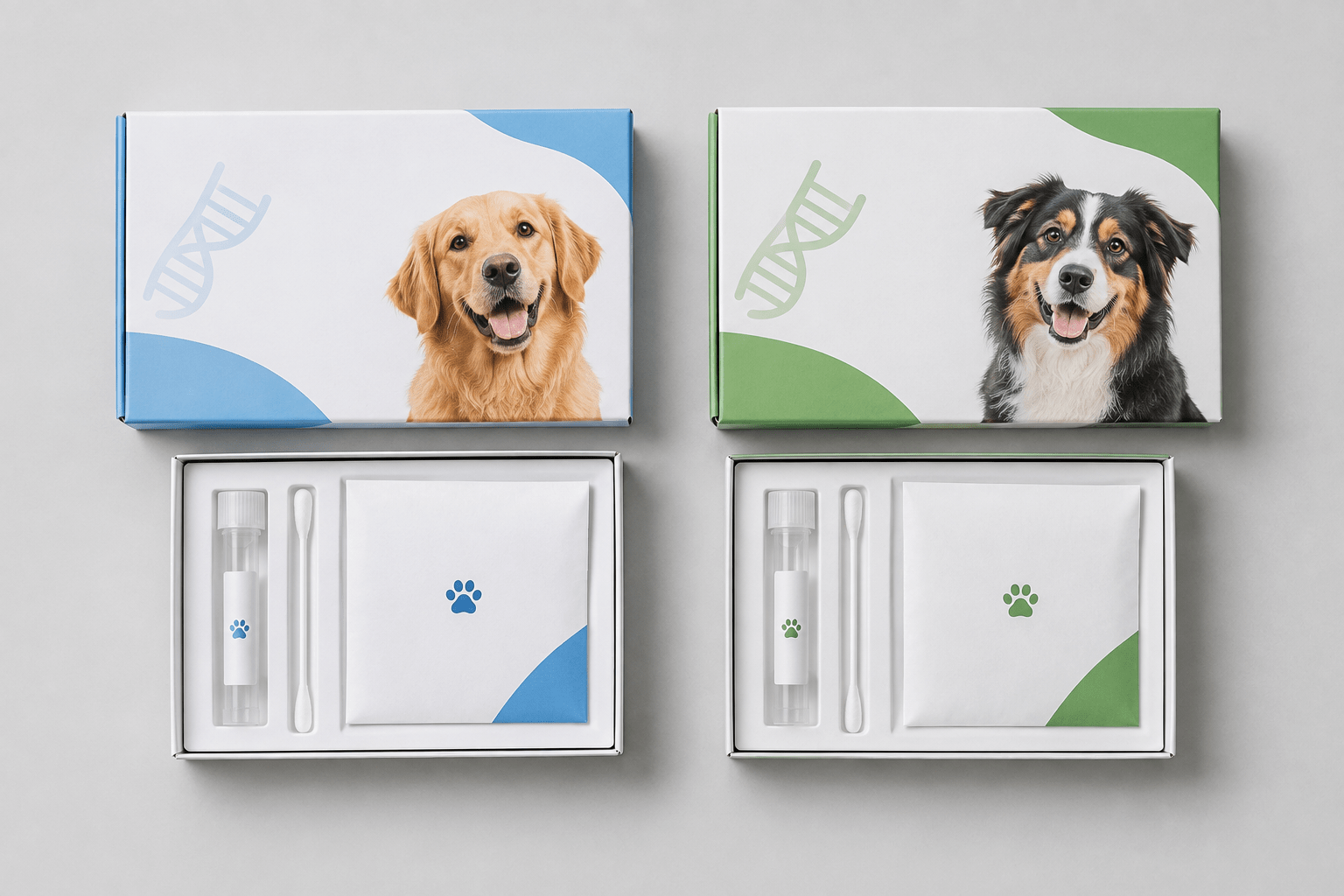
Embark and Wisdom Panel are the two most established names in consumer dog DNA testing, and each has a genuine edge in a different area. Embark generally offers the larger health-screening panel and a bigger breed database, and it’s notably the only major company that also tests for dingo, coyote, wolf, and village dog ancestry, a detail that matters if you have a dog with an unusual or ambiguous background. Embark’s breed-ancestry accuracy claims run around 99%.
Wisdom Panel counters with a simpler swab process, breed-mix detail down to 1% of ancestry, turnaround in roughly two to three weeks, access to expert follow-up advice when a health concern is flagged, and it’s generally positioned as the more budget-friendly option of the two for owners who want solid breed and health information without paying for every add-on feature.
Neither company is a clear universal winner; the right choice depends on whether you value the largest possible database and wild-canine ancestry detection (Embark) or a faster, more budget-conscious test with strong core accuracy (Wisdom Panel).
Privacy: What Happens to Your Dog’s Genetic Data
Because these tests involve sending a biological sample to a private company and creating a permanent genetic profile, it’s worth reading the privacy policy before you buy rather than after. Key questions worth answering for any company you’re considering: does the company sell or share genetic data with third parties such as insurers or breeders, can you request deletion of your dog’s data and sample after testing, is the data used for aggregate research and can you opt out of that use, and how is the sample itself disposed of or stored after processing.
Policies vary meaningfully between companies and change over time, so checking the current policy directly on the company’s site is more reliable than relying on older reviews or marketing pages.
What a Dog DNA Test Costs
Pricing in this category splits fairly cleanly by what the test actually screens for. A standard breed-identification-only kit typically runs $70 to $130. Kits that add health screening, genetic trait testing (things like coat color genetics or expected adult weight), and more detailed ancestry reporting generally run $160 to $200, with some of the most comprehensive kits pushing past $300.
There’s no ongoing subscription requirement for a one-time test, though some companies offer optional add-on services like periodic relative-matching updates as your dog’s genetic relatives also get tested.
How to Get a Reliable Sample
Sample quality is the single biggest factor an owner actually controls in getting a usable result. Swab your dog’s inner cheek and under the tongue for a full 60 seconds using firm, steady pressure, avoid testing right after your dog has eaten, had water, or shared food, toys, or bowls with another dog (residual saliva from another animal can contaminate the sample), and follow the kit’s specific storage and mailing instructions exactly, since samples that sit too long before reaching the lab can degrade. A rushed 10-second swab is the most common owner-side mistake, and it’s an easy one to avoid.
When a DNA Test Is Actually Worth It
A dog DNA test tends to deliver the most genuine value in a few specific situations: satisfying real curiosity about a mixed-breed rescue’s ancestry, getting ahead of breed-linked health risks before they become symptomatic, informing training and exercise expectations based on likely working-breed traits, and in some cases supporting a veterinarian’s diagnostic reasoning when a dog presents with symptoms that map to a known breed-linked condition.
It’s a lower-value purchase for owners of a purebred dog with documented papers, where the ancestry answer is already known, though even purebred owners sometimes use health-screening kits purely for the genetic disease-risk information.
Common Mistakes Owners Make With DNA Test Results
A surprising number of the disappointments owners report with DNA tests come from how the results are interpreted rather than from the test itself. Treating a percentage-range breed match as a precise, guaranteed answer is one common mistake, when in reality lower-confidence matches are genuinely uncertain and should be read as an estimate.
Making major training, diet, or exercise decisions based solely on a breed guess, rather than on your actual dog’s observed size, temperament, and energy level, is another: breed tendencies are statistical patterns, not guarantees about an individual dog. And treating a clean health-screening result as a clean bill of health rather than as “no known mutations detected for the conditions we currently test for” can lead owners to skip health monitoring they’d otherwise do, which isn’t the intended use of the test.
Choosing a Kit: What Actually Matters
When comparing kits, prioritize the size and quality of the breed reference database over marketing claims about “highest accuracy,” since a larger, more rigorously validated database is the actual mechanism behind a more trustworthy result.
Check whether the company’s lab holds recognized accreditation (some leading labs carry accreditation such as ISO 17025 certification through recognized accrediting bodies), look at how many health conditions a screening panel actually covers if that matters to you, and factor in turnaround time if you want results before a specific event like a vet visit. Reading independent, vet-reviewed comparisons rather than relying solely on a company’s own site is worth the extra ten minutes before you buy.
Bottom Line
Dog DNA test kits have become genuinely useful tools for satisfying curiosity about a mixed-breed dog’s ancestry and for surfacing breed-linked genetic health risks early, with top-tier kits from established labs delivering high accuracy for well-documented breeds.
The realistic picture is more nuanced than the marketing: accuracy varies meaningfully between companies and drops for rare breeds, a clean health result isn’t a guarantee of future health, and sample technique genuinely affects whether you get a usable result at all. Choose a kit based on database size and lab accreditation rather than accuracy claims alone, swab carefully, and treat the results as one useful data point to discuss with your vet rather than a final verdict.
FAQ: Dog DNA Test Kits
How accurate are dog DNA tests?
Top-tier kits claim 98-99%+ accuracy for well-documented breeds, but many companies report closer to 90% overall accuracy, and results for rare or regional breeds are typically less precise.
How much does a dog DNA test cost?
Basic breed-identification-only kits run about $70-130. Kits that add health screening and detailed ancestry reporting typically cost $160-300 or more.
How long does it take to get results?
Most companies return results within two to six weeks of receiving your dog’s sample, depending on the lab and how comprehensive the test is.
Can a dog DNA test diagnose a health condition?
No. It can flag known genetic mutations linked to certain conditions, but carrying a mutation doesn’t guarantee the condition will develop, and a clean result doesn’t rule out every possible health risk. Always discuss results with a veterinarian.
What’s the most common reason a dog DNA test fails?
Low DNA concentration in the sample, usually from too short a swab. A full 60-second cheek swab significantly reduces the chance of an inconclusive result.
Is a DNA test worth it for a purebred dog with papers?
Less so for ancestry, since that’s already documented, but some purebred owners still use health-screening kits purely for genetic disease-risk information.
Which is better, Embark or Wisdom Panel?
Embark generally offers a larger breed and health database plus wild-canine ancestry detection; Wisdom Panel offers a simpler process, faster turnaround, and a more budget-friendly price. Neither is universally better — it depends on what you value most.
What happens to my dog’s DNA data after testing?
This varies by company. Check the current privacy policy for whether data is shared with third parties, used in aggregate research, and whether you can request deletion of the sample and profile.
[…] Which foreign pets are legal in Washington State? […]