
Himalayan Persian Cat: Essential Breed, Health and Price Guide (2026)
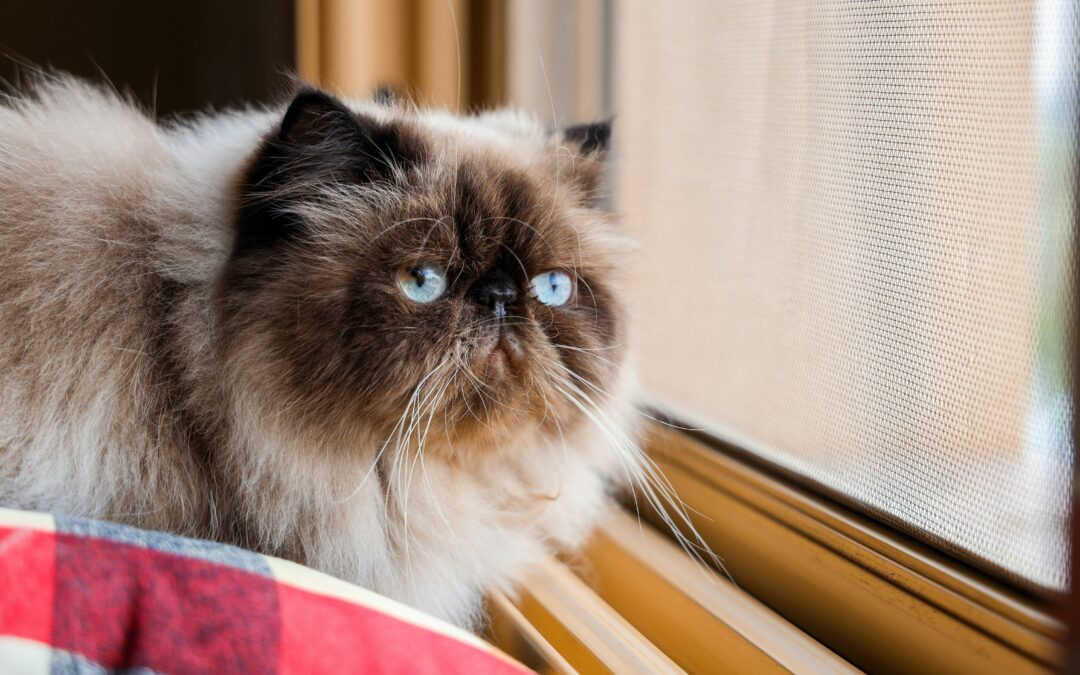
What is a Himalayan Persian cat? It is a long-haired, flat-faced Persian with Siamese-style colorpoint markings and blue eyes. The Cat Fanciers’ Association treats it as a color division of the Persian, not a separate mix. Expect a calm lap cat that needs daily brushing and screening for inherited kidney disease.
Maybe you have seen one on a rescue page and fallen for the cream coat and sapphire eyes. Or you are weighing a breeder’s deposit and want to know what you are really signing up for. This guide covers where the breed came from, how the points form, daily care, health risks and realistic US costs.
Key takeaways
- The Himalayan is a pointed Persian. The CFA merged the two breeds in 1984 and now shows the Himalayan as a division of the Persian.
- Adults usually weigh 9 to 12 lbs (4 to 5.4 kg), and VCA lists a lifespan of 15 to 18 years.
- The long coat needs brushing every day, and the face needs a daily wipe to limit tear staining.
- Polycystic kidney disease (PKD) runs in Persian lines. Ask for both parents’ DNA results.
- Recent US breeder listings range from about $850 to $3,000. Specialist rescues charge roughly $275 to $450.
In this guide
What Is a Himalayan Persian Cat?
A Himalayan Persian cat combines the Persian’s body, coat and face with the pointed color pattern of the Siamese. Many people search for it as the “Himalayan domestic cat,” and pet listings often call it a “Himalayan Persian mix.” That label is misleading today. After decades of breeding back to Persians, the VCA breed profile notes, the Cat Fanciers’ Association folded the Himalayan into the Persian breed in 1984 as a separate division.
| Trait | Himalayan Persian cat at a glance |
|---|---|
| Weight | About 9–12 lbs (4–5.4 kg) |
| Lifespan | 15–18 years (VCA) |
| Body | Cobby, heavy-boned, short thick legs |
| Coat | Long, thick and fine; white or cream body with darker points |
| Eyes | Large, round and blue |
| Energy | Low to moderate; prefers the floor to high shelves |
| Grooming | Daily brushing and face cleaning |
How the Himalayan Breed Was Created
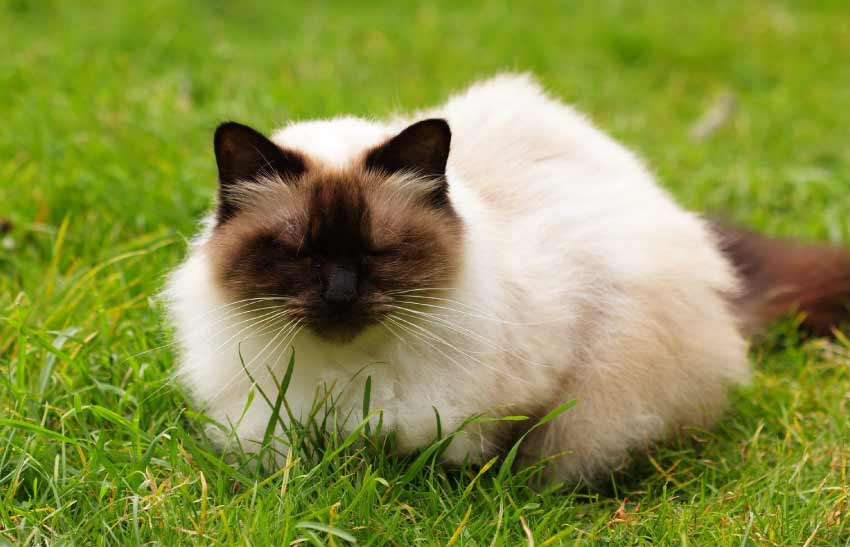
The Himalayan Persian cat exists because breeders wanted Siamese markings on a Persian coat. According to VCA, a British breeder, Brian Sterling-Webb, spent about ten years building a longhaired colorpoint line that gained recognition in Britain in 1955. In the US, California breeder Marguerita Goforth asked the CFA to accept her cats, and recognition followed in 1957.
The first Himalayan grand champion in CFA was crowned in 1966. A CFA history article explains that breeders kept crossing back to Persians through the 1970s to improve head and body type. By 1984 the two were so alike that the CFA board moved the Himalayan into a division of the Persian, even though both breed councils had voted against it.
Colorpoint Genetics: Where the Points Come From
The darker face, ears, paws and tail come from a change in one gene. The UC Davis Veterinary Genetics Laboratory explains that the TYR gene makes an enzyme needed for pigment. In pointed cats, a variant called Siamese colorpoint (cs) makes that enzyme temperature-sensitive. Pigment fades in warm parts of the body and shows on the cooler extremities.
The trait is autosomal recessive. A kitten needs a colorpoint copy from both parents to show points, which is why two pointed parents produce pointed kittens. A solid Persian can still carry one hidden copy. UC Davis includes the Himalayan in its list of breeds suited to this test.
Blue point Himalayan cat and other point colors
The blue point Himalayan cat, with soft gray-blue points on a bluish-white body, was among the first colors accepted. The CFA article lists the history of each shade:
| Point color | Look | CFA history |
|---|---|---|
| Seal point | Deep brown points, fawn to cream body | Accepted 1957 |
| Blue point | Gray-blue points, cool white body | Accepted 1957 |
| Chocolate point | Warm milk-chocolate points | Accepted 1957 |
| Lilac point | Pale pinkish-gray points | Accepted 1957 |
| Flame and tortie point | Red-orange or mottled points | Added 1964 |
| Cream and blue-cream point | Dilute versions of flame and tortie | Recognized dilutes |
| Lynx point | Tabby-striped points | Recognized pattern |
Pet Care Tip: Point color can change the price at some catteries, but it tells you nothing about a kitten’s health. Choose the kitten with the best health paperwork, then enjoy whatever shade comes with it.
Himalayan Persian Cat Personality
VCA describes the breed as gentle, quiet and sweet-tempered, a little more active than a Persian but calmer than a Siamese. Most Himalayans enjoy short play sessions, then settle into a warm lap. They are rarely loud, tend to be polite with visitors and usually get along with other cats and dogs after a careful introduction.
Expect a floor-level companion. Himalayans generally prefer low perches to tall cat trees, so a wide, sturdy bed near a sunny window suits them well. The CFA article adds that many like to “help” with whatever their people are doing, which often means sitting on your paperwork.
Himalayan vs. Persian vs. Siamese
| Trait | Himalayan | Solid Persian | Siamese |
|---|---|---|---|
| Coat | Long, pointed | Long, many colors | Short, pointed |
| Face | Flat, round | Flat, round | Long, wedge-shaped |
| Activity | Moderate | Low | High |
| Grooming | Daily | Daily | Weekly |
Activity ranking based on VCA’s comparison of the three breeds.
Grooming a Himalayan Persian Cat: Daily Care Plan
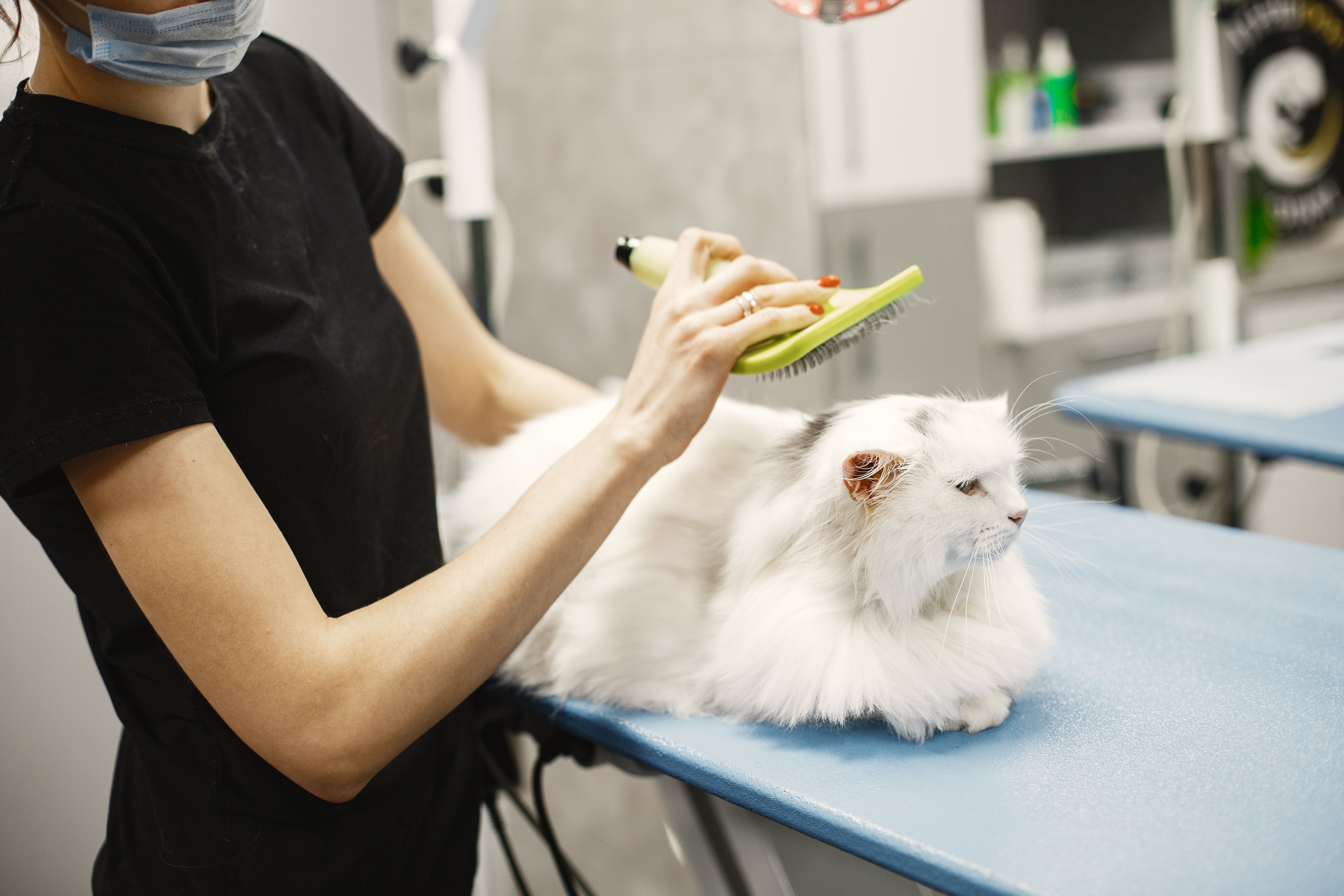
Grooming is the biggest daily commitment of owning a Himalayan Persian cat. VCA advises brushing every day to stop tangles and mats, plus a daily face wipe with a damp washcloth to prevent tear staining. The CFA notes that many catteries also bathe weekly, so well-raised kittens often accept handling calmly.
| How often | Task | Why it matters |
|---|---|---|
| Daily | Brush to the skin with a wide-tooth comb | Mats form fast behind ears, armpits and belly |
| Daily | Wipe eye corners and face folds | Limits tear staining and damp skin |
| Weekly | Check the rear end for clumped fur | Keeps the litter area clean and comfortable |
| Every 2–4 weeks | Trim nails; bathe if your vet or groomer advises | Reduces oil build-up and snagging |
If a mat does form, work it loose gently with your fingers and a comb. Never cut a mat with scissors, because cat skin tents up into the mat and is easy to slice. A groomer or your vet can shave out tight mats safely.
A shallow, wide food bowl helps flat-faced cats reach their food. Some owners find a low-entry litter box easier for heavily coated cats too. For the cost side of coat care, our Persian cat cost breakdown includes grooming tools and salon visits.
Health Risks to Know
When to call a vet: Open-mouth breathing, blue or gray gums, straining in the litter box, or a cat that stops eating needs a veterinarian or a 24/7 emergency animal hospital right away.
Polycystic kidney disease (PKD)
The Cornell Feline Health Center says PKD causes fluid-filled cysts in the kidneys that can lead to kidney failure. It is most common in Persians and also seen in Himalayans. A genetic test shows whether a cat carries the gene, and Cornell advises that carriers should not be bred. There is no cure, but diet, fluids and medication can help manage it.
Eyes, tear staining and face folds
On a short face, tears tend to spill onto the fur, and VCA recommends a daily wipe with a damp cloth to prevent staining. A little clear tearing is usually handled by that routine. Call your vet if the discharge turns yellow or green, if your cat squints or paws at an eye, or if the skin in the facial folds looks red or smells.
Breathing and the flat face
The University of Illinois College of Veterinary Medicine lists Persians, Himalayans and Exotic Shorthairs among increasingly flat-faced breeds. Researchers there found such cats were more likely to show sneezing, coughing, nasal discharge and difficulty chewing. Narrow nostrils can be widened surgically in some cats. Keep your cat lean and indoors on hot, humid days.
Himalayan Persian Cat Price and First-Year Costs
There is no national price list, but a September 2026 ThePricer review of US listings found Himalayan Persian cat kittens priced from about $850 to $3,000. The same review lists Persian and Himalayan Cat Rescue adoption fees of $275 to $450. Prices vary by pedigree, region and what the breeder includes.
| Expense | Approximate cost (USD) |
|---|---|
| Kitten from a breeder | $850–$3,000 |
| Rescue adoption | $275–$450 |
| Pet insurance, accident and illness | About $435 a year (2025 US cat average, NAPHIA) |
| Professional grooming (optional) | About $240–$900 a year (ThePricer estimate) |
Compare these figures with our guide to how much a Persian cat costs, since solid and pointed Persians often come from the same catteries.
Before you pay a deposit: 6 questions for a breeder or rescue
- Can I see PKD DNA results for both parents?
- Has the Himalayan kitten had a vet exam, first vaccines and deworming?
- Can I see the kitten’s nostrils and face up close on a video call or visit?
- How has the kitten been handled for brushing, bathing and nail trims?
- What does the price include, and is there a written health guarantee?
- Will you take the cat back at any age if I cannot keep it?
Example Scenario (illustrative)
Priya, a nurse in Columbus, Ohio, finds a seal point Himalayan Persian cat listed at $1,200. Before paying, she asks for PKD DNA results on both parents and the kitten’s vet records. The breeder sends only the mother’s test. Priya keeps looking and adopts a two-year-old blue point from a breed rescue for $350, with a vet check already done.
| Common mistake | Effect on the cat | How to avoid it |
|---|---|---|
| Brushing only the top coat | Painful mats near the skin | Comb down to the skin daily |
| Skipping PKD paperwork | Risk of inherited kidney disease | Ask for both parents’ DNA results |
| Choosing the flattest face | More breathing and chewing trouble | Favor open nostrils and a moderate face |
| Ignoring eye discharge | Skin irritation in face folds | Wipe daily; see a vet if it changes |
What most owners get wrong
Many buyers assume a “Himalayan Persian mix” is hardier than a purebred Persian. In practice, it shares the same coat, face shape and PKD risk. Judge each kitten by its health testing and facial structure, not by the label. Our guide to cat nose shapes explains why a more open nose can matter.
Himalayan Persian Cat FAQs
Is a Himalayan Persian cat a mixed breed?
Not anymore. It began as a Persian and Siamese cross, but the CFA has shown the Himalayan as a division of the Persian breed since 1984.
How big do Himalayan cats get?
Most adults weigh about 9 to 12 pounds, with a short, stocky, heavy-boned body.
How long do Himalayan cats live?
VCA lists a lifespan of 15 to 18 years. Indoor living, a healthy weight and regular vet checks give the best chance of reaching it.
Are Himalayan cats good for first-time owners?
They suit calm homes well, but only if you can commit to daily grooming. Their gentle nature makes them easy companions once the routine is set.
What is a blue point Himalayan cat?
It is a Himalayan with gray-blue points on its face, ears, paws and tail and a bluish-white body. Blue point was one of the first four colors the CFA accepted in 1957.
Do Himalayan cats shed a lot?
Yes, they shed steadily because of the long, thick coat. Daily brushing removes loose hair before it ends up on furniture or forms mats.
Final Verdict: Is a Himalayan Persian Cat Right for You?
A Himalayan Persian cat suits a calm home that enjoys a quiet, affectionate lap cat and can brush every single day. Budget around $850 to $3,000 from a breeder, or less through a breed rescue. Insist on PKD testing, favor a moderate face, and you gain a gentle companion for many years.
Your next steps
- Explore more breed and care guides in our Cats section.
- Plan your budget with our Persian cat cost guide.
- Before any deposit, ask for PKD results on both parents and a vet record for the kitten.
Share your Himalayan photos and questions with other pet parents on our Pets Store Home Facebook page.
About the author: Written and reviewed by the Pets Store Home Editorial Team, a group of pet owners and animal lovers who check every guide against trusted US veterinary and animal-welfare sources. This article is general information, not a substitute for professional veterinary advice. Always talk to your veterinarian about your own pet’s health.
How we checked this guide: Breed history, size, lifespan and care come from VCA and the Cat Fanciers’ Association. Genetics come from the UC Davis Veterinary Genetics Laboratory, PKD from the Cornell Feline Health Center, and flat-face research from the University of Illinois. Costs come from NAPHIA and a September 2026 review of US listings. We review this article every 12 months, or sooner if guidance changes.
Last reviewed: October 2026. Sources: VCA, CFA, UC Davis VGL, Cornell Feline Health Center, University of Illinois, NAPHIA, ThePricer.
Sources (accessed October 16, 2026)
- VCA Animal Hospitals: Himalayan
- Cat Fanciers’ Association: The Persian Himalayan
- UC Davis Veterinary Genetics Laboratory: Colorpoint Restriction
- Cornell Feline Health Center: Polycystic Kidney Disease
- University of Illinois College of Veterinary Medicine: Brachycephalic Cats
- NAPHIA: State of the Industry 2026 Highlights
- ThePricer: Himalayan Cat Cost
[…] Which foreign pets are legal in Washington State? […]