
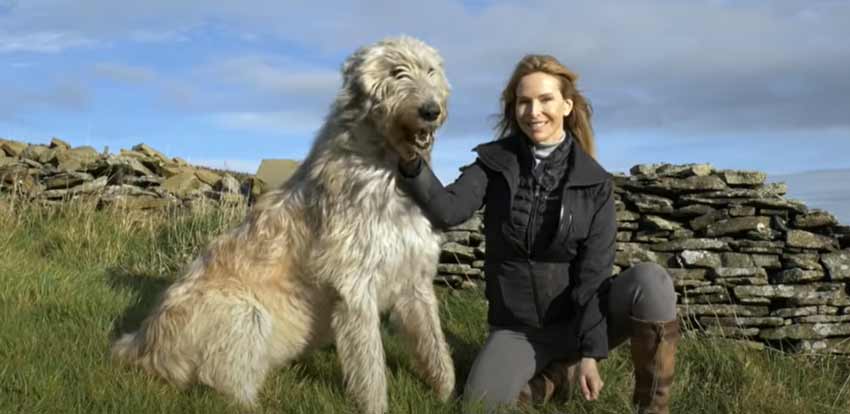
Quick Answer: An Irish Wolfhound German Shepherd mix is a large, often giant-sized dog, but exactly how large varies enormously depending on which parent’s genetics dominate – anywhere from a big, lean German Shepherd-sized dog around 70-90 pounds up to a genuine giant closer to the Wolfhound’s 105-180 pound range. There’s no single reliable number, which is worth knowing before you fall in love with one specific size estimate.
Key Takeaways
- Adult size varies widely – this mix can land anywhere from German Shepherd-sized to genuinely giant, depending on individual genetics.
- Temperament typically blends Wolfhound gentleness with German Shepherd intelligence and alertness.
- Large joints and a deep chest mean hip dysplasia and bloat are the top health concerns to watch for.
- Lifespan likely falls between the Wolfhound’s shorter 6-10 years and the Shepherd’s longer 10-14 years, though this varies by dog.
- Early training matters more than usual here, simply because of how large and strong this mix can become.
Why Trust This Guide?
This guide is researched and written by the Pets Store Home editorial team, drawing on AKC breed standards for both parent breeds and general veterinary care information. It’s intended as general information; consult a veterinarian or a reputable breeder for advice specific to your dog.
Meet the Irish Wolfhound German Shepherd Mix
An Irish Wolfhound German Shepherd mix crosses two working breeds with very different jobs in their history. The Irish Wolfhound is one of the tallest breeds in the world, originally bred in Ireland to hunt wolves and wild boar and later kept as a war dog and estate guardian – the AKC standard sets a minimum of 32 inches and 120 pounds for males, with many dogs averaging 32 to 35 inches and well over 120 pounds. The German Shepherd, by contrast, is a mid-sized, highly versatile herding and working breed developed in Germany at the end of the 19th century, standing 22 to 26 inches and typically weighing 50 to 90 pounds.
Crossing two breeds this different in size produces a genuinely unpredictable outcome. A given puppy might take strongly after one parent or land somewhere in between, and there’s no way to guarantee which before the puppy is fully grown. Anyone considering this mix should go in expecting a large dog, but should hold their exact size expectations loosely until the individual puppy’s growth pattern becomes clear.
Size and Appearance
Because of the wide gap between the parent breeds, adult Irish Wolfhound German Shepherd mixes show real variation in size. Some end up closer to a large German Shepherd, in the 70-90 pound range and around 24-26 inches tall. Others inherit more of the Wolfhound’s frame and can reach 100 pounds or considerably more, with height pushing well past 28-30 inches at the shoulder. Build tends to combine the Wolfhound’s long-legged, rangy structure with the German Shepherd’s more muscular, athletic frame, and coat can come in short or wiry-medium length, in colors ranging from black, brown, and gray to brindle, depending on which parent’s coat genetics come through more strongly.
Temperament
Despite their imposing size, Irish Wolfhounds have a reputation as unusually gentle, patient dogs – sometimes called “gentle giants” – and that calm temperament often comes through clearly in this mix. Paired with the German Shepherd’s intelligence, alertness, and loyalty, the result is typically a dog that’s affectionate and good-natured with its family, reasonably watchful without being unnecessarily aggressive, and capable of real focus when trained. Early socialization still matters, since a dog this large needs to be comfortable and well-mannered around unfamiliar people, animals, and situations well before it reaches full size.
Exercise and Training Needs
This mix needs daily physical activity, though how much varies with which parent’s energy level shows through more strongly – German Shepherd lines tend to want more sustained activity, while Wolfhound lines are often content with a solid walk or two and some open space to stretch their legs. Either way, a fenced yard or secure space for safe off-leash movement is a real asset given the dog’s size and potential prey drive inherited from the Wolfhound side.
Both parent breeds are intelligent and generally responsive to positive, reward-based training, which makes this mix reasonably trainable when started early. Basic obedience – sit, stay, come, and reliable leash manners – is worth prioritizing well before the dog reaches its full adult size and strength, since retrofitting good leash behavior onto a 100-plus-pound dog is considerably harder than teaching it as a puppy.
Health Considerations
Hip and elbow dysplasia are common large-breed joint conditions in which the joint doesn’t form correctly, leading to arthritis and discomfort over time; OFA or PennHIP screening in the parents is one of the most effective ways to reduce this risk. Bloat (gastric dilatation-volvulus) is a serious, potentially fatal emergency in which the stomach fills with gas and can twist, cutting off blood flow – it’s more common in large, deep-chested breeds like both of this mix’s parents, and owners should know the warning signs (a distended abdomen, unproductive retching, restlessness) and treat it as an emergency. Dilated cardiomyopathy, a heart condition where the heart muscle weakens and enlarges, is a known concern in giant breeds including the Irish Wolfhound. Progressive retinal atrophy, an inherited eye condition that gradually causes blindness, is also worth screening for. Given the size difference in lifespans between the parent breeds – Irish Wolfhounds typically live 6 to 10 years, German Shepherds 10 to 14 – this mix’s lifespan likely falls somewhere in between, though it depends heavily on the individual dog’s size and inherited health.
Diet and Nutrition
A dog this size needs a diet formulated for large or giant breeds, particularly during puppyhood, since overly rapid growth in large-breed puppies is linked to a higher risk of joint problems later in life. Adult feeding amounts vary enormously depending on the individual dog’s adult size – a 75-pound adult and a 130-pound adult have very different calorie needs – so working with a veterinarian to set an appropriate feeding plan, rather than following a generic amount, is the more reliable approach for this particular cross. Because of the bloat risk mentioned above, many large-breed owners also feed two or more smaller meals a day rather than one large meal, and avoid vigorous exercise immediately before or after eating.
Grooming Needs
Grooming needs depend on which parent’s coat type comes through. A shorter, denser German Shepherd-type coat sheds fairly heavily and benefits from brushing a few times a week, while a longer, wirier Wolfhound-type coat needs similarly regular brushing to prevent matting and tangling, plus occasional hand-stripping in some cases. Routine nail trims, ear cleaning, and dental care round out a manageable grooming routine regardless of coat type.
Why Predicting Size Is So Difficult
It’s worth spending a bit more time on why this particular cross is so hard to predict, since it’s the single biggest practical question anyone considering this mix will have. Most designer-dog crosses involve parent breeds that are reasonably close in size, which keeps the range of likely outcomes fairly narrow. The Irish Wolfhound and German Shepherd are not close in size at all – a full-grown male Wolfhound can outweigh a German Shepherd by 50 pounds or more and stand nearly a foot taller at the shoulder. When two breeds this far apart are crossed, the puppy’s genetics can sort in either direction, and there’s no reliable way to tell from a young puppy which parent’s size genes will ultimately dominate.
This is different from crosses where both parent breeds fall in a similar size class, where you can reasonably expect the puppy to land somewhere close to both parents. Here, “somewhere in between” can still mean a very wide range – the difference between a 75-pound adult and a 140-pound adult is enormous in terms of housing, feeding, and exercise needs, and both are plausible outcomes from the same litter. A responsible breeder should be upfront about this uncertainty rather than promising a specific adult size.
History of the Parent Breeds
Understanding where each parent breed comes from helps explain the traits that show up in the mix. The Irish Wolfhound has an ancient lineage in Ireland, historically used to hunt wolves and Irish elk and later valued as a war dog and estate guardian for the nobility; the breed nearly went extinct in the 19th century before dedicated breeders revived it. That history of being bred for calm confidence around large game, rather than aggression, is part of why the breed has such a gentle reputation despite its size.
The German Shepherd has a much more recent history, developed in Germany starting in 1899 by Captain Max von Stephanitz, who set out to standardize local herding dogs into a single versatile working breed. That working-dog background – herding, guarding, and later police, military, and service work – is where the mix’s intelligence, trainability, and alertness largely come from. Combining a breed developed for calm, patient guarding with one developed for active, versatile working roles is part of what makes this cross’s temperament so appealing to the right owner.
Cost and Finding a Reputable Breeder
Because this is a mixed-breed pairing between two distinct working breeds, pricing varies more than it would for a purebred with an established market. Expect a wide range depending on the breeder, region, and health testing provided, and treat any breeder who can’t speak knowledgeably about both parent breeds’ health risks with some caution. A reputable breeder should provide hip and elbow health clearances for the parents at minimum, be willing to discuss cardiac health given the Wolfhound side’s risk profile, and let you meet at least one parent in person. Because adult size is so unpredictable in this cross, be especially wary of any breeder who guarantees a specific adult weight or height – that’s not something anyone can promise with confidence for this particular pairing.
Living With a Large, Unpredictable-Sized Dog
Because you won’t know your puppy’s likely adult size with much confidence until it’s well into its growth, it’s worth preparing your home and routine for the larger end of the plausible range rather than assuming the smaller end. That means having furniture, vehicle space, and a yard that can comfortably accommodate a dog well over 90 pounds, even if your particular puppy ends up smaller. It also means budgeting for large-breed-sized costs – food, medication doses, boarding, and veterinary care all scale with size, and it’s easier to plan for a big dog and get a moderate one than the reverse.
Is This Mix Right for You?
This is a dog best suited to an owner with the space, time, and budget for a genuinely large animal – not just physically, but in terms of food costs, veterinary care, and the practical realities of managing a dog that could end up well over 100 pounds. It rewards an owner who’s committed to early training and socialization, has room for the dog to move (a yard is a significant plus), and is prepared for the health monitoring that comes with owning a large or giant breed. For the right household, the combination of loyalty, intelligence, and a typically gentle disposition can make for an exceptional companion.
Frequently Asked Questions
How big does an Irish Wolfhound German Shepherd mix get?
It varies significantly – anywhere from around 70-90 pounds (closer to a large German Shepherd) up to well over 100 pounds (closer to the Wolfhound side), depending on the individual dog’s genetics.
Are Irish Wolfhound German Shepherd mixes good family dogs?
Generally yes, when properly socialized – they tend to combine the Wolfhound’s gentle nature with the Shepherd’s loyalty and trainability.
What health problems should I watch for?
Hip and elbow dysplasia, bloat, dilated cardiomyopathy, and progressive retinal atrophy are the main concerns, largely tied to the mix’s large size.
How much exercise does this mix need?
Daily exercise is a must, though the amount varies depending on which parent’s energy level dominates – some are satisfied with solid daily walks, others need more sustained activity.
How long do Irish Wolfhound German Shepherd mixes live?
Likely somewhere between the Wolfhound’s 6-10 year lifespan and the Shepherd’s 10-14 year lifespan, though this depends on the individual dog.
If you’re comparing other German Shepherd mixes as well, our guides to the Blue Heeler German Shepherd mix and the Wolf German Shepherd Husky mix cover two very different-sized crosses. And since bloat and weight management are worth watching in any large or giant breed, our guide on how to help your dog lose weight covers safe, practical steps.
Curious About the White Coat?
If you’re weighing a German Shepherd mix alongside a purebred, our guide to the White German Shepherd explains the real genetics behind the white coat, why AKC and UKC handle it differently, and what actually affects health and price.
[…] Which foreign pets are legal in Washington State? […]