
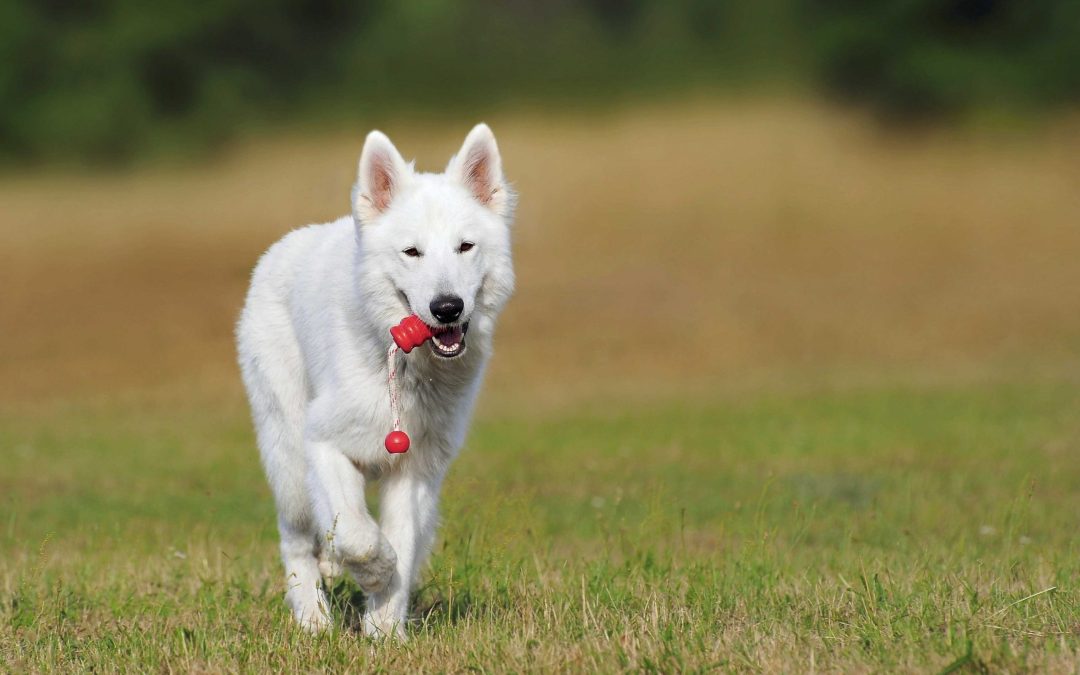
Quick Answer: White German Shepherds are genetically standard German Shepherds carrying a recessive color-masking gene, not albinos and not a separate breed by ancestry. The AKC disqualified the white coat from its GSD breed standard in 1968 (originally over a mistaken albinism concern), so white dogs can still register as German Shepherds for obedience, agility, and herding but can’t compete in AKC conformation shows. The UKC took the opposite approach, recognizing the “White Shepherd” as its own breed in 1999.
Key Takeaways
- White coloring comes from a recessive gene at the MC1R locus (e/e genotype), not albinism – nose, eye rims, and paw pads keep normal dark pigment.
- AKC disqualified white from its GSD breed standard in 1968; UKC instead recognized the White Shepherd as its own breed in 1999.
- Temperament, size, and health needs match standard-colored German Shepherds – color doesn’t change the dog underneath.
- Hip and elbow dysplasia, degenerative myelopathy, and bloat are the same breed-wide health concerns to screen for.
- Price is comparable to standard-colored GSDs from health-tested breeders, sometimes a bit higher due to demand for the color.
Why Trust This Guide?
This guide is researched and written by the Pets Store Home editorial team, drawing on AKC and UKC breed-recognition records and canine coat-color genetics resources. It’s intended as general information; consult a veterinarian or a reputable, health-testing breeder for advice specific to your dog.
White Isn’t a Different Breed – It’s a Recognition Split
A White German Shepherd is, genetically, a German Shepherd Dog carrying two copies of a recessive color gene rather than a separate lineage. The confusion over its breed status comes entirely from how kennel clubs chose to handle that one gene, not from any real difference in ancestry. The American Kennel Club still classifies white-coated dogs as German Shepherd Dogs – they can be registered, and they can compete in obedience, agility, and herding events – but the AKC’s breed standard disqualifies the white coat from conformation showing.
The United Kennel Club took the opposite route. In 1999, after petitioning from White Shepherd breed advocates, the UKC officially recognized the “White Shepherd” as its own distinct breed, allowing white dogs to compete in UKC conformation alongside colored German Shepherds under a separate breed name. The Canadian Kennel Club also recognizes the White Shepherd separately. So depending on which registry a breeder uses, you’ll see the exact same dog described as either a color variant of the German Shepherd or a standalone breed – both are accurate depending on context, since the split is administrative, not genetic.
Why the White Coat Was Disqualified
The German Shepherd Dog was developed in Germany starting in 1899, when cavalry officer Max von Stephanitz began standardizing local herding dogs into a single working breed. White-coated dogs were part of the breed’s early gene pool and appeared in early litters alongside the more familiar black-and-tan and sable colors.
White fell out of favor in Germany’s breed club during the 1930s, and the American Kennel Club followed suit, disqualifying the white coat from the GSD breed standard on April 9, 1968. The original justification was a mistaken belief that white German Shepherds were albinos and therefore likely to carry health problems associated with albinism. That belief was later shown to be false – white GSDs have normal, fully pigmented noses, eye rims, and paw pads, and brown (not pink) eyes – but by the time the science caught up, the disqualification was already firmly written into the standard and has remained ever since.
The Genetics: Masked Color, Not Albinism
White coloring in German Shepherds comes from a recessive variant at the MC1R gene, often written as the “e/e” genotype. This variant doesn’t remove pigment from the dog – it masks the expression of the usual black-and-tan or sable coat pattern, so the coat reads as solid white or cream while the underlying pigment genetics are otherwise identical to any other German Shepherd. Because the nose, lips, eye rims, and paw pads keep their normal dark pigmentation and the eyes stay brown, a genuine White Shepherd looks nothing like a true albino animal.
Because the white gene is recessive, a puppy needs to inherit a copy from both parents to display it. Two dark-coated German Shepherds can each carry a hidden copy of the gene and unexpectedly produce white puppies, which is part of why white coloring can show up in otherwise standard-colored breeding lines.
Physical Characteristics
Aside from coat color, a White Shepherd matches the standard German Shepherd in every measurable way: males typically stand 24 to 26 inches at the shoulder and weigh 65 to 90 pounds, with females slightly smaller. The build is athletic and well-muscled, with the same erect ears, long muzzle, and double coat (though White Shepherds are sometimes bred with a slightly longer, plusher coat than the show-standard colored lines).
Temperament
Temperament is unaffected by coat color. White Shepherds share the breed’s intelligence, trainability, loyalty, and protective instinct, and they’re commonly used in obedience, agility, herding, and service-dog work. Like any German Shepherd, they need consistent training, an experienced or committed owner, and early socialization to channel their working-dog drive productively.
Exercise and Training Needs
These are high-energy working dogs that need substantial daily exercise – at least an hour of physical activity plus mental stimulation through training, puzzle toys, or a job to do. Without an outlet for their energy and intelligence, German Shepherds of any color are prone to developing destructive or anxious behaviors. Positive, reward-based training and early socialization go a long way toward a well-adjusted adult dog.
Health Considerations
White Shepherds share the same breed-wide health profile as standard-colored German Shepherds, since color genetics and health genetics are largely separate. Hip and elbow dysplasia are common concerns in the breed, and OFA or PennHIP screening in a puppy’s parents meaningfully reduces the risk. Degenerative myelopathy, a progressive spinal cord disease, is another breed-associated condition that responsible breeders test for genetically. Bloat (gastric dilatation-volvulus) is a life-threatening emergency more common in large, deep-chested breeds like this one, and owners should learn its warning signs. None of these risks are increased or decreased by the white coat itself – they come with the breed generally, not the color.
Grooming Needs
White Shepherds have a double coat that sheds year-round with heavier seasonal shedding, and it needs brushing two to three times a week (more during shedding season) to manage loose fur and keep the coat healthy. Because white shows dirt and staining more visibly than darker colors, some owners find they bathe a white-coated dog slightly more often, though the coat itself needs no different care than any other German Shepherd’s.
What Drives White Shepherd Pricing
Pricing tracks the same factors that drive standard German Shepherd pricing: health testing and guarantees, pedigree, working-line versus show-line breeding, and breeder reputation. Because white coloring is less common and sought after by a dedicated following, some breeders charge a modest premium for it, but well-bred White Shepherds and well-bred standard-colored GSDs generally land in a similar range – roughly $800 to $2,500 from a reputable breeder, with working-line or specialty breeding pushing prices higher.
Frequently Asked Questions
Is a White German Shepherd albino?
No. White coloring comes from a recessive gene that masks normal coat pigment. The nose, eye rims, and paw pads keep normal dark pigmentation and the eyes are brown, unlike true albinism.
Is the White Shepherd a separate breed?
It depends on the registry. AKC treats it as a German Shepherd with a disqualifying coat color; UKC and the Canadian Kennel Club recognize the White Shepherd as its own breed.
Why can’t White Shepherds compete in AKC conformation shows?
The AKC disqualified the white coat from the GSD breed standard in 1968, originally over a since-disproven concern about albinism. White dogs can still register with AKC and compete in obedience, agility, and herding events.
Do White Shepherds have different health risks than other German Shepherds?
No. They share the same breed-wide risks – hip and elbow dysplasia, degenerative myelopathy, and bloat – regardless of coat color.
Are White Shepherds more expensive than standard-colored German Shepherds?
Sometimes modestly more, due to demand for the color, but well-bred dogs of either color generally fall in a similar price range from a reputable breeder.
If you’re comparing German Shepherd mixes as well as purebred lines, our guides to the Blue Heeler German Shepherd mix and the Irish Wolfhound German Shepherd mix cover two popular crosses, and our guide to the Wolf German Shepherd Husky mix looks at a strikingly different combination built from the same working-dog ancestry.
[…] Which foreign pets are legal in Washington State? […]