
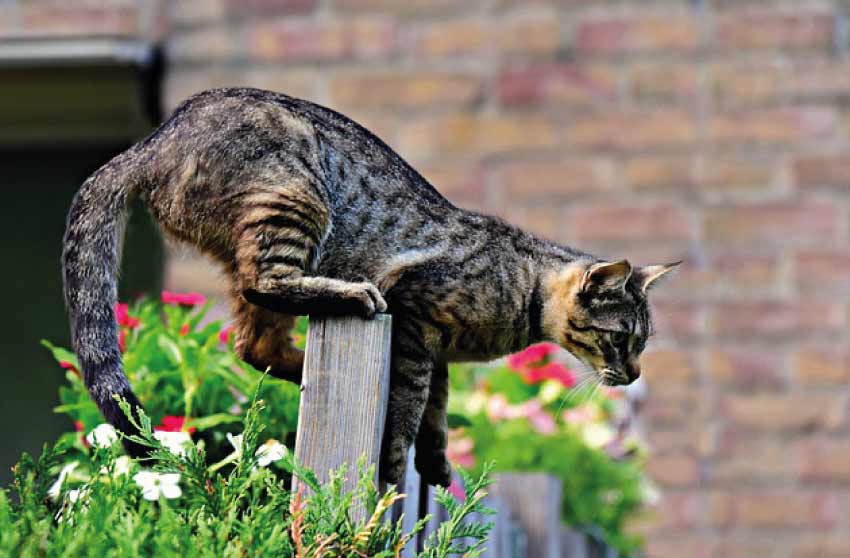
Quick answer: A kinked tail in a cat is almost always a harmless genetic trait, caused by vertebrae that fused at an unusual angle before birth. It’s especially common in Siamese, Burmese, Manx, and Japanese Bobtail cats, and most cats with a kink live completely normal, pain-free lives. A kink that appears suddenly in an adult cat, though, is more likely from an injury and is worth a vet check.
Key Takeaways
- Most kinked tails are congenital – present from birth – and caused by a recessive or variably-expressed gene affecting vertebral fusion.
- Siamese, Burmese, Manx, and Japanese Bobtail cats are especially prone to kinked or bobbed tails as a breed trait.
- A congenital kink is typically painless, feels smooth and fixed, and doesn’t cause balance problems.
- A kink that shows up suddenly in a previously straight-tailed adult cat is more likely caused by injury and should be checked by a vet.
- Watch for pain, swelling, or loss of bladder/bowel control near the tail base – these can signal nerve involvement and need prompt veterinary attention.
Why Trust This Guide?
This guide draws on published feline genetics research, including studies identifying the specific gene mutations behind short and kinked tails in Asian cat breeds, combined with veterinary guidance on distinguishing congenital tail differences from injury. It’s written to help owners understand what’s normal and when a vet visit is actually necessary.
What Causes a Kinked Tail in Cats?
A kinked, bent, or bobbed tail happens when the small bones (vertebrae) that make up a cat’s tail fuse together at an angle instead of forming a smooth, straight line. In the vast majority of cases, this happens before a kitten is even born, as part of normal skeletal development gone slightly sideways due to genetics rather than any kind of trauma.
Researchers have traced at least part of this to specific gene mutations that affect cartilage at the growth plates of the tail vertebrae. A missense mutation identified in the HES7 gene, for example, has been linked to short and kinked tails in Chinese short-tailed feral cats and in the Japanese Bobtail breed specifically. Interestingly, breeding records suggest that a kinked-tailed kitten is reliably born from at least one kinked-tailed parent, which points to the trait being inherited in a fairly consistent, if variably expressed, pattern rather than appearing at random.
Less commonly, a kink can also result from an injury – a fall, a door or window closing on the tail, or another cat stepping on it – that fractures or dislocates a vertebra as it heals. The tail can heal in a slightly bent position, which sometimes looks similar to a congenital kink but has a different origin and history.
Congenital Kinks vs. Injury-Related Kinks: What’s the Difference?
The single most useful piece of information for figuring out which type of kink your cat has is simple: has the kink always been there, or did it appear suddenly at some point in your cat’s life? A congenital kink is present from the very first time you or a previous owner examined the kitten, often noticeable within the first few weeks of life. An injury-related kink, by contrast, always follows some kind of incident – even if you didn’t personally witness it, there was a specific moment where the tail was straight and then wasn’t.
Physically, the two can feel different on close examination too. When you run a finger along a congenital kink, the bend usually sits at a consistent, unchanging angle without any puffiness or thickening around it, and your cat should carry on as if nothing happened. An old fracture that healed on its own can present a similar rigid bend, though it sometimes carries a small ridge of scar-like bone where the break knitted back together over time. A genuinely fresh injury reads very differently – the area is sore to the touch, and most cats will visibly react, whether that means yanking the tail away, hissing, or crying out when that spot is handled.
The Genetics Behind Kinked Tails
Cat tail genetics are more complex than a single gene controlling a single outcome. Multiple mutations across different genes have been documented as contributing to short, kinked, or bobbed tails across various cat populations worldwide, and the specific mutation involved can vary by breed and by region. In domestic cats without any particular breed background, a kink is often simply an inherited quirk passed down through a family line, sometimes showing up in litter after litter from the same parents or grandparents.
What’s notable is that these mutations affect the cartilage at the vertebral growth plates specifically, which is why the effect shows up almost exclusively in the tail rather than causing broader skeletal problems throughout the body. This is part of why most kinked-tail cats are otherwise completely healthy, with no elevated risk of other orthopedic issues tied to the same gene.
Breeds Most Likely to Have Kinked Tails
Certain breeds are far more likely than the general cat population to have naturally kinked, bobbed, or short tails, because the trait has been either deliberately selected for or simply persisted at high rates within the breed’s gene pool.
The Siamese and Burmese breeds are both well known for producing kittens with kinked tails, often described historically as part of the breed’s traditional look before modern breed standards began selecting against visible kinks in show lines. The Manx is perhaps the most famous tailless or short-tailed breed, with a genetic mutation that can range from a full tail with a slight kink all the way to a completely absent tail, depending on which version of the gene the individual cat inherited. The Japanese Bobtail is a breed built entirely around a naturally short, kinked, and often pom-pom-shaped tail, which is considered a defining and desirable breed characteristic rather than a flaw.
Beyond these dedicated breeds, kinked tails also turn up periodically in mixed-breed domestic cats with no known purebred ancestry, simply because the underlying genetic variation is broadly present across the wider cat population, not confined to any single lineage. A kinked tail is just one of many harmless physical quirks that show up across different cats and breeds, in the same family as traits like a notably large nose in some domestic cats or the swollen cheeks tomcats develop with maturity.
Is a Kinked Tail Painful or Harmful?
For the overwhelming majority of cats, a congenital kinked tail causes no pain and no functional problems whatsoever. Cats with kinked tails generally move, balance, jump, and use their tails for communication exactly the same way cats with straight tails do. The kink itself is simply a structural quirk in how the vertebrae are arranged, not an ongoing source of discomfort or nerve irritation.
That said, there are some rarer cases worth knowing about. Occasionally, a kink located very close to the base of the tail can be associated with a spinal or nerve development issue rather than a purely cosmetic tail variation, and in these less common situations a cat might show subtle signs like an unusual gait, difficulty with litter box control, or reduced tail mobility. This is uncommon, but it’s exactly why a first-time diagnosis from a vet is worthwhile, even if you’re fairly confident the kink is just a harmless genetic trait.
How to Tell If Your Cat’s Kink Is From Birth or a Past Injury
If you’ve adopted an adult cat with an unknown history, or you’re just curious about a kink you’ve noticed, there are a few things you can check at home before involving a vet. Gently run your fingers along the length of the tail, feeling for the exact location and texture of the bend. A congenital kink is usually smooth to the touch with no lump, while an old healed fracture may have a small area of thicker, harder tissue where the bone repaired itself.
Watch your cat’s reaction closely as you do this. A cat with a congenital kink typically shows no reaction at all to having that section of tail touched, since there’s no ongoing sensitivity. A cat with any kind of nerve involvement or recent injury, by contrast, is more likely to pull the tail away, flatten its ears, or vocalize. Also consider the cat’s overall tail mobility – a congenital kink usually still allows a full, expressive range of tail movement on either side of the bend, while pain or nerve damage can restrict how much the cat swishes, curls, or raises the tail.
When a Kinked Tail Needs a Vet Visit
A kink that has been present since kittenhood and causes no signs of discomfort generally doesn’t need urgent veterinary attention, though it’s still worth mentioning at a routine checkup so it’s documented in your cat’s records. A kink that appears suddenly in an adult cat is a different story and warrants a vet visit, since it almost always means some kind of trauma occurred.
Certain signs should prompt a same-day or emergency vet visit regardless of when the kink first appeared: visible swelling or an open wound near the tail, the cat crying out or reacting strongly when the tail is touched, sudden difficulty walking or a dragging hind leg, or any new trouble controlling urination or defecation. These particular signs can indicate nerve damage from a tail injury severe enough to affect the nerves that also control bladder and bowel function, which is a genuine medical emergency rather than a cosmetic concern.
What Happens During a Vet Exam for a Tail Kink
A veterinarian evaluating a kinked tail will typically start with a physical exam similar to what you can do at home, checking for tenderness, swelling, and range of motion, then move on to checking basic neurological responses like tail and hind-leg reflexes if anything seems off. If there’s any question about whether the kink is old or new, or any concern about nerve involvement, an X-ray can clearly show whether the vertebrae are fused in a stable, healed position or whether there’s evidence of a more recent fracture or dislocation.
For a straightforward congenital kink with no signs of pain or dysfunction, most vets won’t recommend any treatment at all – it’s simply noted as a normal anatomical variation. If an injury is confirmed, treatment depends on severity, ranging from rest and pain management for a minor fracture to, in rare severe cases involving significant nerve damage, a discussion about partial tail amputation to protect the cat’s comfort and quality of life.
Caring for a Cat With a Kinked Tail
Day-to-day care for a cat with a congenital kinked tail is no different from caring for any other cat – there’s no special diet, medication, or restricted activity needed. The one practical consideration is being mindful during grooming or handling, since even though the kink itself isn’t painful, cats can still have individual sensitivity or ticklishness around the tail, kink or no kink.
If your cat has a more pronounced kink or a Manx-style very short tail, it’s worth paying slightly closer attention to balance during high jumps or fast direction changes, since the tail plays a role in a cat’s balance and coordination. In practice, most cats with even significant tail differences adapt seamlessly and show no noticeable difference in agility compared to cats with a full, straight tail.
Common Myths About Kinked Tails
One persistent myth is that a kinked tail always indicates past abuse or an injury the cat suffered before adoption. While injury is certainly one possible cause, it’s far from the most common one, and assuming abuse without any other supporting signs can lead to an inaccurate picture of a cat’s history. Another myth is that kinked-tail cats are somehow less healthy or shorter-lived than cats with straight tails – there’s no evidence to support this, and the genetic variations responsible for tail kinks generally don’t affect the cat’s broader health or lifespan.
A third misconception is that all bent tails are the same thing. In reality, “kinked tail” covers a wide range of presentations, from a barely noticeable bend near the tip to the dramatically shortened, curled tail of a Japanese Bobtail or the near-total absence of a tail in a Manx, and each of these can have somewhat different underlying genetics even though they get grouped under the same general description.
Kinked Tails and Cat Communication
Tails play a significant role in feline body language – a straight, upright tail often signals confidence and friendliness, a puffed tail signals fear or aggression, and a slowly swishing tail can indicate focus or irritation. Owners sometimes worry that a kink will interfere with a cat’s ability to communicate this way, but in practice, cats with kinked tails generally retain the full range of tail positions and movements needed to express themselves normally. The kink changes the tail’s resting shape, not its functional range of motion, in the vast majority of congenital cases.
What If Only Some Kittens in a Litter Have Kinked Tails?
It’s common for a litter to include a mix of straight-tailed and kinked-tailed kittens, even from the same two parents. This happens because the underlying genetics aren’t a simple, guaranteed inheritance pattern – depending on which specific gene variants each parent carries and passes on, some kittens in a litter may inherit the trait strongly, some may show a milder version, and others may not show it at all. This is especially common in accidental or unplanned litters involving a domestic cat with an unknown genetic background, where neither parent’s full genetic makeup is documented.
For anyone rehoming or adopting from a mixed litter like this, a kinked tail shouldn’t be treated as a health red flag on its own. It’s worth mentioning to a vet at the kitten’s first checkup simply so it’s on record, but it doesn’t typically change vaccination schedules, spay or neuter timing, or any other standard kitten care. It’s also worth noting that a kinked tail generally doesn’t affect a kitten’s value or adoptability the way breed-specific traits can – factors like coat type and lineage tend to matter far more to buyers researching costs for breeds like the Persian or Bengal.
Grooming and Handling Considerations
Cats with a pronounced kink or a very short Manx-style tail sometimes have slightly less surface area to keep clean around the base of the tail, which can occasionally make that area a little more prone to matting or missed spots during self-grooming, particularly in longer-haired cats. A quick check of that area during regular brushing sessions is a reasonable habit, mostly as a general grooming best practice rather than something specific to kinked tails causing a problem.
When picking up or handling a cat with a kinked tail, there’s no need for any special technique – support the body normally and avoid pulling or tugging on the tail itself, which is good practice for any cat regardless of tail shape. If you notice your cat becoming unusually protective or sensitive about a specific area of the tail that wasn’t sensitive before, that’s a reasonable prompt to schedule a vet check rather than something to just monitor indefinitely on your own.
Bottom Line
A kinked tail is, in almost every case, a harmless inherited trait rather than a sign of injury or poor health, and it’s especially common in breeds like the Siamese, Burmese, Manx, and Japanese Bobtail. The main thing to watch for is timing and pain: a kink that’s always been there and doesn’t bother your cat needs no treatment, while a kink that appears suddenly, especially alongside swelling, pain, or changes in bathroom habits, is worth a prompt vet visit to rule out injury or nerve involvement.
FAQ: Kinked Tails in Cats
Is a kinked tail always genetic? No – while most kinked tails present from birth are genetic, a kink can also result from a healed injury, so timing and history both matter when figuring out the cause.
Which cat breeds are most likely to have kinked tails? Siamese, Burmese, Manx, and Japanese Bobtail cats are all known for a higher rate of naturally kinked, bobbed, or short tails.
Does a kinked tail hurt my cat? A congenital kinked tail is generally painless. Pain is more likely to indicate a recent injury or, rarely, nerve involvement, and is worth a vet check.
Can a kinked tail affect my cat’s balance? Most cats with kinked tails, including breeds with very short Manx-style tails, adapt well and show no noticeable balance issues in daily life.
Should I get my cat’s kinked tail X-rayed? It’s not usually necessary for a lifelong, pain-free kink, but an X-ray is a reasonable step if there’s any doubt about whether the kink is old or the result of a recent injury.
Can a kink appear later in an adult cat’s life? Yes, but this points strongly to an injury rather than genetics, since congenital kinks are present from birth, not something that develops fresh in adulthood.
Do kinked tails run in families? Yes – breeding records show kinked-tailed kittens are consistently born from at least one kinked-tailed parent, reflecting the trait’s genetic basis.
Is a kinked tail a sign my cat was abused? Not necessarily. It’s a common misconception – most kinks are simply inherited traits present since birth, not evidence of past mistreatment.
What’s the difference between a kinked tail and a bobtail? They’re related concepts on a spectrum – a bobtail is a dramatically shortened tail (as in the Japanese Bobtail or Manx), while a kink can occur on a tail of otherwise normal length.
When should I take my cat to the vet for a tail kink? Seek prompt veterinary care if the kink appeared suddenly, if your cat shows pain or swelling near the tail, or if you notice any new difficulty walking or controlling urination or defecation.
Checking a Kitten’s Tail Before You Buy
If you’re shopping for a purebred kitten, a quick check of the tail is worth adding to your list alongside the usual health questions. This is especially relevant for higher-priced breeds; anyone budgeting for a Bengal kitten’s cost will want to confirm the kitten’s overall health, tail included, matches what a reputable breeder should be guaranteeing at that price point.
Another Misunderstood Physical Trait: Nose Shape
Like a kinked tail, a cat’s nose shape is often misread as unusual when it’s really just normal breed or individual variation. Our guide to cat nose shapes covers what’s typical, what varies by breed, and when a change is actually worth a vet visit.
[…] Which foreign pets are legal in Washington State? […]