
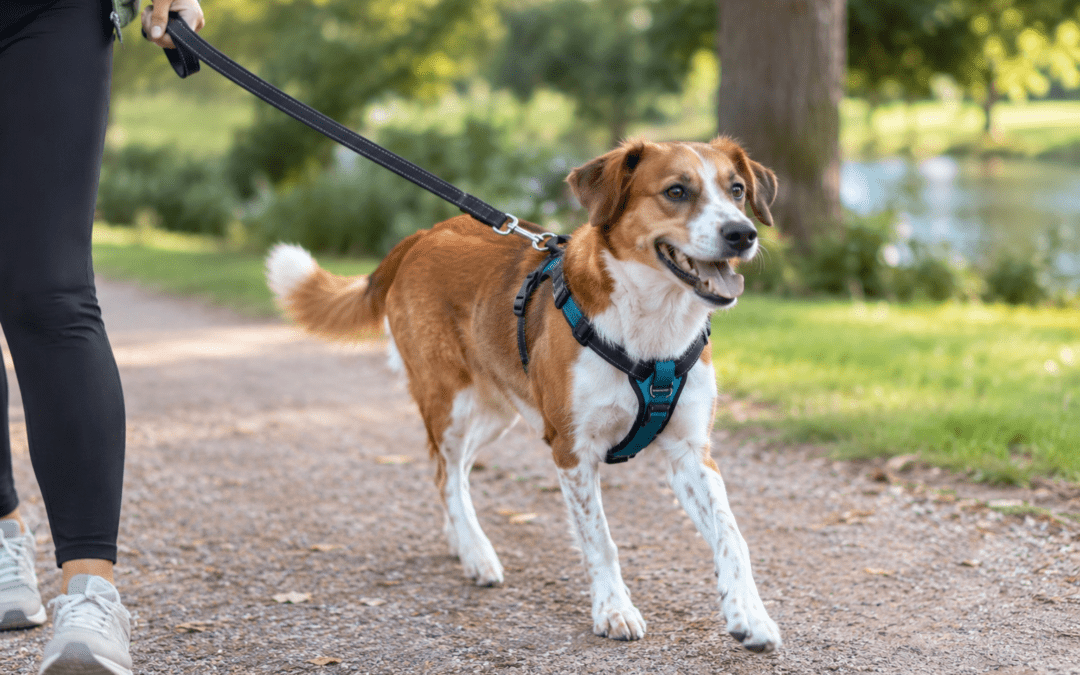
The best harness for dogs that pull on walks is usually a well-fitted, non-tightening harness with a front (chest) clip, used alongside reward-based loose-leash training. It should leave the shoulders free, avoid rubbing behind the front legs, and fit securely enough that your dog can’t back out. A harness can give you more control and take pressure off your dog’s neck, but no harness automatically teaches a dog to stop pulling.
There’s no single “best” harness for every dog. The right choice depends on your dog’s size, body shape, health, and walking behavior, and on how safely you can manage your dog. This guide compares harness types, shows you how to measure and fit one, flags features to avoid, and explains how to train a calmer walk.
Key takeaways
- A 2025 research review suggests trying a non-tightening front-clip harness first for dogs that pull, combined with reward-based training.
- No harness design is perfect; studies show all harnesses change a dog’s movement to some degree, so fit matters.
- Choose a harness that leaves the shoulders free and doesn’t rub behind the elbows.
- Be cautious with tightening or pressure-based “no-pull” designs.
- VCA notes most dogs need several months of regular practice to master loose-leash walking.
In this guide
Best Harness for Dogs That Pull on Walks: Which Type Works?
Current evidence suggests a non-tightening front-clip harness is a sensible first option for many dogs that pull. A 2025 review in the journal Animals by Cavalli and Protopopova examined studies on collars, harnesses, and head collars. The authors concluded there is no one-size-fits-all device, and suggested considering non-tightening front-clip harnesses first for dogs that pull, alongside reward-based training.
The same review found that all harnesses altered dogs’ gait to some degree, and no single design was clearly superior. That’s why the best harness for dogs that pull on walks is really the one that fits your individual dog well and lets it move comfortably. The research also has limits: many studies were small, and the authors note a lack of data on real-world injuries.
Front-Clip vs. Back-Clip Harnesses (and Other Designs)
Here’s how the main harness types compare. The “May suit” column is a general guide, not a guarantee for every dog.
| Harness type | How it works | May suit | Watch for |
|---|---|---|---|
| Front-clip | Leash clips at the chest; gentle pressure turns the dog back toward you | Dogs that pull, during loose-leash training | Straps over the shoulder joints; rubbing; leash tangling |
| Back-clip | Leash clips on the back | Calm walkers; dogs that need to avoid neck pressure | Less steering control for strong pullers |
| Dual-clip | Front and back rings | Training and changing situations | Follow the maker’s instructions for each clip |
| Y-shaped or H-style | Straps form a Y or H across the chest, away from the shoulder front | Many body shapes, if well fitted | The label alone doesn’t guarantee a good fit |
| Tightening “no-pull” | Tightens slightly when the dog pulls | Use with caution, ideally with professional advice | Pressure, discomfort, restricted movement |
Based on VCA Animal Hospitals, the AKC, and Cavalli & Protopopova (2025).
Front-clip harness
VCA explains that with a front-clip dog harness, gentle leash pressure can turn the dog away from a distraction or back toward you. It’s a useful harness for leash training. But VCA also warns that some front-clip designs rest directly over the shoulder joints, which can restrict movement. In one study cited in the 2025 review, a front-clip Y-shaped harness had the largest impact on joint movement, so check how your dog moves in any model you choose.
Back-clip harness
The AKC describes back-clip harnesses as suited to well-trained dogs, and the leash clips on quickly. They keep pressure off the neck, which can help dogs with neck or airway concerns, but they give less directional control if your dog pulls hard. Fit and construction still matter.
Dual-clip harness
A dual-clip harness has both a chest ring and a back ring. The AKC suggests starting with the front clip while your dog learns, then switching to the back clip as walking improves. VCA notes that clipping to both rings can give extra control in urgent situations. Always follow the manufacturer’s instructions.
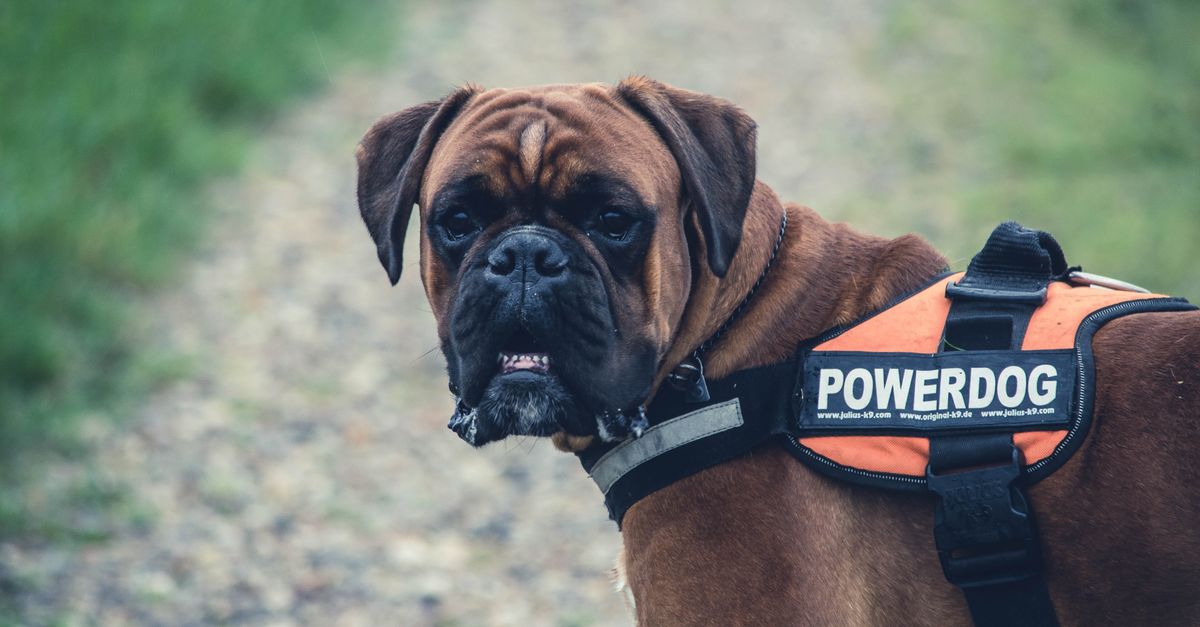
What to Look for in a No-Pull Dog Harness
When people search for the best no-pull dog harness, they often focus on the label. To find the best harness for dogs that pull on walks, focus on the design instead. VCA’s guide to controlling pulling on walks recommends an H-style or Y-style harness that:
- Is easy to put on and take off
- Doesn’t chafe
- Leaves the shoulders free to move, with no strap across the front of the shoulder
- Has two clip points: one on the back and one on the chest
VCA adds that deep-chested dogs may need a double-H design, and that a good body harness is adjustable in every dimension. Other features to consider for a comfortable harness for dogs:
- Material: the AKC notes nylon is light and durable but can trap heat; mesh is breathable but less durable; neoprene is padded but can trap heat and moisture.
- Style of fastening: the AKC notes step-in harnesses suit dogs that dislike things going over their head, while over-the-head styles may not.
- Visibility: the AKC points out that reflective strips can help on early-morning or evening walks.
- Sturdy hardware: strong stitching, buckles, and rings matter most for a dog harness for strong pullers.
How to Measure and Fit a Dog Harness
Even the best harness for dogs that pull on walks won’t work if it fits poorly. A properly fitting dog harness is secure, comfortable, and doesn’t restrict breathing or movement. Use this checklist:
- Measure first. The AKC recommends measuring the base of the neck where it meets the shoulders and the widest part of the chest, usually just behind the front legs. Measure any other points the manufacturer lists.
- Use the product’s own size chart. Sizes vary between brands, so don’t rely on breed or weight alone.
- Adjust the straps. Aim for snug but not tight. The harness shouldn’t rub, pinch, or press on the throat.
- Check behind the front legs and over the shoulders. VCA warns a harness shouldn’t rub behind the elbow, and straps shouldn’t sit across the shoulder joints.
- Test for escape. The AKC suggests gently pulling the harness in different directions and stepping backward to see if it can slide over your dog’s head. If it can, tighten it.
- Test in motion. Watch your dog stand, walk, turn, and sit. Movement should look natural.
- Recheck regularly. The AKC advises rechecking fit after grooming or weight changes. Inspect stitching, buckles, rings, and straps for wear.
You may hear the “two-finger rule.” The AKC’s veterinary expert suggests you should have to squeeze two fingers under the straps, but not so tightly that it’s uncomfortable. Treat that as a rough check only. Follow the manufacturer’s fit instructions, and ask your vet or a professional trainer if you’re unsure.
Pet Care Tip: If your dog is nervous about a harness, introduce it slowly. VCA recommends introducing new gear gradually in a quiet, safe space. Let your dog sniff it, reward calm behavior with treats, and put it on for short periods before your first walk. VCA also advises removing a harness when your dog isn’t supervised, to avoid tangling.
Harness Features and Equipment to Avoid
Some equipment marketed as the best harness for dogs that pull on walks relies on pressure or discomfort. Watch out for:
- Straps across the front of the shoulders: VCA cautions that some “no-pull” styles can injure the shoulder joint.
- Tightening designs: the AKC describes some no-pull harnesses with a ring that tightens slightly when the dog pulls. The 2025 review recommends using tightening harnesses and head collars with caution, as a last resort rather than a first choice.
- Painful training collars: VCA advises against slip, choke, prong, and electronic collars, which work by causing pain and can increase fear or aggression.
- Flat collars on flat-faced dogs: the 2025 review concludes that flat collars should not be used on brachycephalic dogs.
- Retractable leashes: VCA recommends avoiding them and suggests a 6- to 10-foot leash instead. Our guide to retractable leash injuries explains the risks.
Head collars (halters) can help some handlers control a strong dog, but VCA says they need a slow, positive introduction and aren’t right for every dog. The 2025 review found some dogs showed stress signs while wearing them. If you use one, VCA suggests clipping a second leash to a harness or collar as a backup.
Special Considerations for Small, Large, and Flat-Faced Dogs
The best harness for dogs that pull on walks varies with your dog’s body and health. Keep these points in mind:
- Strong pullers: choose secure, well-made equipment you can handle safely, and pair it with a structured training plan. A front-clip or dual-clip harness is a reasonable starting point.
- Small dogs: avoid gear that puts pressure on the neck or throat. The AKC explains that a harness helps distribute pressure around the chest and shoulders instead.
- Flat-faced breeds: in the AKC’s harness guide, veterinarian Dr. Amy Attas recommends harnesses for wide-necked breeds such as Bulldogs, French Bulldogs, and Pugs, and for dogs with breathing issues. Make sure nothing presses on the throat, and ask your vet if you’re unsure.
- Dogs with neck, tracheal, spinal, or orthopedic conditions: VCA calls a body harness an excellent choice for dogs with tracheal disease or neck pain. Ask your veterinarian which equipment suits your dog’s condition.
- Escape-prone dogs: focus on correct fit. The AKC notes properly fitted step-in harnesses can help escape artists. Some owners add a second safety connection, such as a short leash clipped to a well-fitted collar. Only use one if it’s fitted and attached safely.
- Dogs that lunge, bark, or react strongly: pulling may come from fear, excitement, or reactivity. A harness can help you manage the walk, but it won’t address the cause.
Pulling alone doesn’t tell you whether a dog has a behavioral or medical problem. If your dog’s walking suddenly changes, or it seems sore, see your vet.
How to Stop a Dog From Pulling on Walks: Training Still Matters
Even the best harness for dogs that pull on walks is a management aid, not a substitute for training. VCA explains that dogs pull to get where they are going, and pulling works because it gets them there. Teaching loose-leash walking changes that. Before you start, VCA suggests meeting your dog’s exercise and sniffing needs with play or exploration on a long line.
- Start somewhere quiet. Begin indoors or in your yard. Stand still with treats, and the moment the leash goes slack, say “Yes!” and reward.
- Take a few steps. Walk one or two steps, then reward again while the leash stays loose. VCA suggests holding treats near your dog’s nose and rewarding every 2 to 3 seconds at first.
- Add a cue. Once your dog walks reliably on a loose leash, pair it with a cheerful phrase such as “Let’s go!”
- Handle pulling calmly. If your dog pulls toward something, stand still or step away, wait for any slack, then reward. If your dog can’t refocus, move farther from the distraction.
- Change direction when safe. Calmly turning the other way, then rewarding your dog for catching up on a loose leash, also helps.
- Add distractions gradually. Practice near more interesting things only as your dog improves.
- Keep sessions short and consistent. Everyone who walks your dog should use the same method.
Never jerk the leash, deliberately cause pain, or use intimidation. VCA notes that pain can become linked with whatever the dog was approaching, which may increase fear or aggression. Be patient: VCA says most dogs need several months of regular practice. For more step-by-step help, see our guide on how to stop a dog from pulling on the leash.
When to Ask a Veterinarian or Professional Trainer for Help
Choosing the best harness for dogs that pull on walks is only part of the solution. Ask for help if pulling is severe, dangerous, or tied to fear or aggression. VCA recommends that dogs who lunge, bark, or try to chase other animals, people, cars, or bikes see a veterinarian for a referral to a professional behavior consultant and trainer. VCA adds that group classes with a professional trainer can help with timing and distractions; look for one who uses reward-based methods.
See your vet first if your dog seems stiff, limps, avoids having the harness put on, or shows rubbing, hair loss, or sores where the straps sit. Our guide on how to stop a dog from chasing cars, bikes, and joggers covers related walking problems.
Quick harness fit test
| Check | Good sign | Warning sign |
|---|---|---|
| Standing | Straps lie flat; nothing on the throat | Strap pressing the windpipe or across the shoulders |
| Walking | Natural, full stride | Shortened steps or odd gait |
| Turning | Harness stays centered | Harness twists or slides sideways |
| Sitting | No pinching behind the front legs | Straps dig in behind the elbows |
| After the walk | Skin and coat look normal | Redness, rubbing, or hair loss |
Example Scenario (illustrative)
Jordan in Texas adopts a 70-lb mixed-breed dog who pulls hard toward squirrels. Searching for the best harness for dogs that pull on walks, he measures the dog’s neck base and chest, then picks a non-tightening dual-clip harness using the brand’s size chart. He clips the leash to the front ring, practices loose-leash steps in the backyard for 5 minutes a day, and checks for rubbing after each walk. After several weeks, walks are calmer, though the squirrels are still a work in progress.
Before you buy: quick checklist
- Does the harness leave the shoulders free, with no strap across the front?
- Does it have a front clip, or both front and back clips?
- Does it adjust at several points, and does the size chart match your measurements?
- Is it non-tightening?
- Are the buckles, rings, and stitching sturdy enough for your dog’s strength?
Best Harness for Dogs That Pull on Walks: FAQs
What type of harness is best for a dog that pulls?
For many dogs, a well-fitted, non-tightening front-clip harness is a good first choice, used with reward-based training. A 2025 research review found no single design suits every dog, so fit and comfort matter most.
Is a front-clip harness better than a back-clip harness for pulling?
Often, yes. A front clip gently turns a pulling dog back toward you. A back clip is easier to use but gives less steering control, so it often suits dogs that already walk calmly.
Do no-pull harnesses stop dogs from pulling completely?
No. A harness can make pulling easier to manage, but it doesn’t teach your dog to walk nicely. Loose-leash training is still needed, and VCA says most dogs need several months of practice.
How should a dog harness fit?
Snug but comfortable. It shouldn’t rub behind the front legs, press on the throat, or restrict the shoulders, and your dog shouldn’t be able to back out. Follow the manufacturer’s sizing and fit instructions.
Can a harness hurt a dog’s shoulders?
It can if it’s poorly designed or fitted. VCA warns that some designs rest over the shoulder joints and can restrict movement. Choose a harness that leaves the shoulders free, and watch how your dog moves.
Is a harness better than a collar for a strong puller?
Often, yes. A harness spreads pressure across the chest instead of the neck. VCA says a collar isn’t the right choice for dogs that pull very hard, and research shows collars can put high pressure on the neck.
How can I teach my dog to walk without pulling?
Start in a quiet area, reward your dog whenever the leash is loose, and stop or change direction calmly when it pulls. Add distractions gradually and never jerk the leash or use pain.
What should I do if my dog keeps escaping from the harness?
Recheck the fit and measurements, tighten the straps as the maker directs, and test whether the harness slides over the head when you step back. A properly fitted step-in style may help. Ask a trainer if escapes continue.
Final Verdict: Best Harness for Dogs That Pull on Walks
The best harness for dogs that pull on walks is a comfortable, well-fitted, non-tightening harness, usually with a front clip, that leaves the shoulders free and doesn’t rub. Pair it with patient, reward-based loose-leash training, recheck the fit often, and ask your vet or a professional trainer for help if pulling is severe or linked to fear.
Your next steps
- Measure your dog’s neck base and chest today, then compare them with the size chart of any harness you’re considering.
- Pick out other walking essentials in our guide to functional dog accessories.
- Browse more training and care guides in our dog care section.
Share your dog’s walking wins with our community on Facebook.
About the author
Written and reviewed by the Pets Store Home Editorial Team: pet owners and animal lovers who check every guide against trusted US veterinary and animal-welfare sources. This article is general information, not a substitute for professional veterinary advice. Always talk to your veterinarian about your own pet’s health.
How we checked this guide: We used two VCA Animal Hospitals guides, the American Kennel Club’s harness guide, and the 2025 peer-reviewed review by Cavalli and Protopopova in Animals. This guide doesn’t test or rank specific products. We review this article every 12 months, or sooner if guidance changes.
Last reviewed: October 2026
Sources
- VCA Animal Hospitals – Controlling Pulling on Walks (accessed Oct 2026)
- VCA Animal Hospitals – Collar and Harness Options for Dogs (accessed Oct 2026)
- American Kennel Club – How to Find the Right Dog Harness for Your Dog (accessed Oct 2026)
- Cavalli C, Protopopova A. Review of Collars, Harnesses, and Head Collars for Walking Dogs. Animals. 2025;15(15):2162 (accessed Oct 2026)
[…] Which foreign pets are legal in Washington State? […]