
Retractable leash injuries usually come from the thin cord, the long distance, or a sudden change in tension. The cord can cut or burn skin if it slides through your hand or wraps around a leg. The extra length can tangle people and dogs, let a dog hit the end of the line at speed, and make it harder to pull a dog back from traffic or another dog. Handlers can also be pulled off balance and fall.
The risk depends on your dog, your surroundings, the leash’s condition, and how you handle it. This guide explains how retractable leash injuries happen, what to do if you or your dog gets hurt, and how to make walks safer.
Key takeaways
- Never grab a moving retractable cord with bare hands or wrap it around your fingers or wrist.
- VCA advises avoiding retractable leashes because they can cause serious friction burns to people and animals.
- Long lines can tangle, reduce control near traffic and other dogs, and let a dog hit the end of the line suddenly.
- Studies show leash-related injuries to dog walkers are rising, but they don’t record which type of leash was used.
- Seek medical or veterinary care for deep cuts, heavy bleeding, eye injuries, suspected fractures, or severe pain.
- For most everyday walks, a fixed-length leash, a well-fitted harness, and loose-leash training are safer choices.
In this guide
Retractable Leash Injuries: What the Evidence Shows
It’s important to separate what’s known about leash-related injuries in general from what’s known about retractable leashes specifically.
Leash-related injuries in general
- A 2020 study in the American Journal of Emergency Medicine used US emergency department data (NEISS) from 2001 to 2018. It estimated about 356,746 dog leash-related injuries nationally, with the rate rising from 25.4 to 105.5 per million people over that period. Being pulled caused about 54% of injuries, and tripping or tangling about 38%. Fractures, sprains and strains, and bruises or abrasions were the most common diagnoses.
- A 2019 JAMA Surgery research letter found that emergency visits for fractures in adults 65 and older linked to walking leashed dogs rose from an estimated 1,671 in 2004 to 4,396 in 2017.
- A 2024 review in the Journal of the American Veterinary Medical Association notes that leash-related injuries are increasing, particularly among women over 65, and that the data lack details such as the type of leash used.
None of these studies separates retractable leashes from other leashes, so their numbers can’t be read as retractable-leash statistics.
Evidence specific to retractable leashes
- Recall: in 2008, the US Consumer Product Safety Commission announced a recall of about 223,000 Worldwise retractable leashes because the metal clasp could bend or break. The CPSC received five reports of injuries, including facial cuts, a broken tooth, a displaced eye lens, and a bruised collarbone.
- Expert guidance: VCA, MSPCA-Angell, and PetMD all warn about cord burns and cuts, tangling, dropped handles, and reduced control.
- Reported cases: a 2009 Consumer Reports article noted that manufacturer warnings mention cuts, burns, eye injuries, and even amputations. These are documented risks, but national data don’t show how often they happen.
How Retractable Leash Injuries Happen
Most retractable dog leash dangers come down to a handful of situations. Knowing them makes them easier to avoid.
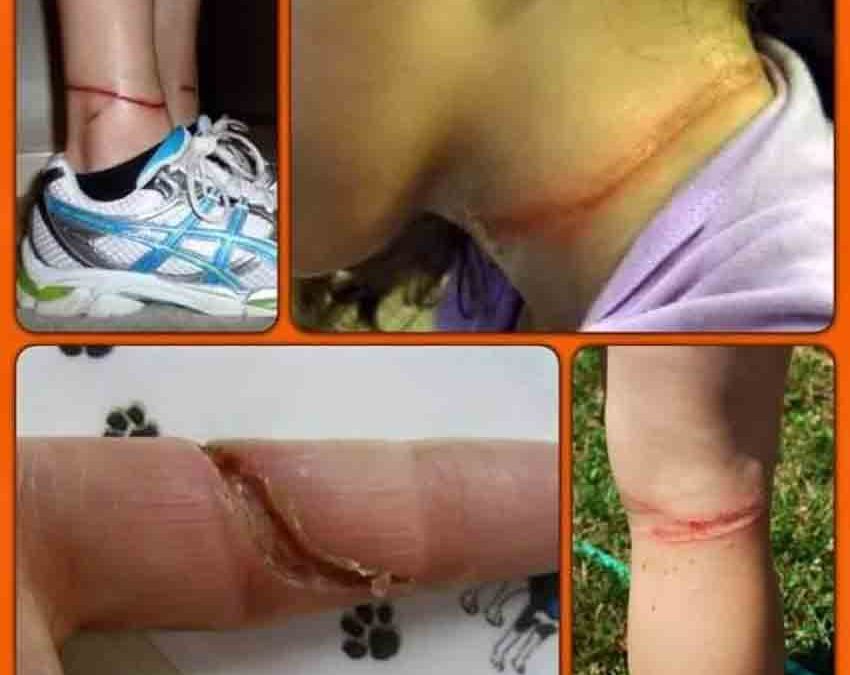
Cuts and dog leash burns
Many retractable leashes use a thin cord. PetMD notes that the line can slide through your hands and cause a burn or cut, and MSPCA-Angell warns the cord can injure you if you grab it while the brake is off. The same friction can affect a leg, a finger, or a dog’s body if the cord wraps around it. Never grab a moving cord with bare hands, and never wrap it around your fingers or wrist.
Entanglement
A long line can loop around a person’s legs, a dog’s legs, a tree, or another dog. PetMD notes tangling can injure your dog or another dog, and MSPCA-Angell warns that tangled leashes during a dog-to-dog meeting can lead to a fight. A sudden pull on a wrapped cord can also trip the handler.
Sudden stops and lunging
If a dog runs to the end of an extended leash, or the handler locks it mid-sprint, the dog can come to an abrupt stop. PetMD says this may injure the neck or throat. Not every jolt causes harm, but repeated or high-speed stops are worth avoiding, and the handler can be yanked off balance at the same moment.
Reduced control
MSPCA-Angell points out that you can’t shorten a retractable leash quickly if another dog approaches or traffic appears. That gap matters near roads, bikes, joggers, children, and unfamiliar dogs. If your dog tends to chase moving things, our guide to stopping a dog from chasing cars, bikes, and joggers can help.
Equipment failure and recoil
PetMD notes the internal mechanism can jam or break, and MSPCA-Angell adds that a worn or defective cord can snap and that you can’t inspect the mechanism inside the handle. The 2008 CPSC recall involved clasps that could bend or break during use.
Dropped handles
Handles are easy to drop. MSPCA-Angell says the loud noise can frighten a dog into running, and PetMD notes a scared dog may bolt with the handle clattering behind it.
Common Leash-Related Injuries to People and Dogs
| Who | Possible injuries | Usual cause |
|---|---|---|
| Handler | Cuts and friction burns to fingers, hands, or legs | Grabbing or being wrapped by a moving cord |
| Handler | Fractures, sprains and strains, bruises | Being pulled, tripping, or tangling (common in leash injuries generally) |
| Handler or bystander | Face or eye injuries | A broken clasp or snapping cord recoiling |
| Dog | Friction burns or cuts from the cord | Cord wrapping around legs or body |
| Dog | Possible neck or throat injury | An abrupt stop at the end of the line |
| Dog | Bite wounds, or injuries after running loose | Tangled dog meetings, or bolting after a dropped handle |
For handlers, the 2019 JAMA Surgery letter found the upper extremity was the most often fractured region in older adults injured while walking leashed dogs, with the hip the most common single site. That study covered all leash types.
What Raises the Risk of Leash-Related Injuries?
Retractable leash injuries, like other leash-related injuries, depend on more than the equipment. These factors can raise the risk:
- Dog behavior: strong pullers, lungers, and dogs that react to other dogs, wildlife, or traffic. If your dog struggles around other dogs, see our guide to dog-on-dog aggression.
- Size and strength: a large, fast dog generates more force on the cord and the handler.
- Environment: busy sidewalks, roads, crowded parks, trails with trees and posts, and icy or uneven ground.
- Equipment condition: frayed cords, worn clips, and sticky brakes or locks.
- Handler factors: distraction, holding phones or bags, limited grip strength, or balance concerns. The JAVMA review notes rising leash injuries in women over 65.
- Training: PetMD and MSPCA-Angell note retractable leashes can reward pulling, because the dog gains more line when it pulls.
If a Person Is Injured by a Leash
If a walk ends with one of these retractable leash injuries, get yourself and your dog out of traffic and away from other hazards first. Secure your dog to something stable or hand the leash to someone you trust, so you can focus on the injury.
Minor cuts, scrapes, and leash burns
Mayo Clinic’s first-aid steps for cuts and scrapes are a good guide: wash your hands, apply gentle pressure with a clean cloth to stop bleeding, rinse the wound with clean running water, and cover it with a bandage. Watch for signs of infection, such as spreading redness, warmth, swelling, worsening pain, or drainage, and see a healthcare professional if they appear.
When to get medical help
MedlinePlus advises calling 911 if bleeding is severe or can’t be stopped after about 10 minutes of pressure, if the person can’t feel the injured area or it doesn’t work properly, or if they’re otherwise seriously injured. Contact a healthcare provider right away for:
- Large or deep cuts, wounds on the face, or wounds more than a quarter inch deep
- Any eye injury
- A suspected fracture, sprain, or dislocation, or severe pain after a fall
- Numbness, tingling, or trouble moving fingers
- Debris stuck in the wound, or a tetanus shot that isn’t up to date
An injury doesn’t deserve less attention just because it happened on an ordinary dog walk.
If Your Dog Is Injured
Stop the walk and keep your dog calm. If the cord is wrapped around a leg or the neck, release the tension and unclip or unwind it gently, without pulling on the injured area. The AVMA warns that an injured pet may be in pain, frightened, and confused, so avoid hugging the dog and keep your face away from its mouth.
- Bleeding: apply firm, direct pressure with a clean cloth or towel, and the AVMA advises holding it for at least three minutes before checking.
- Cuts: the American Red Cross notes many lacerations need stitches, so call your vet about any cut.
- Limping or suspected fracture: keep the dog still and support it on a flat surface. The AVMA advises leaving splints to the veterinarian if you’re unsure.
- Eye injuries: seek veterinary care immediately, and don’t try to remove anything from the eye.
Get urgent veterinary care for:
- Deep cuts or bleeding that won’t stop
- Any eye injury
- Breathing difficulty, coughing, or gagging after a jolt to the neck
- Severe pain, limping, swelling, or reluctance to move the head or neck
- Weakness, collapse, or other signs of severe trauma
Don’t give human pain relievers. The ASPCA warns that common medicines such as ibuprofen and naproxen can cause life-threatening problems in pets. Let your veterinarian examine your dog rather than guessing at the injury.
Retractable vs. Fixed-Length Leashes
To lower the risk of retractable leash injuries, many veterinary and animal-welfare professionals prefer a fixed-length leash for everyday walks. VCA suggests a comfortable leash 6 to 10 feet long and advises avoiding retractable leashes. MSPCA-Angell recommends traditional, non-extendable leads in most situations.
| Feature | Retractable leash | Fixed-length leash (about 6 ft) | Long line (15–50 ft) |
|---|---|---|---|
| Material | Often a thin cord or narrow tape | Thicker nylon, leather, or similar | Often flat webbing |
| Control near traffic or dogs | Hard to shorten quickly | Dog stays close | Needs open space and skill |
| Burn and cut risk | Higher with a thin, fast-moving cord | Lower | Possible if it slides through hands |
| Training effect | Can reward pulling | Supports loose-leash training | Useful for recall and sniffing practice |
| Best use | Limited: open, quiet areas with a responsive dog | Everyday walks, sidewalks, crowds | Training and exploration in open areas |
Leash choice should also fit your dog, your strength, your surroundings, and your local leash rules, which can vary by city and county.
Retractable Leash Safety and Safer Dog Walking Tips
Good equipment and good habits work together. These steps lower the risk on everyday walks:
- Use a fixed-length leash for ordinary walks. A standard leash around 6 feet long works well for many dogs on sidewalks, in crowds, and near traffic. PetMD’s trainer author suggests a 4- or 6-foot leash in urban areas.
- Choose a well-fitted harness or flat collar. VCA notes a well-fitted H-style or Y-style harness can be a wonderful tool for many dogs, and that a collar isn’t the right choice for a dog that pulls very hard. See our guide to the best harness for dogs that pull on walks.
- Train loose-leash walking. VCA says most pulling can be prevented or reversed with reward-based training: reward slack in the leash, stop when it tightens, and expect several months of practice. Our tips on stopping a dog from pulling on the leash walk you through it.
- Build a reliable recall. Hardware can’t replace a dog that comes when called.
- Keep your dog close near hazards. Shorten up well before roads, crowds, other dogs, bikes, and obstacles.
- Inspect your gear before every walk. Check the line, clip, handle, and lock or brake, and stop using anything frayed, cracked, sticky, or bent.
- Use a long line for training space. VCA suggests a fixed-length line of 15 to 50 feet for safe exploration. Long lines are also used in tracking dog training.
If you still use a retractable leash: save it for open, quiet areas with plenty of space, and only with a dog that responds reliably to cues. Stay alert, keep the handle in a firm grip, and lock it at a short length well before people, dogs, or roads come into view. A locking button doesn’t make a retractable leash automatically safe, and you should never grab or wrap the cord.
Retractable Leash Injuries: FAQs
What are the most common retractable leash injuries?
Cuts and friction burns from the cord are among the most widely reported, along with falls from being pulled or tangled. Dogs can also be hurt by cord burns, tangling, or an abrupt stop at the end of the line.
Are retractable leashes bad for dogs?
VCA and MSPCA-Angell advise against them for most walks. They can cause friction burns, tangle with other dogs, jolt a dog to a stop, and teach dogs that pulling earns more line.
How do you treat a leash burn?
Wash your hands, rinse the area with clean running water, and cover it with a clean bandage. See a healthcare provider for deep wounds, heavy bleeding, numbness, or signs of infection.
Can a retractable leash hurt a dog’s neck?
It may. PetMD notes an abrupt stop at the end of the line can injure the neck or throat. Contact your vet if your dog coughs, gags, has trouble breathing, or seems painful after a jolt.
What leash length is safest for everyday walks?
Many professionals recommend a fixed-length leash. VCA suggests 6 to 10 feet, and a 6-foot leash is a practical choice for many sidewalk walks. Check your local leash rules as well.
When should I see a doctor after a leash injury?
Get help right away for bleeding that won’t stop after about 10 minutes of pressure, deep or facial cuts, eye injuries, numbness, suspected fractures, or severe pain. Call 911 for severe bleeding or serious injury.
Are there statistics on retractable leash injuries specifically?
Not reliable national ones. Large US studies track leash-related injuries overall but don’t record leash type, so their numbers shouldn’t be read as retractable-only statistics.
Final Verdict: Preventing Retractable Leash Injuries
Retractable leash injuries usually come from cord burns, tangling, sudden stops, and lost control. For most walks, a fixed-length leash, a well-fitted harness, and reward-based training are safer choices. If anyone is hurt, deal with traffic first, then get medical or veterinary help for anything more than a minor scrape.
Your next steps
- Check your current leash, clip, and handle for wear today.
- Pick up a fixed-length leash for everyday walks and start short loose-leash practice sessions.
- Browse more training and safety guides in our dog care section.
Share your favorite walking setup with our community on Facebook.
About the author
Written and reviewed by the Pets Store Home Editorial Team: pet owners and animal lovers who check every guide against trusted US veterinary, medical, and safety sources. This article is general information, not a substitute for professional veterinary or medical advice. Always talk to your veterinarian about your own pet’s health.
How we checked this guide: We used VCA Animal Hospitals, MSPCA-Angell, PetMD, the AVMA, the ASPCA, the American Red Cross, Mayo Clinic, MedlinePlus, the US Consumer Product Safety Commission, and peer-reviewed studies in the American Journal of Emergency Medicine, JAMA Surgery, and the Journal of the American Veterinary Medical Association. We review this article every 12 months, or sooner if guidance changes.
Last reviewed: October 2026
Sources
- VCA Animal Hospitals – Controlling Pulling on Walks (accessed Oct 2026)
- MSPCA-Angell – Retractable Leashes (accessed Oct 2026)
- PetMD – Are Retractable Leashes Bad? (Erika Lessa, CPDT-KA, 2024) (accessed Oct 2026)
- Rosa R, Buckley RE. Leash-related injuries associated with dog walking. JAVMA, 2024 (accessed Oct 2026)
- Forrester MB. Dog leash-related injuries treated at emergency departments. Am J Emerg Med, 2020 (accessed Oct 2026)
- Pirruccio K, et al. Fractures in elderly Americans associated with walking leashed dogs. JAMA Surg, 2019 (accessed Oct 2026)
- US CPSC – Worldwise Retractable Dog Leash Recall (2008) (accessed Oct 2026)
- AVMA – First Aid Tips for Pet Owners (accessed Oct 2026)
- American Red Cross – Dog Cuts, Tears, and Lacerations (accessed Oct 2026)
- ASPCA – Human OTC Medications Lead Annual List of Top Toxins for Pets (accessed Oct 2026)
- Mayo Clinic – Cuts and Scrapes: First Aid (accessed Oct 2026)
- MedlinePlus – Cuts and Puncture Wounds (accessed Oct 2026)
- Consumer Reports – Retractable Leashes Pose Problems for People and Their Pets (2009) (accessed Oct 2026)
[…] Which foreign pets are legal in Washington State? […]