
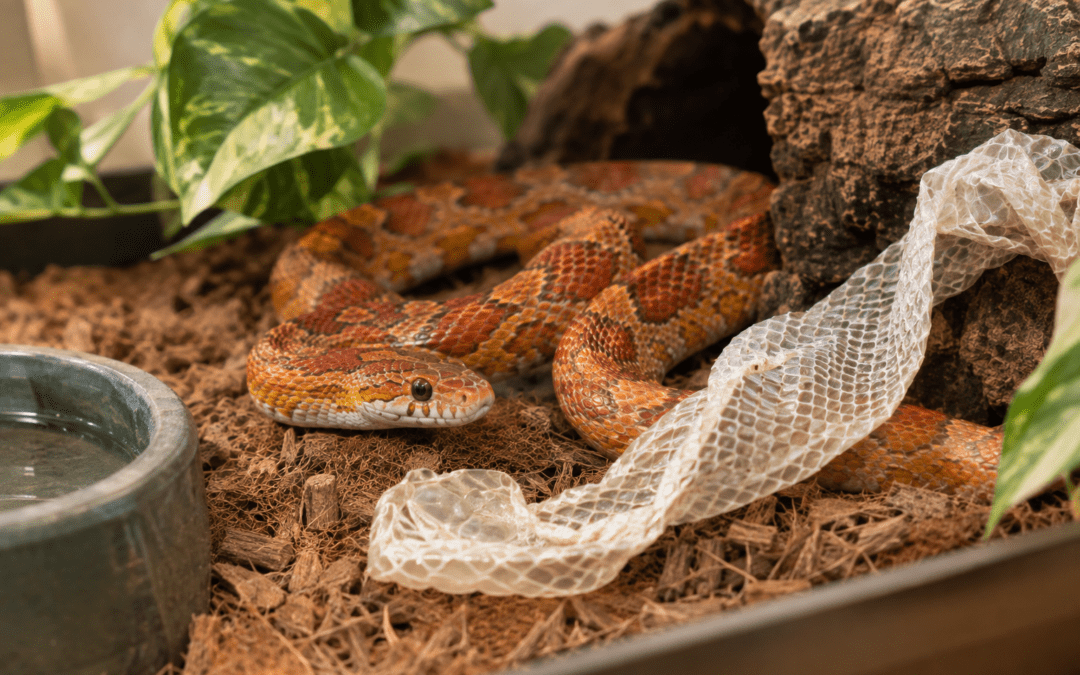
How to Tell If a Snake Is About to Shed
Last updated: September 2026
Short answer: the two clearest signs are dulling, faded skin color and cloudy or blue-tinted eyes — both come from the same cause: fluid building up between a snake’s old and new skin layers, including over the eyes. Normal-looking eyes don’t fully rule out an early shed, though, so don’t rely on them alone. The full process typically takes something in the range of one to two weeks, though sources differ meaningfully on the exact figure — see “How Long Does the Whole Process Take?” below for the honest range.
A note on scope: this guide focuses specifically on recognizing and managing a normal shed cycle. If your snake has also stopped eating and you’re not sure whether shedding explains it, see Why Is My Snake Not Eating? for the fuller cause list and warning signs. For species-specific feeding and care detail, see How Often Should You Feed a Ball Python? and Best Beginner Pet Snake for First-Time Owners.
Quick Answer
The two most reliable signs a snake is entering a shed cycle are dulling, faded skin color and cloudy or blue-tinted eyes — sometimes described as a snake going “in blue.” Normal-looking eyes don’t rule out an early shed, since the color change often comes first. Reduced appetite and increased hiding are common alongside these signs too, but aren’t reliable on their own since they’re also common non-shed causes of appetite refusal — see “Shed Signs vs. Illness Signs” below.
The full process from first color change to a completed shed typically takes roughly one to two weeks, though sources disagree on the exact figure — see “How Long Does the Whole Process Take?” below.
Key Takeaways
- Dulling skin color and cloudy or blue-tinted eyes are the two clearest signs of an approaching shed cycle, both caused by fluid building up between old and new skin layers — though normal-looking eyes don’t fully rule out an early shed.
- How long the full process takes varies meaningfully by source (roughly five days to two weeks) — treat any single precise number, including the ones in this article, as an estimate rather than a fixed schedule.
- Reduced appetite and hiding are common during shedding, but they’re also common causes of appetite refusal unrelated to shedding — see “Shed Signs vs. Illness Signs” below.
- Minimize handling once a snake’s eyes go cloudy, and never pull or peel at stuck shed yourself — especially near the eyes.
In this article: The Full List of Signs · Why Eyes Turn Blue · How Long Shedding Takes · How Often Snakes Shed · Shed Signs vs. Illness Signs · What to Do and Avoid · Stuck Shed and Retained Eye Caps · FAQ
Why Shedding Happens
Snakes shed their outer skin layer periodically as they grow — a process called ecdysis. In the days before a shed, a snake’s body produces fluid that separates the old outer skin from the new layer forming underneath it.
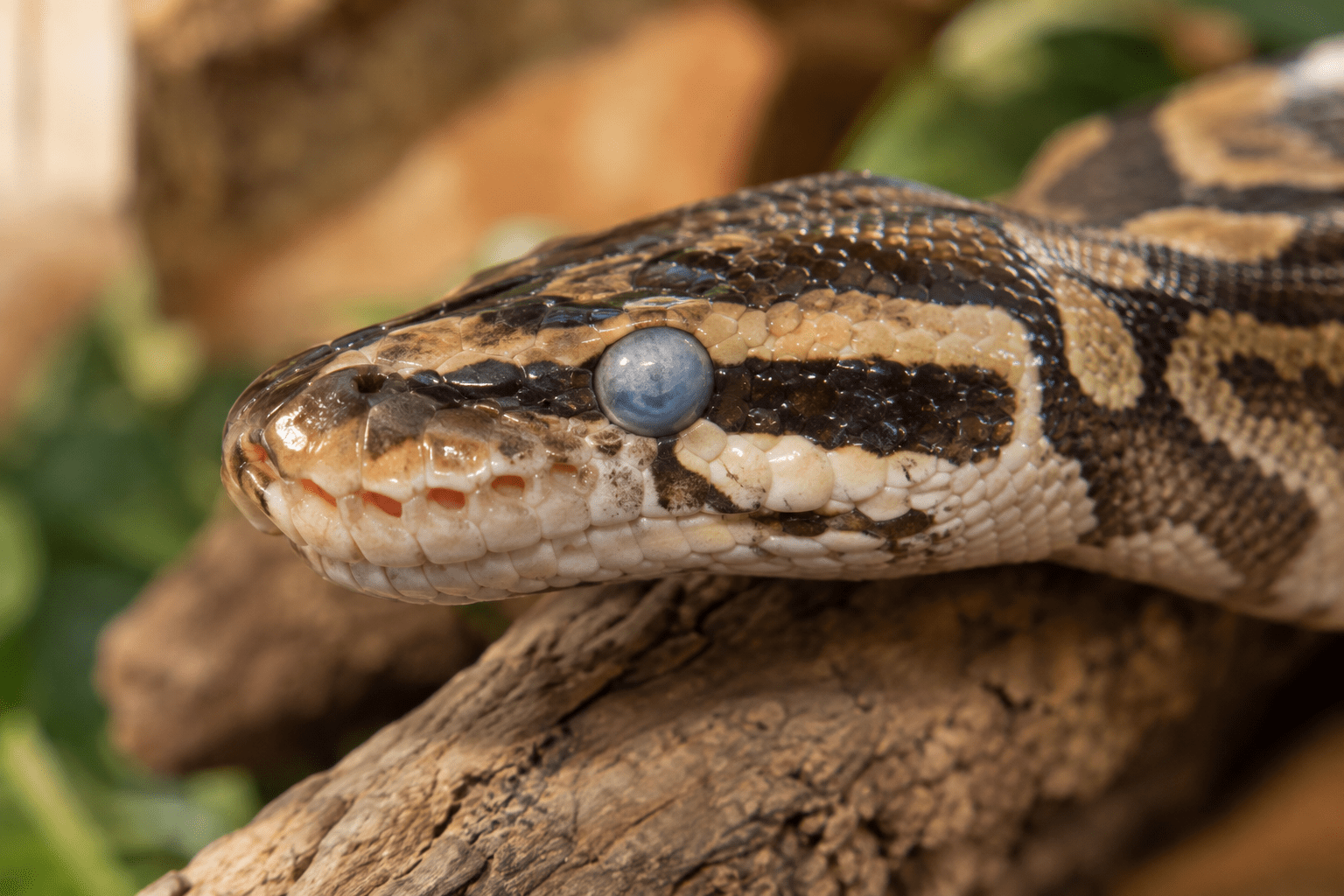
That separation is what causes both of the main signs covered in this article: the skin looks duller and more faded because light no longer passes through it the way it does through healthy, tightly attached skin, and the eyes look cloudy or blue because the same fluid separation happens over the brille — the clear scale that covers and protects a snake’s eye, since snakes don’t have movable eyelids.
Because the underlying mechanism is the same across snake species, the visible signs described in this article are broadly consistent whether you have a ball python, a corn snake, a kingsnake, or a rosy boa. What varies more by species, age, and individual growth rate is timing and frequency, covered later in this guide.
The Full List of Signs
Across the sources reviewed for this guide, the following signs are reported, roughly in order of how reliably shed-specific they are:
- Dulling or fading skin color. Often the earliest visible change — patterns that are normally vivid look washed out or grayish, and on some snakes the belly takes on a dull, hazy pink or gray cast.
- Cloudy or blue-tinted eyes. A strong, fairly reliable shed-specific sign — see “Why Do a Snake’s Eyes Turn Blue Before Shedding?” below for why this happens and what it means for timing. Note that this sign tends to appear after the color-dulling stage, so normal-looking eyes don’t rule out an early shed already underway.
- Reduced appetite. Common during the lead-up to a shed, but not shed-specific by itself — see “Shed Signs vs. Illness Signs” below.
- Increased hiding or reduced activity. Snakes often become more reclusive and less active in the days surrounding a shed, consistent with reduced vision and general caution.
- Skin that looks tight, dry, or papery. Reported by some sources as the shed cycle progresses, particularly in the day or two immediately before the old skin comes off.
- Rubbing against enclosure furniture. Deliberately rubbing against rough surfaces like cork bark, branches, or rock helps loosen the old skin layer and is a normal part of the process, not a sign of distress on its own.
Pet Care Tip: Cloudy or blue-tinted eyes are a strong sign that a shed is approaching. However, normal-looking eyes don’t rule out an early shed cycle — dulling color and reduced appetite can appear before the eyes change. If your snake has other concerning symptoms, don’t assume shedding is the cause just because its eyes look normal.
Why Do a Snake’s Eyes Turn Blue Before Shedding?
Snakes don’t have movable eyelids — instead, each eye is covered by a fixed, transparent scale called the brille (sometimes called an eye cap or spectacle). Per Purdue University College of Veterinary Medicine, in the days before a shed, a snake’s eyes “turn whitish blue because of lymph like fluid accumulating between old eye covering layer and newly formed layer.” Veterinarian Dr.Heidi Hammel, quoted by A-Z Animals, describes the same process in more everyday terms: “We say that the snake is ‘in blue’ at that time,” explaining that fluid separating the old and new skin layers over the eye scatters light, producing the cloudy or blue-grey appearance.
According to Dr. Hammel, the snake then reabsorbs that fluid several days before the actual shed, which is why the eyes typically clear again before the skin comes off — and per that same source, once the eyes clear, the actual shed tends to follow within roughly twenty-four to seventy-two hours, though this specific window comes from one source and shouldn’t be treated as a guarantee.
This is worth knowing because it can give you a rough, practical way to read where your snake is in the cycle: cloudy or blue eyes suggest a shed is coming, and clear eyes after a period of being blue are, per the sources that give a specific window, often a signal the shed itself is close. Treat this as a general pattern rather than an exact countdown — and remember that the color-dulling stage typically comes before the eyes change at all, so normal eyes this early don’t mean a shed isn’t underway.
Pet Care Tip: Vision is genuinely impaired while the eyes are cloudy — this is part of why minimizing handling and disturbance during this phase matters, not just as a general precaution.
How Long Does the Whole Process Take?
This is the point where the sources reviewed for this guide disagree, and it’s worth being upfront about that rather than presenting a single number as settled fact. PetMD states the process takes “five to seven days to finish.” SnakeSnuggles, a hobbyist source, gives a more detailed but different breakdown: seven to fourteen days total, with the “blue phase” itself lasting seven to ten days into the cycle. My Snake Pet, another hobbyist source, states the opaque-eye phase alone lasts “roughly 4 to 7 days,” with the total process taking “up to two weeks.”
A-Z Animals, quoting veterinarian Dr. Heidi Hammel, gives a somewhat different and more specific picture: eyes clear a few days after first going blue, and the shed itself follows within twenty-four to seventy-two hours after the eyes clear. None of these sources acknowledge that the others give different numbers, and no single figure here should be treated as a guarantee.
Some sources describe the shed following within a few days after the eyes clear, but that specific window comes from one source, not a universal rule — use the change in your snake’s appearance as your guide rather than relying on an exact day-count. Taken together, the figures above suggest a rough range of roughly one to two weeks from the first sign of dulling color to a completed shed, with real variation between individual snakes.
Pet Care Tip: Don’t set a calendar reminder based on any single number in this section. Use the eyes as a general guide instead — cloudy suggests a shed is coming, and clearing again, per the sources that give a specific window, often suggests it’s close.
How Often Do Snakes Shed?
Shedding frequency depends much more on age and growth rate than on a fixed schedule. Young, rapidly growing snakes shed considerably more often than adults, since shedding is tied to growth. Per Purdue, healthy growing snakes shed “at minimum monthly,” and rapidly growing reptiles may shed as often as every two weeks. My Snake Pet, a hobbyist source, describes a hatchling’s first shed occurring “a few days after hatching,” with young snakes shedding three to twelve times a year during their most active growth period before slowing considerably as adults.
SnakeSnuggles, also a hobbyist source, gives its own estimate of roughly every four to six weeks for juveniles and every two to three months for adults. These figures aren’t precisely reconciled across sources, but the pattern they agree on is clear: expect shedding to slow down meaningfully as your snake matures, and don’t be concerned if a young, fast-growing snake sheds far more often than an adult of the same species.
Species and individual growth rate both matter here more than any single number. If you have a ball python specifically, see our dedicated feeding-frequency guide for species-specific detail; for other beginner-friendly species, see our species comparison guide.
Shed Signs vs. Illness Signs: How to Tell the Difference
This is a gap worth addressing directly: dulling skin color, reduced appetite, and increased hiding are all reported as shedding signs — and they’re also exactly the kind of non-emergency signs covered in our Why Is My Snake Not Eating? article as ordinary, non-alarming causes of temporary appetite refusal (husbandry issues, stress, and normal seasonal fasting, among others). None of the sources reviewed for this guide directly address how to tell these apart, which matters because a shed-related appetite dip and a husbandry- or stress-related one call for different next steps.
The clearest shed-specific signal is the eyes. Cloudy or blue-tinted eyes are a strong, fairly reliable sign of an approaching shed across the sources reviewed for this guide — they don’t typically accompany most of the other ordinary causes of appetite refusal or lethargy. That said, normal-looking eyes don’t rule out an early shed cycle — the color-dulling stage often comes first, before the eyes change at all.
If your snake is showing dulling color and reduced appetite with normal-looking eyes, shedding is still possible, but it’s worth checking husbandry and the fuller cause list on our companion article too, rather than waiting to see if the eyes change, especially if anything else about your snake seems off.
Regardless of whether a shed is also underway, genuine warning signs — unintentional weight loss, lethargy, mouth sores or wounds, abnormal breathing, or repeated regurgitation — warrant contacting a vet promptly. This article doesn’t re-derive that full warning-signs framework; see the Why Is My Snake Not Eating? article for the complete list and sourcing.
Pet Care Tip: Checking the eyes is a useful first step, but not a definitive test. Cloudy eyes are a strong positive sign, while normal-looking eyes don’t fully rule shedding out — especially early in the cycle.
What to Do (and Avoid) During the Shed Cycle
Advice is fairly consistent across the sources reviewed for this guide:
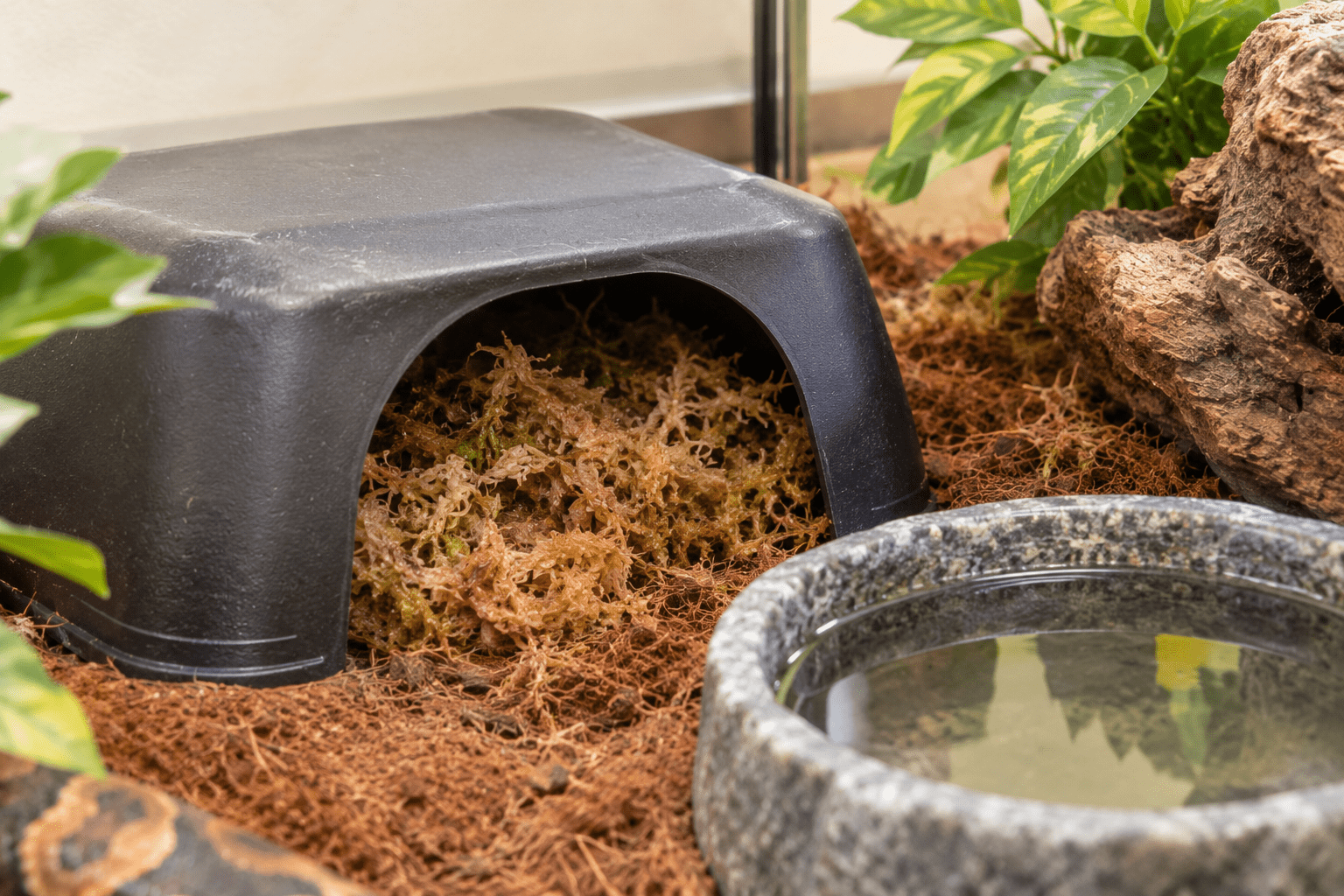
- Maintain the humidity range recommended for your snake’s species and enclosure. Several sources reviewed for this guide cite roughly 50–70% as a common range, with some tropical species needing closer to 80% — but don’t raise humidity to a generic target without checking what’s actually appropriate for your snake. A shallow water bowl for soaking, or a dedicated humid hide with damp sphagnum moss, are commonly recommended ways to help without disturbing the rest of the enclosure’s setup.
- Minimize handling. Reported across most of the sources reviewed — a snake’s vision is impaired while its eyes are cloudy, and the new skin underneath is more fragile, so unnecessary handling raises both the stress level and the physical risk. Per PetMD, snakes may become more defensive during this period and can strike “out of aggression, but fear” if disturbed; Purdue similarly notes that snakes may be “very irritable and temperamental” and may strike if handled while shedding.
- Some keepers pause feeding attempts once the eyes go fully cloudy. This recommendation comes from a single hobbyist source (SnakeSnuggles) rather than veterinary guidance, so treat it as a practical suggestion rather than a medical rule: the reasoning is that with vision significantly impaired, a snake may be more likely to misjudge a strike at offered prey. If your snake also refuses food during this window on its own, that’s expected — see Why Is My Snake Not Eating? for the fuller picture on shed-related appetite refusal.
- Provide rough surfaces to rub against. Cork bark, branches, or textured rock give a snake something to help loosen the old skin layer naturally.
- Don’t manually peel or pick at shedding skin, and especially not at the eyes — covered in detail in the next section.
Pet Care Tip: None of this requires special equipment beyond what a well-set-up enclosure should already have — a water bowl, a humid hide, and some rough décor cover most of it.
Stuck Shed and Retained Eye Caps: When to Wait, When to Call a Vet
A healthy shed normally comes off in one complete piece. When it doesn’t — coming off in patches instead, or leaving a section stuck — low humidity is the most commonly cited factor, but it isn’t the only one. Per Purdue, incomplete or improper shedding (dysecdysis) can also be linked to mites, excessive handling, malnutrition, dermatitis, or trauma.
For an occasional patchy shed, the common first response across sources is to raise humidity and offer a soak in shallow lukewarm water to help loosen the remaining skin, rather than picking at it by hand.
Retained eye caps are a specific case worth calling out on their own. Because the brille sits directly over the eye, attempting to peel off a stuck eye cap yourself carries a real risk of corneal damage. The sources that address this directly — Purdue, PetMD, A-Z Animals, and Petcover AU among them — are consistent on this point: don’t do it yourself.
Per Petcover AU, this kind of work should be left to “a veterinarian or trained professional,” with soaking recommended as the safe first step for struggling snakes. SnakeSnuggles, a hobbyist source, suggests monitoring for retained eye caps beyond two weeks as a rough marker for when to be more concerned, though no veterinary source reviewed for this guide gave a specific cutoff.
The practical guidance: a patchy or incomplete shed can be linked to low humidity, but it may have other causes too. Raise humidity and offer a soak for an occasional occurrence — and if incomplete sheds recur, a cap or patch is still retained by the time your snake’s next full shed cycle comes around, or anything about the eye looks abnormal (swelling, discharge, visible injury), that’s the point to involve a reptile-experienced vet rather than keep waiting or attempt it yourself.
Pet Care Tip: A soak in shallow, lukewarm water is the safe, low-risk first step recommended across sources for a patchy shed — reach for that before reaching for tweezers, and don’t attempt to remove a retained eye cap yourself under any circumstances.
What These Situations Might Suggest
The following are illustrative scenarios based on patterns commonly described by reptile keepers, not documented case studies — they’re meant to show how the signs above might play out, not to predict what will happen with your snake.
A textbook lead-up. An owner notices their corn snake’s belly has taken on a dull, hazy pink cast. A few days later, its eyes go cloudy and blue-grey. This progression — dulling color followed by cloudy eyes — is consistent with a shed cycle beginning. Maintaining appropriate husbandry and monitoring the snake fits this pattern, though it’s still worth watching for other symptoms and seeking veterinary advice if anything seems off.
Eyes clearing as the useful signal. An owner watches their ball python’s eyes stay cloudy for several days, then clear again — and a complete shed follows about three days later. This illustrates the pattern some sources describe of the shed following within days after the eyes clear, and shows why watching the eyes can be a more useful signal than counting days from when they first went blue.
Ruling shedding in or out. An owner notices their snake has stopped eating and looks a bit duller than usual, and checks specifically for blue or cloudy eyes to help figure out whether shedding explains it. Finding the eyes look normal, they don’t rule shedding out entirely, but they also check husbandry and the fuller warning-signs list from Why Is My Snake Not Eating? rather than assuming it’s just a shed.
Common Mistakes to Avoid
- Assuming any dulling or reduced appetite is automatically a shed sign without checking for the more shed-specific cloudy or blue-eye change.
- Handling a snake more than necessary while its eyes are cloudy, when vision is most impaired and it’s most likely to react defensively.
- Trying to peel or pick at stuck shed yourself — especially retained eye caps — instead of raising humidity, offering a soak, and involving a vet if it persists.
- Treating any single source’s exact day-count for the shed timeline as a guarantee rather than a rough estimate, given how much the sources reviewed for this guide actually disagree.
- Continuing to offer food once a snake’s eyes have gone fully cloudy, which raises the risk of a misjudged strike during a period of significantly impaired vision.
Editor’s Insights
- The shed-timeline and frequency figures in this article come from sources that don’t agree with each other — treat the ranges given here as practical estimates built from conflicting data, not settled facts.
Which Situation Applies to You?
A quick pointer to the right section above — not a substitute for reading it:
- Dulling skin color, eyes still look normal? → May be an early shed sign — normal eyes don’t rule shedding out this early in the cycle. See “The Full List of Signs” above; maintain normal husbandry and watch for further changes, and seek veterinary advice if other symptoms appear or you’re concerned.
- Cloudy or blue-tinted eyes? → A reliable shed-specific sign — see “What to Do (and Avoid)” above; minimize handling, maintain species-appropriate humidity, and expect the actual shed within roughly a few days to two weeks depending on your snake, though timing varies.
- Reduced appetite or hiding, but eyes look normal? → Less clearly shed-related — see “Shed Signs vs. Illness Signs” above and check Why Is My Snake Not Eating? for the fuller cause list.
- Shed came off in patches, or an eye cap still looks present after the shed? → See “Stuck Shed and Retained Eye Caps” above — raise humidity and offer a soak; involve a vet if incomplete sheds recur, a cap stays retained after the next shed cycle, or anything looks abnormal.
Checklists
Before-the-Shed Checklist
- Confirm humidity is in range for your species using a hygrometer, not guesswork
- Add or check a humid hide with damp sphagnum moss
- Minimize handling once the eyes go cloudy
- Consider pausing feeding attempts once vision is clearly impaired
After-the-Shed Checklist
- Confirm the shed came off in one piece, or check carefully for retained patches if it didn’t
- Check specifically for retained eye caps
- Resume normal handling and feeding once the skin and eyes look normal again
Frequently Asked Questions
How can you tell if a snake is about to shed?
The two clearest signs are dulling, faded skin color and cloudy or blue-tinted eyes. See “The Full List of Signs” above for the complete list.
Why do a snake’s eyes turn blue before shedding?
Fluid builds up between the old and new layers of the brille, the clear scale covering a snake’s eye, which scatters light and creates the cloudy or blue appearance. See “Why Do a Snake’s Eyes Turn Blue Before Shedding?” above for the full explanation.
How long does the shedding process take?
Sources disagree — estimates range from roughly five days to two weeks for the complete process. See “How Long Does the Whole Process Take?” above for the specific source figures.
How often do snakes shed?
It depends much more on age and growth rate than a fixed schedule — young, fast-growing snakes shed far more often than adults. See “How Often Do Snakes Shed?” above.
Is it normal for a snake to stop eating while shedding?
Yes, reduced appetite is commonly reported during the shed cycle. See Why Is My Snake Not Eating? for the fuller picture.
Should I handle my snake while it’s “in blue”?
Only if necessary — vision is impaired and new skin is more fragile during this phase, so most sources recommend minimizing handling.
What should I do if my snake’s shed comes off in pieces?
Raise enclosure humidity and offer a shallow, lukewarm soak. Don’t peel or pick at it by hand. See “Stuck Shed and Retained Eye Caps” above.
What if my snake has a retained eye cap?
Don’t attempt to remove it yourself — this risks corneal damage. Soak first; see a reptile-experienced vet if it’s still retained after the next shed cycle.
How is shedding different for young snakes versus adults?
Young, actively growing snakes shed far more often, sometimes monthly or more, while adults typically shed only every couple of months. See “How Often Do Snakes Shed?” above.
How can I tell if my snake is shedding or actually sick?
Cloudy or blue-tinted eyes are a strong shed-specific sign, but normal eyes don’t rule out an early shed. If your snake shows other signs of concern, see “Shed Signs vs. Illness Signs” above.
Related Reading
- Why Is My Snake Not Eating?
- How Often Should You Feed a Ball Python?
- Best Beginner Pet Snake for First-Time Owners
- Why Is My Turtle Not Eating?
- Signs a Bearded Dragon Is Stressed
Sources & References
- Purdue University College of Veterinary Medicine, “Shedding in Reptiles” — written by Padma Yadlapalli, last updated June 25, 2026; a genuine veterinary academic institution; primary source for the shedding mechanism, dysecdysis causes, and the “minimize handling” guidance
- PetMD, “What To Do When Your Pet Snake’s Shedding Skin” — written by Gail Baker Nelson, reviewed by Melissa Witherell, DVM; updated February 5, 2025; source for the five-to-seven-day timeline figure and behavioral/defensiveness signs
- A-Z Animals, “The Blue-Eyed Warning Sign That Means a Snake Is About to Shed” — written by Drew Wood, May 23, 2026, quoting veterinarian Dr. Heidi Hammel; source for the blue-eye mechanism explanation and the eyes-clear-then-shed-follows-within-days timing detail
- SnakeSnuggles, “7 Signs Your Snake is About to Shed (and What to Do)” — written by Mutasim Sweileh; hobbyist source, no stated credentials; used for the full sign list and specific day-by-day timeline figures, flagged as hobbyist-sourced
- My Snake Pet, “When Do Snakes Shed Their Skin?” — written by Gordon Wilson, last updated May 16, 2022; hobbyist source whose own site states “Nothing on this site constitutes official snake medical advice. We are not professionals”; used for shedding-frequency-by-age figures, flagged as hobbyist-sourced
- Petcover AU, “Shedding in Snakes: Dos and Don’ts” — pet insurance company blog, published December 10, 2018; used as a general cross-check on care “dos and don’ts,” not a primary source for specific numbers
- This article’s cross-references to appetite refusal and warning signs are drawn from and consistent with this site’s own Why Is My Snake Not Eating? article, which sources those claims primarily from VEG ER for Pets
Written by the Pets Store Home editorial team. Sourcing by claim: the shedding mechanism, dysecdysis framing, and handling guidance are drawn primarily from Purdue University College of Veterinary Medicine; the timeline and frequency figures are drawn from multiple sources and presented as a range specifically because they conflict, with each source’s specific figure attributed rather than averaged; the feeding-pause-during-shed point is attributed to a single hobbyist source (SnakeSnuggles) rather than presented as universal guidance.
No licensed veterinarian has reviewed this draft, and it is not a substitute for professional veterinary or exotic-pet-care advice — this is a limitation of this article, not a formality, so if anything about your snake’s shedding looks abnormal (retained eye caps, patchy sheds that recur, or any of the warning signs covered in our companion article), consult an exotic-animal vet rather than relying on this guide alone.
Last fact-checked: September 2026 — the shedding-mechanism and handling guidance were checked against Purdue University College of Veterinary Medicine’s published page; the timeline and frequency figures were checked against PetMD, A-Z Animals, SnakeSnuggles, and My Snake Pet directly, and are presented as a disclosed range rather than resolved to one number given how much the sources disagree.
Where to Go From Here
If your snake’s appetite is the bigger concern, our Why Is My Snake Not Eating? guide covers shed-related refusal and the full warning-signs list. If you’re still deciding which snake to get, or want species-specific feeding detail, our Best Beginner Pet Snake and ball python feeding-frequency guides have you covered.
[…] Which foreign pets are legal in Washington State? […]