
Why Is My Snake Not Eating?
Last updated: September 2026
Short answer: most snake feeding refusal has an ordinary explanation — shedding, a husbandry issue, stress, or normal seasonal fasting — and isn’t an emergency by itself. Weight loss, lethargy, mouth sores, or abnormal breathing warrant contacting a vet promptly, regardless of how long your snake has gone without eating — don’t wait those out.
Separately, a veterinary emergency source lists prolonged refusal itself — roughly 3-4+ weeks in adults, 1-2 weeks in juveniles — as one of the reasons it recommends taking a snake to the vet right away; that’s the source’s own recommended action, and it isn’t the same for every snake (a ball python’s documented ability to fast much longer is a real exception — see “How Long Is Too Long” below for the full explanation and how that duration should and shouldn’t be used). This guide gives you the causes organized by category, the warning signs that matter more than the calendar, and an honest note on where fasting tolerance genuinely varies by species.
A note on scope: this guide covers snake species broadly and is a companion to two more detailed pieces on this site — How Often Should You Feed a Ball Python? for ball-python-specific feeding frequency and fasting tolerance, and Best Beginner Pet Snake for First-Time Owners for species comparisons and setup. If you have a ball python specifically, start with that dedicated guide — its numbers are more precise than the general figures here.
Quick Answer
Common, non-urgent causes of feeding refusal include shedding, an off husbandry parameter, recent stress, and normal seasonal fasting. Weight loss, lethargy, mouth sores, abnormal breathing, or repeated regurgitation matter more than the calendar and warrant contacting a vet promptly, regardless of timing. Separately, a veterinary emergency source’s own recommended action is to take a snake to the vet right away once refusal reaches roughly 3-4+ weeks in adults or 1-2 weeks in juveniles — see “How Long Is Too Long” below for exactly what that means and how it varies by species (a healthy adult ball python, for example, often goes considerably longer without that being a concern on its own).
Key Takeaways
- Common causes of feeding refusal include shedding, husbandry issues, stress, and normal seasonal fasting — these often have a non-emergency explanation, though a snake with any warning sign below (weight loss, lethargy, mouth sores, abnormal breathing) or one that otherwise looks unwell still warrants a vet call regardless of which cause seems likely.
- A veterinary source’s own recommended action is to take a snake to the vet right away once prolonged refusal reaches roughly 3-4+ weeks in adults or 1-2 weeks in juveniles — see “How Long Is Too Long” below for how that figure applies and how it varies by species (ball pythons in particular are well-documented to tolerate much longer fasts).
- Warning signs (weight loss, lethargy, mouth sores, abnormal breathing, repeated regurgitation) matter more than the calendar — contact a vet promptly if you see any of these, regardless of how recently your snake last ate or how long a fast is normally tolerated for its species.
- Force-feeding is a last-resort, vet-guided step, not something to attempt at home.
In this article: How Long Is Too Long? · Husbandry Problems · Shedding & Seasonal Fasting · Stress · Illness & Prey-Related Causes · Warning Signs · What to Try First · Force-Feeding · FAQ
Why Snakes Stop Eating: The Big Picture
Appetite in snakes doesn’t work quite like it does in most mammals. Snakes are ectotherms, so digestion and metabolism depend heavily on temperature — a slightly too-cool enclosure can make a snake genuinely unable to digest efficiently, not just uninterested. On top of that, snakes have natural fasting cycles built into their biology: many refuse food before a shed, many go through seasonal fasting periods (often tied to cooler temperatures or breeding activity), and species differ meaningfully in how long they can comfortably go without a meal.
That’s the reason “my snake hasn’t eaten in two weeks” doesn’t mean the same thing for every snake or every situation — a fact many of the generic feeding-refusal guides reviewed for this article gloss over by giving one number for “snakes” as a category. The rest of this guide gives you both a general framework and the species-specific exceptions worth knowing.

How Long Is Too Long? The General Rule (and Its Exceptions)
Per VEG ER for Pets — written by Dr. Kelsey Bradley, DVM, at a 24/7 veterinary emergency practice — “Prolonged anorexia (3-4+ weeks in adults, 1-2 weeks in juveniles)” is listed as one of several reasons the source recommends taking your snake to a vet right away, alongside the warning signs covered later in this article. That’s the source’s own stated action, not a softer suggestion. Editorially, we’d add one clarification on top of it: reaching this duration with no other symptoms is a reasonable prompt to book that vet visit, not proof something is already seriously wrong — but it isn’t a threshold to wait out either, and going shorter than it doesn’t guarantee nothing is wrong.
Species differ substantially, and that duration is a default to fall back on when you don’t know your snake’s species-specific tolerance — not a replacement for it. Ball pythons are the clearest, best-documented exception: healthy adults routinely go several weeks without eating and often a month or more, especially during cooler months or breeding season, without that being a problem on its own (see our dedicated ball python feeding guide for the full weight-based picture). I
mportantly, that longer documented tolerance doesn’t make unexplained symptoms or weight loss safe to ignore in a ball python either — the warning signs in this article apply regardless of species or how long a fast might normally be tolerated. Corn snakes sit closer to the general figure above: one reptile-specialist source states a healthy adult “can go for two to three months without food,” while a corn-snake hatchling refusing food for “over a week” is flagged by that same source as a real concern requiring closer attention.
More broadly, VEG ER’s own figures already build in a juvenile/adult difference (1-2 weeks versus 3-4+ weeks), reflecting that younger snakes typically have less of a buffer than adults — the corn-snake hatchling figure above is consistent with that general pattern, but it’s a corn-snake-specific data point, not a documented figure for hatchlings of every species.
For California kingsnakes and rosy boas specifically, the sources reviewed for this guide didn’t agree closely enough to state a reliable number — kingsnake estimates ranged from roughly 6-8 weeks to several months across non-veterinary sources, and no credible rosy-boa-specific duration turned up at all. Rather than picking one of those numbers, the honest answer for these two species is to use the general figure above together with your snake’s body condition (see “Illness and Prey-Related Causes” below) as your guide, and to treat any confident-sounding specific number for either species with some skepticism.
Pet Care Tip: If you don’t know your snake’s species-specific fasting tolerance, use body condition as your real check — a snake that’s alert, moving normally, and holding its weight is a different situation than one that’s visibly thinning, regardless of exactly how many days it’s been. And regardless of species or duration, the warning signs below are the more reliable signal — don’t wait on the calendar if any of those appear.
Husbandry Problems — Often Listed First
Across the sources reviewed for this guide — including VEG ER, Petco’s DVM-reviewed Q&A, PBS Pet Travel, and Chewy — incorrect temperature, humidity, or an inadequate number of hides is one of the most frequently mentioned causes, and is often listed first or near the top of each source’s own list. It’s also the easiest thing to actually check, which makes it a sensible first stop before assuming something more serious.
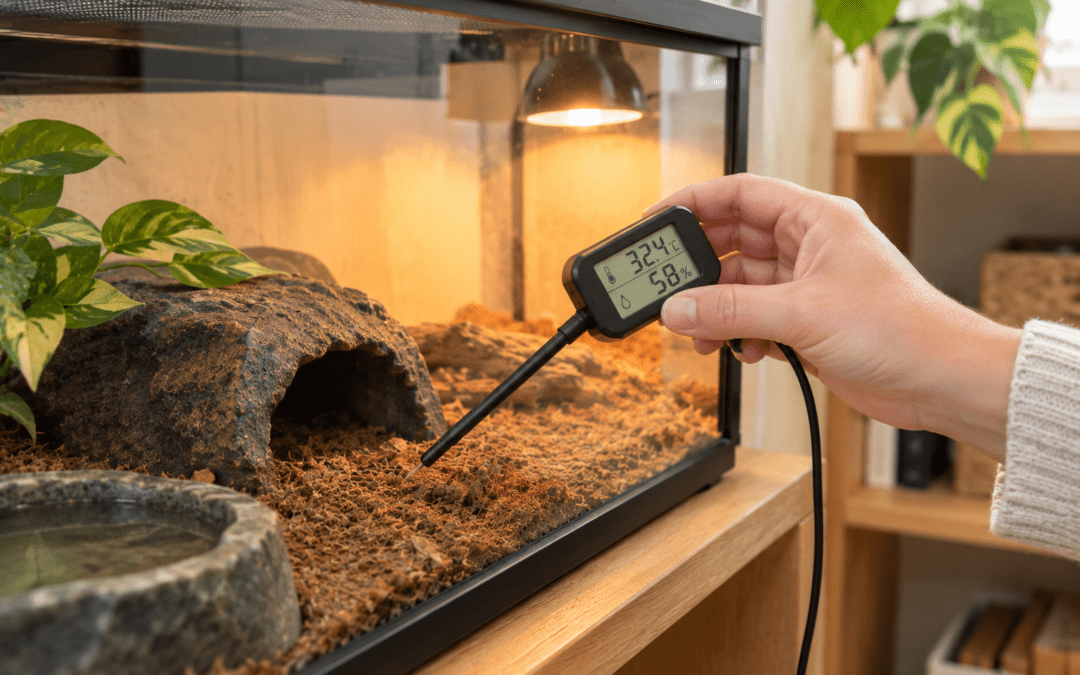
Practical checks: confirm your warm side and cool side temperatures with a digital thermometer rather than estimating by feel or an analog dial (these are commonly reported as inaccurate), confirm humidity sits in your species’ target range, and confirm your snake has at least one hide on the warm side and one on the cool side — a snake without a secure hide can be too stressed to eat regardless of how correct the temperature is.
Pet Care Tip: A digital thermometer/hygrometer combo is inexpensive and removes the guesswork — if you’re troubleshooting a feeding issue and don’t already have one, this is one of the first things worth adding.
Shedding and Seasonal or Breeding-Related Fasting
Refusing food in the days to weeks before a shed is a commonly reported, low-concern pattern across the sources reviewed for this guide — VEG ER, Petco, Chewy, PBS Pet Travel, and cornsnake.co.uk all note it.
Several of these sources describe appetite returning within roughly a week or so after the shed completes, though the exact wording and range varied by source and wasn’t consistent enough to state as one precise figure — treat “about a week, give or take” as a general pattern rather than a guarantee. Some adult snakes, ball pythons especially (more often reported in males), go through a longer seasonal fasting period during cooler months or breeding season that can last several weeks; this is a recognized pattern in the species rather than something to intervene on, as long as your snake otherwise looks and behaves normally.
Separate from natural seasonal fasting, some keepers deliberately induce a period of cooling — sometimes called brumation — as a breeding-prep practice for certain species. That’s a more advanced, intentional technique and not something to attempt casually in response to a snake that’s simply skipped a few meals; if your snake’s enclosure has drifted cold on its own, that’s an accidental husbandry issue to fix (see above), not a brumation cycle to lean into.
Stress: What Actually Causes It and How to Fix It
“Stress” gets named as a cause of feeding refusal almost everywhere, but most sources reviewed for this guide don’t explain what actually causes it or what to do about it — which is a real gap, since the fixes are usually straightforward once you know the specific trigger:
- A new snake’s acclimation period. A recently acquired or recently moved snake often needs a genuine settling-in stretch before its appetite normalizes — how long varies by the individual snake, so treat this as something to allow for rather than a fixed timeline. Early refusal in a brand-new snake reads differently than a sudden change in a snake that’s been settled and eating reliably for months.
- Enclosure placement. A tank in a high-traffic hallway, near a loud TV or speaker, or in direct line of frequent foot traffic can keep a snake on edge enough to affect appetite. A quieter, more out-of-the-way spot is a simple, low-cost thing to try.
- Over-handling, or handling too close to a feeding attempt. Snakes generally do better with handling kept light around feeding time, and a snake that’s picked up and disturbed shortly after refusing a meal is more likely to stay stressed than to be encouraged to eat.
- Insufficient hides. As above — a snake that doesn’t feel securely hidden is a snake under chronic low-grade stress, which can suppress appetite over time even without any single dramatic trigger.
Pet Care Tip: If you’ve recently changed anything about the enclosure, its location, or your handling routine, that’s a reasonable first place to look before assuming illness.
Illness and Prey-Related Causes
Less common than husbandry or normal fasting, but real: parasites, mouth rot (infectious stomatitis, often linked to live-prey injuries or environmental stress), and respiratory illness can all suppress appetite and warrant a vet visit, particularly alongside any of the warning signs in the next section.
On the prey side, a few things are worth checking before assuming illness: prey that’s too large relative to the snake (sized closer to the snake’s own body diameter is the safer choice, consistent with the sizing guidance in our ball python guide), prey that hasn’t been warmed enough before offering (roughly 100-102°F, per a DVM-reviewed source, is the target most keepers aim for), and — a cause that’s genuinely absent from most feeding-refusal guides reviewed for this article — prey quality itself. A rancid or poor-quality frozen rodent, or a recent change in your usual supplier or batch, is worth ruling out if refusal started suddenly with no other explanation.
Pet Care Tip: Keep a simple feeding log — date, prey size and source, accepted or refused. It’s the fastest way to notice a pattern (a specific supplier, a specific prey size) that a single missed meal won’t reveal on its own.
Warning Signs That Warrant a Vet Visit Regardless of Timing
Short answer: these matter more than how long it’s been since your snake last ate. VEG ER for Pets — written by Dr. Kelsey Bradley, DVM — lists prolonged anorexia itself (the duration figure in the section above) alongside the following as reasons it recommends taking your snake to a vet right away:
- Unintentional weight loss
- Lethargy, or decreased energy/activity
- Abnormal breathing sounds, or bubbles from the nose
- Sores or wounds in the mouth or on the body
- Difficulty shedding
- Any other concern about symptoms or husbandry
One more sign worth treating the same way, drawn from the regurgitation-specific sources used elsewhere on this site (Ball Python Breeder UK, Lizards101 — see Sources & References): repeated regurgitation (more than once or twice) is also a reason to contact a vet promptly rather than wait it out.
None of this is a substitute for an actual veterinary exam — this article can describe what a veterinary source reports as a reason for concern, not diagnose your individual snake. If you’re seeing any of the above, that’s the reason to contact a vet — regardless of species, how recently your snake last ate, or how long a fast might normally be tolerated for that species.

What to Try Before Assuming the Worst
Before escalating to a vet visit for a snake with no warning signs from the list above, it’s reasonable to work through a short troubleshooting pass: re-verify husbandry with an actual thermometer/hygrometer rather than assumption, check whether the timing lines up with a shed or a seasonal pattern, reconsider prey size and temperature, and — if you recently switched from live to frozen-thawed prey — know that a temporary adjustment period after that switch is commonly reported and not a sign something’s wrong. Give an identified normal cause (a shed in progress, a known seasonal pattern) reasonable time to resolve before escalating further.
Why Force-Feeding Is a Last Resort, Not a Home Remedy
If you’ve searched anything like “how do I get my snake to eat,” it’s worth pausing here specifically: force-feeding is not a safe first response to a snake that’s skipped some meals, and none of the general feeding-refusal guides reviewed for this article address that clearly. Force-feeding carries real risks — aspiration, physical injury to the snake, and added stress that can make an already-reluctant eater worse rather than better — and it isn’t something to attempt without a vet’s direct guidance.
If your snake has gone well past the general threshold above, or is showing any warning sign, the right next step is a vet visit, not an attempt to feed it yourself against its will. A vet can assess whether assisted feeding is actually appropriate for your snake’s specific situation and, if so, do it safely.
What These Situations Might Suggest
The following are illustrative scenarios based on patterns commonly described by reptile keepers, not documented case studies — they’re meant to show how the causes above might play out, not to predict what will happen with your snake.
A cold-drift scenario. An owner notices their corn snake has refused food for two weeks. Checking with an actual thermometer (rather than relying on the enclosure’s built-in dial) could reveal the warm side has drifted several degrees too cool — a pattern consistent with husbandry-related refusal, and one reason temperature is worth verifying directly rather than assuming it’s correct.
A seasonal-fasting scenario. An adult ball python stops eating for roughly two months over the winter, with no other symptoms. This kind of extended, symptom-free fast is consistent with the seasonal fasting pattern documented for the species — though only a vet exam can actually confirm normal body condition in an individual snake, not the passage of time alone.
A stress-related scenario. An owner notices their snake’s refusal started around the same time its enclosure was moved next to a busy hallway. A quieter location may help in a case like this, though appetite returning afterward wouldn’t necessarily prove the location was the sole cause — other factors could be involved too.
Common Mistakes to Avoid
- Applying one universal timeframe to every snake, when species-specific tolerance genuinely differs — a ball python and a corn snake are not on the same clock.
- Assuming stress is the cause without checking husbandry basics first — temperature, humidity, and hides are the more common, more checkable culprits.
- Attempting to force-feed at home before ruling out ordinary causes or talking to a vet.
- Repeatedly offering food or disturbing the snake after a refusal, which tends to prolong stress rather than help.
- Overlooking prey quality — a rancid or old batch of frozen prey is an easy thing to rule out and an easy thing to miss.
Editor’s Insights
- Reliable, specific fasting-duration data for California kingsnakes and rosy boas is genuinely thin — treat any confident-sounding number you find for either species with some skepticism, this guide included, and lean on body condition and the general duration figure above instead.
Which Situation Applies to You?
A quick pointer to the right section above — not a substitute for reading it:
- Refusal is shorter than the general duration figure for your snake’s life stage (or longer, but you have a species with documented longer tolerance, like a ball python), with no other symptoms? → See “Shedding and Seasonal Fasting” and “Husbandry Problems” above — likely normal; monitor and recheck husbandry.
- Approaching or past that general duration figure, snake otherwise alert and holding body condition, no other symptoms? → Worth a vet check-in as a conservative step.
- Any weight loss, lethargy, mouth sores, abnormal breathing, or repeated regurgitation? → See “Warning Signs” above — contact an exotic-animal vet promptly, regardless of timing or species.
- Considering force-feeding? → See “Why Force-Feeding Is a Last Resort” above — talk to a vet first, don’t attempt it at home.
Fasting Tolerance by Species
Figures below describe healthy adults unless noted otherwise.
|
Species |
General Fasting Tolerance |
Evidence Quality |
Practical Note |
|
Ball python |
Often several weeks, routinely a month or more, especially seasonally |
Well-documented across multiple sources |
See our dedicated ball python feeding guide for the full weight-based picture |
|
Corn snake |
Roughly 2-3 months per one reptile-specialist source; hatchlings have far less tolerance |
Single-source figure (TerrariumQuest) |
Treat as a starting point, not a guarantee |
|
California kingsnake |
Not reliably established — non-veterinary sources reviewed range from roughly 6-8 weeks to several months |
Conflicting, no veterinary source found |
Use the general duration figure above and body condition instead of a specific number |
|
Rosy boa |
Not reliably established — no species-specific figure found in the sources reviewed |
Insufficient evidence |
Use the general duration figure above and body condition instead of a specific number |
None of these figures are fixed feeding schedules or guaranteed safe waiting limits — they describe general tolerance reported for healthy adults under typical conditions. Health, body condition, life stage, and individual variation all matter more than any number in this table, and the warning signs earlier in this article apply regardless of species or how long a fast is normally tolerated.
Checklists
Husbandry Quick-Check Checklist
- Verify warm-side and cool-side temperatures with a digital thermometer
- Verify humidity is in range for your species
- Confirm at least two hides (one warm side, one cool side)
- Confirm prey is properly warmed (roughly 100-102°F) before offering
Before You Worry Checklist
- Check recent shed history
- Consider the season and your species’ typical fasting tolerance
- Weigh your snake if you can, and assess body condition
- Consider whether a recent move, handling change, or new environment could be a stress trigger
Frequently Asked Questions
Why is my snake not eating?
Common causes include shedding, a husbandry issue (temperature, humidity, hides), stress, and normal seasonal fasting. See “Why Snakes Stop Eating” and the cause-specific sections above for details.
How long can a snake go without eating before it’s a problem?
A veterinary emergency source’s own recommended action is to take a snake to the vet right away once refusal reaches roughly 3-4+ weeks in adults or 1-2 weeks in juveniles — see “How Long Is Too Long?” above for the full explanation, including how that figure varies by species (ball pythons in particular often tolerate much longer, and a corn snake’s adult tolerance has been reported around 2-3 months by one specialist source). Regardless of species or timing, weight loss, lethargy, mouth sores, abnormal breathing, or repeated regurgitation are reasons to contact a vet promptly on their own.
Is it normal for a snake to stop eating after shedding?
Yes — it’s a commonly reported, low-concern pattern across the sources reviewed for this guide, with several sources describing appetite returning within roughly a week or so after the shed completes.
Why won’t my ball python eat, specifically?
Ball pythons are well-documented to fast for extended periods, especially seasonally — see our dedicated ball python feeding guide for the full weight-based picture and warning signs specific to that species.
Should I try to force-feed my snake?
No, not at home. Force-feeding carries real risk (aspiration, injury, added stress) and should only be done under a vet’s guidance after ordinary causes have been ruled out.
What temperature should snake prey be before feeding?
Roughly 100-102°F, per a DVM-reviewed source — check with a probe or a quick water-bath check rather than estimating by feel.
Can stress alone stop a snake from eating?
Yes — a recent move, a loud or high-traffic enclosure location, over-handling, or insufficient hides can all suppress appetite even without any illness present. See “Stress” above for specific fixes.
When should I take my snake to the vet for not eating?
Promptly for any weight loss, lethargy, mouth sores, abnormal breathing, or repeated regurgitation, regardless of timing. Separately, a veterinary source’s own recommended action is to take your snake to the vet right away once refusal reaches roughly 3-4+ weeks in adults or 1-2 weeks in juveniles with no identifiable cause — see “How Long Is Too Long?” above for what that figure does and doesn’t mean.
Does a snake refusing food always mean something is wrong?
No — refusal often has an ordinary, identifiable explanation. The warning signs above matter more than the fact of refusal itself.
How is feeding refusal different for babies versus adult snakes?
Juveniles have far less of a buffer than adults — the general figure above is shorter for juveniles (roughly 1-2 weeks versus 3-4+ weeks), and for corn snakes specifically, a hatchling refusing food for “over a week” has been flagged as a real concern by a reptile-specialist source, unlike the much longer tolerance reported for adults.
Related Reading
- How Often Should You Feed a Ball Python?
- Best Beginner Pet Snake for First-Time Owners
- Why Is My Turtle Not Eating?
- Signs a Bearded Dragon Is Stressed
- Bearded Dragon Glass Surfing: Causes & How to Stop
Sources & References
- VEG ER for Pets, “My Snake Isn’t Eating – Is it Serious?” — written by Dr. Kelsey Bradley, DVM, at a 24/7 veterinary emergency practice; verbatim-checked against the live page in September 2026; primary source for the fasting-duration figure and the full warning-sign list (the source’s own heading is “Some reasons to take your snake to a vet right away”)
- Petco, “Ball python won’t eat or shed?” — DVM-reviewed Q&A (Miranda Sadar, DVM, DACZM); source for the prey-temperature figure and ball-python-specific cross-check
- TerrariumQuest, “How Long Can a Corn Snake Go Without Eating?” — reptile-specialist source; primary source for the corn-snake-specific fasting duration and feeding-frequency-by-age figures
- Chewy, “Why Your Ball Python Won’t Eat and What to Do” — large-retailer editorial with expert quotes; cross-checked against Petco for ball-python-specific claims
- PBS Pet Travel, “What to Do if Your Snake Stops Eating” — pet-transport company blog, used as a secondary cross-check on general causes, not a primary source
- cornsnake.co.uk, “Reasons why a baby corn snake might refuse food” — UK hobbyist specialist site, not veterinary; used for cause-list breadth, flagged as hobbyist-sourced
- atshq.org and myreptileblog.com — non-veterinary aggregator/blog sources checked for California kingsnake fasting duration; their figures (roughly 6-8 weeks to several months) conflicted enough that neither is used as a stated figure in this article
- Repeated regurgitation as a vet-contact reason is drawn from the regurgitation-specific sources cited on this site’s How Often Should You Feed a Ball Python? article (Ball Python Breeder UK, Lizards101 — both hobbyist/breeder sources, not veterinary), not from VEG ER’s own list
- This article’s ball-python-specific claims are drawn from and consistent with this site’s own How Often Should You Feed a Ball Python? article, which sources them primarily from TerrariumQuest’s feeding chart
Written by the Pets Store Home editorial team. Sourcing by claim: the fasting-duration figure and warning-sign list are drawn from VEG ER for Pets (written by Dr.
Kelsey Bradley, DVM), verbatim-checked against the source directly; the corn-snake-specific fasting duration and feeding-by-age figures are drawn from TerrariumQuest; prey-temperature guidance is drawn from a DVM-reviewed Petco Q&A; repeated regurgitation as a vet-contact reason is drawn from the regurgitation-specific sources cited on this site’s ball-python article, not from VEG ER’s own list; California kingsnake and rosy boa fasting-duration figures were not reliably sourced and are deliberately not stated as specific numbers in this article.
No licensed veterinarian has reviewed this draft, and it is not a substitute for professional veterinary or exotic-pet-care advice — this is a limitation of this article, not a formality, so if your snake’s feeding behavior concerns you and any warning sign in this article applies, consult an exotic-animal vet rather than relying on this guide alone.
Last fact-checked: September 2026 — the fasting-duration figure and warning-sign list were checked against a verbatim reproduction of VEG ER’s published page, including its exact heading (“Some reasons to take your snake to a vet right away”) and exact bullet wording; the corn-snake figure was checked directly against TerrariumQuest; California kingsnake and rosy boa duration figures are flagged as unreliable rather than resolved to a specific number.
Where to Go From Here
Feeding worries often have an ordinary explanation, and the warning signs above matter more than the calendar — regardless of species or how long a fast is normally tolerated. If you have a ball python specifically, our dedicated feeding-frequency guide has a far more precise picture than the general rule of thumb here; if you’re still deciding which snake to get in the first place, our Best Beginner Pet Snake guide covers the full species and setup picture.
[…] Which foreign pets are legal in Washington State? […]