
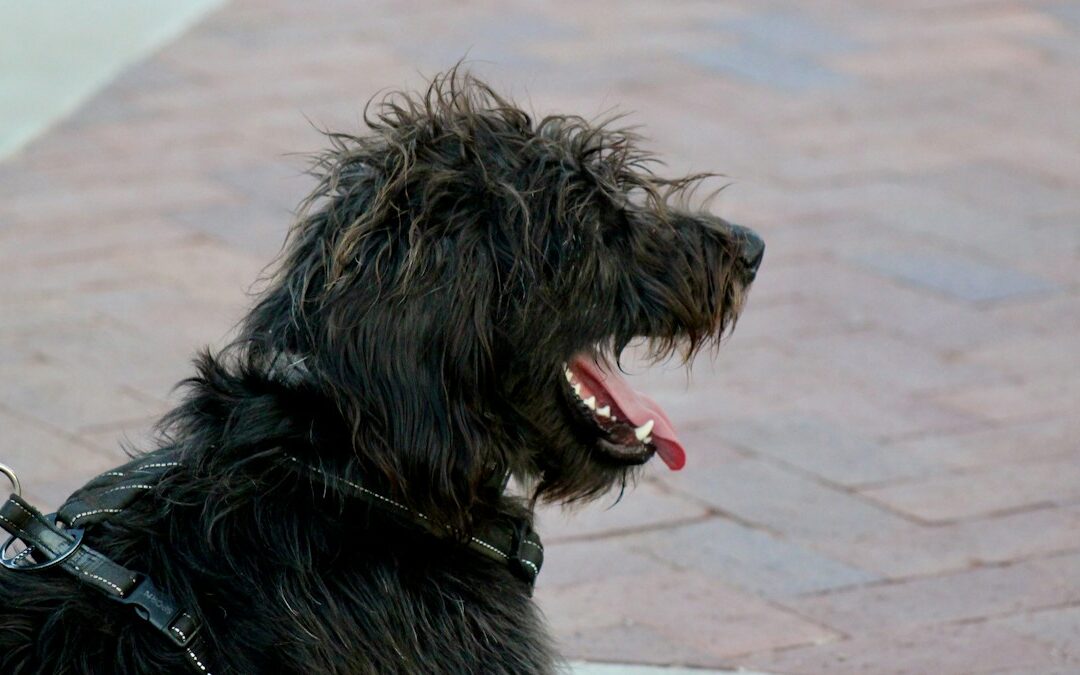
Black Russian Terrier: Size, Temperament, Health, Grooming and Cost (2026)
What is a Black Russian Terrier? It is a large, powerful, all-black guard dog created by the Soviet military’s Red Star Kennel. The AKC lists males at 27 to 30 inches and adults at 80 to 130 pounds, with a 10 to 12 year lifespan. Expect a confident, loyal protector that needs daily exercise, early training and regular grooming.
The Black Russian Terrier, or BRT, looks like a giant teddy bear but was built to guard. This guide covers its Soviet history, size, temperament, training, exercise, coat care, health tests and US price range, and explains who this big Russian dog suits best. Every fact links to its source.
Key takeaways
- The BRT is a Working Group breed, not a true terrier, recognized by the AKC in 2004.
- The AKC lists 80 to 130 pounds and a 10 to 12 year lifespan.
- Black is the only accepted coat color.
- It is naturally aloof with strangers and needs lifelong socialization.
- Chewy puts puppy prices at about $3,000 to $4,000.
In this guide
What Is a Black Russian Terrier?
The American Kennel Club (AKC) describes this breed as a large, immensely powerful worker with heavy bone and a coarse all-black coat, known for courage, confidence and intelligence. Bred to guard and protect, it is naturally aloof with strangers. The AKC calls it a brawny guard dog of the Siberian steppes.
Is the Black Russian Terrier Really a Terrier?
Not in the usual sense. Despite the name, the AKC places the breed in the Working Group, not the Terrier Group. It was recognized by the AKC in 2004 as its 151st breed. You may also see it called the Russian black terrier or simply the Black Russian, especially outside the US.
A Rare Russian Dog in the US
The AKC popularity ranking places the breed at 154 of 210, and Chewy describes it as relatively rare in the US. As general advice, expect to join a waiting list and to travel to meet a good breeder. For other uncommon breeds, see our guide to rare dog breeds.

Soviet Origins: The Red Star Kennel
The AKC says the Soviet government set up the Red Star Kennel in the 1930s, where scientists and breeders worked to create a “superdog” for the Russian army. The breed came from selective breeding of many breeds, including Rottweilers, Giant Schnauzers and Airedales.
Chewy adds that the breed was developed in Moscow to be trainable, reliable and able to cope with cold climates, and that about 17 breeds were used, including the Newfoundland. The AKC notes the dense coat is warm enough for some of the coldest inhabited places on earth. Chewy also notes that BRTs served as military guardians in the 20th century.
The Breed Club in America
According to the AKC, the Black Russian Terrier Club of America was founded in 1997 and is the breed’s official AKC parent club. As general advice, start your breeder search with the parent club’s referral list rather than online ads.

Black Russian Terrier Size and Appearance
The AKC lists males at 27 to 30 inches and females at 26 to 29 inches, with adults weighing 80 to 130 pounds. It adds that some can tip the scales at 140 pounds. In our experience, that makes it one of the largest Russian dog breeds you are likely to meet in the US.
| Trait | Black Russian Terrier | Source |
|---|---|---|
| Height (male) | 27 to 30 inches | AKC |
| Height (female) | 26 to 29 inches | AKC |
| Weight | 80 to 130 pounds (some up to 140) | AKC |
| Life expectancy | 10 to 12 years | AKC |
| Coat | Tousled double coat: soft undercoat, coarse outer coat | AKC |
| Color | Black only | AKC |
| AKC group | Working (recognized 2004) | AKC |
The AKC describes a huge, brick-shaped head and calls the breed nimble-footed for its size. Its grooming notes also mention the breed’s beard and mustache, which give the BRT its bearded look.
Black Russian Terrier Temperament
Chewy describes BRTs as calm, confident and vigilant, with strong loyalty to their family; owners often call them “Velcro dogs.” Bred as guardians, they assess a situation before acting and can be wary of strangers. The AKC warns that a BRT that does not spend enough time with its family can develop aggressive tendencies.
Is a BRT Good With Kids and Other Pets?
In our experience, a well-socialized BRT can be gentle with its own family, but its size alone means toddlers can be knocked over. As general advice, supervise all time with young children, introduce other pets slowly, and never leave a powerful guardian breed alone with visiting kids. For gentler options, see our list of excellent family dogs.

Training and Socialization
The AKC is blunt: an owner who is not willing or able to train a powerful, willful dog should not get a BRT. It says socialization must start in puppyhood and continue for life, and obedience training should begin as early as possible and continue into adulthood.
The AKC adds that BRTs can become pushy with anyone they can intimidate, so training must be firm and consistent but always reward-based, never punishment-based. The breed is intelligent and learns quickly when treated with kindness and respect. The American Veterinary Society of Animal Behavior (AVSAB) says puppy classes can start at 7 to 8 weeks, after first vaccines.
Dog Sports for the BRT
The AKC says many BRTs excel at obedience, agility, rally and Schutzhund (protection) competitions. As general advice, a weekly class gives this smart working dog a job and strengthens your bond.
Exercise and Grooming Needs
The AKC says a BRT needs at least 30 to 40 minutes of exercise every day and enjoys brisk walks, long runs, bike rides, swims and hikes. Chewy suggests a longer 60 to 90 minutes of purposeful activity plus mental work. The AKC warns that an under-exercised BRT can become unhappy and destructive.
Grooming the BRT Coat
The AKC says the double coat needs a thorough brushing once or twice a week to prevent mats, while Chewy suggests two to three times a week. Owners should learn to scissor the face, beard and mustache or use a groomer, and a clipper trim every few months keeps the coat tidy. Check ears regularly and brush teeth often.
| Care task | How often | Source |
|---|---|---|
| Exercise | 30 to 40 minutes daily (Chewy: 60 to 90) | AKC, Chewy |
| Brushing | Once or twice a week (Chewy: 2 to 3 times) | AKC, Chewy |
| Clipper trim | Every few months | AKC |
| Professional grooming | About every six weeks | Chewy |
| Nail trims | Regularly | AKC |
| Ears and teeth | Check ears and brush teeth regularly | AKC |

Big dogs need the right diet. See how to build muscle on a dog with food, and if your BRT gains weight, our guide on how to help your dog lose weight.
Black Russian Terrier Health and Lifespan
The AKC calls the BRT a typically healthy breed and lists a 10 to 12 year life expectancy. Responsible breeders screen for allergies, urinary tract stones, hip and elbow dysplasia and progressive retinal atrophy.
| Condition | What to know | Source |
|---|---|---|
| Hip and elbow dysplasia | Joint problems; breeders should test | AKC, Chewy |
| JLPP | Juvenile laryngeal paralysis and polyneuropathy; inherited, no treatment; DNA test available | AKC, Chewy |
| Hyperuricosuria (HUU) | Inherited; raises the risk of bladder or kidney stones | Chewy, UC Davis VGL |
| Progressive retinal atrophy | Can cause vision loss | AKC |
| Allergies | Breeders screen for them | AKC |
| Bloat (GDV) | Risk in large, deep-chested dogs; an emergency | Chewy, VCA |
Recommended Health Tests
The AKC lists the parent club’s recommended tests: hip and elbow evaluations, a cardiac exam, an eye exam by a veterinary ophthalmologist and a JLPP DNA test. You can look up results on the Orthopedic Foundation for Animals (OFA) website. As general advice, ask to see results for both parents.
Hyperuricosuria and Bladder Stones
The UC Davis Veterinary Genetics Laboratory says hyperuricosuria (HUU), high uric acid in the urine, is most common in the Dalmatian, Bulldog and Black Russian Terrier. Affected dogs can form bladder or kidney stones that often need surgery. It is inherited as a simple recessive trait, and a DNA test shows whether a dog is clear, a carrier or affected.
Bloat Warning Signs
VCA Animal Hospitals says bloat is most common in large, deep-chested dogs and lists restlessness, heavy drooling and retching without bringing anything up as signs. It calls bloat a life-threatening emergency. Chewy suggests smaller meals and asking your vet about a preventive gastropexy.
Price and Ethical Breeders
Chewy puts a Black Russian Terrier puppy at about $3,000 to $4,000. As general advice, budget for a large crate, big food bills and regular grooming too. An AKC article by Randa Kriss says parents should be tested for breed-specific genetic diseases, that puppies usually go home at 8 to 12 weeks, and that you should ask whether the breeder will take the dog back.
Pet Care Tip: Our suggestion is to enroll your BRT puppy in a class the week it comes home. In our experience, early, reward-based training is far easier than correcting a 100-pound adolescent later.
When to call a vet right away: As general advice, go to your vet or a 24/7 emergency animal hospital immediately if your dog retches without bringing anything up, has a swollen belly, drools heavily, collapses, struggles to breathe, or strains to urinate.
7 questions to ask a breeder
- Can I see hip, elbow, cardiac and eye results for both parents?
- Are the parents clear of JLPP by DNA test?
- Have the parents been tested for hyperuricosuria?
- How do the parents behave with strangers?
- How are the puppies socialized before going home?
- Are you a member of the Black Russian Terrier Club of America?
- Will you take the dog back at any age?
Example Scenario (illustrative)
Mark in Denver brought home a BRT puppy and started a weekly obedience class at nine weeks. By one year, his 110-pound dog greeted guests calmly on cue, enjoyed daily hikes and loved his weekly brushing session.
| Myth | Fact |
|---|---|
| “The BRT is a terrier.” | The AKC places it in the Working Group. |
| “A guard dog does not need socializing.” | The AKC says socialization must continue for life. |
| “Big dogs are lazy.” | The AKC says at least 30 to 40 minutes of exercise a day. |
| “Harsh training works best.” | The AKC says reward-based, never punishment-based. |
What most owners get wrong
In our experience, many owners fall for the teddy-bear look and underestimate the guardian instinct. A BRT needs leadership, daily exercise and lifelong socialization, not just love.
Black Russian Terrier FAQs
How big does a BRT get?
The AKC lists 26 to 30 inches and 80 to 130 pounds.
How long do BRTs live?
The AKC gives a life expectancy of 10 to 12 years.
Is a Black Russian Terrier a good family dog?
Chewy calls BRTs loyal to their families, but the AKC stresses lifelong socialization; always supervise them with kids.
Do BRTs shed?
They have a double coat that needs brushing once or twice a week to prevent mats, per the AKC.
How much is a BRT puppy?
Chewy puts puppies at about $3,000 to $4,000.
What breeds make up the Black Russian Terrier?
The AKC names Rottweilers, Giant Schnauzers and Airedales among many breeds used.
Is a BRT good for first-time owners?
The AKC says owners unwilling or unable to train a powerful, willful dog should not get one.
Final Verdict: Is a Black Russian Terrier Right for You?
This breed is a loyal, intelligent and imposing guardian with a softer side for its family. It suits experienced owners who can give daily exercise, regular grooming and lifelong, reward-based training. Choose a health-testing breeder, and this rare Russian working dog can be a devoted companion for many years.
Your next steps
- Meet adult BRTs and their owners before you commit.
- Ask for hip, elbow, cardiac, eye and JLPP results.
- Book a puppy class before your puppy comes home.
Share your BRT on the Pets Store Home Facebook page, and find more breed guides in our Dogs section.
About the author: Written and reviewed by the Pets Store Home Editorial Team, pet owners who check every guide against trusted sources.
How we checked this guide: Size, history, temperament, training, exercise, grooming, health and recommended tests come from the AKC breed page. Price, extra health detail and grooming frequency come from Chewy’s breed guide, bloat signs from VCA Animal Hospitals, hyperuricosuria from the UC Davis Veterinary Genetics Laboratory, breeder questions from the AKC, and socialization timing from AVSAB.
Where sources differ, such as exercise time and brushing frequency, we show both. This guide was written in November 2026 and is reviewed every 12 months.
Last reviewed: November 2026.
Sources (accessed November 8, 2026)
- AKC: Black Russian Terrier
- Chewy: Black Russian Terrier
- VCA Animal Hospitals: Bloat (GDV) in Dogs
- AKC: Questions to Ask Your Potential Breeder
- UC Davis Veterinary Genetics Laboratory: Hyperuricosuria (HUU)
- Orthopedic Foundation for Animals
- AVMA News: Behavior society supports early puppy socialization
[…] Which foreign pets are legal in Washington State? […]