
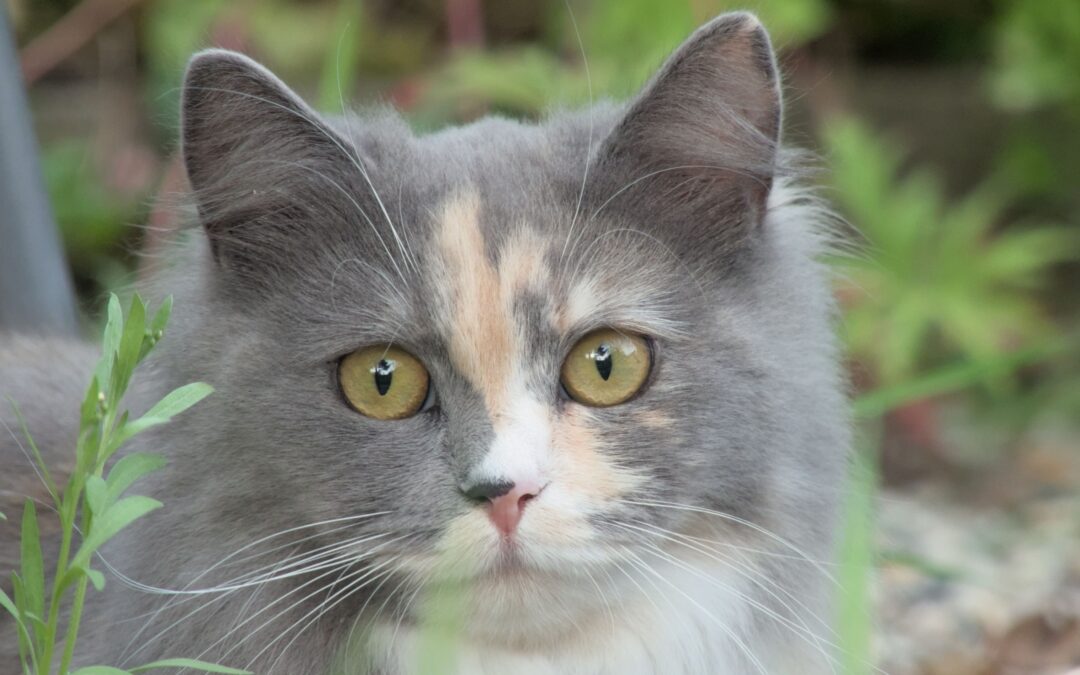
Dilute Tortie Cat: Essential Guide to Blue-Cream Colors, Genetics and Care (2026)
A dilute tortie is a tortoiseshell cat whose coat looks softer because a recessive dilute gene turns black into blue-gray and orange into cream. It is a color, not a breed, and almost every one is female. Care is the same as for any healthy cat of her breed and age.
If you have just met a pastel gray-and-cream kitten, this guide explains exactly where that coat comes from. We use the UC Davis Veterinary Genetics Laboratory, the Cat Fanciers’ Association (CFA) and 2025 orange-gene research to cover genetics, color names, breeds, male torties and daily care.
Key takeaways
- A blue-cream coat needs two copies of the recessive dilute gene, MLPH (UC Davis).
- The CFA calls this color blue-cream: “a blue female cat with patches of cream.”
- The tortie pattern comes from an X-linked orange gene, traced in 2025 to a change near ARHGAP36.
- Male blue-creams are rare XXY cats and are usually sterile (Vetstreet).
- Coat color does not change care; every cat needs at least a yearly vet exam (AAHA/AAFP).
In this guide
Dilute Tortie: The Short Answer
What exactly is a dilute tortie cat? The snapshot below sums up the coat in one place, with the source behind each line.
| Trait | What to know |
|---|---|
| Other names | Dilute tortoiseshell, blue-cream, muted tortoiseshell, diluted tortie cat |
| Colors | Blue-gray and cream; lilac-cream in some breeds (CFA) |
| Sex | Almost always female; rare males are XXY (Vetstreet) |
| Is it a breed? | No; it is a color pattern seen in pedigreed cats and mixes alike |
| Genes involved | X-linked orange gene plus two copies of dilute, d/d (UC Davis) |
| Lifespan and health | Depends on breed, care and overall genetics, not coat color alone |
| DNA test | UC Davis dilute test, cheek swab, $44 (accessed November 2026) |
Sources: UC Davis VGL, CFA coat and color descriptions, Vetstreet, accessed November 2026.
In our experience, owners often mistake a dilute tortie for a gray tabby or a faded calico at first glance. The quickest clue is the mix of soft gray and peachy cream with little or no white.

What Makes a Tortie “Dilute”?
Two separate genes have to line up. One creates the tortoiseshell pattern, and the other softens every color in it.
The Dilute Gene (MLPH)
The UC Davis Veterinary Genetics Laboratory explains that dilution is caused by a change in the MLPH gene and is autosomal recessive, so a cat needs two copies to show it. Black pigment becomes gray, which breeders call blue, and red becomes cream.
| Dilute genotype | Coat result | What it passes on |
|---|---|---|
| D/D | Full color (black and orange tortie) | Cannot pass on dilute |
| D/d | Full color, but a carrier | Dilute to about half of her kittens, on average |
| d/d | Dilute (blue and cream tortie) | Dilute to every kitten |
Source: UC Davis VGL. Two carriers are predicted to produce about 25% dilute kittens.
The Orange Gene and the X Chromosome
The tortie pattern itself is sex-linked. Two research groups, one in Japan at Kyushu University and one at Stanford, published back-to-back Current Biology papers in May 2025. As EurekAlert and Scientific American reported, orange fur traces back to a short deletion beside the X-linked ARHGAP36 gene.
A female carries two X chromosomes, and early in development each cell silences one of them at random, as Scientific American explains, so her coat becomes a patchwork of both versions.
Put the two together and you get a dilute tortie: a female carrying orange on one X, non-orange on the other, and two copies of dilute. The blue patches come from diluted black, and the cream patches from diluted orange.
Blue-Cream, Lilac-Cream and Other Muted Shades
The CFA defines blue-cream as “a blue female cat with patches of cream.” Its descriptions also list lilac and cream among calico colors, and the British Shorthair standard includes lilac-cream as an even paler option. Breed standards differ on pattern: the CFA British Shorthair standard wants blue and cream “softly mingled, not patched,” while the Persian standard accepts patches or softly intermingled areas.
| Dilute look | What it shows | Common name |
|---|---|---|
| Mingled | Fine swirls of gray and cream all over | Brindled or muted tortoiseshell |
| Patched | Larger blocks of gray and cream | Patched blue-cream |
| With tabby stripes | Gray and cream plus tabby markings | Dilute torbie |
| With white | Gray, cream and large white areas | Dilute calico |
Common names used by owners and breeders; CFA terms differ slightly by breed.

Dilute Tortie vs. Standard Tortie and Dilute Calico
Adopters often mix these coats up. The table below shows how to tell a dilute tortie apart at a glance.
| Coat | Main colors | White areas | Genes in play |
|---|---|---|---|
| Standard tortie | Black and orange | Little or none | Orange gene, full color (D/-) |
| Dilute tortie | Blue-gray and cream | Little or none | Orange gene plus d/d |
| Calico | Black, orange and white | Large white patches | Orange gene plus white spotting |
| Dilute calico | Blue-gray, cream and white | Large white patches | Orange gene, d/d and white spotting |
Based on CFA color descriptions and UC Davis dilute genetics.
In our experience, the white is the easiest giveaway. A cat with big white patches is a calico or dilute calico, while a diluted tortoiseshell cat keeps her soft gray and cream across most of her body. Our guide to whether tortoiseshell cats are rare covers standard torties and calicos in more depth.
How to Identify a Dilute Tortie Kitten: 4 Quick Checks
- Look at the dark color. Soft blue-gray instead of true black points to dilution.
- Look at the light color. Pale cream or peach instead of bright orange is the second clue.
- Check for white. Little or none suggests a tortie; big white patches suggest a calico.
- Check the nose and paw pads. In our experience, blue-cream cats often have gray or pinkish-gray pads rather than black ones.
As general advice, view a kitten in daylight, since indoor bulbs can make a light tortoiseshell cat look plain gray or beige. A blue dilute tortoiseshell cat with heavy tabby markings may also be listed as a dilute torbie.
Which Breeds Come in Blue-Cream?
Because blue-cream is a color, it shows up in mixed-breed cats and many pedigreed breeds. The CFA lists blue-cream in its breed standards for the British Shorthair and the Persian, among others. UC Davis notes that the Chartreux, Korat and Russian Blue are fixed for dilute, but these are solid blue breeds, so torties are not part of their standards.
Domestic Shorthair and Longhair Blue-Creams
In our experience, most blue-cream cats in US shelters are domestic shorthairs or longhairs rather than pedigreed cats. A longhaired blue-cream can look especially soft, because the long coat blurs the gray and cream into a pastel haze.
Can a Dilute Tortie Be Male?
Rarely. A tortoiseshell coat needs two X chromosomes, so a male must carry an extra X and be XXY. Vetstreet puts the odds at roughly one male per 3,000 calicos, citing University of Missouri research, and adds that these males are usually sterile.
Personality: Is “Tortitude” Real?
Many owners describe torties as sassy or strong-willed, often called “tortitude.” In our experience, a blue-cream’s personality depends far more on her early socialization, health and home than on her color. Our tortoiseshell facts guide looks at the tortitude myth in detail.

Caring for a Blue-Cream Cat
Coat color does not change what a cat needs. The AAHA and AAFP feline life stage guidelines, announced by the AAFP in 2021, say all cats need a full physical exam at least once a year. Beyond that, plan care around your cat’s breed, coat length and age.
| Care area | What to do | Why it matters |
|---|---|---|
| Vet visits | At least yearly exams (AAHA/AAFP); ask your vet about seniors | Catches problems early |
| Grooming | Brush shorthairs weekly and longhairs several times a week | Reduces shedding and mats |
| Spay | Ask your vet about timing | Prevents unplanned litters |
| Indoor life | Provide climbing, scratching and play | Keeps an indoor cat fit and busy |
| DNA testing | Optional UC Davis dilute test for breeders | Confirms d/d, D/d or D/D |
Grooming and enrichment tips are general advice; ask your vet about your own cat.
Pet Care Tip: Our suggestion is to photograph your blue-cream in natural daylight for your vet records and lost-pet flyers. In our experience, indoor lighting can make blue-cream coats look plain gray, which confuses people trying to identify a missing cat.
When to call the vet: As general advice, book a prompt vet visit if your cat skips meals, hides for over a day or struggles to breathe. Straining in the litter box, especially in a male, can mean a blocked bladder, so treat it as an emergency and phone an emergency clinic.
| Common mistake | Why it matters | Better approach |
|---|---|---|
| Calling a blue-cream a breed | It is a coat color, not a breed | Ask about the actual breed or mix |
| Paying extra for “rare” color | UC Davis says most breeds carry both versions | Choose a healthy, well-socialized cat |
| Breeding a male tortie | XXY males are usually sterile (Vetstreet) | Have him neutered and enjoy him as a pet |
| Judging personality by color | In our experience, socialization matters more | Meet the cat before you adopt |
Example Scenario (illustrative)
Lena in Portland adopted Mabel, a shy gray-and-cream kitten listed as a “gray tabby.” Her vet pointed out the cream patches and called her a dilute tortie. Lena booked yearly checkups, set up a cat tree by the window, and used daylight photos for Mabel’s microchip record.
Dilute Tortie FAQs
Is a dilute tortie rare?
Not especially. The dilute gene is common in many breeds, according to UC Davis, but a kitten needs two copies of it plus the tortoiseshell pattern, so in our experience blue-creams turn up less often than standard torties.
Can a dilute tortie cat be male?
Very rarely. Tortoiseshell coats need two X chromosomes, so a male must be XXY. Vetstreet, citing University of Missouri research, estimates roughly one male in every 3,000 calicos, and such males are usually sterile.
What is the difference between a dilute tortie and a dilute calico?
Both show blue-gray and cream. A dilute calico also has large patches of white, while a blue-cream has little or no white.
Is a dilute tortoiseshell cat a breed?
No. It is a coat color, not a breed. Mixed-breed cats and many pedigreed breeds, including British Shorthairs and Persians, can be blue-cream.
What is a muted tortoiseshell cat?
It is another name for a dilute tortoiseshell. The coat looks muted because blue-gray replaces black and cream replaces orange.
How can I tell if my gray tortie is dilute?
Look for soft gray and cream patches or swirls with little white. If you need proof for breeding, UC Davis offers a cheek-swab DNA test for the dilute gene.

Final Verdict
A dilute tortie is a tortoiseshell cat with softened colors: blue-gray instead of black and cream instead of orange, thanks to two copies of the recessive dilute gene. She is almost always female, she is not a breed, and her care depends on her breed and health rather than her coat. Choose her for her personality, and enjoy that pastel coat as a bonus.
Your next steps
- Read the UC Davis dilute gene page and the CFA color descriptions.
- Learn more about standard torties in our tortoiseshell cat guide and orange coats in our ginger cat guide.
- Browse more cat guides in our Cats section.
Share your blue-cream cat photos on the Pets Store Home Facebook page.
About the author: Written and reviewed by the Pets Store Home Editorial Team: pet owners and animal lovers who check every guide against trusted US veterinary and animal-welfare sources. This article is general information, not a substitute for professional veterinary advice. Always talk to your veterinarian about your own pet’s health.
How we checked this guide: Dilute genetics and DNA testing come from the UC Davis Veterinary Genetics Laboratory. Color names and breed standards come from the CFA. Orange-gene findings come from EurekAlert and Scientific American reports on two 2025 Current Biology studies. Male tortie figures come from Vetstreet, and exam frequency from the 2021 AAHA/AAFP feline life stage guidelines. We review this article every 12 months.
Last reviewed: November 2026.
Sources
- UC Davis Veterinary Genetics Laboratory: Dilute (cat) (accessed November 2026)
- Cat Fanciers’ Association: Coat and Color Descriptions (accessed November 2026)
- CFA: British Shorthair breed standard (accessed November 2026)
- CFA: Persian breed standard (accessed November 2026)
- EurekAlert: Kyushu University orange-gene release (May 15, 2025)
- Scientific American: The mutation behind orange cats (2025)
- Vetstreet: Can Calico Cats Be Male? (Dr. Marty Becker)
- AAFP: Updated Feline Life Stage Guidelines (March 2, 2021)
[…] Which foreign pets are legal in Washington State? […]