
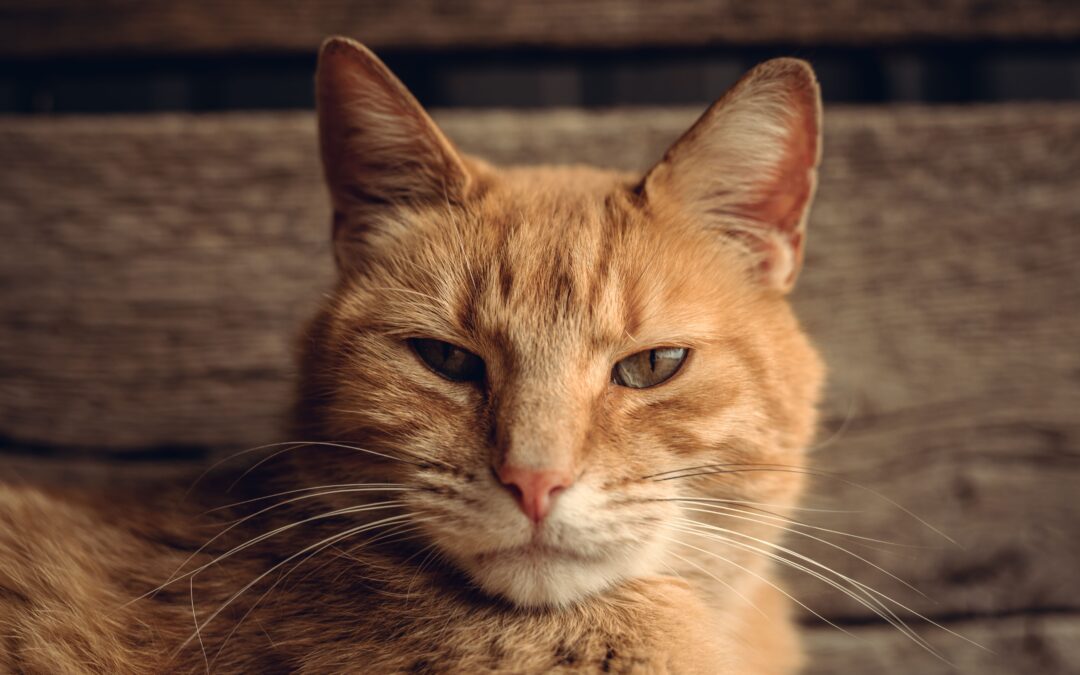
Ginger Cat Guide: Essential Facts on Orange Tabbies, Genetics and Care (2026)
A ginger cat is any cat with an orange, red or cream coat, and it is a color rather than a breed. Every ginger cat is a tabby, and most are male because the orange gene sits on the X chromosome. Personality comes from upbringing and the individual cat, not coat color.
If you share your home with an orange tabby, or you are thinking about adopting one, this guide explains what science actually says. It covers the 2025 discovery of the orange gene, why female gingers are less common, the different tabby patterns and shades, kitten care, and the harmless freckles many orange cats develop.
Key takeaways
- Orange is a coat color found in many breeds and in mixed-breed cats.
- All orange cats show a tabby pattern, according to Chewy’s vet-reviewed guide.
- Roughly 80% of orange cats are male and about 20% are female (Chewy).
- A 2025 study linked orange fur to a DNA deletion near the ARHGAP36 gene.
- Black freckles on an orange cat’s lips are usually harmless lentigo (Merck Veterinary Manual).
In this guide
Ginger Cat: The Short Answer
What makes a ginger cat different from other cats? Mostly its genes and its coat. Here are the core facts in one place, each tied to its source.
| Question | Quick answer |
|---|---|
| Is it a breed? | No; orange is a coat color seen across many breeds (Chewy) |
| Other names | Orange, red or ginger tabby; in our experience, often marmalade too |
| Always a tabby? | Yes; the stripes always show (Chewy) |
| Male or female? | About 80% male, 20% female (Chewy) |
| Gene behind it | Deletion near ARHGAP36 on the X chromosome (Kyushu University, 2025) |
| Lighter shade | Cream, a dilute form of red (Fear Free Happy Homes) |
| Special health issues? | Harmless lentigo freckles can appear (Merck) |
Sources: Chewy (reviewed by Hannah Hart, DVM), Kyushu University, Fear Free Happy Homes and Merck Veterinary Manual, accessed November 2026.

Why Are Cats Orange? The Genetics Explained
For decades, scientists have known orange fur is linked to the X chromosome, but not which gene was responsible. That changed in May 2025, when two research teams, one led by Professor Hiroyuki Sasaki at Kyushu University and one at Stanford, published their findings in Current Biology.
Both teams found that orange cats carry a small missing stretch of DNA near a gene called ARHGAP36. Scientific American reported that this gene had never before been tied to pigment. According to Kyushu University, the deletion sits in a non-coding stretch of DNA, so the protein the gene makes stays the same.
Why Female Ginger Cats Are Less Common
Most orange cats are male, so a female ginger cat is the rarer find. Males have one X chromosome, so a single copy of the orange variant makes them orange. Females have two X chromosomes and need the variant on both to be fully orange. Chewy’s vet-reviewed guide gives about 80% male and 20% female, and notes that both parents must carry the gene for an orange daughter.
How Orange Links to Calico and Tortoiseshell Cats
A female with one orange copy and one non-orange copy does not turn out half-orange. Instead, one X chromosome is switched off at random in each cell, so her coat forms patches. This is why calico and tortoiseshell cats are nearly always female, as Kyushu University explains. Our guide asking whether tortoiseshell cats are rare covers that pattern in more depth.
Pet Care Tip: Our suggestion: if you want a female orange kitten, ask the shelter or breeder about the parents. In our experience, female gingers often come from litters where both parents show orange in their coats.

Ginger Tabby Patterns and Shades
Why does every orange cat have stripes? Chewy explains that the orange gene does not mask tabby markings, so some striping always shows. A vet-reviewed guide from Fear Free Happy Homes names four tabby patterns.
| Pattern | What it looks like on a ginger tabby cat |
|---|---|
| Classic | Bold swirls on the sides, often with a bullseye shape |
| Mackerel | Narrow stripes running down the sides like a fish skeleton |
| Spotted | Stripes broken into spots along the body |
| Ticked | Banded hairs that give an even, sandy look with few stripes |
Pattern names: Fear Free Happy Homes; descriptions are our own.
Shades of Ginger in Orange Tabbies
Orange coats range from pale cream to deep red. Fear Free Happy Homes describes cream as a dilute version of red, also called buff. In our experience, owners use names like marmalade, apricot or copper for the shades in between. A ginger and white cat gets its white patches from separate genetics, which our orange and white cat breed guide explains.
Long-Haired and Fluffy Ginger Cats
Coat length and color are inherited separately, so orange shows up on short, medium and long coats. As general advice, a long-haired ginger cat, whether a Maine Coon, a Persian or a fluffy mixed breed, needs brushing a few times a week to stop mats forming behind the ears and on the belly. Shorthaired gingers usually need only a weekly brush.
Breeds That Come in Ginger
Orange is a color, not a breed, so it turns up in pedigreed and mixed-breed cats alike. In our experience, you will often see red coats in Maine Coons, Persians, British Shorthairs and American Shorthairs, plus countless domestic shorthairs. Our Norwegian Forest Cat vs Maine Coon guide covers the orange Maine Coon.
Ginger Cat Personality: Myth vs Evidence
Are orange cats really friendlier? Many owners think so, but the evidence is thin. A UC Berkeley study surveyed 189 cat-experienced people and found they were more likely to call orange cats friendly. Lead author Mikel Delgado warned there was “little evidence that these perceived differences between differently colored cats actually exist.”
Chewy’s guide agrees, noting that personality depends on genetics, socialization and life experience rather than color. As general advice, meet the individual cat before you adopt, and ask shelter staff how it behaves with people and other pets.
Ginger and Tabby Kittens: What to Know
Ginger and tabby kittens can turn up in the same litter, because each kitten inherits its own mix of coat genes from the parents. Every orange kitten will show some tabby marks, though in our experience they may look faint until the adult coat comes in.
The American Animal Hospital Association (AAHA) advises a full exam at the first vet visit and core vaccines against panleukopenia, calicivirus and rhinotracheitis. It suggests spaying or neutering by about 5 months of age, plus parasite prevention your vet recommends.
Ginger tabby kitten checklist
- Book a first vet visit and follow the vaccine schedule your vet sets.
- Ask about spay or neuter timing (AAHA suggests by about 5 months).
- Set up a litter box, scratching post and climbing space (AAHA).
- Start gentle handling and tooth brushing early.
- Note any freckles so your vet can track them.

Ginger Cat Health and Care
Does coat color change a cat’s health or lifespan? We found no research showing that it does, so care for a ginger cat the same way you would any cat. The one color-linked quirk is lentigo, dark freckles on the lips, nose and eyelids.
The Merck Veterinary Manual says lentigo usually shows up first on the lips and eyelids around 1 year of age and is not precancerous. As general advice, still show your vet any spot that grows, bleeds or looks raised, because other skin problems can look similar.
Daily Care at a Glance
| Care task | How often | Source or note |
|---|---|---|
| Wellness exam | Every year | AAHA |
| Tooth brushing | As often as your vet advises | AAHA advises home brushing and dental treats |
| Brushing the coat | Weekly; more for long hair | General advice |
| Play and climbing | Several short sessions a day | General advice |
| Litter box cleaning | Scoop daily | General advice |
| Freckle check | Monthly, and at each vet visit | Merck notes lentigo on lips and eyelids |
Illustrative schedule; ask your vet to adjust it for your cat’s age and health.
A ginger feline does best with an indoor setup that keeps it busy. As general advice, offer window perches, puzzle feeders and scratching posts in more than one room, since a bored cat is more likely to scratch furniture or overeat.
When to call the vet: As general advice, call your vet promptly if a dark spot on your cat grows quickly, bleeds, becomes raised or crusty, or if your cat stops eating, hides or strains in the litter box.
| Common mistake | Why it matters | Better approach |
|---|---|---|
| Assuming freckles are always harmless | Other skin conditions can look like lentigo | Ask your vet to check new or changing spots |
| Choosing a cat for its color alone | Berkeley researchers found little evidence color predicts personality | Meet the cat and ask about its history |
| Skipping yearly checkups | AAHA recommends annual wellness exams | Book a checkup every year |
| Ignoring dental care | AAHA advises home brushing and professional cleanings | Brush teeth and ask about dental cleanings |
Example Scenario (illustrative)
Paige in Omaha adopted Saffron, a two-year-old female ginger cat, and was surprised to learn female gingers are less common. When tiny black dots appeared on Saffron’s lips, Paige mentioned them at the annual checkup. The vet confirmed lentigo and simply noted it in her records.
Ginger Cat FAQs
Are all ginger cats male?
No. Chewy’s vet-reviewed guide puts the split at roughly 80% male and 20% female, because a female needs the orange gene on both X chromosomes.
Are all orange cats tabbies?
Yes. Chewy’s guide says “every orange cat is actually an orange tabby,” because the orange gene does not mask tabby markings.
What gene makes a cat orange?
In 2025, teams at Kyushu University and Stanford linked orange fur to a small DNA deletion near the ARHGAP36 gene on the X chromosome, as reported in Current Biology.
Do orange cats have a special personality?
There is little evidence for it. A UC Berkeley study found people tend to see orange cats as friendly, but the researchers noted little proof that color differences in personality are real.
Why does my orange cat have black freckles?
Those spots are usually lentigo. The Merck Veterinary Manual says the marks often appear on the lips and eyelids and are not precancerous, but ask your vet to check any new spot.
Is a ginger cat a breed?
No. Ginger, also called orange or red, is a coat color that can appear in many breeds and in mixed-breed domestic cats.

Final Verdict
A ginger cat is a striking orange tabby whose color comes from a single X-linked gene, which is why most are male. Coat color does not set personality or lifespan, so judge each cat as an individual. Give yours routine vet care, keep an eye on any freckles, and enjoy one of the most recognizable coats in the cat world.
Your next steps
- Read the Kyushu University summary of the orange-gene research.
- Use the kitten checklist above before your first vet visit.
- Find the perfect name in our orange cat names guide, then explore more in our Cats section and Pets hub.
Share your ginger cat photos with our community on the Pets Store Home Facebook page.
About the author: Written and reviewed by the Pets Store Home Editorial Team: pet owners and animal lovers who check every guide against trusted US veterinary and animal-welfare sources. This article is general information, not a substitute for professional veterinary advice. Always talk to your veterinarian about your own pet’s health.
How we checked this guide: Genetics come from Kyushu University and Scientific American coverage of the 2025 Current Biology papers. Sex ratio and tabby facts come from Chewy (reviewed by Hannah Hart, DVM). Patterns and cream come from Fear Free Happy Homes, lentigo from the Merck Veterinary Manual, kitten care from AAHA and personality research from UC Berkeley. We review this article every 12 months.
Last reviewed: November 2026.
Sources
- Kyushu University: Scientists find the “meow-tation” that gives cats their orange fur (May 2025)
- Scientific American: This Strange Mutation Explains the Mystifying Color of Orange Cats (May 2025)
- Chewy: Are All Orange Cats Male and All Calico Cats Female? (updated July 2026)
- Fear Free Happy Homes: Cat Colors (accessed November 2026)
- Merck Veterinary Manual: Congenital and Inherited Skin Disorders of Cats (accessed November 2026)
- AAHA: A Guide to Health Care in Your Kitten’s First Year (accessed November 2026)
- UC Berkeley News: Don’t be so fast to judge a cat by its color (October 2012)
[…] Which foreign pets are legal in Washington State? […]