
Siberian Cat for Allergy Sufferers: What the Science Says and How to Test Your Reaction
Is a Siberian cat good for allergy sufferers? Some people with mild cat allergies react less to Siberians, but no cat is truly hypoallergenic. WebMD notes Siberians may produce less Fel d 1, the main cat allergen, yet they still make it and shed dander. Levels vary from cat to cat, so test your reaction to the individual kitten before committing.
Siberians are often sold as the answer for cat lovers who sneeze, but the truth is more nuanced. This guide explains what causes cat allergies, what the research on a Siberian cat for allergy sufferers really shows, how the breed compares with other “hypoallergenic cats,” and a step-by-step plan to test your reaction safely.
Key takeaways
- No cat breed is allergy-free, according to the ASPCA and ACAAI.
- Siberians may produce less Fel d 1 on average, but the evidence is thin and individual cats vary widely.
- Fel d 1 levels can differ up to 100-fold between cats, per researchers writing in The Conversation.
- See an allergist and spend real time with the specific kitten before you buy.
- Cat allergen can linger in a home for 20 to 30 weeks after a cat leaves, per ACAAI.
In this guide
Is a Siberian Cat for Allergy Sufferers a Safe Choice?
Start with the hard fact: there is no such thing as a hypoallergenic cat. The ASPCA says no species or breed is allergy-proof, and fur length makes no difference. The American College of Allergy, Asthma and Immunology (ACAAI) puts it bluntly: there are no “non-allergenic” cat or dog breeds.
So why does the Siberian have such a strong reputation? WebMD and VCA Animal Hospitals both describe the breed as producing lower levels of Fel d 1. WebMD adds that Siberians still make the protein and still produce dander, so calling them hypoallergenic is not accurate. A Siberian cat for allergy sufferers may help some people, but it is not a guarantee.
What Causes Cat Allergies? Fel d 1 and Cat Dander Explained
Most cat allergies are triggered by a protein called Fel d 1. As The Conversation explains, cats make it in their skin oil glands and saliva, then spread it over their fur while grooming. Tiny flakes of skin, known as cat dander, carry the allergen and float easily in the air, so you can react without touching the cat.
The ASPCA adds that allergens are also found in urine and skin oil cells, so even a Siberian cat for allergy sufferers can leave allergen on its litter box, bedding and favorite chair.
Common cat allergy symptoms
| Area | Possible symptoms |
|---|---|
| Nose | Sneezing, runny or stuffy nose |
| Eyes | Itchy, watery or red eyes |
| Chest | Coughing, wheezing or shortness of breath |
| Skin | Hives or a rash where a cat licked or scratched |
| General | Headaches; worsening asthma in people who have it |
Sources: ACAAI (nose, eye, chest and headache symptoms); skin reactions are general guidance. Only a doctor can confirm a cat allergy.
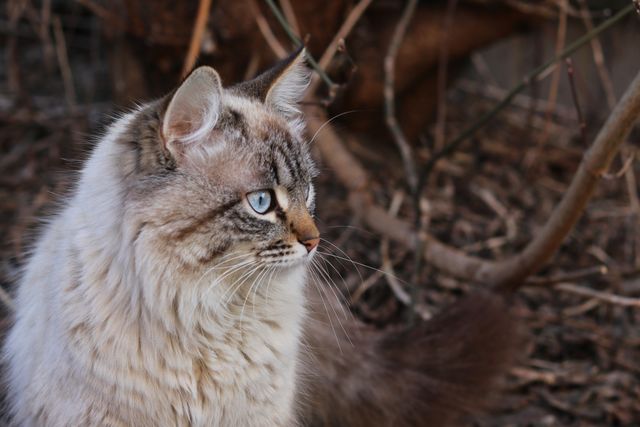
Siberian Cat for Allergy Sufferers: What the Research Shows
The evidence is thin. A 2017 University of Turin study, published in Veterinary Sciences, sequenced the genes behind the allergen in just four Siberian cats and compared them with other cats. The researchers found some gene variants seen only in Siberians, and one Siberian with two protein-changing mutations had a low saliva Fel d 1 level of 0.48 µg/mL.
However, the other two Siberians with saliva results had levels of 1.66 and 2.19 µg/mL, so the breed did not show consistently low levels. The authors called for more research and noted that the low-allergen idea comes largely from breeders. The study is a lead, not proof.
Researchers writing in The Conversation add an important point: Fel d 1 levels can vary by as much as 100-fold between individual cats. That means two Siberians from the same breeder could affect you very differently. Our view is that a Siberian cat for allergy sufferers should be judged one cat at a time, never by breed label alone.
| Claim you may hear | What the evidence says |
|---|---|
| “Siberians don’t make Fel d 1.” | False. WebMD says they still produce it, along with dander. |
| “Siberians make less Fel d 1.” | Possibly, on average. Evidence is limited to small studies and breeder reports. |
| “A low-allergen certificate guarantees no symptoms.” | No. Results come from small samples, and your own sensitivity matters. |
| “Long fur means more allergies.” | The ASPCA and ACAAI say coat length does not change allergen potential. |
Sources: Sartore et al. (2017), WebMD (reviewed by Amy Flowers, DVM), ASPCA and ACAAI.
Siberian vs Other Hypoallergenic Cat Breeds
The Siberian often appears on lists of hypoallergenic cat breeds alongside several others. These breeds are commonly marketed as cats for cat allergies, usually based on owner experience rather than strong science. Every one of them still produces Fel d 1.
| Breed | Why it is often suggested | Reality check |
|---|---|---|
| Siberian | Reported lower allergen levels | Still produces allergen and dander |
| Balinese | Often listed by breeders | Limited published evidence |
| Russian Blue | Often listed by breeders | Limited published evidence |
| Devon Rex and Cornish Rex | Short, curly coat sheds less | Shedding is not the main allergy trigger |
| Sphynx | Hairless | The Conversation notes Sphynx cats still make Fel d 1 |
| Bengal | Short, low-shedding coat | Allergen is in saliva and skin, not just fur |
General summary of common marketing claims, not proven results; individual cats vary.
If you are drawn to an energetic short-haired breed instead, our guide to Bengal cat behavior explains what living with one is really like.
Siberian Cat Breed Snapshot: Size, Coat, Personality and Price
Before choosing a Siberian cat for allergy sufferers, make sure the Siberian cat personality suits your home: these cats are big, athletic and sociable.
| Trait | Details |
|---|---|
| Origin | Russia; considered its national cat, with a history of at least 1,000 years (VCA) |
| Weight | 12 to 20 pounds; fit males can reach 25 pounds (VCA) |
| Lifespan | 12 to 15 years (VCA) |
| Coat | Dense triple coat built for cold climates (VCA, WebMD) |
| Shedding | Heavier in spring, lighter in summer (WebMD) |
| Grooming | Brush weekly; daily in shedding seasons (VCA) |
| Personality | Intelligent, playful and good with families and other pets (WebMD) |
| Health note | Ask breeders about heart screening; WebMD names HCM as a concern |
| Price | About $1,000 to $2,500 from a breeder (Hepper, not vet-reviewed) |
Sources: VCA Animal Hospitals, WebMD and Hepper. Prices vary by region and breeder.
Siberians can take up to five years to mature fully, according to VCA, and their thick coat needs regular brushing.
How to Test a Siberian Cat for Allergy Sufferers Before You Commit
Because every cat is different, the only reliable test is how your body reacts to the specific kitten. Our suggested plan:
- See an allergist first. ACAAI says a simple in-office test can confirm a cat allergy and help you judge your risk.
- Visit the breeder more than once. Spend at least an hour with the parents and the kitten you want, as general advice.
- Track your symptoms. Note any sneezing, itchy eyes or wheezing over the next day or two.
- Ask about saliva testing. Some breeders test cats for the allergen, but treat results as a guide, not a guarantee.
- Ask about a return policy. In our view, a responsible breeder should take a kitten back if allergies become unmanageable.
- Meet a Siberian owner before you buy, if possible.
As general advice, a Siberian kitten may produce less allergen than an adult, so meeting an adult Siberian as well gives you a more realistic picture of a Siberian cat for allergy sufferers in the long run.

Living With a Cat When You Have Allergies
Even with a Siberian cat for allergy sufferers, your home routine matters. The ASPCA and researchers in The Conversation recommend these steps.
| Step | Why it helps |
|---|---|
| Keep the cat out of your bedroom | The ASPCA says this gives you at least eight allergen-free hours a night |
| Use a HEPA vacuum and HEPA air purifier | Traps fine allergen particles instead of blowing them back out |
| Wash your hands after handling the cat | Stops allergen reaching your eyes and face |
| Limit fabrics and steam-clean what you keep | Carpets and drapes trap dander |
| Use low-dust litter and clean it often | Allergen is also found in urine |
| Brush the cat often (ideally by a non-allergic person) | Removes loose hair and dander; general advice |
Sources: ASPCA and The Conversation.
Diet may also help. In a 2019 study in Immunity, Inflammation and Disease, Purina researchers fed 105 cats a food containing an egg-based antibody that binds Fel d 1. Active allergen on the cats’ hair fell by an average of 47% after 10 weeks. The study was run by the manufacturer, so ask your allergist whether it is worth trying.

Cat Allergy Treatment: What a Doctor May Suggest
The American College of Allergy, Asthma and Immunology (ACAAI) says allergen immunotherapy, or allergy shots, can reduce sensitivity over time, and many patients notice fewer symptoms within the first six months. It also lists medicines such as steroid nasal sprays and eye drops.
The ASPCA notes that medication and immunotherapy often let people and their pets stay together. Ask a doctor or allergist which allergy medicine suits you rather than choosing on your own, especially if you have asthma.
Pet Care Tip: Before bringing a kitten home, deep-clean the room he will live in and set up a HEPA purifier. Starting with a low-allergen home gives a Siberian cat for allergy sufferers the best possible chance of working out.
When to get help right away: If you have wheezing, chest tightness, trouble breathing or swelling of the face or throat around a cat, seek emergency medical care or call 911. If your cat shows sudden breathing trouble, lethargy or stops eating, call your vet or a 24/7 emergency animal hospital.
7 questions to ask your breeder and allergist
- Can I visit the kitten and parents more than once?
- Have the parents been tested for Fel d 1, and by which lab?
- Are the parents screened for heart disease?
- What is your return policy if my allergies flare?
- Is my cat allergy mild enough to try living with a cat?
- Would allergy shots help me?
- Which medicines are safe with my asthma or other conditions?
Example Scenario (illustrative)
Daniel in Minneapolis had mild cat allergies and longed for a Siberian. His allergist confirmed a mild sensitivity, so he visited two breeders twice each. One kitten left him sneezing; another barely bothered him. He chose the second, kept his bedroom cat-free, bought a HEPA purifier and now manages with occasional antihistamines his doctor recommended.
| Myth | Fact |
|---|---|
| “Siberians are hypoallergenic.” | No cat is allergy-free; WebMD says Siberians still produce Fel d 1. |
| “It’s the fur that causes allergies.” | The main trigger is Fel d 1 from saliva and skin glands. |
| “If I’m fine with one Siberian, I’ll be fine with all.” | Fel d 1 can vary up to 100-fold between cats. |
| “Allergen leaves when the cat does.” | ACAAI says it can take 20 to 30 weeks to fall to cat-free levels. |
What most allergy sufferers get wrong
The biggest mistake is buying a kitten based on the breed label, then discovering the allergy too late. Rehoming is hard on everyone, including the cat. Test yourself with the actual kitten, involve an allergist, and agree on a return policy first. A Siberian cat for allergy sufferers works best when you plan ahead.
Siberian Cat for Allergy Sufferers: FAQs
Are Siberian cats good for allergy sufferers?
Some people with mild allergies react less to Siberians, possibly because many produce less of the allergen. Reactions vary, so test with the specific cat first.
Are there truly hypoallergenic cats?
No. The ASPCA and ACAAI both say no breed is allergy-free. Some cats simply cause milder reactions in some people.
What cat breeds are best for cat allergies?
Breeds often suggested include the Siberian, Balinese, Russian Blue, Devon Rex, Cornish Rex and Sphynx. All still produce Fel d 1.
What is cat dander?
Cat dander is tiny flakes of skin that carry allergens. It floats in the air and settles on furniture.
How much does a Siberian cat cost?
A typical Siberian cat price from breeders is about $1,000 to $2,500, according to Hepper; it varies by region.
Do Siberian cats shed a lot?
Yes. WebMD says they shed heavily in spring and more lightly in summer, so regular brushing is important.
How long does cat allergen stay in a home?
ACAAI says cat allergen can take 20 to 30 weeks to fall to the level of a cat-free home.
Final Verdict on a Siberian Cat for Allergy Sufferers
A Siberian cat for allergy sufferers can work for some people with mild allergies, but it is not hypoallergenic. Evidence for lower Fel d 1 is limited, and cats vary widely. See an allergist, spend time with the actual kitten, prepare a low-allergen home and agree a return policy before you commit.
Your next steps
- Book an allergy test.
- Visit two or three Siberian breeders, more than once.
- Set up a cat-free bedroom and a HEPA purifier.
Join us on the Pets Store Home Facebook page, and find more breed guides in our Cats section, plus our easy, low-maintenance pets if a cat is not right for you.
About the author: Written and reviewed by the Pets Store Home Editorial Team, pet owners who check every guide against trusted sources.
How we checked this guide: Allergy facts come from the ASPCA and ACAAI, and allergen biology from The Conversation. Siberian research comes from Sartore et al. (2017) and Satyaraj et al. (2019). Breed facts come from VCA and WebMD (reviewed by Amy Flowers, DVM), and pricing from Hepper.
This guide is general information, not medical advice; always follow your doctor and vet. It was rewritten in October 2026 and is reviewed every 12 months.
Last reviewed: October 2026.
Sources (accessed October 31, 2026)
- ASPCA: Are You Allergic to Your Pet?
- ACAAI: Pet Allergies
- The Conversation: Do Hypoallergenic Cats Even Exist? (2022)
- Sartore et al. (2017), Polymorphism Analysis of Ch1 and Ch2 Genes in the Siberian Cat, Veterinary Sciences
- Satyaraj et al. (2019), Immunity, Inflammation and Disease
- VCA Animal Hospitals: Siberian
- WebMD: What to Know About Siberian Cats (reviewed by Amy Flowers, DVM, 2024)
- Hepper: Siberian Cat Cost (2026)
[…] Which foreign pets are legal in Washington State? […]