
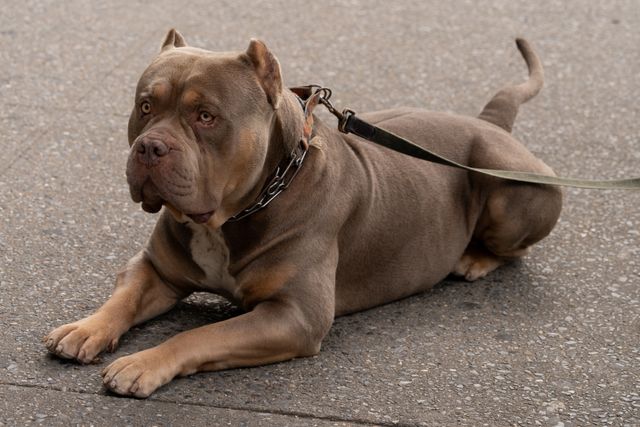
Tri Color American Bully: Essential Coat, Size and Care Guide (2026)
What is a tri color American Bully? It is an American Bully with three coat colors: a main color such as black, blue, chocolate or lilac, tan “points” on the cheeks, eyebrows, chest and legs, and white markings. The pattern is fully allowed under the United Kennel Club standard. A tri coat on its own does not change size, temperament or health.
Tri coats are among the most eye-catching in the breed, and breeders often market them as rare. Before you pay a premium, it helps to know how the pattern is inherited, which sizes exist, what health checks matter and what local rules may apply. This guide covers all of that in plain language.
Key takeaways
- A tri color American Bully has a base color plus tan points and white markings.
- The UKC accepts any color or pattern except merle, so tri is a standard, recognized coat.
- Tan points come from the agouti (A locus) gene, so two non-tri parents can sometimes produce tri puppies.
- The UKC recognizes four sizes: Pocket, Standard, Classic and XL.
- Ask breeders about hip screening and breathing, and check your city’s dog ordinances before you buy.
In this guide
Tri Color American Bully: The Short Answer
A tri color American Bully is simply an American Bully wearing a three-color coat. The breed itself was recognized by the United Kennel Club on July 15, 2013. Its UKC breed standard states that any color, color pattern or combination of colors is acceptable except merle. Here are the most common tri combinations you will see listed:
| Tri type | Base color | What it looks like |
|---|---|---|
| Black tri | Black | Glossy black with rich tan points and white chest or feet |
| Blue tri | Blue (diluted black) | Steel gray coat with softer tan points and white |
| Chocolate tri | Chocolate (liver) | Brown coat with lighter tan and white; nose usually brown |
| Lilac tri | Lilac (diluted chocolate) | Pale purple-gray coat with muted tan and white |
The amount of white varies a lot. Some dogs have only a white blaze and chest; others are mostly white with patches of base color and tan. Either way, the dog underneath is the same American Bully.
Pet Care Tip: Ask to see a puppy’s coat in daylight, not just in photos. Tan points on blue and lilac tris can look much brighter or duller depending on lighting and filters.
How the Tri Color Pattern Works
The tan points on a tri color American Bully come from the agouti gene, also called the A locus or ASIP. The UC Davis Veterinary Genetics Laboratory describes a black-and-tan pattern in which the back is dark and tan appears on the cheeks, eyebrows and undersides. That is the “points” part of a tri coat.
Three other pieces complete the picture:
- Base color genes decide whether the dark areas are black, chocolate, blue or lilac.
- White-spotting genes add the white chest, feet, blaze or larger white patches that make the coat “tri.”
- Dominant black (K locus) can hide the agouti pattern completely. UC Davis notes that agouti patterns only show in the absence of dominant black.
Can two non-tri parents have tri puppies?
Sometimes, yes. UC Davis lists the agouti variants as a series in which some patterns win out over others, and dominant black can mask them all. So a solid-looking parent may still carry the tan-point variant without showing it. When two carriers are bred, some puppies can come out tri. A coat-color DNA test is the most reliable way to know what a dog carries.
Tri color vs. “tri merle”: why it matters
Some sellers advertise “tri merle” bullies. Merle is a different gene, and the UKC lists merle as a disqualification, along with blue eyes. The UC Davis lab also warns that breeding two merle dogs can produce double merles, which may have hearing, eye and other defects. A true tri color American Bully carries no merle, so it avoids that merle-related risk.
If you already own a bully of unknown background, our guide to dog DNA test kits can help you choose a kit that reports coat-color genes, not just breed mix.
Tri Color American Bully Sizes: Pocket, Standard, Classic and XL
Every tri color American Bully also belongs to one of the breed’s size varieties. The UKC standard defines them by height at the withers, the top of the shoulders:
| Variety | Males | Females | Notes |
|---|---|---|---|
| 14 to under 17 in | 13 to under 16 in | Shortest variety | |
| Standard | 17–20 in | 16–19 in | Mid-height variety |
| Classic | 17–20 in | 16–19 in | Same height as Standard, lighter frame |
| XL | Over 20 to 23 in | Over 19 to 22 in | Tallest variety |
Source: UKC American Bully standard, effective January 1, 2025. The UKC standard gives heights only, not weights.
The UKC also lists “overly massive dogs” and dwarfism among disqualifications. That matters for buyers, because extreme, exaggerated bodies are not what the standard asks for, whatever the coat color.
Temperament and Family Life
The UKC describes the American Bully as primarily a companion dog: confident and energetic, with a gentle, friendly manner despite its powerful build. The standard calls aggression toward people highly undesirable and uncharacteristic. A tri coat changes none of this. Temperament comes from genetics, early socialization and training.
In daily life, most bullies want to be close to their people. Plan on daily walks, short play sessions and reward-based training from puppyhood. A strong young dog that never learned leash manners is much harder to manage as a heavy adult than as a puppy.
Socialization matters just as much. Gentle, positive meetings with different people, calm dogs, sounds and places during puppyhood help a bully grow into the steady companion the breed standard describes. Puppy classes that use rewards rather than force are a good start, and they also give you support if problems appear later.
Coat care for a tri color American Bully
The short, smooth coat is easy to keep. A weekly brush with a rubber curry or soft bristle brush lifts loose hair and spreads skin oils, and a bath every few weeks, or when dirty, is usually enough. Check the white areas and skin folds now and then for redness or irritation, and ask your vet if anything looks sore. Tan points on puppies can shift slightly in shade as the adult coat comes in, so expect a few changes during the first year.
Health and Daily Care
No health problem is linked to the tri pattern itself. The things to watch are breed-wide and size-related.
Hips and joints
VCA Animal Hospitals describes hip dysplasia as a genetic disease seen mainly in large dogs, including bulldogs. Signs include limping, a wobbly gait and reluctance to climb stairs. VCA reports that large-breed puppies fed freely develop hip dysplasia at twice the rate of those fed measured meals. Keep your puppy lean and ask breeders for hip screening results on both parents.
Breathing and heat
Some bullies have shorter, broader muzzles closer to bulldog types. VCA lists bulldogs and boxers among breeds prone to brachycephalic airway syndrome, with noisy breathing and snoring that often worsen in hot, humid weather. Extra weight makes it worse. Use a harness rather than a collar, exercise in cooler hours and choose a puppy whose parents breathe quietly at rest.
When to call a vet: Loud breathing at rest, gums turning blue or gray, collapse after exercise, or limping that lasts more than a day needs a veterinarian. In heat, move your dog to shade and call a 24/7 emergency animal hospital right away if breathing does not settle.
Buying or Adopting: Price, Papers and Local Rules
Breeders often charge more for tri puppies because the pattern is popular. Prices vary widely by breeder, size and pedigree, and our separate guide to tri-color American Bully prices breaks down what buyers actually pay. Whatever the price, the coat should never be the main reason to choose a breeder.
Check local rules before you commit. The American Veterinary Medical Association opposes breed-specific legislation, but it notes that several US cities, towns and states have adopted breed-specific measures, with “pit bull” types the most common target. Rules vary by state, county and city, so check with your local animal control office and, if you rent, your landlord and insurer.
Before you pay a deposit: 7 questions to ask
- Can I see coat-color DNA results for both parents, showing no merle?
- Have both parents had their hips screened, and can I see the results?
- Do the parents breathe quietly at rest and after play?
- Which size variety are the parents, and how tall are they?
- Can I meet the mother and see where the puppies are raised?
- Which registry are the puppies registered with?
- Will you take the dog back at any age if I can no longer keep it?
Example Scenario (illustrative)
Luis in San Antonio, Texas, falls for a blue tri puppy listed as “rare tri merle.” After reading the UKC standard, he learns that a true tri color American Bully carries no merle, so he asks the breeder for coat DNA results. The test confirms merle, so Luis passes. A month later he adopts a two-year-old black tri from a local rescue, after checking his city’s dog ordinance and his renter’s insurance first.
| Common mistake | Why it matters | Better approach |
|---|---|---|
| Paying extra for “rare” color | Tri is a recognized, widely bred pattern | Pay for health testing, not color |
| Buying a “tri merle” | Merle is a UKC disqualification; merle-to-merle risks | Ask for DNA proof of no merle |
| Choosing the most extreme build | “Overly massive” is a disqualification; joint and breathing strain | Favor a balanced, athletic dog |
| Skipping local rule checks | Housing or city restrictions may apply | Check city, landlord and insurer first |
What most owners get wrong
Many buyers treat coat color as a mark of quality. It is not. A tri coat tells you about a handful of pigment genes, nothing about hips, breathing or temperament. The best tri color American Bully is the one with healthy, even-tempered parents. For another popular coat, compare our guide to blue American Bully puppies.
Tri Color American Bully FAQs
What makes an American Bully tri color?
Three colors in one coat: a base color, tan points on the face, chest and legs, and white markings. The tan points come from the agouti gene.
Is a tri color American Bully rare?
Tri is popular and widely bred, so it is not truly rare. Some combinations, such as lilac tri, tend to be less common because they need several recessive color genes together.
Is a tri coat recognized by the UKC?
Yes. The UKC accepts any color or pattern in the American Bully except merle, so tri coats are fully recognized.
Do tri color bullies have more health problems?
No health problem is linked to the tri pattern itself. Watch for breed-wide issues such as hip dysplasia and, in shorter-muzzled dogs, breathing trouble in heat.
How big do American Bullies get?
It depends on the variety. UKC heights run from 13 inches for small Pocket females to 23 inches for the tallest XL males.
What is the difference between tri and tri merle?
Tri has tan points and white. Tri merle adds the merle pattern, which the UKC disqualifies and which carries health risks when two merles are bred.
Final Verdict: Is a Tri Color American Bully Right for You?
A tri color American Bully is a standard, UKC-accepted coat on a friendly, people-focused companion breed. Choose the right size variety, insist on hip and breathing checks, avoid anything labeled merle, and confirm your local rules. Do that, and the striking three-color coat is simply a bonus on top of a well-bred, well-raised family dog.
Your next steps
- Check your city’s dog ordinance and your housing rules.
- Compare costs in our tri-color American Bully price guide.
- Explore more breed guides in our Dogs section.
Share your tri bully photos with other pet parents on our Pets Store Home Facebook page.
About the author: Written and reviewed by the Pets Store Home Editorial Team, a group of pet owners and animal lovers who check every guide against trusted US veterinary and animal-welfare sources. This article is general information, not a substitute for professional veterinary advice. Always talk to your veterinarian about your own pet’s health.
How we checked this guide: Breed recognition, sizes, colors and disqualifications come from the UKC American Bully standard (effective January 1, 2025). Coat genetics come from the UC Davis Veterinary Genetics Laboratory. Hip and breathing information comes from VCA Animal Hospitals, and local-rule guidance from the American Veterinary Medical Association. We review this article every 12 months, or sooner if guidance changes.
Last reviewed: October 2026. Sources: UKC, UC Davis VGL, VCA, AVMA.
Sources (accessed October 22, 2026)
- United Kennel Club: American Bully Breed Standard
- UC Davis Veterinary Genetics Laboratory: Agouti (A Locus)
- UC Davis Veterinary Genetics Laboratory: Merle
- VCA Animal Hospitals: What Is Hip Dysplasia?
- VCA Animal Hospitals: Brachycephalic Airway Syndrome in Dogs
- American Veterinary Medical Association: Why Breed-Specific Legislation Is Not the Answer
[…] Which foreign pets are legal in Washington State? […]