
How big is a full grown mini Goldendoodle? Under the Goldendoodle Association of North America’s size guidelines, a Miniature stands over 14 inches but under 17 inches at the shoulder and typically weighs about 26 to 35 pounds. These are guidelines, not guarantees. Your dog’s adult size depends on its parents, genetics, and individual growth, and some “minis” end up smaller or larger.
The Goldendoodle is a cross between a Golden Retriever and a Poodle. It isn’t an AKC-recognized purebred, so there’s no single official adult size, and breeders don’t all use “mini” the same way. This guide explains the size ranges, when growth slows, what affects adult size, and how to keep your dog healthy.
Key takeaways
- GANA’s Miniature category is over 14 to under 17 inches tall, typically 26–35 pounds.
- GANA says height, not weight, determines the size category.
- Size is set at adulthood, and a breeder’s puppy estimate is an educated guess.
- PetMD says small dogs are typically fully grown at 9–12 months and medium dogs at 12–15 months, but timing varies.
- No dog is 100% allergen-free, and Goldendoodle coats and shedding vary.
- Ask breeders for parent health-screening records, since mixes can inherit problems from either parent.
In this guide
- How big is a full grown mini Goldendoodle?
- Goldendoodle size categories
- When is a mini Goldendoodle fully grown?
- What affects adult size
- How to estimate your puppy’s adult size
- Males vs. females
- Healthy body condition
- Exercise and enrichment
- Grooming and shedding
- Health and responsible ownership
- FAQs
- Final verdict
How Big Is a Full Grown Mini Goldendoodle?
The Goldendoodle Association of North America (GANA) sorts Goldendoodles into four size categories. A full grown mini Goldendoodle under GANA’s guidelines is over 14 inches but under 17 inches at the withers, the top of the shoulders, and typically weighs 26 to 35 pounds.
GANA’s breed standard adds that height will be the determining factor for size, since weights can fluctuate. So a dog that’s a little heavier or lighter than 26 to 35 pounds can still fall in the mini category by height.
Goldendoodle Size Categories
| GANA size | Height at withers | Typical weight |
|---|---|---|
| Petite | Below 14 inches | 25 lb or less |
| Miniature | Over 14 to under 17 inches | 26–35 lb |
| Medium | Over 17 to under 21 inches | 36–50 lb |
| Standard | Over 21 inches | 51 lb or more |
GANA calls its smallest category “Petite,” and some breeders use other names, such as “Petite Mini.” Breeders may also use their own size labels, so always ask what height and weight range a breeder means by “mini.”
Guidelines, not guarantees: GANA notes that a dog’s size category is set at adulthood and that a breeder’s puppy estimate is “an educated guess.” Your puppy’s final size may vary somewhat from what was predicted.
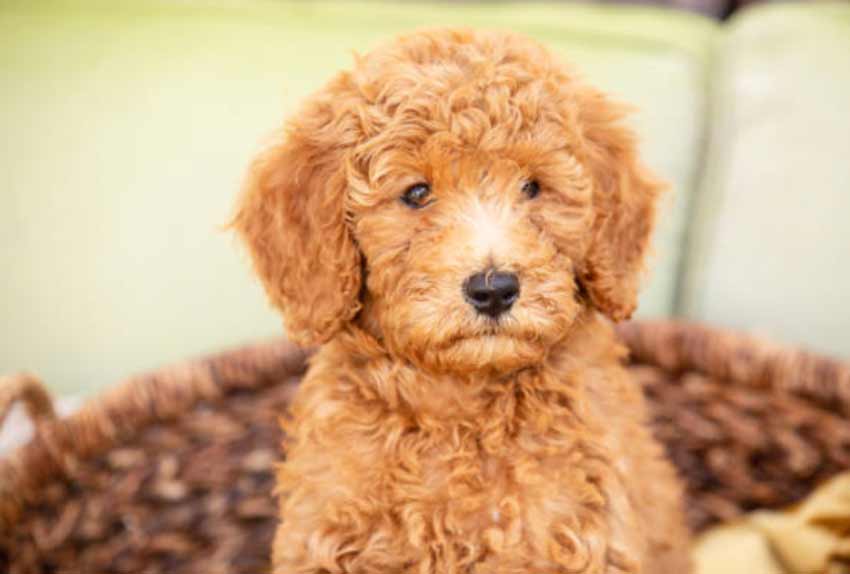
When Is a Mini Goldendoodle Fully Grown?
There’s no single age when every mini Goldendoodle stops growing. PetMD’s veterinarian-written guide says small dogs (about 12–24 pounds) are typically fully grown at 9–12 months, and medium dogs (about 24–59 pounds) at 12–15 months. Since many minis fall near the border of those weight ranges, it’s reasonable to expect most growth in the first year or so, but individual timing varies.
Height usually settles before a dog finishes filling out, so a young adult may still gain some muscle and body shape. PetMD explains that a puppy stops growing when the growth plates in its bones seal, which a vet can check with X-rays if there’s a question. For a deeper look at the timeline, see our guide on when a mini Goldendoodle is full grown.
What Affects the Size of a Full Grown Mini Goldendoodle?
- Both parents’ sizes: Minis are often bred from a Golden Retriever or Goldendoodle crossed with a Miniature Poodle, or from two smaller Goldendoodles. PetMD notes that mini size depends on whether the dog has a Miniature Poodle parent. The AKC recognizes the Poodle in Standard, Miniature, and Toy sizes, which is why the Poodle parent’s size matters so much.
- Genetics: Puppies in one litter can inherit different traits and end up different sizes.
- Generation or cross: F1, F1B, and multigenerational Goldendoodles mix parent breeds differently, which can affect size and coat.
- Nutrition: PetMD says dogs fed too little or too much can have unwanted changes in their growth rate, and overfeeding can stress bones and joints.
- Overall health: illness or other health problems can affect growth.
Important: Never feed less to try to keep a puppy small. Underfeeding can harm growth and health. Feed a complete puppy diet in the amounts your vet recommends.
How to Estimate Your Puppy’s Adult Size
- Ask about both parents. Their adult heights and weights are the best clue to a full grown mini Goldendoodle’s likely size.
- Ask about past litters from the same pairing, if any.
- Track your puppy’s growth. Weigh and measure at the same time each month and share the records with your vet.
- Treat estimates as estimates. GANA calls a breeder’s prediction “an educated guess,” and the final size may vary.
Do Male Mini Goldendoodles Get Bigger Than Females?
We couldn’t find a reliable source that gives a typical size difference between male and female mini Goldendoodles. GANA’s size categories are the same for both sexes. Some males may end up larger, but the parents’ sizes and genetics matter far more than sex, so don’t choose a puppy based on sex alone if size matters to you.
Example Scenario (illustrative)
Jordan in Colorado brings home a puppy sold as a “mini.” At 10 months, the dog measures 17.5 inches at the shoulder, putting it in GANA’s Medium range. Jordan checks with the vet, who confirms the dog is healthy and at a good body weight. It’s simply a bit bigger than the breeder predicted, which can happen. This is an illustration, not a real case.
Healthy Body Condition: Small vs. Underweight
A naturally small full grown mini Goldendoodle is different from an underweight one. A healthy dog should have ribs you can feel easily but not see sharply, a visible waist from above, and steady energy. Your vet can show you how to check body condition at home, especially under a fluffy coat that can hide weight changes.
Talk to your veterinarian if your puppy seems to be growing unusually slowly or quickly, gains or loses weight unexpectedly, or seems unwell. PetMD notes that a pup that isn’t growing normally, is gaining weight too quickly, or seems to have bone or joint pain may have a growth problem.
Exercise and Enrichment for an Adult Mini Goldendoodle
PetMD says Goldendoodles of both sizes need 30–60 minutes of physical exercise per day. Individual needs vary with age, health, and energy level.
- Puppies: keep activity age-appropriate, with short play sessions rather than long runs.
- Build up gradually: increase walk length and intensity over time.
- Train regularly: short, positive training sessions help with manners and focus.
- Add mental enrichment: puzzle feeders, sniff walks, and new tricks keep a smart dog busy.
Grooming and Shedding
GANA recognizes three coat types: curly, wavy, and straight. Curly and wavy coats can mat if they’re not brushed often. PetMD recommends brushing at least a few times a week and professional grooming every four to eight weeks.
About allergies: PetMD notes that Goldendoodles have a reputation as “hypoallergenic” because many don’t shed much, but no dog is 100% allergen-free. Coat type and shedding vary from dog to dog, even within a litter. If you have allergies, spend time with the specific dog, and its parents if possible, before you commit.
Don’t forget hygiene areas. Our guide on trimming the hair around a dog’s private areas explains the sanitary trim many groomers include.
Health and Responsible Ownership
Being a mix doesn’t guarantee better health. Goldendoodles can inherit health problems from either parent breed. PetMD lists concerns including:
- Hip dysplasia
- Eye conditions such as glaucoma, cataracts, and progressive retinal atrophy (PRA)
- Subvalvular aortic stenosis (SAS), a heart condition
PetMD gives Goldendoodles a lifespan of about 10–15 years. Ask breeders for appropriate health-screening records for both parents, and work with your vet on preventive care such as vaccines, parasite prevention, dental care, and regular checkups.
Full Grown Mini Goldendoodle: FAQs
How big is a full grown Mini Goldendoodle?
Under GANA’s guidelines, a Miniature Goldendoodle stands over 14 inches but under 17 inches at the shoulder. Individual dogs can fall outside that range, and breeders may define “mini” differently.
How much does a full grown Mini Goldendoodle weigh?
GANA says a Miniature typically weighs 26 to 35 pounds. Height, not weight, sets the category, so a healthy mini can be a little lighter or heavier.
At what age is a Mini Goldendoodle fully grown?
Timing varies. PetMD says small dogs are typically fully grown at 9–12 months and medium dogs at 12–15 months. Many minis reach adult height within the first year or so, then keep filling out.
Can a Mini Goldendoodle grow bigger than expected?
Yes. GANA calls a breeder’s size prediction an educated guess, and a dog’s final size may vary. Some puppies sold as minis end up in the Medium range.
How can I estimate my puppy’s adult size?
Ask about both parents’ adult heights and weights and any past litters, then track your puppy’s growth with your vet. Treat any prediction as an estimate, not a guarantee.
Do male Mini Goldendoodles get bigger than females?
Some may, but we couldn’t find reliable data on a typical difference. GANA uses the same size categories for both sexes, and the parents’ sizes matter more.
How much exercise and grooming does an adult Mini Goldendoodle need?
PetMD suggests 30–60 minutes of exercise a day, brushing at least a few times a week, and professional grooming every four to eight weeks. Needs vary by dog and coat type.
Final Verdict: Full Grown Mini Goldendoodle
A full grown mini Goldendoodle under GANA’s guidelines stands over 14 to under 17 inches tall and typically weighs 26 to 35 pounds, but those are guidelines, not promises. The parents’ sizes and genetics matter most. Feed a complete diet, keep your dog lean and active, brush that coat often, and ask your vet about anything unusual.
Your next steps
- Ask your breeder for both parents’ adult heights, weights, and health records.
- Read our timeline guide on when a mini Goldendoodle is full grown.
- Browse more breed and care guides in our dogs section.
Share your Doodle’s growth photos with our community on Facebook.
About the author
Written and reviewed by the Pets Store Home Editorial Team: pet owners and animal lovers who check every guide against trusted US veterinary and animal-welfare sources. This article is general information, not a substitute for professional veterinary advice. Always talk to your veterinarian about your own pet’s health.
How we checked this guide: We used size guidelines and the breed standard from the Goldendoodle Association of North America, and health, grooming, exercise, and growth information from PetMD (reviewed by veterinarians). We review this article every 12 months, or sooner if guidance changes.
Last reviewed: October 2026
Sources
- Goldendoodle Association of North America – Sizes (accessed Oct 2026)
- Goldendoodle Association of North America – Breed Standard (accessed Oct 2026)
- PetMD – Goldendoodle (reviewed by Jo Cornett, DVM; accessed Oct 2026)
- PetMD – When Do Dogs Stop Growing? (Sandra C. Mitchell, DVM, DABVP; accessed Oct 2026)
- American Kennel Club – Poodle (Miniature) (accessed Oct 2026)
[…] Which foreign pets are legal in Washington State? […]