
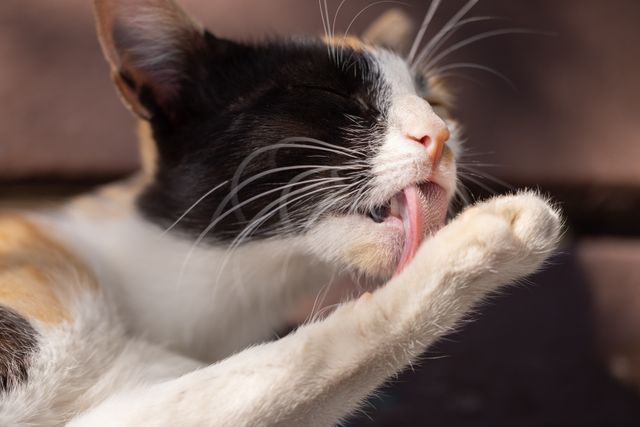
Why is my cat licking me? Most of the time, it’s a sign of affection and trust. Cats lick the people they’re bonded with the same way they groom other cats they like. Your cat may also be marking you as “family,” enjoying the salty taste of your skin, asking for attention, or calming itself when stressed. Licking that suddenly increases, or comes with other changes, is worth a vet check.
You’re relaxing on the couch, and your cat climbs onto your lap and starts licking your hand with a tongue that feels like sandpaper. It’s sweet, a little strange, and sometimes ends with a nip. If you’ve ever wondered, “Why is my cat licking me?”, you’re not alone. This guide explains the main reasons for cat licking, why a cat’s tongue feels so rough, why some cats lick and then bite, when licking becomes excessive, and how to gently stop it if it bothers you.
Key takeaways
- Licking is usually a friendly, social behavior, similar to cats grooming each other.
- Other common reasons include scent marking, salty skin, lotion, attention-seeking, and stress relief.
- A cat’s tongue feels rough because it’s covered in tiny, stiff, hooked spines made of keratin.
- Licking followed by a bite often means your cat is overstimulated and wants you to stop.
- Never let your cat lick skin where you’ve applied medicated creams. Some are dangerous to cats.
- Sudden or constant licking, or overgrooming with bald spots, needs a vet visit.
- To reduce licking, redirect gently. Never punish your cat.
In this guide
Why Is My Cat Licking Me? The Short Answer
Why is my cat licking me so often, you might ask? In most cases, your cat licks you because it sees you as part of its social group. Cats that are friendly with each other often groom one another, a behavior called allogrooming. When your cat licks your hand, arm, or face, it’s usually treating you like a trusted companion.
Still, licking can mean different things depending on the moment. Pet insurer Pumpkin lists reasons ranging from affection and grooming to taste, attention, stress, and even a polite request to stop petting. The trick is to look at the context:
| When your cat licks you… | It probably means… |
|---|---|
| While relaxed, purring, or kneading | Affection and bonding |
| Right after you exercise or cook | Salt or food taste on your skin |
| When you’re busy on your phone or laptop | A request for attention |
| With a twitching tail and flattened ears | Overstimulation; time to stop petting |
| After a move, new pet, or other change | Stress or self-soothing |
Why Does a Cat’s Tongue Feel So Rough?
Why is my cat licking me with such a scratchy tongue? If cat licking feels like fine sandpaper, there’s a good reason. A cat’s tongue is covered in tiny, backward-facing spines called papillae. A 2018 study in the Proceedings of the National Academy of Sciences by Georgia Tech researchers Alexis Noel and David Hu found that these spines:
- are made of keratin, the same tough material as your fingernails,
- are far stiffer than the soft tongue underneath,
- are shaped like tiny scoops with a hollow tip that holds saliva, and
- are long enough to reach down through the fur to the skin.
That design works like a built-in comb. It pulls out loose hair and spreads saliva deep into the coat, which helps cats stay clean and may even help them cool off. On your skin, though, the same hooked spines create that scratchy feeling. It doesn’t mean your cat is being rough on purpose.
Why Does My Cat Lick Me? 7 Common Reasons
So, why does my cat lick me rather than just sitting nearby? These are the most common explanations described by Pumpkin and other pet experts. Many cats lick for more than one reason.
1. Affection and bonding
Licking is one of the clearest ways a cat shows it trusts you. Mother cats lick their kittens to clean and comfort them, and many cats keep that habit as adults with the people they love. If your cat licks you while purring, slow-blinking, or kneading, take it as a compliment.
2. Grooming you like family
Cats that are bonded often groom each other’s heads and necks. When your cat licks your hair or face, it may be “grooming” you as it would a feline friend. In your cat’s eyes, it’s doing you a favor.
3. Scent marking
Cats rely heavily on scent to recognize their family. Pumpkin notes that licking may be a way of signaling that you belong to your cat. You’ll often see this alongside cheek rubbing and head bunting, which also leave your cat’s scent on you.
4. The taste of salt, food, or lotion
Why is my cat licking me right after a shower or workout? Sometimes the answer is simple: you taste interesting. Sweat leaves salt on your skin, and traces of food, drinks, or lotion can attract a curious tongue. This is why some cats lick you after a workout, after you cook, or after a shower when you’ve used body cream. Be careful with this one, since some skin products can be harmful to cats (see the safety section below).
5. Attention-seeking
Cats learn quickly what gets a reaction. If licking your hand makes you stop scrolling and pet them, they’ll do it again. Pumpkin points out that licking can be a request to be petted, fed, played with, or picked up. Often, it’s your cat’s way of saying, “Notice me.”
6. Stress or self-soothing
Why is my cat licking me more since we moved? Licking can be calming. Pumpkin notes that some cats lick more when anxious, such as after a move. Changes like a new baby, a new pet, a different work schedule, or loud construction can all trigger extra licking. If your cat licks you more during stressful times, it may be comforting itself.
7. Kittenhood habits
Kittens that were separated from their mother too early may suckle or lick on blankets, clothing, or people for comfort. Pumpkin describes this as a nursing-like behavior. It’s usually harmless, but talk to your vet if it becomes constant or your cat chews and swallows fabric.
Pet Care Tip: Keep a short note for a week of when your cat licks you: the time, where you were, and what happened before. Patterns, such as licking every time you open your laptop, usually reveal the reason quickly.
Why Does My Cat Lick and Bite Me?
Lick, lick, lick… nip. This combination confuses many owners. There are two common explanations.
Gentle grooming nibbles. When cats groom each other, they sometimes use their front teeth to work through tangles. A soft nibble mixed into licking, with a relaxed body and no hissing, is often just part of the grooming routine.
Overstimulation. The ASPCA describes petting-induced aggression, where a cat that was enjoying attention suddenly nips and runs off. Behaviorists think repeated stroking can become unpleasant or irritating. Pumpkin also notes that licking itself can be a warning before a bite. Watch for the ASPCA’s warning signs:
- tail twitching or flicking,
- ears flattening or rotating back and forth,
- quickly turning the head toward your hand,
- restlessness, and
- dilated pupils.
The ASPCA’s advice is simple: when you see these signs, stop petting. Let your cat walk away, and keep future petting sessions shorter.
Young cats may also lick and bite during play. The ASPCA explains that rough play is normal in kittens and cats under two, and that kittens weaned early may not learn bite control. Use wand toys rather than your hands for play, and never encourage your cat to attack fingers or toes.
Is It Safe When My Cat Licks Me?
For most healthy people, an occasional lick is harmless. The bigger risk is what’s on your skin.
Warning: medicated creams
The FDA has warned that cats became ill or died after their owners used prescription pain creams containing flurbiprofen on their own skin. According to AVMA News, three cats died and two needed treatment for kidney failure. Even small amounts can be dangerous. Keep medicated creams away from pets, ask your doctor whether to cover the treated area, and call your vet if your cat licks a product and seems unwell.
Other simple precautions:
- Don’t let your cat lick skin with lotion, sunscreen, essential oils, or medicated products on it.
- Keep cuts and scrapes covered, and don’t let your cat lick open wounds.
- Avoid letting cats lick your face if you have a weakened immune system, and ask your doctor about any concerns.
- Keep your cat on flea prevention, which helps protect both of you from flea-borne illness.
When Cat Licking Becomes Excessive
Why is my cat licking me nonstop, and should I worry? Licking you now and then is normal. Constant licking, licking that suddenly increases, or a cat that overgrooms itself can point to a medical or behavioral problem.
Veterinary behaviorists writing for VCA Animal Hospitals explain that repetitive behaviors such as overgrooming can start as a way of coping with conflict, frustration, or anxiety, and can become compulsive over time. They stress that medical causes, including pain, skin disease, and allergies, must be ruled out first.
According to Angell Animal Medical Center (MSPCA-Angell), allergies are the most common cause of overgrooming. Other causes include fleas, mites, ringworm, skin lesions, pain from arthritis or a bladder problem, and hyperthyroidism.
| See your vet if you notice… | Why it matters |
|---|---|
| Bald patches, or short, stubbly fur | A classic sign of overgrooming |
| Red, scabby, or raw skin | Possible allergies, parasites, or infection |
| Licking focused on one spot, such as the belly or a joint | May point to pain or a bladder problem |
| Licking that interrupts eating, sleeping, or play | Can signal a compulsive behavior |
| Sudden change in licking along with weight loss, hiding, or appetite changes | May be a sign of illness or stress |
Your vet may check for fleas, recommend skin tests or a diet trial, or run blood work. If a behavior problem is the cause, your vet may suggest a behavior plan or refer you to a veterinary behaviorist. Any medication should be chosen and dosed by your vet.
How to Gently Stop Your Cat From Licking You
Once you know why your cat is licking you, you can decide whether to change it. Why is my cat licking me even when I pull away? Often because it’s still getting attention. If licking bothers you, you can redirect it without hurting your bond. VCA’s behaviorists recommend reward-based training and avoiding punishment, since punishment can add to stress and make repetitive behaviors worse. Try these steps:
- Redirect calmly. When licking starts, gently move your hand and offer a toy, a scratching post, or a lick-safe chew toy instead.
- Walk away quietly. If licking continues, stand up and leave for a minute. No scolding, just less attention.
- Reward the behavior you want. Praise or pet your cat when it sits calmly beside you.
- Schedule play. Short, daily play sessions with wand toys burn off energy and meet your cat’s need for attention.
- Keep a routine. VCA notes that a predictable daily schedule helps reduce stress-driven behaviors.
- Add enrichment. Puzzle feeders, window perches, and rotating toys keep your cat busy.
- Cover up. Wear long sleeves or use a light blanket on your lap during cuddle time.
- Watch body language. Stop petting at the first sign of overstimulation to prevent lick-and-bite moments.
Example Scenario (illustrative)
Maya in Texas notices her cat, Pepper, has started licking her arm every evening since she began working from home. She keeps a simple log and realizes it happens whenever she’s on video calls. Maya schedules a 10-minute wand-toy session before her afternoon meetings and leaves a puzzle feeder near her desk. Within two weeks, the licking drops off, and Pepper naps on the window perch instead.
Why Is My Cat Licking Me? FAQs
Why does my cat lick me and not other people?
Cats usually groom the individuals they’re most bonded with. If your cat licks only you, it likely sees you as its closest companion.
Why does my cat lick me when I pet it?
It may be returning the affection by grooming you back. If licking comes with a twitching tail or flattened ears, it may be asking you to stop.
Why does my cat lick and bite me?
Soft nibbles can be part of grooming, but a lick followed by a firmer bite often means overstimulation. The ASPCA advises stopping petting when you see warning signs.
Why does my cat lick my hair?
Your cat may be grooming you as it would another cat. Shampoo or hair products can also attract it, so keep products out of reach.
Is cat licking a sign of stress?
It can be. Some cats lick more after changes at home. If licking is constant or your cat overgrooms itself, ask your vet to rule out medical causes.
Is it bad to let my cat lick me?
Occasional licking is usually fine for healthy people. Don’t let your cat lick wounds, lotions, or medicated creams, which can be harmful to cats.
Why is my cat licking me all of a sudden?
A sudden change can follow stress, a new routine, or a product on your skin. If it comes with other changes in behavior or health, see your vet.
Final Verdict: Why Is My Cat Licking Me?
If you’ve been asking “why is my cat licking me,” the answer is usually a happy one: your cat trusts you and treats you like family. Licking can also be about taste, attention, scent, or stress, and a lick followed by a bite often means “that’s enough petting.” Keep creams and lotions away from your cat, redirect gently if licking bothers you, and see your vet if licking becomes constant or your cat starts overgrooming.
Your next steps
- Keep a one-week licking log to spot patterns.
- Add a daily wand-toy play session.
- Read more cat behavior and care guides in our cat care section.
Does your cat groom you too? Share your story with other owners on our Facebook page.
About the author
Written and reviewed by the Pets Store Home Editorial Team: pet owners and animal lovers who check every guide against trusted US veterinary and animal-welfare sources. This article is general information, not a substitute for professional veterinary advice. Always talk to your veterinarian about your own pet’s health and behavior.
How we checked this guide: We used the ASPCA, VCA Animal Hospitals, the FDA, AVMA News, MSPCA-Angell, a 2018 PNAS study on cat tongues, and Pumpkin’s guide to cat licking. We review this article every 12 months, or sooner if guidance changes.
Last reviewed: October 2026
Sources
- ASPCA – Aggression in Cats (accessed Oct 2026)
- VCA Animal Hospitals – Compulsive Disorders in Cats (accessed Oct 2026)
- MSPCA-Angell – Overgrooming Cats (accessed Oct 2026)
- FDA – Pet Exposure to Prescription Topical Pain Medications Containing Flurbiprofen (accessed Oct 2026)
- AVMA News – FDA Warns of Pet Illnesses From Topical NSAIDs (accessed Oct 2026)
- Noel & Hu (2018), PNAS – Cats Use Hollow Papillae to Wick Saliva Into Fur (PDF) (accessed Oct 2026)
- Pumpkin – Why Does My Cat Lick Me? (accessed Oct 2026)
[…] Which foreign pets are legal in Washington State? […]