
Pitbull Dachshund Dog (Doxie Pit): Size, Temperament, Back Health and Care (2026)
What is a pitbull dachshund dog? A pitbull dachshund dog, often called a Doxie Pit or Doxbull, is a cross between a pit bull-type dog and a Dachshund. Dogster lists 12 to 18 inches, 15 to 35 pounds and a 12 to 15 year lifespan. Many may also share the Dachshund’s high risk of spinal disc disease (IVDD).
Picture a pit bull’s broad chest and big grin on a longer, lower body, and you have one common Doxie Pit look. These mixes can be loyal, playful companions, but their build matters more than their looks. This guide covers size, temperament and care, and explains the back health research every pitbull dachshund dog owner should know before bringing one home.
Key takeaways
- The Doxie Pit is a crossbreed with no breed standard, so looks and size vary.
- Dogster lists 15 to 35 pounds and 12 to 18 inches for this mix.
- Chewy says up to 24% of Dachshunds may develop IVDD, a spinal disc disease.
- The gene behind that risk is dominant, so one copy is enough to raise it.
- Ramps, a lean weight and no jumping are the core of back-friendly care.
In this guide
What Is a Pitbull Dachshund Dog?
A pitbull dachshund dog is any dog with one pit bull-type parent and one Dachshund parent. You will see it listed as a Doxie Pit, Doxbull, Dox-Bull, Dachshund pitbull mix, pitbull dachshund mix or pitbull wiener (often spelled weiner) dog. Because it is a crossbreed, there is no breed standard, and puppies from the same litter can look and act quite differently.
Breed labels are often guesses, especially in shelters. In a University of Florida study of 120 shelter dogs, staff labels of “pit bull” were wrong up to 48% of the time, depending on the assessor. A dog DNA test kit can confirm ancestry and, with some tests, screen for genes linked to back problems.
| Trait | American Pit Bull Terrier | Dachshund (standard) |
|---|---|---|
| Height | 17 to 21 in. | 8 to 9 in. |
| Weight | 30 to 60 lbs | 16 to 32 lbs |
| Lifespan | 12 to 14 years | 12 to 16 years |
| Exercise notes | Very high energy; 60 to 90 minutes a day | Avoid rough play and jumping (Chewy) |
| Key health watch | Hip and elbow dysplasia, skin allergies | IVDD (spinal disc disease) |
Sources: Hill’s Pet Nutrition (American Pit Bull Terrier) and Chewy (Dachshund, reviewed by Barri Morrison, DVM). Miniature Dachshunds weigh 11 pounds or less.

Pitbull Dachshund Dog Size and Appearance
Dogster lists 12 to 18 inches and 15 to 35 pounds for the Dachshund pitbull mix. Because the parents range from an 11-pound miniature Dachshund to a 60-pound pit bull, some dogs will fall outside that range. Our suggestion is to look at the adult size of both parents, or ask your vet to estimate adult weight as your puppy grows.
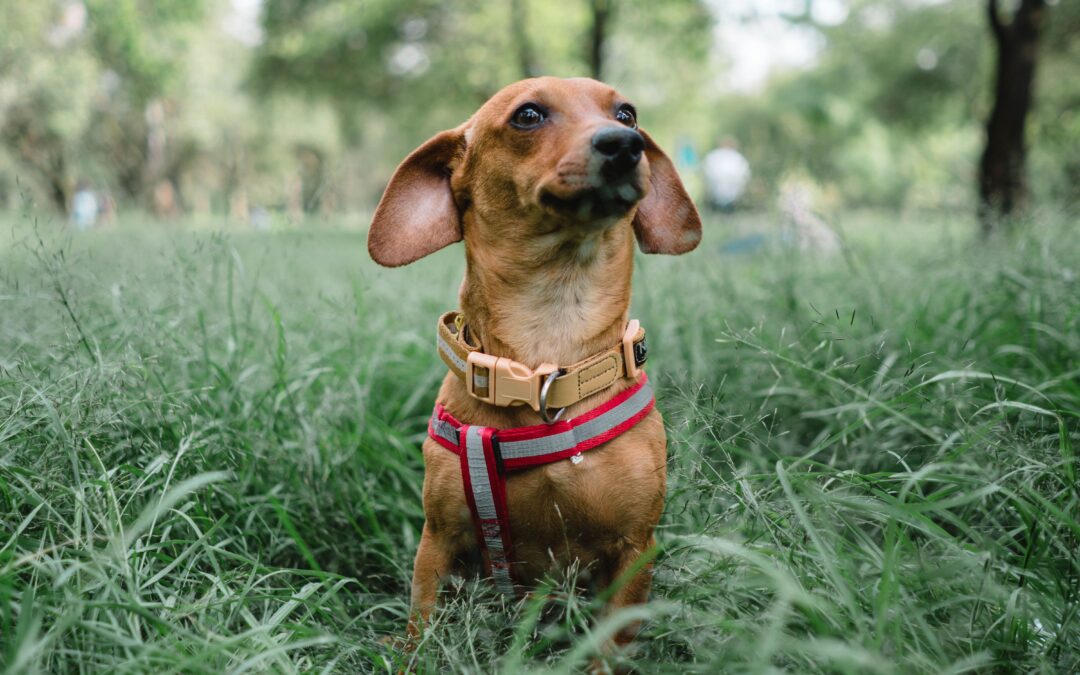
Dogster lists colors including white, blue, silver, red, brown, gray and black. In our experience, many Doxie Pits have a pit bull-style head and chest on a longer body with shorter legs, though some look more like a small pit bull. Most have a short coat, but a long-haired or wire-haired Dachshund parent can add longer or rougher fur.
| If your Doxie Pit takes after… | Expect |
|---|---|
| The pit bull side | Taller, heavier build; short, smooth coat |
| The Dachshund side | Longer back and shorter legs; possible longer or wiry coat |
| A blend | Stocky, low dog with a muscular chest |
Our general guide, based on parent-breed traits from Hill’s and Chewy. Individual dogs vary.
Pitbull Dachshund Dog Temperament
Both parents are known for strong bonds with their families. Hill’s Pet Nutrition describes the American Pit Bull Terrier as playful, loyal and people-focused, and notes that human aggression is atypical for the breed. Dogster calls the Doxie Pit loyal, loving, intelligent and easy to train, and says it gets along with other pets.
Plan for prey drive and independence, though. Hill’s rates the pit bull’s prey drive 4 out of 5, and Dachshunds were bred as hunting dogs, so in our experience many Doxie Pits love to chase and dig. The United Kennel Club (UKC) standard also notes some level of dog aggression is characteristic of the APBT. Early, reward-based socialization helps your dog stay relaxed around other animals.
Pet Care Tip: Our suggestion is to give your Doxie Pit a legal place to dig, such as a sandbox or a digging mat with hidden treats. It channels hunting instincts and saves your garden, without the jumping and twisting that can strain a long back.

Pitbull Dachshund Dog Back Health, IVDD and Lifespan
In our view, back health is the biggest concern for this mix. Chewy says as many as 24% of Dachshunds may develop intervertebral disc disease (IVDD), which is caused by a bulging or slipped disc in the spine. Untreated, it can lead to paralysis. Chewy advises calling your vet if your dog’s movement changes or it has trouble walking.
Genetics explain why. The UC Davis Veterinary Genetics Laboratory reports that a variant called CDDY, an extra copy of the FGF4 gene, makes discs degenerate early. It is dominant, so one copy is enough, and it is found at a frequency of 0.98 in Dachshunds. Dogs with one or two copies are 5 to 15 times more likely to have a disc herniate, with the highest relative risk, 15.1, reported in mixed-breed dogs.
Based on those figures, many Doxie Pits are likely to inherit CDDY from the Dachshund side. UC Davis offers a DNA test for it, so ask a breeder for results or test your own dog. As general advice, a positive result does not mean your dog will get IVDD, but it is a strong reason to follow back-friendly care from day one.
| Parent | Health concerns to know | Source |
|---|---|---|
| Dachshund | IVDD, bloat (GDV), deafness (higher risk when both parents are dapple), epilepsy, cataracts, PRA, luxating patella | Chewy |
| American Pit Bull Terrier | Hip and elbow dysplasia, Demodex mites, skin allergies, ear infections | Hill’s |
| Doxie Pit (reported) | Spinal problems, thyroid problems, nervous system disorders, cataracts | Dogster |
Mixed breeds are not automatically healthier. A UC Davis study of more than 90,000 dogs found that 13 of 24 inherited conditions occurred at similar rates in purebred and mixed-breed dogs. Lifespan estimates sit fairly close together: Dogster lists 12 to 15 years for the mix, Hill’s gives 12 to 14 for the APBT and Chewy gives 12 to 16 for the Dachshund.
When to call a vet right away: As general advice, sudden back pain, a hunched posture, crying when picked up, wobbly or dragging back legs, or loss of bladder control can signal a disc emergency. Chewy also lists a swollen belly, restlessness and dry heaving as bloat signs. Call your vet or a 24/7 emergency animal hospital immediately.
Caring for a Pitbull Dachshund Dog
Back-friendly care comes first. Chewy recommends using ramps or stairs so your dog does not jump onto furniture, supporting both the chest and hind end when you carry it, and avoiding tug-of-war and rough play. It also lists a healthy weight as part of protecting the back, so see our guide on how to help your dog lose weight.
Exercise still matters. Hill’s recommends 60 to 90 minutes a day for the APBT, but a long-backed Doxie Pit may do better with steady walks, sniffing games and gentle play than with jumping, stairs and hard fetch. In our experience, two or three moderate walks a day plus puzzle toys keep most Doxie Pits happy. Ask your vet about the right level for your dog.
Doxie Pit Puppies: The First Few Months
The American Veterinary Society of Animal Behavior (AVSAB) says puppy classes can start at 7 to 8 weeks, once a puppy has had at least one set of vaccines at least seven days before class. Hill’s recommends short, reward-based sessions with recall, loose-leash walking and “leave it.” Our suggestion is to teach your puppy to use a ramp early and to lift it correctly from the start.
| Care task | Doxie Pit plan |
|---|---|
| Furniture and car | Use ramps or steps; no jumping (Chewy) |
| Carrying | Support chest and hind end together (Chewy) |
| Play | Skip tug-of-war and rough play (Chewy) |
| Weight | Measured meals; keep lean (Chewy) |
| Walking gear | A harness to avoid pulling on the neck (general advice) |
| Vet checks | At least every 12 months (Hill’s) |
Pitbull Dachshund Dog Cost and Adoption
We could not find a reliable US price survey for Doxie Pits, so we have not listed a price. In our experience, many are adopted from shelters and rescues, often as dogs with uncertain ancestry. Ask for written fees and health records up front, and ask any breeder whether the parents were tested for CDDY.
Check local rules, too. As general advice, some cities, landlords and insurers restrict pit bull-type dogs, even small mixes. The ASPCA opposes breed-specific laws, but confirm your lease and insurance before adopting.
7 questions to ask before adopting a Doxie Pit
- Has the dog had a DNA test, including for CDDY?
- Has it ever shown back pain or trouble walking?
- How big are the parents, or what does it weigh now?
- How does it behave with cats and small pets?
- Can I add ramps to my sofa, bed and car?
- Does my lease or insurance restrict pit bull-type dogs?
- Can I keep it lean for life?
Example Scenario (illustrative)
Jordan in Atlanta adopted a 28-pound Doxie Pit with a long back. A DNA test showed one copy of CDDY, so he added ramps to the couch and car, switched to a harness and swapped tug games for sniff walks. His vet set a target weight and checked the dog’s back at each visit.
| Myth | Fact |
|---|---|
| “A Doxie Pit is a recognized breed.” | It is a crossbreed with no breed standard. |
| “Mixing breeds removes back risk.” | UC Davis says the CDDY variant is dominant, so one copy raises risk. |
| “Long-backed dogs need lots of jumping to stay fit.” | Chewy advises avoiding jumping and using ramps. |
| “A little extra weight is harmless.” | Chewy lists a healthy weight as key to protecting the back. |
What most owners get wrong
In our experience, many owners treat a pitbull dachshund dog like a mini pit bull and encourage jumping, stairs and tug games. That fun can be hard on a long spine. Build habits early: ramps, careful lifting, a lean body and low-impact play.
Pitbull Dachshund Dog: FAQs
What is a pitbull dachshund mix called?
It is usually called a Doxie Pit or Doxbull. You may also see Dox-Bull, Dachshund pitbull mix or pitbull wiener dog.
How big does a pitbull dachshund dog get?
Dogster lists 12 to 18 inches and 15 to 35 pounds, though individual dogs can fall outside that range.
How long do Doxie Pits live?
Dogster lists 12 to 15 years. The parents typically live 12 to 14 years (APBT) and 12 to 16 years (Dachshund).
Do Doxie Pits have back problems?
Many are at risk. Chewy says up to 24% of Dachshunds may develop IVDD, and the CDDY gene behind it is dominant.
Are Doxie Pits good family dogs?
They can be loyal and affectionate, with early socialization, supervision and gentle handling of their backs.
Are Doxie Pits good with cats?
Not always. Both parents can have a strong prey drive, so introduce cats slowly and supervise.
Can a Doxie Pit live in an apartment?
It can, with daily walks, low-impact play, ramps instead of jumping and a lease that allows pit bull-type dogs.
Final Verdict on the Pitbull Dachshund Dog
A pitbull dachshund dog can be a loyal, playful and affectionate companion, but its long back needs protecting. Expect a small-to-medium dog, test for CDDY if you can, and build habits around ramps, careful lifting, low-impact exercise and a lean weight. With that care and early socialization, a Doxie Pit can thrive for many years.
Your next steps
- Meet the dog, and ask about any past back pain.
- Add ramps to your sofa, bed and car before pickup day.
- Book a vet visit to set a target weight and back-care plan.
Share your Doxie Pit on the Pets Store Home Facebook page, and explore more mixes in our Dogs section, including the Chiweenie, the pitbull chihuahua mix dog and the Siberian pitbull mix.
About the author: Written and reviewed by the Pets Store Home Editorial Team, pet owners who check every guide against trusted sources.
How we checked this guide: Parent-breed data comes from Hill’s Pet Nutrition, the UKC and Chewy (reviewed by Barri Morrison, DVM). Genetics come from the UC Davis Veterinary Genetics Laboratory, and research from UC Davis and the University of Florida. Training guidance comes from AVSAB, Doxie Pit figures from Dogster and legal context from the ASPCA.
Where sources differ, such as lifespan for the mix and its parents, we show each figure and name the source. This guide was written in November 2026 and is reviewed every 12 months.
Last reviewed: November 2026.
Sources (accessed November 3, 2026)
- Hill’s Pet Nutrition: American Pit Bull Terrier
- United Kennel Club: American Pit Bull Terrier Standard
- Chewy: Dachshund Health Issues
- UC Davis Veterinary Genetics Laboratory: Chondrodystrophy (CDDY) with IVDD risk
- Dogster: Dachshund Pitbull Mix
- UF Health: DNA studies reveal shelter workers often mislabel dogs as pit bulls
- dvm360: UC Davis study on genetic disorders in purebred and mixed-breed dogs
- AVMA News: Behavior society supports early puppy socialization
- ASPCA: Position Statement on Breed-Specific Legislation
[…] Which foreign pets are legal in Washington State? […]