
Quick Answer: A cat’s nose size and shape mostly come down to breed and individual genetics rather than any single “big-nosed cat” type. Straight, longer noses show up in breeds like Siamese, Oriental Shorthair, and Russian Blue; rounded Roman noses appear in breeds like the Birman; and short, flat “snub” noses define brachycephalic breeds like Persians and Exotic Shorthairs, which are actually the opposite of big-nosed despite a common misconception. A larger nose is generally just cosmetic, though sudden swelling, discharge, or breathing changes always warrant a vet visit.
Key Takeaways
- Nose shape and size vary by breed and individual genetics, not by any officially recognized “big-nosed” category.
- Long, straight noses are typical of Siamese, Oriental, and Russian Blue cats.
- Persians and Exotic Shorthairs are actually flat-nosed (brachycephalic), the opposite of big-nosed, despite a popular misconception.
- A cat’s real scent-processing organ, the vomeronasal (Jacobson’s) organ, sits in the roof of the mouth, not inside the nose itself.
- Flat-faced breeds face more nose-related health risks (breathing difficulty) than long-nosed breeds do.
Why Trust This Guide?
This guide is researched and written by the Pets Store Home editorial team, drawing on feline anatomy references and breed-standard information. It’s intended as general, educational information; a vet can evaluate any specific concern about a cat’s nose or breathing.
There’s No Such Thing as a “Big-Nosed Cat” Breed
“Big-nosed cat” is a phrase people use casually, but it isn’t a recognized breed, category, or standard in feline genetics. Every cat’s nose is shaped by a mix of genetics and breed background, and what one person calls a “big nose” is usually just a longer or more prominent muzzle relative to a typically compact feline face. Rather than one type of cat owning this trait, prominent noses show up unevenly across the breed spectrum, and the actual variation is better described by shape than by size alone.
The Four Main Cat Nose Shapes
Feline nose shape generally falls into a handful of recognizable profiles, and breed standards actually describe them formally:
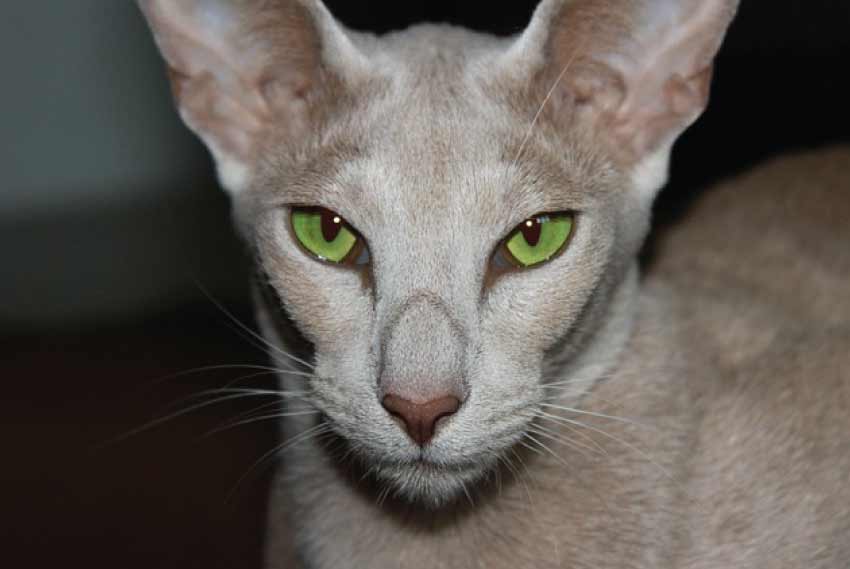
Straight nose: A nose with no visible curve in profile, running in a clean line from the forehead to the tip. Siamese, Oriental Shorthair, and Russian Blue cats are classic examples, and this is the shape most likely to read as “long-nosed” to a casual observer since there’s no break interrupting the profile.
Roman nose: A gently convex profile that curves outward, giving a slightly aquiline look. The Birman and Cornish Rex are commonly cited examples. An exaggerated version of this curve, sometimes called a “banana nose,” shows up in some of the more extreme Oriental-type cats.
Button nose: Small, short, and rounded, with only a subtle concavity or a soft, mostly straight profile ending in a rounded tip. This shape sits in between the two extremes and appears in a range of moderate-faced breeds.
Snub nose: Very short with a pronounced break, or dip, centered between the eyes. Persian and Exotic Shorthair cats have the most extreme version of this shape, which is the defining feature of a brachycephalic, or “flat-faced,” skull structure.
Worth noting directly: the Persian, often assumed by casual observers to be a big-nosed breed because of its overall round, full-cheeked face, actually has the shortest, flattest nose of any common breed. The visual fullness of a Persian’s face comes from its rounded skull and heavy cheek fur, not from nose size, and the two traits get confused fairly often.
Why Individual Cats Vary in Nose Size
Beyond breed averages, plenty of individual variation exists within any single breed, the same way people within a family can have noticeably different nose shapes despite sharing genetics. Polygenic inheritance, where several genes contribute to one trait rather than a single dominant gene, is the main driver: a kitten can end up with a more pronounced or more modest nose than either parent simply based on how those multiple genes combine. Age plays a role too, since a cat’s nose continues developing slightly through its first year, and general body size and bone structure can make a nose look proportionally larger or smaller on an individual cat regardless of breed standard.
How a Cat’s Nose Actually Works
The visible, furless skin covering a cat’s nose is called the rhinarium, and it does more than just look distinctive: it helps keep the nostrils moist for better scent detection and contains blood vessels that assist with regulating body temperature. Behind it, a cat’s nasal cavity is lined with scent receptors, and cats with longer noses do tend to have more surface area inside that cavity for those receptors, which is one reason flat-faced breeds can have a comparatively reduced sense of smell alongside their breathing challenges.
A common myth worth correcting directly: a cat’s advanced scent-detection organ, known as the vomeronasal organ or Jacobson’s organ, is not located inside the nose itself. It actually sits in the roof of the mouth, accessed through two small ducts just behind the upper front teeth. This is the organ responsible for the “flehmen response,” the slightly odd open-mouthed, lip-curled expression cats make when investigating an intense scent, most often another cat’s urine markings. Air carrying scent particles gets directed up through those ducts to the vomeronasal organ rather than processed through the nostrils the way ordinary smells are, which is why the behavior looks more like tasting the air than sniffing it.
Health Differences: Long-Nosed vs. Flat-Faced Cats
This is where nose shape stops being purely cosmetic. Cats with a normal or longer nasal structure generally have wider, longer nasal passages that support efficient breathing and a fuller sense of smell. Brachycephalic, flat-faced breeds like Persians, Exotic Shorthairs, and Himalayans are a different story: their shortened skull bones compress the nasal passages, narrow the nostrils, and can lengthen the soft palate, a combination that vets refer to as brachycephalic obstructive airway syndrome, or BOAS. Cats with BOAS may breathe noisily, tire quickly during play, struggle more in heat, and snore heavily even while resting normally.
Flat-faced breeds also tend to have more pronounced facial folds, which trap moisture and debris more easily and raise the risk of skin infections and tear staining around the eyes. None of this means a longer-nosed cat is automatically healthier across the board, but it does mean nose shape is a genuine factor to weigh when choosing a breed, not just an aesthetic one. Anyone drawn to Persians or Exotics for their famously flat, round faces should go in aware of these trade-offs and choose a breeder who screens for airway health rather than optimizing purely for how extreme the flat face looks.
If you’re weighing breed options with these kinds of trade-offs in mind, it’s worth reading up on the actual costs involved too; our guide on how much a Persian cat costs breaks down pricing alongside the grooming and health-care expenses that come with the breed’s flat-faced structure and long coat.
When a Change in Nose Appearance Signals a Problem
A cat’s usual nose size and shape don’t change overnight, so a sudden difference is worth paying attention to rather than dismissing as normal variation. Watch for swelling on one side only, unusual discharge (clear, colored, or bloody), a change in the normal texture or color of the rhinarium, sneezing that doesn’t resolve within a few days, or visible discomfort when the nose is touched. These can point to anything from a minor upper respiratory infection to an abscess, a foreign object lodged in a nostril, dental disease affecting the nearby sinuses, or, less commonly, a growth that needs veterinary evaluation. Ordinary breed or individual variation in nose size, by contrast, is stable and symmetrical, and it doesn’t come with any of these accompanying symptoms.
Caring for a Cat’s Nose, Whatever the Shape
Day-to-day nose care is fairly minimal for most cats, since they groom their own faces and rhinarium routinely. A few things are still worth keeping an eye on: gently wipe away any crusting or discharge with a damp, soft cloth rather than letting it build up, keep food and water bowls clean since bacteria around the muzzle can transfer to the nose during eating and drinking, and watch flat-faced cats a little more closely during hot weather or strenuous play, since their reduced airflow makes overheating and breathing distress more likely than in longer-nosed cats. A yearly vet visit that includes a close look at the nose and facial structure is a simple way to catch developing issues, especially in brachycephalic breeds, before they become serious.
Choosing a Cat Based on Facial Structure
If a distinctive nose or facial profile is part of what draws you to a particular breed, it’s worth researching the specific breed’s standard rather than assuming “big-nosed” describes any single type. Siamese and Oriental Shorthairs offer the classic long, straight profile; the Birman and Cornish Rex bring a gently curved Roman nose; and moderate, button-nosed breeds sit comfortably in between. Whatever the facial structure, it’s just one part of a much bigger picture that includes temperament, activity level, grooming needs, and known health risks, all of which matter more to daily life with a cat than nose shape alone. Other harmless physical quirks are worth knowing about too, since they get misunderstood in similar ways; a kinked tail, for instance, is a common genetic trait in breeds like the Siamese and Manx that looks unusual but is rarely a health concern on its own.
Facial and body proportions can vary dramatically across the cat world in general, not just in domestic breeds; for a sense of just how much variation exists, our piece on the rusty-spotted cat, one of the smallest wild cat species on earth, is a good look at the other end of the size spectrum.
FAQ: Big-Nosed Cats
Is there an actual “big-nosed cat” breed?
No. It’s a casual description, not a recognized breed or category. Long, straight noses appear in breeds like Siamese, Oriental Shorthair, and Russian Blue.
Are Persian cats big-nosed?
The opposite, actually. Persians have the shortest, flattest “snub” nose of any common breed. Their round, full face often gets mistaken for a bigger nose, but it’s really their skull shape and cheek fur creating that impression.
Do cats smell better with a bigger nose?
Generally yes, cats with longer nasal passages have more surface area for scent receptors. Flat-faced breeds tend to have a comparatively reduced sense of smell along with their well-known breathing challenges.
Where is a cat’s Jacobson’s organ located?
In the roof of the mouth, behind the upper front teeth, not inside the nose. It’s the organ responsible for the open-mouthed “flehmen response” cats make when investigating strong scents.
When should I worry about my cat’s nose?
See a vet for sudden or one-sided swelling, unusual discharge, persistent sneezing, or visible discomfort when the nose is touched. Stable, symmetrical nose size on its own is just normal variation.
Considering a Himalayan Persian?
If you’re weighing a colorpoint Persian alongside other options, our guide to the Himalayan Persian cat breaks down what actually distinguishes it from a standard Persian, the health testing to ask about, and what really drives its price.
[…] Which foreign pets are legal in Washington State? […]