Are Tortoiseshell Cats Rare? 7 Surprising Tortie Facts 2026

Are Tortoiseshell Cats Rare? 7 Surprising Tortie Facts 2026

Are tortoiseshell cats rare? Not as a group. Female tortoiseshell cats are a common sight in shelters and homes across the US, and “tortoiseshell” is a coat color pattern, not a breed. What is rare is a male tortoiseshell cat. Because the coat depends on having two X chromosomes, torties are almost always female, and the few males usually carry an extra X and are typically sterile.

This guide explains the genetics behind the tortoiseshell cat coat in plain English, why males are so unusual, how a tortie differs from a calico, which breeds can carry the pattern, and what the evidence says about tortoiseshell cat personality.

Key takeaways

  • Tortoiseshell describes a coat pattern of black (or a related color) mixed with orange, not a breed.
  • Female torties are common. Male torties are rare because the pattern usually needs two X chromosomes.
  • Most male tortoiseshell cats have XXY chromosomes, and VCA notes these males are infertile.
  • A calico has the same two colors plus distinct areas of white.
  • Many breeds, and plenty of mixed-breed cats, can have a tortoiseshell coat.
  • “Tortitude” is a popular idea, but personality depends on the individual cat, not just its coat.

Are Tortoiseshell Cats Rare? The Short Answer

So, are tortoiseshell cats rare? For females, no. Torties appear in many breeds and in everyday mixed-breed cats, and adoptable torties are easy to find at shelters. The pattern itself simply isn’t unusual among female cats.

The real rarity is sex. PetMD’s veterinarian-reviewed guide to feline genetics quotes Cornell’s Dr. Bruce Kornreich explaining that torties and calicos are almost always female. A male tortie only happens in very rare cases, which is why people ask “are tortoiseshell cats rare?” and get two different answers.

Cat How rare? Why
Female tortoiseshell Common Two X chromosomes can carry both coat colors
Male tortoiseshell Very rare Usually needs an extra X chromosome (XXY)
Tortoiseshell as a breed Doesn’t exist It’s a coat pattern found across breeds

What Is a Tortoiseshell Cat?

A tortoiseshell cat, often called a “tortie,” has a coat that mixes two color families in patches or swirls. The Cat Fanciers’ Association (CFA) describes a tortoiseshell as a black, chocolate, or seal female cat with patches of red throughout the coat. In everyday terms, that usually looks like black and orange, mottled or brindled together.

Softer versions exist too. A “dilute” tortie shows paler shades, often described as blue (gray) and cream. Every tortoiseshell cat’s pattern is unique, so no two look exactly alike.

Are tortoiseshell cats rare: a black and orange tortoiseshell cat posing on a wooden deck
Are tortoiseshell cats rare? Female torties like this one are common; males are the rare exception. Photo: Serdar Balpetek / Pexels.

The X-Chromosome Genetics Behind the Tortie Coat

The answer to “are tortoiseshell cats rare?” comes down to one chromosome. In cats, the main orange gene sits on the X chromosome. A 2025 study published in Current Biology and reported by Stanford Medicine identified the long-sought mutation behind orange fur: a small deletion on the X chromosome that increases activity of a gene called Arhgap36.

Here’s how that creates a tortie, step by step:

  1. Females have two X chromosomes (XX). One X can carry the orange version and the other a non-orange version, such as black.
  2. Each cell switches off one X. Early in development, every cell randomly inactivates one of its two X chromosomes, a process called X inactivation.
  3. Patches form. Cells using the “orange” X make orange fur, while cells using the other X make black fur. The result is a mosaic of both colors.
  4. Males usually have one X (XY). With only one X, a typical male is either orange or not orange, but not both.

Because the pattern depends on random X inactivation, even cloned or closely related torties can look different from one another.

Why a Male Tortoiseshell Cat Is So Rare

Are tortoiseshell cats rare when they’re male? Yes, very. A male tortoiseshell cat breaks the usual rule. According to PetMD’s genetics guide, in very rare cases a male is born with an extra X chromosome (XXY), which lets him show the mosaic coat. The same source notes that most of these males are sterile, and Dr. Kornreich adds that many have shorter lifespans than female torties.

VCA Animal Hospitals confirms the fertility link, explaining that male calico and tortoiseshell cats are typically infertile because they carry XXY chromosomes instead of the usual XY.

How rare are male torties?

Exact numbers are hard to pin down. One widely cited estimate, which Vetstreet attributes to research from the University of Missouri College of Veterinary Medicine, is that only about 1 in 3,000 calico cats is male. Male torties are considered similarly uncommon. The CFA also notes that male tortoiseshells do occur occasionally and are not always sterile, so there are exceptions.

Pet Care Tip: If you think you’ve adopted a male tortie, ask your vet to confirm the cat’s sex and discuss neutering and any extra health checks. Don’t assume a rare coat means the cat is worth a high price; adoption is a great way to find one.

Whether male or female, every tortie needs the same core care as any cat: regular vet visits, vaccinations, a complete diet, and spaying or neutering. The ASPCA notes that spaying female cats prevents uterine infections and decreases the incidence of breast tumors.

Tortie vs. Calico: What’s the Difference?

Whether you search “calico vs tortie” or “tortie vs calico,” the answer starts with genetics. Torties and calicos share the same X-chromosome color genetics, which is why both are nearly always female. The difference is white. The CFA describes a calico as a female cat with white and large solid areas of black and red, or of the dilute versions. A tortoiseshell cat has little or no white, and its colors are usually more mixed together. If you’re still asking “are tortoiseshell cats rare compared with calicos?”, neither is rare in females.

Feature Tortoiseshell Calico
Colors Black (or chocolate) and orange, or blue and cream The same colors plus white
Pattern Mottled, brindled, or patched Larger, more distinct patches
White Little or none Clear white areas from a separate white-spotting gene
Sex Almost always female Almost always female
Breed? No, a coat pattern No, a coat pattern

You may also hear “torbie,” a tortie with tabby striping, and “caliby,” a calico with tabby markings. These are variations of the same underlying genetics. For more color-pattern guides, see our article on orange and white cats.

Which Breeds Can Be Tortoiseshell?

Because tortoiseshell is a pattern rather than a breed, it shows up wherever a breed’s genetics allow the orange gene alongside black or its dilutes. The CFA’s color guide gives examples such as a tortoiseshell Persian or Cornish Rex, a blue-cream American Curl, and tortie-point Colorpoint Shorthairs. So, are tortoiseshell cats rare within a single breed? Not usually, though a tortie of one specific pedigreed breed may take longer to find, since most torties you’ll meet are mixed-breed cats.

  • Persian: long-coated torties and blue-creams, which need daily grooming. See our guide to how much a Persian cat costs.
  • Cornish Rex: a curly, short coat that can show the tortie mix.
  • American Curl: listed by the CFA in blue-cream examples.
  • Colorpoint Shorthair: tortie colors appear on the points, such as the face, ears, legs, and tail.
  • Domestic shorthair and longhair cats: most torties in US shelters are mixed-breed cats.

What about dilute tortoiseshell cats? A dilute tortie, often called a blue-cream, carries the same genetics with softer blue-gray and cream shades. It can appear in many of the breeds above, as well as in mixed-breed cats.

Breed standards differ between registries, so if you’re considering a pedigreed cat, check the specific breed’s accepted colors. Cornell’s Feline Health Center notes that with a pedigreed cat, size, appearance, and to some extent personality are likely to fit the breed profile, while mixed-breed cats are less predictable.

Tortoiseshell Cat Personality: “Tortitude” Myths vs. Facts

Many owners swear their tortie is sassy, vocal, or strong-willed, and the nickname “tortitude” has stuck as shorthand for tortoiseshell cat personality. Is there anything to it? One study offers a little support, with important limits.

Researchers at the University of California, Davis, led by veterinary behaviorist Dr. Elizabeth Stelow, surveyed more than 1,200 cat owners. According to Veterinary Practice News, owners reported that calico and tortoiseshell cats were more likely to hiss, chase, bite, swat, or scratch during interactions with people. But the cats weren’t observed directly, and Stelow stressed that most of these cats make lovely pets.

Myth What the evidence suggests
Every tortie has an attitude Personality varies widely; many torties are calm and affectionate
Coat color controls behavior One owner survey found a weak link, but it didn’t prove cause and effect
Torties make poor pets The UC Davis lead researcher said most make lovely pets
A rare coat means a rare cat Female torties are common; only males are rare

When you meet a tortie for adoption, judge the individual. Cornell advises looking for a cat that’s friendly and comfortable with people, and notes an adult cat’s personality is already established. If a cat’s behavior changes suddenly, check with your vet first; our guide to cat behavior disorders explains common causes.

Example Scenario (illustrative)

Priya visits a shelter in Colorado and asks, “Are tortoiseshell cats rare?” after falling for a 3-year-old black-and-orange female. Staff explain that female torties are common and that this one has a gentle, lap-loving temperament. Priya adopts her based on how she behaves, not her coat, and schedules a vet checkup for the first week.

Are Tortoiseshell Cats Rare? FAQs

Are tortoiseshell cats rare?

Female tortoiseshell cats are common. Male torties are very rare because the coat usually requires two X chromosomes, so most males with the pattern have an extra X (XXY).

Is a tortoiseshell cat a breed?

No. Tortoiseshell is a coat color pattern, not a breed. It appears in many pedigreed breeds, such as Persians and Cornish Rex, and in mixed-breed cats.

Can a male tortoiseshell cat have kittens?

Usually not. VCA notes male tortoiseshell and calico cats typically carry XXY chromosomes and are infertile, though the CFA says rare exceptions occur.

What is the difference between a tortie and a calico?

Both mix black and orange or their dilute shades. A calico also has distinct areas of white, while a tortoiseshell has little or no white.

Do tortoiseshell cats have a special personality?

Not necessarily. One UC Davis owner survey linked tortie and calico coats to more feisty behavior, but personality varies by individual, and most torties make lovely pets.

How much is a tortoiseshell cat worth?

Female torties aren’t rare, so the pattern alone doesn’t add value. Cost depends on breed and source, and many wonderful torties are available for adoption at shelters.

Do male tortoiseshell cats have health problems?

Some may. PetMD’s genetics guide notes many male torties have shorter lifespans than females. Ask your vet about checkups and care for an XXY cat.

Final Verdict: Are Tortoiseshell Cats Rare?

Are tortoiseshell cats rare? Female torties are common, and tortoiseshell is a pattern rather than a breed. The rare one is the male tortoiseshell cat, who usually has an extra X chromosome and is typically sterile. When choosing a tortie, focus on the individual cat’s health and temperament rather than coat-color myths.

Your next steps

  1. Visit a local shelter or rescue and meet adult torties in person.
  2. Book a vet checkup within the first week of bringing a new cat home.
  3. Explore more coat and breed guides in our cat care section, including black cats with green eyes.

Share a photo of your tortie with our community on Facebook.

About the author

Written and reviewed by the Pets Store Home Editorial Team: pet owners and animal lovers who check every guide against trusted US veterinary and animal-welfare sources. This article is general information, not a substitute for professional veterinary advice. Always talk to your veterinarian about your own pet’s health.

How we checked this guide: We used VCA Animal Hospitals, the ASPCA, Cornell University’s Feline Health Center, PetMD (veterinarian-reviewed), the Cat Fanciers’ Association, Stanford Medicine’s report on 2025 research in Current Biology, and reporting on the UC Davis coat-color study. We review this article every 12 months, or sooner if research changes.

Last reviewed: October 2026

Can Dogs Eat Frozen Strawberries? Safe Serving Guide (2026)

Can Dogs Eat Frozen Strawberries? Safe Serving Guide (2026)

Can dogs eat frozen strawberries? Yes. Most healthy dogs can enjoy plain, unsweetened frozen strawberries as an occasional treat, as long as they’re cut into small pieces or slightly thawed first. Skip any strawberries packed in syrup, sugar, or sweeteners such as xylitol, and keep portions small so the treat doesn’t upset your dog’s stomach.

This guide covers how to prepare frozen fruit for dogs safely, how much to offer by size, what to know about strawberries for puppies, easy homemade frozen treats, and the signs your dog has had too many.

Key takeaways

  • The AKC says frozen strawberries can be a safe, refreshing treat when cut into appropriately sized pieces.
  • Choose plain frozen strawberries only. Avoid syrup, added sugar, and any product containing xylitol.
  • Cut or slightly thaw frozen berries to lower the risk of choking and hard-on-teeth chunks.
  • The AKC suggests one to three strawberries a day as a starting point, depending on your dog’s size.
  • Treats of all kinds should stay within about 10% of your dog’s daily calories.
  • Too many strawberries can cause loose stools. Call your vet if stomach upset lasts or comes with other signs.

Can Dogs Eat Frozen Strawberries? The Short Answer

If you’re asking “can dogs eat frozen strawberries,” the answer from the American Kennel Club is reassuring. The AKC states that frozen strawberries can be a safe and refreshing treat for dogs when cut into appropriately sized pieces. The ASPCA also lists strawberries among fruits that are okay to share with pets.

That makes the broader question, can dogs eat strawberries, a yes for most dogs too, and the same goes for anyone asking “can dogs have strawberries?” about fresh berries. Fresh or frozen, the same rules apply: plain fruit, small pieces, small amounts. Freezing simply changes the texture, which brings a few extra safety steps covered below.

Are Strawberries Good for Dogs?

So, are strawberries good for dogs? In small amounts, they make a light, low-fuss snack compared with many processed treats. The AKC notes they are:

  • Full of antioxidants, which help protect cells
  • High in fiber, which supports digestion in small amounts
  • A source of vitamin C

Frozen fruit for dogs has an extra appeal on hot days. A chilled piece of strawberry can be a refreshing reward after a walk, and many dogs enjoy the crunch. Still, strawberries are a treat, not a replacement for a complete and balanced dog food. Your dog doesn’t need them to stay healthy.

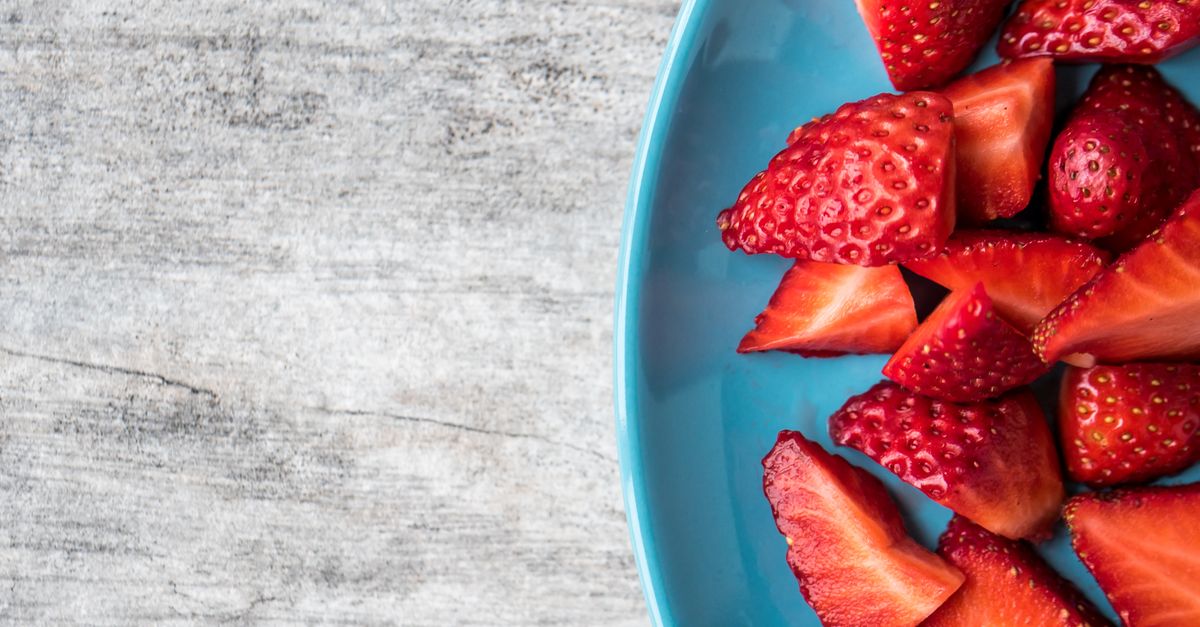
Can dogs eat frozen strawberries: sliced strawberries on a plate, cut into small dog-safe pieces
Can dogs eat frozen strawberries? Yes, when they’re plain and cut into small slices like these. Photo: Jessica Lewis / Pexels.

Which Frozen Strawberries Are Safe for Dogs?

When people ask “can dogs eat frozen strawberries?”, the bag they buy matters as much as the fruit. The AKC advises avoiding strawberries in syrup and canned strawberries because they contain too much sugar, and it warns about artificial sweeteners such as xylitol.

Product Safe for dogs? Why
Plain frozen whole or sliced strawberries Yes, in small amounts Strawberries are the only ingredient
Sweetened frozen strawberries No Added sugar your dog doesn’t need
Strawberries in syrup or canned No Too much sugar, per the AKC
“Sugar-free” or “lite” frozen desserts No May contain xylitol, which can be deadly to dogs
Mixed berry blends Check the label Every fruit in the mix must be dog-safe

Xylitol deserves special attention. The ASPCA warns that it can cause low blood sugar and possible liver damage in dogs, and the AVMA notes it can be deadly. If your dog eats something sweetened with xylitol, call your vet, the ASPCA Animal Poison Control Center at (888) 426-4435, or the Pet Poison Helpline at (855) 764-7661. A consultation fee may apply.

Pet Care Tip: Flip the bag over before you buy. The ingredient list should say only “strawberries.” Anything with sugar, syrup, or a sweetener name belongs on the human shelf. The best strawberries for dogs are the plainest ones.

How to Serve Frozen Strawberries Safely

Once you know the answer to “can dogs eat frozen strawberries?”, preparation is what keeps the treat safe. A whole berry straight from the freezer is hard, cold, and sized for a human mouth.

  1. Wash fresh berries before freezing them yourself. The AKC recommends washing strawberries thoroughly before serving.
  2. Remove the green tops. The AKC notes stems and leaves can cause stomach upset.
  3. Cut to your dog’s size. The AKC advises cutting strawberries into small pieces, and mashing or pureeing them for small dogs.
  4. Let them soften slightly. Leave frozen pieces out for a few minutes so they’re cold but not rock-hard.
  5. Supervise. Watch your dog while it eats, especially the first time.

Protecting teeth and preventing choking

Frozen food can be tough on teeth. Discussing ice, the AKC notes that hard ice may crack or damage teeth, particularly in dogs with dental problems or weaker teeth, such as many seniors. It also notes pieces that are too big, or swallowed whole, can be a choking risk. The same common sense applies to rock-hard frozen fruit: smaller, slightly softened pieces are the safer choice, especially for seniors, small breeds, and dogs that gulp.

How Many Frozen Strawberries Can a Dog Eat?

A complete answer to “can dogs eat frozen strawberries?” includes portion size. The AKC suggests one to three strawberries a day as a reasonable starting point, depending on your dog’s size. Treats overall should stay small: VCA explains that about 90% of a dog’s daily calories should come from its complete and balanced food, leaving roughly 10% for treats. The ASPCA suggests an even lower cap of 5% for snacks, so smaller portions are never a mistake.

Dog size Practical starting portion How to serve
Toy and small dogs About 1 strawberry a day, or less Mashed, pureed, or in tiny thawed pieces
Medium dogs About 1–2 strawberries a day Bite-size pieces, slightly softened
Large and giant dogs Up to about 3 strawberries a day Halves or quarters, never whole hard berries

Based on the AKC’s one-to-three-per-day starting point, split by size by our editorial team. Your dog’s needs may differ.

Count strawberries as part of the day’s treats, not on top of them. If your dog is overweight, has diabetes, or eats a prescription diet, ask your vet before adding any fruit. Our guide to helping your dog lose weight explains why treat calories add up.

Strawberries for Puppies: What to Know

Can puppies eat strawberries? Many can have a tiny taste once your vet agrees. Strawberries for puppies follow the same rules as for adult dogs, with extra caution. VCA stresses that proper nutrition is critical to a puppy’s development and advises that no more than 10% of daily calories come from treats or snacks. A puppy’s tummy is still adjusting, so:

  • Ask your vet before introducing new foods, as the AKC recommends.
  • Start with one tiny, softened piece and wait a day to check for loose stool.
  • Mash or puree strawberries for very small or young puppies.
  • Avoid hard frozen chunks, which can be a choking risk for small mouths.

If your puppy is teething, the AKC notes cold chews such as frozen wet washcloths or a frozen stuffable toy can help soothe sore gums. Ask your vet whether a little softened strawberry inside a toy suits your puppy.

Homemade Frozen Strawberry Treats for Dogs

Wondering whether the answer to “can dogs eat frozen strawberries?” covers homemade treats too? It does, and making your own frozen fruit for dogs lets you control every ingredient. Keep portions small and count them as treats.

  • Strawberry ice bites: blend a few plain strawberries with water, pour into a small silicone mold or ice cube tray, and freeze. Small molds make bite-size portions.
  • Strawberry-banana yogurt pops: the AKC’s frozen treat ideas include mixing plain yogurt with banana and strawberries. Use plain yogurt with no added sugar or sweeteners.
  • Stuffed toy filler: mash a strawberry into your dog’s kibble, spoon it into a stuffable toy, and freeze for a longer-lasting treat.
  • Strawberry and peanut butter swirl: combine mashed strawberry with a little unsalted, xylitol-free peanut butter and freeze in small dollops.

The AKC’s guide to homemade frozen dog treats stresses checking labels on yogurt, peanut butter, and other ingredients for xylitol. If your dog is sensitive to dairy, skip the yogurt version. Looking for other fruit ideas? See our guide on whether dogs can eat watermelon skin.

Signs Your Dog Ate Too Many Strawberries

Even when the answer to “can dogs eat frozen strawberries?” is yes, more isn’t better. The AKC notes that too many strawberries at once can cause loose stools or diarrhea, and the stems and leaves can upset the stomach. Watch for:

  • Loose stool or diarrhea
  • Gas or a gurgling stomach
  • Vomiting
  • Reduced appetite at the next meal

Mild, one-time upset in an otherwise healthy adult dog often settles once the extra fruit stops. Contact your vet if diarrhea doesn’t improve within 2–3 days, if you see blood or black, tarry stool, or if your dog is vomiting, lethargic, or refusing food, which VCA lists as reasons to seek veterinary care. Don’t give human stomach medicines unless your vet recommends them. For more on loose stool, see our guide to the causes of diarrhea in dogs.

Example Scenario (illustrative)

On a hot afternoon in Arizona, Dana wonders, “Can dogs eat frozen strawberries?” before sharing her smoothie fruit with her 40-lb shepherd mix. She checks the bag lists only strawberries, removes the tops, cuts two berries into quarters, and lets them soften for five minutes. Her dog enjoys them after a walk, and Dana counts them as part of his treats for the day. She keeps the sweetened smoothie mix out of reach.

Common mistakes to avoid

Mistake Why it’s a problem Better approach
Tossing whole frozen berries Choking and tooth risk Cut and slightly thaw first
Sharing sweetened smoothie mix Sugar or xylitol Use plain frozen strawberries only
Leaving the green tops on Can upset the stomach Remove stems and leaves
Giving a big handful Loose stool and extra calories Stick to one to three, by size

Can Dogs Eat Frozen Strawberries? FAQs

Can dogs eat strawberries every day?

A small amount can fit into a healthy dog’s daily treats. The AKC suggests one to three strawberries a day as a starting point, and all treats should stay within about 10% of daily calories.

Are frozen strawberries good for dogs’ teeth?

Not especially. Hard frozen food can be tough on teeth, and the AKC notes hard ice may crack or damage weaker teeth. Cut and slightly thaw frozen strawberries, especially for senior dogs.

Can puppies eat frozen strawberries?

Puppies can try a tiny, softened, plain piece once your vet approves. Mash it for small puppies, avoid hard chunks, and keep treats within 10% of daily calories.

Can dogs eat strawberry tops?

It’s best to remove them. The AKC notes strawberry stems and leaves can cause stomach upset in dogs.

Can dogs have strawberry yogurt or strawberry ice cream?

Not the human versions. Flavored yogurts and frozen desserts often contain added sugar, and some contain xylitol, which can be deadly to dogs. Make your own with plain yogurt and plain strawberries instead.

Is frozen fruit good for dogs in summer?

Plain, dog-safe frozen fruit can be a refreshing treat in hot weather. Serve small, softened pieces, supervise your dog, and always provide plenty of fresh water and shade.

What should I do if my dog ate too many strawberries?

Stop offering fruit and watch for loose stool, gas, or vomiting. Call your vet if symptoms last more than 2–3 days, or right away if you see blood, repeated vomiting, or lethargy.

Final Verdict: Can Dogs Eat Frozen Strawberries?

Can dogs eat frozen strawberries? Yes, as an occasional treat. Choose plain, unsweetened berries, remove the tops, cut and slightly thaw them, and stick to one to three a day based on size. Keep sweetened and xylitol products away from your dog, and call your vet if stomach upset doesn’t settle.

Your next steps

  1. Check your freezer for a bag that lists only strawberries.
  2. Make a small batch of strawberry ice bites in a silicone mold.
  3. Explore more safe-feeding guides in our pet food center and our dog care section.

Share your dog’s favorite frozen treat with our community on Facebook.

About the author

Written and reviewed by the Pets Store Home Editorial Team: pet owners and animal lovers who check every guide against trusted US veterinary and animal-welfare sources. This article is general information, not a substitute for professional veterinary advice. Always talk to your veterinarian about your own pet’s health.

How we checked this guide: We used the AKC (including its chief veterinarian’s guidance on frozen treats), the ASPCA, the AVMA, and VCA Animal Hospitals. We review this article every 12 months, or sooner if guidance changes.

Last reviewed: October 2026

What Does Pumpkin Do for Dogs? Benefits, Safe Amounts & Risks (2026)

What Does Pumpkin Do for Dogs? Benefits, Safe Amounts & Risks (2026)

What does pumpkin do for dogs? Plain cooked or canned pumpkin adds fiber, water, and a few vitamins to your dog’s bowl, which may help firm up mild diarrhea or ease mild constipation. It’s low in calories and safe for most dogs in small amounts. It isn’t a cure, though, and pumpkin pie filling, raw rind, stems, and moldy jack-o’-lanterns are a different story.

This guide explains how pumpkin for dogs works, which kind to buy, how much vet sources suggest by dog size, and when an upset stomach needs a veterinarian instead of a spoonful from the pantry.

Key takeaways

  • Pumpkin’s fiber can absorb water and add bulk, which the AKC says may help mild diarrhea and mild constipation.
  • Choose 100% plain canned pumpkin. Never use pumpkin pie filling, which may contain sugar, spices, or xylitol.
  • Cooked pumpkin is easier to digest than raw. Skip the stem, tough rind, and any moldy pumpkin.
  • Vet sources suggest starting small: about 1 teaspoon per meal for small dogs and up to about 1 tablespoon for larger dogs.
  • Pumpkin is a food, not a medicine. Tufts nutritionists note its fiber content is modest.
  • Call your vet for bloody or black stool, vomiting, lethargy, puppy diarrhea, or diarrhea lasting more than 2–3 days.

What Does Pumpkin Do for Dogs? The Short Answer

When owners ask what does pumpkin do for dogs, the answer mostly comes down to fiber and moisture. Here’s what veterinary and canine health sources describe:

  • Firms loose stool. The AKC explains that the soluble fiber in pumpkin adds bulk to stool by absorbing water. VCA lists small amounts of plain canned pumpkin among home options for mild diarrhea.
  • Eases mild constipation. The AKC notes pumpkin can help ease mild constipation, as long as your dog drinks enough water while eating more fiber.
  • Feeds gut bacteria. The AKC describes pumpkin’s fiber as a prebiotic that can support beneficial gut bacteria.
  • Adds nutrients. Pumpkin contains vitamins A, C, and E, plus potassium and iron, according to the AKC.
  • Adds few calories. Tufts’ Petfoodology notes unsalted canned pumpkin has about 83 calories per cup, so a spoonful barely dents a dog’s daily total.

In short, pumpkin for dogs works as a gentle food-based helper for mild, short-term stool changes. It doesn’t treat infections, parasites, or other underlying causes.

Is Pumpkin Good for Dogs? Benefits and Limits

For most healthy dogs, yes. The AKC calls pure pumpkin a healthy food for dogs, and the AVMA notes that small pieces of pumpkin can be a healthy snack for pets. Still, it’s worth knowing the limits:

  • The fiber dose is small. Tufts veterinary nutritionist Dr. Lisa Freeman points out that a medium-sized dog would need nearly 12 cups of pumpkin a day to match the fiber in one high-fiber therapeutic diet.
  • The fiber type may not match the problem. Pumpkin contains a mix of soluble and insoluble fiber, and Freeman notes some dogs need a specific type that your vet can recommend.
  • Too much can unbalance the diet. Freeman advises keeping pumpkin and other extras within 10% of daily calories.

So is pumpkin good for dogs? As an occasional, plain addition, it’s a reasonable choice, and the benefits of pumpkin for dogs are real but modest. For ongoing stool problems, your vet may suggest a proper fiber supplement or a therapeutic diet instead.

What does pumpkin do for dogs: a Bernese mountain dog puppy sitting beside a whole pumpkin
What does pumpkin do for dogs? Its plain, cooked flesh adds fiber, but the stem and rind of a whole pumpkin aren’t for chewing. Photo: Polina / Pexels.

Canned Pumpkin for Dogs vs. Pumpkin Pie Filling

Once you know what does pumpkin do for dogs, the next question is which kind to buy. Canned pumpkin for dogs is convenient, but the can you grab matters. The AKC recommends 100% pumpkin puree and warns never to use canned pumpkin pie filling, which may contain xylitol or other ingredients that could be toxic to dogs.

Feature Plain canned pumpkin (puree) Pumpkin pie filling or mix
Ingredients Pumpkin only Pumpkin plus sugar, spices, and sometimes sweeteners
Spices None May include nutmeg and cloves, per PetMD
Xylitol risk None if the label lists only pumpkin Possible; xylitol can be deadly to dogs
Safe for dogs? Yes, in small amounts No; keep it for people

The ASPCA warns that xylitol can cause low blood sugar and possible liver damage, and the AVMA says it can be deadly if dogs eat it. If your dog gets into pie filling, sugar-free treats, or anything sweetened with xylitol, call your vet, the ASPCA Animal Poison Control Center at (888) 426-4435, or the Pet Poison Helpline at (855) 764-7661. A consultation fee may apply.

Pet Care Tip: Read the ingredient list, not just the front of the can. “Pumpkin” should be the only ingredient. Spoon leftovers into an ice cube tray and freeze single portions so the rest of the can doesn’t spoil in the fridge.

Spices are a common worry in fall. For more on one of them, see our guide on whether dogs can have cinnamon.

Raw vs. Cooked Pumpkin, Seeds, and Stems

Raw or cooked?

Preparation affects the answer to what does pumpkin do for dogs, because cooking makes the flesh easier to digest. PetMD advises against raw pumpkin because it can be hard to digest and may pose a choking or blockage risk, especially the rind. If you cook fresh pumpkin, PetMD suggests peeling it, removing the seeds, roasting or boiling until soft, and mashing it, with no salt, butter, or seasoning. It also notes small sugar pumpkins work better than stringy, watery carving pumpkins.

Can dogs have pumpkin seeds?

PetMD notes pumpkin seeds contain minerals such as zinc, magnesium, and copper. Plain seeds that are roasted and ground are the safest option. Whole seeds can be a choking hazard, particularly for small dogs, and salted or seasoned seeds aren’t suitable.

Stems, rind, and jack-o’-lanterns

Keep your dog away from the stem and the tough outer rind, which are hard to chew and could cause choking or a blockage. The ASPCA also warns that pumpkins, especially after being cut open, can grow mold that may cause tremors or seizures. Dispose of carved jack-o’-lanterns before they get moldy.

How Much Pumpkin to Give a Dog

How much you give affects the answer to what does pumpkin do for dogs in practice: too little may make no difference, and too much may upset the stomach. There’s no single official amount, and veterinary sources vary. Start small and ask your vet what suits your dog, especially if your dog has a health condition or eats a prescription diet. Here’s what vet-reviewed sources suggest for plain canned pumpkin:

Dog size Typical starting amount Source
Small dogs About 1 teaspoon mixed into each meal PetMD (Jennifer Coates, DVM)
Larger dogs Up to about 1 tablespoon per meal PetMD (Jennifer Coates, DVM)
Any size 1 to 4 tablespoons per meal, starting at the low end AKC
All dogs Keep extras within 10% of daily calories Tufts Petfoodology

PetMD veterinarian Dr. Jennifer Coates suggests about 1 teaspoon per meal for small dogs and up to about 1 tablespoon for larger dogs. Begin at the lower end, keep fresh water available, and stop if your dog develops gas, looser stool, or vomiting. Pumpkin is a food topper, not a medicine, so there’s no “dose” to calculate. If you’re tempted to give more, talk to your vet first.

Pumpkin for Dogs With Diarrhea or Constipation

Stool changes are where the question of what does pumpkin do for dogs matters most. If your otherwise bright, healthy adult dog has a single episode of soft stool or mild constipation, a little plain pumpkin is a reasonable first step:

  1. Check that your dog is eating, drinking, and acting normally.
  2. Mix a small amount of plain canned pumpkin into the regular meal.
  3. Keep fresh water available, especially for constipation.
  4. Watch stool over the next day or two and note any changes.
  5. Call your vet if things don’t improve, or sooner if new signs appear.

For a closer look at what can upset a dog’s stomach, see our guide to the causes of diarrhea in dogs.

Example Scenario (illustrative)

Carlos in Texas wonders what does pumpkin do for dogs when he notices his 25-lb adult beagle mix has soft stool after a weekend of extra treats. The dog is still eating and playing. Carlos checks the can says “100% pumpkin,” mixes about a teaspoon into dinner, and keeps the water bowl full. By the second day the stool is firmer. He’d planned to call the vet if it didn’t improve within two to three days, or right away if he saw blood or vomiting.

Common mistakes with pumpkin for dogs

Is pumpkin bad for dogs? Usually only when it’s the wrong product, the wrong part of the plant, or simply too much.

Mistake Why it’s a problem Better approach
Grabbing pie filling May contain sugar, spices, or xylitol Buy cans labeled 100% pumpkin
Starting with a big scoop Sudden fiber can upset the stomach Start with a teaspoon and adjust slowly
Using pumpkin for days of diarrhea It can delay care for a real problem Call your vet after 2–3 days
Letting dogs chew jack-o’-lanterns Mold, rind, and stems carry risks Throw out carved pumpkins promptly

When to Call a Vet Instead of Reaching for Pumpkin

Knowing what does pumpkin do for dogs also means knowing what it can’t do. Pumpkin is only for mild, short-lived stool changes in an otherwise healthy dog. Contact your veterinarian if you notice:

  • Diarrhea that doesn’t improve within 2–3 days, which VCA says may need further testing or treatment
  • Blood in the stool, or black, tarry stool
  • Vomiting, lethargy, weakness, fever, or refusing food
  • Any diarrhea in a puppy, which the AKC says should always be treated as a potential emergency
  • Straining to pass stool, crying out, or passing only small, dry pieces, which PetMD notes could signal an obstruction
  • No bowel movement for 48 hours or more. The AKC suggests calling after 24 hours to be safe.
  • Any stool change in a dog with a known health condition or on a prescription diet

Don’t reach for human anti-diarrhea medicines. VCA warns that bismuth products like Pepto-Bismol can be toxic in high doses, and that Imodium can make some problems worse. Let your vet decide whether any medication is needed and how much.

Questions to ask your vet

  • What does pumpkin do for dogs with my dog’s specific condition, and would a fiber supplement be better?
  • How much plain pumpkin, if any, should my dog have?
  • Will pumpkin interfere with my dog’s prescription diet?
  • Which signs mean I should bring my dog in right away?

What Does Pumpkin Do for Dogs? FAQs

Is pumpkin good for dogs with diarrhea?

It can help mild cases. The AKC says pumpkin’s soluble fiber absorbs water and adds bulk to stool. Call your vet if diarrhea lasts more than 2–3 days or comes with blood, vomiting, or lethargy.

Does pumpkin help constipated dogs?

It may ease mild constipation, especially with plenty of water. A dog that’s straining, in pain, or hasn’t passed stool in 48 hours needs a vet.

Can I give my dog canned pumpkin every day?

Small amounts of plain canned pumpkin are generally fine for healthy dogs, but keep extras within 10% of daily calories. Ask your vet before making it a daily habit.

Is pumpkin pie filling safe for dogs?

No. Pie filling may contain sugar, spices such as nutmeg and cloves, or xylitol, which can be deadly to dogs. Use only cans labeled 100% pumpkin.

Can dogs eat pumpkin puree?

Yes, if it’s plain. Canned or homemade puree with pumpkin as the only ingredient is the easiest way to serve it. Avoid puree with added sugar, salt, spices, or sweeteners.

Can dogs eat raw pumpkin?

It’s not recommended. Raw pumpkin can be hard to digest, and the rind may cause choking or a blockage. Cooked, plain pumpkin is easier on the stomach.

Can dogs eat pumpkin seeds?

Plain seeds that are roasted and ground are the safest option. Whole seeds can be a choking hazard for small dogs, and salted or seasoned seeds should be avoided.

How fast does pumpkin work for dogs?

There’s no set timeline. Many owners watch for firmer stool over a day or two. If there’s no improvement within 2–3 days, or new symptoms appear, call your veterinarian.

Final Verdict: What Does Pumpkin Do for Dogs?

What does pumpkin do for dogs? It adds fiber, water, and a few nutrients that may help mild diarrhea or constipation. Use only plain canned or cooked pumpkin, start with a teaspoon or so, skip pie filling, stems, and moldy pumpkins, and call your vet when stool changes last or come with other signs.

Your next steps

  1. Check your pantry: keep a can labeled 100% pumpkin, and store pie filling out of reach.
  2. Ask your vet how much pumpkin, if any, suits your dog.
  3. Explore more safe-feeding guides in our pet food center and our dog care section.

Share your dog’s favorite healthy fall snack with our community on Facebook.

About the author

Written and reviewed by the Pets Store Home Editorial Team: pet owners and animal lovers who check every guide against trusted US veterinary and animal-welfare sources. This article is general information, not a substitute for professional veterinary advice. Always talk to your veterinarian about your own pet’s health.

How we checked this guide: We used the AVMA, the ASPCA, the AKC, VCA Animal Hospitals, Tufts University’s Petfoodology, and PetMD (veterinarian-written and reviewed). We review this article every 12 months, or sooner if guidance changes.

Last reviewed: October 2026

Sources

Cat in Heat Symptoms: 8 Signs, How Long Heat Lasts & What to Do (2026)

Cat in Heat Symptoms: 8 Signs, How Long Heat Lasts & What to Do (2026)

The most common cat in heat symptoms are loud yowling, extra affection, rolling on the floor, raising the hindquarters when petted, restlessness, and more frequent urination or spraying. Most cats show these signs for about a week, and VCA notes that cats don’t usually have the visible bleeding many owners expect from dogs. Unspayed cats can repeat the cycle every few weeks during breeding season.

If your young female cat suddenly seems to be crying all night or acting out of character, heat is a likely explanation, but it isn’t the only one. This guide explains each sign, how long heat lasts, how often it returns, which symptoms need a vet, and how to keep your cat comfortable.

Key takeaways

  • Cat in heat behavior is the main clue: vocalizing, rubbing, rolling, a raised rear end, urine marking, and trying to get outside.
  • Heat lasts about seven days on average, though VCA notes it can range from 1 to 21 days.
  • Unspayed cats may cycle about every three weeks from roughly January to late fall, and indoor cats can cycle year-round.
  • First heat often arrives around six months, and some kittens cycle as early as four months.
  • Bleeding, pus-like discharge, vomiting, lethargy, or a swollen belly are not normal heat signs. Call your vet.
  • Spaying is the only reliable way to stop heat cycles, and AAHA supports spaying by five months of age.

Cat in Heat Symptoms: 8 Signs to Watch For

If you’re working out how to tell if a cat is in heat, start with behavior: most cat in heat symptoms are changes in behavior rather than physical changes. VCA’s guide to estrous cycles in cats and the Merck Veterinary Manual describe a consistent pattern:

  1. Loud, repeated vocalizing. Many cats yowl or call, often at night. Merck describes queens yowling loudly and repeatedly.
  2. Unusual affection. VCA notes most cats become very affectionate, even demanding, and rub against people and furniture.
  3. Rolling on the floor. Cats in heat tend to roll more often than usual.
  4. Raised hindquarters. When stroked along the back, many cats raise their rear end and tread with their back legs.
  5. Kneading. Some knead with their paws, including the back feet.
  6. Frequent urination or spraying. VCA says some cats urinate more often or spray urine on vertical surfaces, which can attract male cats.
  7. Restlessness. PetMD veterinarian Dr. Jamie Lovejoy notes restlessness is common, and some cats eat a little less.
  8. Trying to get outside. Some cats in heat hang around doors and windows or try to slip out, and VCA notes male cats may try to get in.

These signs a cat is in heat usually appear together for several days. Not every cat shows every sign. A quiet cat may simply seem clingier than normal, while another may be loud enough to keep the household awake.

What Does It Mean When a Cat Is in Heat?

So, what is heat in cats? “In heat,” or estrus, is the part of the reproductive cycle when an unspayed female cat is ready to mate. VCA explains that cats are seasonally polyestrous, meaning they have several cycles during the breeding season, and they’re described as “long-day breeders” because longer daylight hours trigger cycling.

Cats are also induced ovulators: mating itself triggers the release of eggs. That’s why an unmated cat can go out of heat and come back into it again a short time later. If she does become pregnant, Merck notes pregnancy lasts about 60 to 65 days.

Cat in heat symptoms: a cat lying upside down on a carpet, rolling and stretching
Rolling on the floor is one of the classic cat in heat symptoms. Photo: Diana / Pexels.

When Do Cats Go Into Heat?

VCA says puberty in cats occurs at about six months of age on average. Timing varies: Dr. Lovejoy writes that first heat typically arrives between 5 and 9 months, with some kittens starting at 3 to 4 months and others not until about 18 months. AAHA notes female kittens can enter their first heat as early as four months.

Season matters too. In the Northern Hemisphere, VCA describes the breeding season as running roughly from January to late fall. Indoor cats living under artificial light, and cats in warm, tropical climates, may cycle all year.

If you’ve just adopted a kitten, the first cat in heat symptoms can appear sooner than many owners expect, so talk to your vet about spay timing early.

How Long Do Cats Stay in Heat?

Owners often ask how long is a cat in heat, or how long do cats stay in season. According to VCA, each heat generally lasts several days, with an average of seven days and a possible range of 1 to 21 days. PetMD gives a typical range of about 3 to 14 days. The cat heat cycle has several stages:

Stage Typical length What you may notice
Proestrus About 1–2 days Few or no obvious signs; she isn’t yet receptive
Estrus (“in heat”) About a week on average Yowling, rolling, rubbing, raised hindquarters
Interestrus Often 1–3 weeks if she isn’t mated Behavior returns to normal before the next heat
Anestrus Usually a few months a year No cycling, often in the short-daylight months

Stage lengths based on PetMD (Dr. Jamie Lovejoy, 2026) and VCA. Individual cats vary.

So how many days is a cat in heat? For many cats, about seven. How long does cat heat last beyond that average? It varies between cats and between cycles, which is why tracking each one helps.

How Often Do Cats Go Into Heat?

An unspayed cat that isn’t mated will usually come back into heat again and again during the breeding season. VCA’s kitten guide says she typically cycles about every three weeks, and its adult guide notes the complete cycle can range from one to six weeks. That means cat in heat symptoms may seem to come and go all spring and summer.

Pet Care Tip: Keep a simple heat diary on your phone. Note the date the yowling or rolling starts and stops. A record of two or three cycles helps your vet plan spay timing and spot anything unusual.

Cat in Heat Symptoms or Something Else?

Cat in heat behavior can look dramatic. Some owners worry their cat is in pain when she rolls, cries, and crouches. Use this table as a guide, and call your vet whenever you’re unsure.

Usually typical of heat Not typical: contact your vet
Yowling and calling Vaginal bleeding or pus-like discharge
Rolling, rubbing, and kneading Vomiting or diarrhea
Raised hindquarters when petted Loss of appetite, hiding, or lethargy
More frequent urination or spraying A swollen belly, especially weeks after a heat
Restlessness for about a week Signs in a spayed cat, or signs that don’t fit a cycle

Unspayed cats are at risk of pyometra, a serious uterine infection. VCA describes it as life-threatening and in need of prompt treatment. It usually develops within about four weeks of a heat, though it can appear two to 16 weeks afterward. With an open cervix, pus may drain from the vulva. With a closed cervix, the belly may swell and the cat can become severely ill quickly. PetMD also advises calling your vet for vaginal discharge, appetite loss, vomiting, or diarrhea.

If your cat’s behavior changes and heat doesn’t seem to fit, our guide to why your cat is acting different all of a sudden covers other possible causes.

What to Do When Your Cat Is in Heat

You can’t switch off cat in heat symptoms at home, but you can keep her safe and make the week easier for everyone:

  1. Keep her indoors. Close windows, check screens, and watch doors closely. A cat in heat can become pregnant quickly if she slips out, and PetMD suggests a carrier or cat backpack if she must travel.
  2. Separate her from intact males. Keep her away from any unneutered tomcat in the home, and see our guide to tomcat cheeks if you’re unsure whether a male is intact.
  3. Offer play and attention. PetMD notes enrichment, a steady routine, and extra attention may help her settle.
  4. Clean urine marks promptly. Use an enzyme-based cleaner so the scent doesn’t encourage repeat marking. If problems continue after heat, see our tips for when a cat stops using the litter box.
  5. Don’t give medications or supplements to “calm” her. Ask your vet before giving any product, and never guess at a dose.
  6. Book a spay consultation. This is the only lasting solution.

Example Scenario (illustrative)

Maya in Ohio adopts a 5-month-old kitten in March. Three weeks later, the kitten starts yowling at 2 a.m., rolls across the rug, and lifts her rear end whenever Maya strokes her back. Maya recognizes the cat in heat symptoms, keeps the windows shut, and adds two extra play sessions a day. When the behavior settles after about a week, she calls her vet to book a spay. She also notes she’ll call sooner if she sees any discharge or loss of appetite.

Common mistakes owners make

Mistake Why it matters Better approach
Assuming an indoor cat won’t cycle Indoor cats can cycle year-round Plan spay timing with your vet
Waiting for bleeding as a sign Cats don’t usually bleed in heat Watch behavior instead; treat bleeding as a vet visit
Letting her outside “for a minute” Mating can happen quickly Keep her fully indoors during heat
Punishing yowling or spraying The behavior is hormone-driven Redirect with play and clean marks calmly

Spaying: The Only Reliable Way to Stop Heat Cycles

VCA says the best way to prevent pregnancy is spaying, and most vets recommend it around six months of age, before the first cycle. AAHA endorses the Fix Felines by Five approach, recommending that cats be sterilized by five months of age. The ASPCA also advises scheduling surgery before five months to help avoid urine spraying and pregnancy, and the AVMA states there is no known benefit to waiting until after a first heat.

  • Ends heat behavior: VCA notes spaying stops heat cycles and the behaviors that come with them.
  • Prevents pyometra: VCA and the AVMA note spaying prevents uterine infection.
  • Lowers mammary cancer risk: Cornell’s Feline Health Center cites a study in which cats spayed before six months had a 91% reduction in mammary tumor risk, and those spayed before one year had an 86% reduction.

Can a cat be spayed while in heat? Yes, in many cases. VCA notes increased blood flow can raise the risk of bleeding during surgery, but generally only slightly. Your vet will decide whether to operate now or wait until the heat ends.

Questions to ask your vet

  • Is she showing cat in heat symptoms now, or could something else explain her behavior?
  • Should we spay now or wait until this heat ends?
  • What signs after a heat should make me call you right away?
  • How should I prepare her for surgery and recovery?
  • Are there low-cost spay programs in our area?

Cat in Heat Symptoms: FAQs

How long does a cat stay in heat?

Usually about a week. VCA puts the average at seven days, with a range of 1 to 21 days. If she isn’t mated, she may come back into heat a few weeks later.

How often do cats go into heat?

Unspayed cats often cycle about every three weeks during breeding season, which runs roughly from January to late fall in the Northern Hemisphere. Indoor cats may cycle all year.

At what age do cats go into heat?

Often around six months, though some kittens cycle as early as four months and others later. Ask your vet about spaying before the first heat.

Do cats bleed when they are in heat?

Not usually. Cat in heat symptoms are mostly behavioral. Vaginal bleeding or discharge isn’t a typical heat sign, so contact your veterinarian promptly if you see it.

How can I tell if my cat is in heat or in pain?

Heat brings yowling, rolling, rubbing, and a raised rear when petted, and the cat usually still eats and seeks attention. Hiding, vomiting, lethargy, appetite loss, or discharge point to a problem that needs a vet.

How can I calm a cat in heat?

Keep her indoors and away from intact males, stick to a routine, and offer extra play and attention. Don’t give medications unless your vet prescribes them. Spaying is the lasting solution.

Can a cat get spayed while in heat?

Often, yes. VCA notes the bleeding risk rises only slightly in cats. Your veterinarian will advise whether to spay now or after the heat ends.

Final Verdict: Cat in Heat Symptoms Explained

Cat in heat symptoms usually mean yowling, affection, rolling, a raised rear end, and urine marking for about a week, often repeating every few weeks. Keep her indoors and calm, call your vet for bleeding, discharge, or illness, and talk to your veterinarian about spaying to end the cycles for good.

Your next steps

  1. Start a heat diary noting when the signs begin and end.
  2. Book a spay consultation with your veterinarian.
  3. Explore more behavior and health guides in our cat care section, including cat behavior disorders.

Share your experience with other cat owners in our community on Facebook.

About the author

Written and reviewed by the Pets Store Home Editorial Team: pet owners and animal lovers who check every guide against trusted US veterinary and animal-welfare sources. This article is general information, not a substitute for professional veterinary advice. Always talk to your veterinarian about your own pet’s health.

How we checked this guide: We used the AVMA, VCA Animal Hospitals, the Merck Veterinary Manual, AAHA, the ASPCA, Cornell University’s Feline Health Center, and PetMD (veterinarian-written). We review this article every 12 months, or sooner if guidance changes.

Last reviewed: October 2026

Dogs and Down Syndrome: Surprising Truth & Best Care (2026)

Dogs and Down Syndrome: Surprising Truth & Best Care (2026)

Dogs and Down Syndrome: Surprising Truth & Best Care (2026)

Dogs and Down syndrome is a common search, but dogs cannot have Down syndrome in the human sense. Down syndrome is caused by an extra copy of human chromosome 21, and dogs simply do not have that chromosome. A puppy can still look or act “different” because of other conditions, such as congenital hypothyroidism, hydrocephalus or a liver shunt, and these need a vet’s diagnosis. Dogs can also be wonderful companions for people who have Down syndrome.

Owners often type “down syndrome dog” after noticing a puppy with a flat face, a large tongue or slow learning. This guide explains why the label doesn’t fit, which real conditions can look similar, how a vet tells them apart, and how to care for a special-needs dog. We also cover the other side of the topic: dogs for Down syndrome support, including therapy and service dogs.

Key takeaways

  • Down syndrome in people comes from a full or partial extra copy of chromosome 21.
  • Dogs have 78 chromosomes (39 pairs) and no direct match for human chromosome 21.
  • No confirmed case of Down syndrome has been described in dogs.
  • Lookalike signs usually point to a treatable or manageable condition, so see a vet.
  • Congenital hypothyroidism, hydrocephalus, pituitary dwarfism and liver shunts are common “mimics.”
  • Many people with Down syndrome enjoy life with a dog; service dogs must be trained for specific tasks.

See a vet promptly if your puppy: has seizures, circles or presses its head against walls, seems disoriented after meals, stops growing, or cannot stand or walk normally. These can be signs of brain, liver or hormone problems that often respond better to early treatment. A seizure lasting more than a few minutes is an emergency.

Dogs and Down Syndrome: The Short Answer

Can dogs have Down syndrome? Based on current science, no. In 2016, veterinarian Dr. Jennifer Coates wrote for PetMD that Down syndrome “has not been described in dogs.” She gave three possible reasons: the chromosome errors may cause early death, the genetic testing to find them is rarely done, or the condition may not exist in dogs at all.

So when people talk about dogs and Down syndrome, they usually mean one of two things. Either a dog has features that remind them of Down syndrome, or they want to know how dogs help people with Down syndrome. This guide covers both, starting with the science.

Dogs and Down syndrome: a veterinarian checking a brown short-coated dog during an exam
A puppy that looks or acts differently needs a vet check, not a label. Photo: Mikhail Nilov / Pexels.

What Is Down Syndrome?

The National Down Syndrome Society (NDSS) explains that Down syndrome happens when a person has a full or partial extra copy of chromosome 21. This is why it is also called trisomy 21. That extra genetic material changes how the body and brain develop.

People with Down syndrome may share some features, such as low muscle tone, a flatter facial profile and upward-slanting eyes. Every person is unique, though, and these traits vary widely. Understanding this human definition is the key to understanding dogs and Down syndrome, because the condition is defined by one specific human chromosome.

Why Dogs Can’t Get Down Syndrome

Humans have 46 chromosomes arranged in 23 pairs. Dogs have 78 chromosomes in 39 pairs. Dog and human genes are shared in many places, but they are packaged differently, so there is no dog chromosome that matches human chromosome 21 one-to-one. Whole Dog Journal makes the same point: without that chromosome, a dog cannot have Down syndrome as it is defined in people.

Fact Humans Dogs
Total chromosomes 46 78
Chromosome pairs 23 39
Chromosome 21 equivalent Yes; an extra copy causes Down syndrome No direct match
Confirmed Down syndrome cases Yes None described

Dogs can still have chromosome errors. They are simply not called Down syndrome, and they appear to be rarely diagnosed, partly because full chromosome testing (karyotyping) is uncommon in general practice. Most consumer DNA kits aren’t designed to detect them either; our guide to dog DNA test kit accuracy explains what those kits can and can’t show.

Can Any Animals Have Down Syndrome?

The closest example comes from our nearest relatives. In 2017, researchers at Kyoto University described Kanako, a captive chimpanzee with trisomy 22. Chimp chromosome 22 corresponds to human chromosome 21, and Kanako showed growth delay, heart problems and vision loss. It was only the second such case reported in chimpanzees.

So “down syndrome animals” is mostly a great-ape story. For dogs and Down syndrome, cats and other pets, the honest answer is that similar-looking traits usually have a different cause.

Conditions That Look Like Down Syndrome in Dogs

When owners describe a “dog with Down syndrome,” they are often seeing signs of a congenital condition, one present from birth. These are the mimics vets most often consider. Each needs a proper diagnosis, and several can be treated or managed.

Condition Signs that may look similar Often seen in
Congenital hypothyroidism Small, stocky body, short legs, large tongue, slow mental development Puppies of many breeds
Congenital hydrocephalus Dome-shaped head, large soft spot, trouble learning, circling, vision problems Toy and short-faced breeds
Pituitary dwarfism Very small size, puppy coat that doesn’t mature, slow growth German Shepherds and related breeds
Portosystemic (liver) shunt Stunted growth, poor muscle, disorientation, seizures Yorkshire Terriers, small breeds

Congenital hypothyroidism

The Merck Veterinary Manual notes that congenital and juvenile hypothyroidism can cause disproportionate dwarfism and impaired mental development. This is probably the closest lookalike in discussions of dogs and Down syndrome. The good news is that thyroid hormone is usually given as a daily tablet, and treatment tends to work better when it starts early.

Congenital hydrocephalus

Hydrocephalus is a buildup of fluid inside the brain. VCA lists Chihuahuas, Yorkshire Terriers, toy Poodles, Boston Terriers and Pekingese among the breeds more often affected. A large soft spot and a dome-shaped head are common clues, along with difficulty house-training.

Pituitary dwarfism

A lack of growth hormone keeps a puppy small. Research in German Shepherds points to a simple recessive pattern, meaning an affected puppy usually inherits the gene from both parents. Affected dogs may keep a fluffy puppy coat and develop skin, kidney or dental problems later.

Portosystemic (liver) shunt

Here, blood bypasses the liver, so toxins it would normally filter can build up and affect the brain. VCA says the most common signs include “stunted growth, poor muscle development,” plus disorientation, circling and seizures. Many dogs improve with diet, medicine or surgery.

Signs to Watch for in a Puppy

No single sign proves anything, but these are worth raising with your vet, especially in a young puppy:

  • Growing much more slowly than littermates
  • A large, protruding tongue or unusual facial shape
  • Short legs or a stocky, disproportionate body
  • A dome-shaped head or soft spot that doesn’t close
  • Poor muscle tone, wobbliness or trouble walking
  • Very slow learning or difficulty with house-training
  • Circling, staring, head pressing or seizures
  • Delayed eye or ear opening, or vision or hearing problems

Pet Care Tip: bring a “growth and behavior” diary

  • Weekly weight and a photo beside a fixed object
  • Littermates’ weights, if the breeder or shelter has them
  • Any odd behavior, especially after meals
  • Short phone videos of walking, circling or seizures
  • Diet, deworming and vaccine records

How Your Vet Finds the Real Cause

There is no Down syndrome test for dogs, so your vet will look for the conditions above instead. A typical workup starts with a full history and physical exam, then routine blood work and a urine test. Depending on the signs, your vet may add a thyroid panel, a bile acid test for liver shunts, X-rays to check bone growth, or an ultrasound, CT or MRI of the brain. Your vet may refer you to a specialist in internal medicine or neurology.

Caring for a Special-Needs Dog

Many dogs with congenital conditions live happy lives with the right plan. Care depends on the diagnosis, but these habits often help:

  1. Follow the treatment plan exactly, including daily medicine and recheck blood tests.
  2. Feed the diet your vet recommends; dogs with liver shunts, for example, may need a special diet.
  3. Keep training short and positive. Use tiny rewards and repeat often; our guide to socializing a shy or fearful puppy has gentle methods.
  4. Make the home safe with gates at stairs, non-slip rugs and padded corners for wobbly dogs.
  5. Plan for costs. Lifelong medicine and tests add up; read about pet insurance that covers pre-existing conditions before you enroll.

Dogs for Down Syndrome: Companions, Therapy and Service Dogs

One of the biggest searches in this topic, “dogs for Down syndrome,” often comes from families. Many parents wonder whether a dog could help a child or adult with Down syndrome. For many families, a calm, well-matched dog can be a source of routine, exercise and friendship. Dogs and Down syndrome support usually falls into three groups:

Type What it does Public access (US)
Family companion Friendship, routine, play and exercise Pet rules apply
Therapy dog Visits schools, clinics or reading programs with a handler Only where invited
Service dog Trained for specific tasks linked to a person’s disability Protected under the ADA

Under the Americans with Disabilities Act, service animals “are defined as dogs that are individually trained to do work or perform tasks for people with disabilities.” The ADA adds that dogs whose sole function is comfort or emotional support do not qualify. Whether a person with Down syndrome needs a service dog depends on their individual needs, so talk with their care team and a reputable, accredited training organization.

If you’re choosing a family dog, look for a steady, patient temperament over a specific breed. Supervise every interaction between dogs and children, and teach gentle handling from day one.

Example Scenario: The Puppy Who Wasn’t Growing

This is an illustrative example, not a real owner.

Carlos, in Austin, Texas, adopts a small mixed-breed puppy and notices she is half the size of her littermates, with a thick tongue and short legs. A friend who has read about dogs and Down syndrome suggests that might be the cause. Instead of guessing, Carlos books a vet visit and brings weekly photos and weights. Blood tests point to congenital hypothyroidism. The puppy starts daily thyroid medicine, and over the next few months her energy improves and she starts learning basic cues.

What Most Owners Get Wrong About Dogs and Down Syndrome

Mistake Why it matters Do this instead
Labeling a puppy “Down syndrome” and stopping there A treatable condition may be missed Ask your vet to check for mimics
Assuming a slow puppy is just “stubborn” Learning delays can have a medical cause Rule out health problems first
Ignoring odd behavior after meals Can be a sign of a liver shunt Film it and tell your vet
Buying an online “service dog” vest The ADA requires task training, not gear Work with an accredited program
Breeding an affected dog Some mimics, like pituitary dwarfism, are inherited Discuss spaying or neutering with your vet

Dogs and Down Syndrome: FAQs

Can dogs have Down syndrome?

No confirmed case has been described. Down syndrome involves an extra copy of human chromosome 21, and dogs have no direct equivalent of that chromosome.

What does it mean if my dog looks like it has Down syndrome?

Features such as a large tongue, small size or slow learning usually point to another condition, such as congenital hypothyroidism, hydrocephalus, pituitary dwarfism or a liver shunt. A vet can test for these.

How many chromosomes do dogs have?

Dogs have 78 chromosomes in 39 pairs, compared with 46 chromosomes in 23 pairs in humans.

Can animals have Down syndrome?

A similar condition, trisomy 22, has been reported in a small number of chimpanzees. In dogs, cats and most pets, lookalike signs usually have a different cause.

Are dogs good for people with Down syndrome?

Many families find a calm, well-matched dog brings companionship, routine and exercise. Always supervise children with dogs and choose a dog for temperament.

Can a person with Down syndrome have a service dog?

Yes, if the dog is individually trained to perform tasks related to that person’s disability. Under the ADA, comfort alone does not make a dog a service animal.

Final Verdict: Dogs and Down Syndrome

The truth about dogs and Down syndrome is simple: dogs can’t have Down syndrome as it exists in people, because they lack a match for human chromosome 21. A puppy with unusual looks or slow development may still have a real medical condition, so the right step is a vet visit rather than a label. And for families affected by Down syndrome, a well-chosen dog can be a loving companion or, with proper training, a service dog.

Caring for a special-needs pup? Your next steps

  1. Explore more health and care guides in our pet care section.
  2. Learn what DNA kits can reveal in dog DNA test kit accuracy.
  3. Build confidence with socializing a shy puppy.

Do you share life with a special-needs dog? Tell other owners what helped on our Facebook community.

About the author

Written and reviewed by the Pets Store Home Editorial Team: pet owners and animal lovers who check every guide against trusted animal-welfare and veterinary sources. This article is general information, not a substitute for professional veterinary or medical advice. Always speak to your vet about your own pet’s health.

How we checked this guide: the definition of Down syndrome was checked against the National Down Syndrome Society; the dog-specific evidence against PetMD (DVM-authored) and Whole Dog Journal; lookalike conditions against the Merck Veterinary Manual, VCA Animal Hospitals and PubMed; the chimpanzee case against Kyoto University; and service-dog rules against ADA.gov. We review this article every 12 months, or sooner if guidance changes.

Last reviewed: October 2026.