Feeding American Bully Food Chart

Feeding American Bully Food Chart

Feeding American Bully Food Chart: How Much to Feed by Weight and Age (2026)

How much should you feed an American Bully? It depends on weight, age and activity. A typical 60-pound neutered adult needs roughly 1,300 calories a day, or about 3.3 cups of a 400 kcal/cup kibble. Puppies need two to three times their resting calories. Use the chart below as a starting point, then adjust to body shape.

This feeding American Bully food chart turns a standard veterinary calorie formula into daily cup amounts for adults and puppies of every size, from Pocket to XL. It also covers meals by age, when to switch to adult food, reading calorie labels and adjusting portions.

Key takeaways

  • A feeding American Bully food chart should be based on your dog’s weight and calories, not a single cup number.
  • The breed standard sets heights for Pocket, Standard, Classic and XL Bullies but no official weights.
  • Neutered adults need about 1.6 times their resting energy; intact adults about 1.8 times.
  • Puppies need about 2 to 3 times resting energy, more when younger.
  • Feed puppies four meals a day at 6 to 12 weeks, three meals from 3 to 6 months and two meals after that.
  • Treats should stay under 10% of daily calories.
  • Check body shape every 2 to 4 weeks and adjust portions.

How Much Should an American Bully Eat? The Short Answer

The American Bully comes in several sizes. The United Kennel Club (UKC) breed standard describes Pocket, Standard/Classic and XL varieties by height, from about 13 inches at the withers for small Pocket females to 23 inches for large XL males. It gives no official weights, so two Bullies of the same variety can need very different amounts of food.

That is why any American Bully feeding chart should start from calories, as vets do. The Pet Nutrition Alliance uses this formula for resting energy requirement (RER): RER = 70 × (body weight in kg)0.75. Daily needs are then estimated by multiplying RER by a life-stage factor:

Life stage Daily calories
Neutered or spayed adult 1.6 × RER
Intact adult 1.8 × RER
Inactive or prone to weight gain 1.2–1.4 × RER
Weight loss 1.0 × RER (vet-guided)
Growing puppy 2–3 × RER (higher when young)

Multipliers from the Pet Nutrition Alliance. These are estimates, so use body condition to fine-tune.

Feeding American Bully Food Chart for Adults

To see how much to feed an adult, the table below applies the formula to common Bully weights. Cup amounts assume a dry food with 400 kcal per cup, so recalculate if your bag lists a different number. If your dog is overweight, feed for its ideal weight.

Ideal weight Neutered adult (kcal/day) Cups/day* Intact adult (kcal/day) Cups/day*
30 lb (13.6 kg) ~795 2.0 ~895 2.2
40 lb (18.1 kg) ~985 2.5 ~1,110 2.8
50 lb (22.7 kg) ~1,165 2.9 ~1,310 3.3
60 lb (27.2 kg) ~1,335 3.3 ~1,500 3.8
70 lb (31.8 kg) ~1,500 3.7 ~1,685 4.2
80 lb (36.3 kg) ~1,655 4.1 ~1,865 4.7
90 lb (40.8 kg) ~1,810 4.5 ~2,035 5.1
100 lb (45.4 kg) ~1,960 4.9 ~2,200 5.5
120 lb (54.4 kg) ~2,245 5.6 ~2,525 6.3

*Our calculation using the Pet Nutrition Alliance formula and an example food with 400 kcal per cup, rounded. Split the daily amount into two meals. Not a substitute for your vet’s advice.

Feeding American Bully food chart: a muscular bully-type dog resting at home
A lean, muscular build is the goal, not extra bulk from extra food. Photo: Dani v / Unsplash.

Feeding American Bully Food Chart for Puppies

Puppies need more energy per pound than adults because they are still growing. The Pet Nutrition Alliance puts growth needs at 2 to 3 times RER, higher when young and decreasing from about 4 months until the dog is fully grown. Use your puppy’s current weight and weigh it every week or two, because the right amount changes fast.

Puppy’s current weight Under 4 months (3 × RER) 4 months to adult (2 × RER)
10 lb ~655 kcal (1.6 cups) ~435 kcal (1.1 cups)
20 lb ~1,100 kcal (2.7 cups) ~730 kcal (1.8 cups)
30 lb ~1,490 kcal (3.7 cups) ~990 kcal (2.5 cups)
40 lb Rare at this age ~1,230 kcal (3.1 cups)
50 lb Rare at this age ~1,455 kcal (3.6 cups)
60 lb Rare at this age ~1,670 kcal (4.2 cups)

Our calculation using the Pet Nutrition Alliance formula and an example puppy food with 400 kcal per cup. The 3× and 2× figures are the ends of the published 2–3× range; older puppies near adult size may need closer to the adult amounts.

Because this feeding American Bully food chart uses current weight, it works for every variety. A Pocket puppy simply moves down the table more slowly than an XL puppy.

American Bully Feeding Schedule by Age

How often you feed matters as much as how much, so pair this feeding American Bully food chart with a meal schedule. The American Kennel Club’s puppy feeding guide recommends this general schedule:

Age Meals per day Notes
6–12 weeks 4 Puppy food only
3–6 months 3 Potbelly should be gone by about 12 weeks
6–12 months 2 Keep feeding puppy food
Over 1 year 2 Adult food once growth slows

Source: AKC Puppy Feeding Fundamentals (updated October 2026).

When to switch an American Bully to adult food

The AKC says small breeds usually switch to adult food at about 7 to 9 months and large breeds at about 12 to 14 months. It notes that large breeds can take 15 to 24 months to reach full size, and that spaying or neutering slightly lowers energy needs. Smaller Pocket Bullies may be ready earlier and XL Bullies later, so ask your vet. The AKC adds that a little too long on puppy food beats switching too early.

Pet Care Tip: Weigh your food with a kitchen scale instead of a scoop. Scoops vary, and a slightly heaped cup at every meal adds up quickly.

How to Use This Feeding American Bully Food Chart With Your Dog Food

Dog foods differ widely in calories. A Tufts University study by Drs. Deborah Linder and Lisa Freeman found that dry dog foods with weight-control claims ranged from 217 to 440 kcal per cup. For most of those foods, following the label’s feeding directions would not have helped a dog lose weight. That is why a cup amount only makes sense alongside the calorie number on your bag.

  1. Find the calorie statement. Look for “kcal/cup” or “kcal/kg” on the bag or the brand’s website.
  2. Find your dog’s daily calories in the adult or puppy chart above.
  3. Divide daily calories by kcal per cup. For example, 1,335 kcal ÷ 350 kcal per cup = about 3.8 cups a day.
  4. Subtract treats and toppers. Count chews, training treats and wet food toppers in the total.
  5. Split into meals using the schedule by age.

Adjusting for Body Condition

No feeding American Bully food chart can predict every dog. Activity, metabolism, climate and food type all change the numbers. The AKC’s advice is to “watch the dog, not the dish,” and the Pet Nutrition Alliance recommends adjusting calories to reach and keep an ideal body condition score, then rechecking weight and condition in 2 to 4 weeks after a diet change.

For a Bully, ideal condition usually means you can feel the ribs under a thin layer of fat, see a waist from above and see a tuck behind the ribs from the side. These muscular dogs can look heavy even when lean, so feel the ribs rather than judging by size alone.

What you see Likely meaning What to try
Ribs hard to feel, no waist Overweight Cut food about 10%, recheck in 2–4 weeks
Ribs easy to feel, clear waist Ideal Keep the current amount
Ribs, spine or hips easily seen Underweight See your vet, then add food gradually

The 10% step is a common, gentle starting adjustment; your vet may suggest a different plan.

Choosing the Right Food for an American Bully

Even the best feeding American Bully food chart only works with the right food. Pick a complete and balanced food that carries an AAFCO nutritional adequacy statement for your dog’s life stage.

Size matters for puppies. As Whole Dog Journal explains, foods labeled for “growth of large-size dogs (70 pounds or more as an adult)” meet a lower maximum calcium level, because too much calcium can cause bone and joint problems in large-breed puppies. An XL Bully puppy expected to pass 70 pounds should eat a food with that wording.

  • Treats: Keep them under 10% of daily calories, as the Pet Nutrition Alliance advises.
  • Supplements: The AKC suggests checking with your vet before adding vitamins or minerals, especially for large-breed puppies. Ask the same before using protein powders or “mass” products marketed for bully breeds.
  • Diet changes: Switch foods gradually to reduce the chance of stomach upset.

Some people foods are dangerous for dogs. The ASPCA lists chocolate, grapes and raisins, onions, garlic, xylitol and macadamia nuts among the foods pets should not eat. If your Bully eats something toxic, call the ASPCA Animal Poison Control Center at (888) 426-4435 or the Pet Poison Helpline at (855) 764-7661. A consultation fee may apply.

When to call a vet right away: Call promptly if your Bully refuses food for more than a day, vomits repeatedly, has diarrhea with blood, loses weight without trying or has a swollen, hard belly after eating, especially if it retches without bringing anything up. If your vet is closed, call a 24/7 emergency animal hospital.

7 questions to ask your vet

  1. What is my Bully’s ideal weight?
  2. What body condition score is my dog today?
  3. How many calories a day should my dog eat?
  4. Does my puppy need a large-breed puppy food?
  5. When should my puppy switch to adult food?
  6. Are any supplements needed?
  7. How often should we recheck weight?

Example Scenario (illustrative)

Marcus in Charlotte feeds his neutered 70-pound Standard Bully, Tank, the 4.5 cups suggested on the bag, and Tank keeps gaining. Using a feeding American Bully food chart, Marcus finds Tank needs about 1,500 calories a day. His food has 380 kcal per cup, so he switches to about 3.9 cups, counts treats, and Tank’s waist returns within two months.

Common mistake Why it matters Better approach
Feeding for “bulk” Extra weight can strain joints Aim for ideal body condition
Using the bag amount only Labels can overestimate Calculate from calories
Forgetting treats Calories add up fast Keep treats under 10%
Adult food too early for an XL Large dogs grow longer Ask your vet about timing

What most owners get wrong

Many owners look for one feeding American Bully food chart with a fixed cup number for “the breed.” Because Bullies range from compact Pocket dogs to large XLs, there is no single right amount. Your dog’s weight, life stage and the calories in your food decide the portion.

Feeding American Bully Food Chart: FAQs

How many cups should an American Bully eat a day?

Our feeding American Bully food chart puts most adults at about 2 to 6 cups a day, depending on weight and the food’s calories. A 60-pound neutered adult needs about 3.3 cups of a 400 kcal/cup food.

How much should an American Bully puppy eat?

About 2 to 3 times its resting calories, based on current weight, split into three or four meals.

How many times a day should I feed my Bully?

Four meals at 6 to 12 weeks, three from 3 to 6 months and two after 6 months, per the AKC.

What is the best food for an American Bully?

A complete and balanced food with an AAFCO statement for your dog’s life stage. XL puppies need a food labeled for large-size growth.

How much should an XL Bully eat?

A neutered 100-pound XL adult needs about 1,960 calories a day, or about 4.9 cups of a 400 kcal/cup food. Adjust to body condition.

Can I free-feed my American Bully?

Measured meals make it easier to control weight and notice appetite changes, so set meals are usually the simpler choice.

Should I feed raw food to my Bully?

Discuss it with your vet first. Raw diets need careful balancing and safe handling.

Final Verdict: Feeding American Bully Food Chart

The best feeding American Bully food chart is one built on your dog’s weight and calories. Start with 1.6 times resting energy for a neutered adult or 2 to 3 times for a puppy, convert using your food’s kcal per cup, keep treats under 10% and adjust every few weeks to body condition.

Your next steps

  1. Weigh your Bully and find the calorie number on your food bag.
  2. Learn about related breeds in our guide to the bull terrier pitbull mix.
  3. Explore more breed care in our golden retriever pitbull mix guide, or browse our Dogs section.

Share your Bully’s feeding routine on our Pets Store Home Facebook page.

About the author: Written and reviewed by the Pets Store Home Editorial Team, pet owners who check every guide against trusted veterinary sources. This article is general information, not a substitute for professional veterinary advice. Ask your vet about your own dog’s needs.

How we checked this guide: Calorie formulas and life-stage multipliers come from the Pet Nutrition Alliance. Feeding schedules and adult-food timing come from the American Kennel Club. Size varieties come from the UKC breed standard, effective January 1, 2025.

Calorie ranges come from Tufts University research, large-breed calcium guidance from Whole Dog Journal and toxic foods from the ASPCA. The chart figures are our own calculations from these formulas. We review this article every 12 months.

Last reviewed: October 2026.

Can Gerbils Eat Strawberries? Portions, Risks & Safe Feeding Guide

Can Gerbils Eat Strawberries? Portions, Risks & Safe Feeding Guide

Can Gerbils Eat Strawberries? Safe Portions, Benefits and Risks (2026)

Can gerbils eat strawberries? Yes. Gerbils can eat fresh strawberries as an occasional treat. Wash the berry, remove the green leaves and offer a piece about the size of your gerbil’s paw a few times a week. Strawberries are sweet, so too much can upset a gerbil’s stomach and add extra sugar to a diet that should be mostly pellets.

Many owners want to share a bite of their own fruit with a pet gerbil. This guide answers “can gerbils eat strawberries” in detail: how much and how often, how to prepare them, what the fruit offers, which forms to avoid, and how strawberries fit into a healthy gerbil diet.

Key takeaways

  • Can gerbils eat strawberries? Yes, as a small, occasional treat.
  • WebMD lists strawberries among safe fruits and suggests a bite-sized amount every other day.
  • Chewy advises keeping all treats, including fruit, under 10% of daily calories, with pellets making up about 90% of the diet.
  • Wash berries, remove the leaves and cut them into small pieces.
  • Too much fruit can cause diarrhea.
  • Skip sugared, canned, dried or jam-style strawberries.

Can Gerbils Eat Strawberries? The Short Answer

Yes, with limits. Both a WebMD guide reviewed by Vanesa Farmer, DVM, and a Chewy gerbil feeding guide list strawberries as a safe fruit for gerbils, and neither puts them on its foods-to-avoid list. The key is portion size and frequency.

Question Answer
Can gerbils eat strawberries? Yes, as an occasional treat
How much? A small, bite-sized piece
How often? A few times a week, no more than every other day
Leaves and stem? Remove them
Seeds on the outside? Fine to leave on
Frozen? Plain, unsweetened and fully thawed only
Dried, canned, jam or sugared? No

Portion and frequency guidance comes from WebMD and Chewy; leaf removal is Chewy advice, and the seed, frozen and dried notes are our editorial guidance. Ask your vet about your own gerbil.

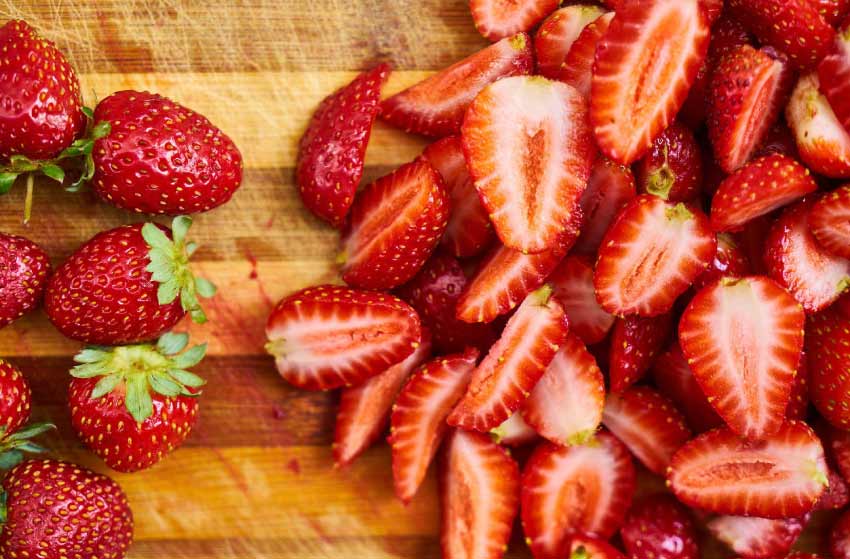
Can gerbils eat strawberries: a bunch of fresh red strawberries
Fresh, plain strawberries are a safe occasional gerbil treat in tiny portions. Photo: David J. Boozer / Unsplash.

How Many Strawberries Can Gerbils Eat?

Gerbils are small, so a little fruit goes a long way. WebMD suggests offering a bite-sized amount of safe fruits every other day and keeping all extras in moderation. Chewy recommends that pellets make up about 90% of the diet, with fruits, vegetables and treats together staying under 10% of daily calories, offered a few times a week in small amounts.

Gerbil Suggested strawberry treat Frequency
Healthy adult A piece about the size of its paw 2–3 times a week
Any gerbil new to fruit A sliver to test Once, then watch for 24 hours
Overweight gerbil Ask your vet first As your vet advises
Gerbil with loose stools None until stools are normal Talk to your vet

Portions are our practical guide based on WebMD and Chewy advice; they are not a veterinary prescription.

If you keep a pair or group and wonder “can gerbils eat strawberries” together, cut a separate piece for each gerbil. That way, one bold gerbil does not eat every bite while a shy one gets none.

How to Prepare Strawberries for Your Gerbil

  1. Choose a fresh berry. Pick one that is firm, ripe and free of mold or soft spots.
  2. Wash it well. The FDA advises rinsing produce under plain running water while gently rubbing it, without soap or produce wash, then drying it with a clean towel.
  3. Remove the leaves. Chewy advises removing the green top before feeding.
  4. Cut it small. Slice off a piece about the size of your gerbil’s paw.
  5. Serve and clear. Offer it by hand or in a dish, and remove any uneaten fruit within a few hours so it does not spoil in the bedding.

How to introduce strawberries safely

Once you know the answer to “can gerbils eat strawberries,” the next step is a slow start. Any new food should go in slowly so you can spot a problem early. Give one tiny sliver on its own, not mixed with other new treats, so you know what caused any change.

Over the next 24 hours, check the droppings, which should look the same as usual. The VCA veterinarians explain that moisture around the rear end can be a sign of diarrhea. If that happens, stop the fruit and call your vet.

If all looks normal, you can build up to a paw-sized piece. Some gerbils love strawberries right away, while others sniff them and walk off. Both are fine. Never force a treat, and never swap pellets for fruit to tempt a fussy eater.

Pet Care Tip: Hand-feeding a tiny strawberry piece can help build trust with a shy gerbil. Keep the session short, sit low to the ground and let your gerbil come to you.

What Strawberries Offer Gerbils

Strawberries are mostly water, with a little natural sugar, fiber and vitamin C. According to USDA FoodData Central data for raw strawberries, 100 grams contain:

Nutrient (per 100 g) Amount What it means for gerbils
Water 91 g Adds a little moisture
Energy 32 kcal Low calorie, but adds up for a tiny pet
Total sugars About 4.9 g The main reason to limit portions
Fiber 2 g Small fiber boost
Vitamin C About 59 mg A bonus nutrient; pellets provide the core diet

Figures are for 100 g of raw strawberries, far more than a gerbil should eat. A gerbil’s portion is a tiny fraction of this.

For a gerbil, the main benefit is likely enrichment rather than nutrition. A new taste and texture gives a gerbil something to explore, and it may make handling easier. The VCA veterinarians note that gerbils come from dry regions and get much of their water from fruits and vegetables, but they should still always have fresh, clean water available.

Risks: Can Gerbils Eat Strawberries Every Day?

It is best not to. WebMD warns that too much fruit can cause digestive problems such as diarrhea, and Chewy describes fruit as high in sugar and best kept as an occasional treat. Daily strawberries also crowd out the balanced pellets your gerbil needs.

  • Diarrhea: Sugary, watery fruit in large amounts can upset digestion.
  • Weight gain: The Royal Veterinary College calls obesity a big problem in pet gerbils and recommends a measured diet and plenty of exercise.
  • Picky eating: Gerbils given many treats may ignore their pellets.
  • Spoilage: Hidden fruit can mold in bedding.

Strawberry products to avoid

Product Safe? Why
Fresh strawberries Yes, in small pieces Plain and natural
Plain frozen, thawed Occasionally Check for added sugar
Dried strawberries No Concentrated sugar
Jam, jelly or syrup No Added sugar and sometimes sweeteners
Strawberry yogurt or candy No Sugar, dairy and additives

Our editorial guidance, based on WebMD and Chewy advice to keep sugar low and stick to plain, fresh fruit.

Where Strawberries Fit in a Healthy Gerbil Diet

VCA veterinarians advise against an all-seed diet, which can lead to obesity, and recommend a gerbil pellet plus small amounts of fresh vegetables and limited fruit. WebMD suggests a commercial food with about 14% protein and 6% to 8% fat, and scattering food to encourage foraging.

Other fruits Okay as a treat?
Apple (no seeds) Yes, small pieces
Blueberries Yes, small pieces
Banana (peeled) Yes, small pieces
Pear Yes, small pieces
Grapes No; WebMD lists them to avoid
Citrus fruits No; WebMD and Chewy advise avoiding them
Rhubarb No; WebMD lists it to avoid

Safe fruits from the Chewy guide; foods to avoid from WebMD and Chewy. When in doubt, ask your vet.

Better everyday extras than fruit

If your gerbil enjoys fresh food, vegetables usually make a better regular extra than fruit because most carry less sugar. Chewy lists carrots, broccoli, cucumber, zucchini, bell peppers and leafy greens as safe options in small amounts, and VCA recommends washing vegetables before serving. Offer one new vegetable at a time, in pieces about the size of a fingernail, and remove anything uneaten the same day.

Foraging also matters. WebMD suggests scattering food around the enclosure instead of always using a bowl. Hiding a tiny strawberry piece in clean hay or a cardboard tube turns a treat into a short puzzle. This keeps your gerbil busy and makes a small portion feel like more.

Can gerbils eat strawberries as often as hamsters?

Owners comparing gerbils and hamsters often ask if both pets can share the same treats. For strawberries, the general approach is similar: plain fresh fruit, tiny pieces and only a few times a week. The bigger difference is the main diet, so use a pellet made for gerbils and follow your vet’s advice for each pet.

When to call a vet right away: Diarrhea or a wet, dirty rear end, not eating, a hunched posture, lethargy or sudden weight loss needs prompt care from a vet who treats small mammals. Small pets can become seriously ill quickly. If your vet is closed, call a 24/7 emergency animal hospital that sees exotic pets.

7 questions to ask your vet about gerbil treats

  1. Is my gerbil at a healthy weight?
  2. How many treats per week are right for my gerbil?
  3. Which fruits and vegetables are best for its diet?
  4. Is my pellet food the right protein and fat level?
  5. Should I avoid fruit because of any health condition?
  6. How do I spot early digestive problems?
  7. How often should my gerbil have a checkup?

Example Scenario (illustrative)

Leo in Minneapolis wonders “can gerbils eat strawberries?” after his gerbil, Pip, sniffs at his breakfast. He washes a berry, removes the leaves and offers a sliver. Pip eats it happily, and her droppings stay normal the next day. Leo now gives a paw-sized piece twice a week as a hand-feeding treat.

Common mistake Why it matters Better approach
Giving a whole strawberry Far too much sugar for a gerbil Offer a paw-sized piece
Feeding fruit daily Risks diarrhea and weight gain A few times a week at most
Skipping the wash Dirt and residue stay on the berry Rinse under running water
Leaving fruit in the cage It can spoil in the bedding Remove leftovers within a few hours

What most owners get wrong

Many owners ask “can gerbils eat strawberries?” and stop at “yes.” The real question is how much. A gerbil is tiny, so a portion that looks small to us is a big sugar load for it. Think of strawberries as a reward, not a food group.

Can Gerbils Eat Strawberries? FAQs

Can gerbils eat strawberry leaves?

It is best to remove them. Chewy advises taking off the leaf before feeding and notes that the leaves can be hard for gerbils to digest.

Can gerbils eat strawberry seeds?

The tiny seeds on the surface are part of the fruit and are normally left on. Chewy’s preparation advice is to remove the leaf; it does not mention removing seeds.

Can gerbils eat frozen strawberries?

Plain, unsweetened frozen strawberries are fine once fully thawed. Avoid any with added sugar or syrup.

Can gerbils eat dried strawberries?

No. Drying concentrates the sugar, so fresh fruit is a better choice.

Are strawberries better for gerbils or hamsters?

Both can have small amounts of fresh strawberry as a treat. The same rule applies: tiny portions, a few times a week.

How long do gerbils live?

VCA veterinarians say gerbils usually live about 2 to 3 years. A balanced diet with limited treats supports a healthy life.

What should a gerbil eat every day?

A good gerbil pellet, fresh water and small amounts of vegetables. Chewy suggests pellets make up about 90% of the diet.

Final Verdict: Can Gerbils Eat Strawberries?

Can gerbils eat strawberries? Yes, as a small, occasional treat. Wash the berry, remove the leaves, offer a paw-sized piece a few times a week, and keep pellets as about 90% of the diet. Skip dried, canned or sugary strawberry products, and call your vet if your gerbil gets diarrhea or stops eating.

Your next steps

  1. Check that your gerbil’s main food is a quality pellet, not an all-seed mix.
  2. Have guinea pigs too? Read our guide on whether guinea pigs can eat strawberries and bananas.
  3. Thinking about another small pet? See our low-maintenance pets for beginners guide, or explore our Other Pets section.

Share your gerbil’s favorite treats on our Pets Store Home Facebook page.

About the author: Written and reviewed by the Pets Store Home Editorial Team, a group of pet owners and animal lovers who check every guide against trusted US veterinary and food-safety sources. This article is general information, not a substitute for professional veterinary advice. Always talk to a vet who treats small mammals about your own pet’s diet.

How we checked this guide: Safe fruits, portions and foods to avoid come from a DVM-reviewed WebMD article and a Chewy gerbil feeding guide. Safe vegetables come from Chewy. Diet and lifespan information comes from VCA veterinarians, obesity guidance from the Royal Veterinary College, strawberry nutrition from USDA FoodData Central data, and washing advice from the FDA. Portion sizes in our tables are practical guidance, not a prescription. We review this article every 12 months, or sooner if guidance changes.

Last reviewed: October 2026.

Can Gerbils eat Bananas?

Can Gerbils eat Bananas?

Can Gerbils Eat Bananas? Safe Serving Guide and Easy Tips (2026)

Can gerbils eat bananas? Yes. A healthy adult gerbil can have a tiny piece of fresh, peeled banana as an occasional treat. Banana is sugary, so keep it to a small cube once or twice a week. A gerbil-formulated pellet diet should always make up most of what your pet eats.

Maybe your gerbil sniffed at the banana on your breakfast plate, or you want a treat that is not from a pet-store bag. Either way, you want to know how much is safe and what could go wrong. This guide gives you the nutrition facts, clear portions, a step-by-step way to introduce banana, and the warning signs to watch.

Key takeaways

  • Fresh, peeled banana is safe for healthy adult gerbils in very small amounts.
  • Banana carries about 12 g of sugar per 100 g, so it belongs in the treat category, not the daily menu.
  • Offer a cube about 1/4 inch (6 mm) across, once or twice a week at most.
  • Skip the peel, dried banana chips and any banana-flavored human snacks.
  • A gerbil pellet diet should be the base. VCA veterinarians warn against seed-only diets because they are high in fat.

Can Gerbils Eat Bananas? The Short Answer

The answer to “can gerbils eat bananas?” is yes, with limits. Banana is not toxic to gerbils, and Chewy’s gerbil feeding guide lists peeled banana among safe fruits. The catch is sugar. Gerbils come from arid regions, and VCA veterinarians recommend a plain pellet diet with only limited fruit.

Banana form OK for gerbils? Why
Fresh, ripe flesh Yes, tiny amounts Soft, easy to eat; high in natural sugar
Peel No Tough, hard to digest and may carry residues
Dried banana chips No Sugar is concentrated; many are fried or sweetened
Banana bread, pudding or flavored snacks No Added sugar, fat and sometimes chocolate
Unripe green banana Best avoided Firm and starchy; ripe fruit is gentler

Pet Care Tip: Cut the banana cube on a clean board, not from a piece you have been eating. Saliva, butter or peanut butter on your own snack can add things your gerbil does not need.

Can gerbils eat bananas: a pet gerbil next to a small piece of fresh banana
Can gerbils eat bananas? Yes, but only a tiny peeled piece as an occasional treat.

Banana Nutrition: What Your Gerbil Actually Gets

Knowing what is inside a banana explains the cautious portion. Here are the USDA FoodData Central values for raw banana:

Nutrient (per 100 g raw banana) Amount What it means for a gerbil
Energy 89 kcal Calorie-dense for an animal this small
Total sugars 12.23 g The main reason to limit portions
Fiber 2.6 g Some, but pellets and vegetables supply more reliably
Water 74.91 g Adds moisture; too much fruit can loosen stools
Potassium 358 mg A mineral already covered by a complete pellet
Vitamin B6 0.367 mg Useful, but not a reason to feed more

Source: USDA FoodData Central, Bananas, raw (FDC ID 173944, SR Legacy).

The takeaway is simple. Banana offers a few vitamins and minerals, but nothing a gerbil cannot get from its regular pellets. What it adds most is sugar and water. That is why banana works as a reward, not as nutrition. Ripeness matters too: as a banana ripens, more of its starch tends to turn into sugar, so a heavily spotted banana is the sweetest choice of all.

How Much Banana Can a Gerbil Eat?

Once you know the answer to “can gerbils eat bananas?”, portion size is the next question. Chewy’s feeding guide suggests pellets make up about 90% of the diet, with fruit, vegetables, seeds and treats sharing no more than 10% of daily calories. Banana has to fit inside that small slice alongside everything else.

A WebMD guide reviewed by a veterinarian says fruit should be offered in small pieces no more than every other day. Because banana is one of the sweeter options, our editorial rule is tighter still:

Your gerbil Banana portion How often
Healthy adult at a good weight One cube about 1/4 inch (6 mm) Once or twice a week
Young gerbil still settling onto pellets None yet Wait until it eats its regular diet well
Overweight gerbil Swap for a low-sugar vegetable Ask your vet first
Gerbil with diarrhea or a health condition None Only with your vet’s OK

Can gerbils eat bananas every day?

No. Daily banana would push sugar well past the treat allowance. Chewy notes that overfeeding fruit can lead to weight gain, diabetes, stomach upset and dental problems. Keep banana as a weekly surprise rather than a habit.

Can gerbils eat bananas: a pet gerbil with a small piece of banana
Can gerbils eat bananas? A tiny piece is a full treat portion. Photo: Pexels.

How to Prepare and Introduce Banana

If you have decided the answer to “can gerbils eat bananas?” is yes for your pet, start slowly. A gerbil’s gut handles change best in tiny steps.

  1. Pick a ripe banana. Yellow with a few brown flecks is ideal. Avoid green or mushy, fermenting fruit.
  2. Wash your hands and peel it. Discard the peel and the stringy fibers.
  3. Cut one small cube. About 1/4 inch (6 mm) is plenty for one gerbil.
  4. Offer it by hand or in a clean dish. Hand feeding builds trust and lets you see that it gets eaten.
  5. Remove leftovers within a few hours. Gerbils hoard food in their bedding, and soft fruit spoils quickly.
  6. Watch droppings for 24 to 48 hours. Firm, dry pellets mean all is well. Soft stools mean stop.

Can gerbils eat banana peel?

It is best to skip it. The peel is tough and fibrous, and it is the part most exposed to farm sprays and handling. Your gerbil gets nothing from the peel that it cannot get more safely elsewhere.

What about dried banana chips or frozen banana?

Dried chips pack the sugar of a much larger piece into one bite, and many store-bought chips are fried or sweetened. Leave them out. Frozen banana is very cold and hard for small teeth, so thaw any frozen piece to room temperature first, then treat it like fresh fruit.

Example Scenario (illustrative)

Marcus in Tucson, Arizona, keeps two gerbils, Pip and Sage. He wonders, “Can gerbils eat bananas as a reward for coming to my hand?” He cuts two 1/4-inch cubes, one each, and offers them on a Saturday. Both droppings stay firm, so banana becomes their Saturday treat. On other days he uses a sliver of carrot instead, which keeps the sugar low.

A sample weekly treat plan for your gerbil diet

Planning ahead stops treats from creeping up. This sample week keeps pellets as the daily base, uses vegetables most days, and limits fruit to well within WebMD’s every-other-day ceiling. Use it as a starting point and adjust with your vet.

Day Base Extra (one tiny piece)
Monday Gerbil pellets and fresh water Carrot sliver
Tuesday Pellets and water None
Wednesday Pellets and water Broccoli floret tip
Thursday Pellets and water Apple sliver, no seeds
Friday Pellets and water Cauliflower crumb
Saturday Pellets and water Banana cube, 1/4 inch
Sunday Pellets and water None

Editorial example. Fruit appears twice in the week, so banana and apple never land on back-to-back days.

Using banana to hand-tame a shy gerbil

Can gerbils eat bananas as a training reward? Yes, and its soft texture makes it handy for building trust. Hold a crumb-sized piece on a flat palm inside the enclosure and let your gerbil come to you. Keep sessions short, and count that crumb as the day’s treat rather than adding more.

Signs of Too Much Banana and When to Call a Vet

Too much fruit usually shows up in the litter first. Stop banana and go back to plain pellets if you notice:

  • Soft, wet or smelly droppings, or a dirty rear end
  • Weight gain or a rounder body over a few weeks
  • Picky eating, where your gerbil ignores pellets and waits for treats
  • Sticky fur around the mouth or chin

When to call a vet: Watery diarrhea, a hunched posture, refusing food, or lethargy can turn serious quickly in a small rodent. Contact a veterinarian who treats small mammals, or a 24/7 emergency animal hospital, the same day.

VCA Animal Hospitals recommends a vet exam soon after you bring a gerbil home, then yearly checkups with fecal parasite tests. Older gerbils benefit from visits twice a year. Those visits are a good time to ask whether fruit treats suit your gerbil’s weight.

Better Everyday Foods and Foods to Avoid

VCA veterinarians advise a pelleted diet made for gerbils as the base, with small amounts of washed vegetables and limited fruit. They warn that seed-only diets are high in fat, poor in nutrition and linked to obesity. Gerbils evolved in arid regions and drink little, but they should always have fresh water.

Food Verdict Notes
Gerbil pellets Daily staple The base of the diet
Carrot, broccoli, cauliflower Small daily amounts Lower in sugar than fruit
Apple (no seeds), pear, blueberry, strawberry Occasional treat Same tiny portions as banana
Chocolate, caffeine, onion, garlic Never Listed as toxic by Chewy
Grapes, rhubarb Avoid On WebMD’s avoid list
Citrus Best skipped Can upset the digestive system

If your gerbil enjoys fruit, rotate rather than repeat. Our guide to feeding gerbils strawberries covers another favorite. Owners of other small pets can compare with our chinchilla fruit and vegetable guide.

Common mistake Effect on your gerbil How to avoid it
Thumb-sized banana chunks Sugar overload, soft stools Cut a 1/4-inch cube
Leaving fruit in the cage Hoarded fruit spoils in bedding Remove leftovers within a few hours
Seed mix as the main food High fat, risk of obesity Feed gerbil pellets as the base
Several new foods at once Hard to spot the culprit Add one food, wait 48 hours

What most owners get wrong

Many owners judge a treat by whether it is “natural.” Banana is natural, yet it still carries about 12 g of sugar in every 100 g. The size of the piece matters more than the type of food. A cube the size of a pencil eraser is a treat; a slice is a sugar spike.

Can Gerbils Eat Bananas? FAQs

Do gerbils like bananas?

Many gerbils accept banana eagerly because it is soft and sweet. Liking it does not mean they need it, so keep it occasional.

Can baby gerbils eat bananas?

Wait until a young gerbil is eating its regular pellets well. Then introduce banana in the same tiny portion as for adults and watch its droppings.

Can gerbils eat banana peel?

No. The peel is tough to digest and may carry farm residues. Always remove it and offer only the soft flesh.

Can gerbils eat dried banana chips?

No. Drying concentrates the sugar, and many chips are fried or sweetened. Fresh, peeled banana is the only form to offer.

How often can gerbils eat bananas?

Once or twice a week at most for a healthy adult, in a cube about 1/4 inch across. On other days, choose lower-sugar vegetables.

Can bananas cause diabetes in gerbils?

Vet-reviewed guides warn that sugary treats and overfed fruit can contribute to diabetes and weight gain. Small, occasional portions keep that risk low.

Can gerbils eat bananas and apples on the same day?

Better not. Stick to one fruit per treat day so sugar stays low and you can tell which food caused any stomach upset. Spread different fruits across the week instead.

Final Verdict: Can Gerbils Eat Bananas Safely?

Can gerbils eat bananas? Yes, as long as you treat banana like candy. Offer a peeled cube about 1/4 inch across, no more than once or twice a week, on top of a gerbil pellet diet. Skip the peel and chips, watch the droppings, and call your vet if your gerbil’s stools turn loose.

Your next steps

  1. Check your gerbil’s pellet bag and make sure pellets, not seeds, are the main food.
  2. Read our guide to gerbils and strawberries to plan a treat rotation.
  3. Browse more small-pet care in our Other Pets section.

Share your gerbil’s favorite treats with other pet parents on our Pets Store Home Facebook page.

About the author: Written and reviewed by the Pets Store Home Editorial Team, a group of pet owners and animal lovers who check every guide against trusted US veterinary and animal-welfare sources. This article is general information, not a substitute for professional veterinary advice. Always talk to your veterinarian about your own pet’s health.

How we checked this guide: Diet structure and vet-care advice come from VCA Animal Hospitals. Fruit frequency comes from a veterinarian-reviewed WebMD guide, and treat limits and toxic foods from Chewy’s feeding guide. Banana nutrition values come from USDA FoodData Central. Portion sizes are our editorial guidance based on those limits. We review this article every 12 months, or sooner if guidance changes.

Last reviewed: October 2026. Sources: VCA, WebMD, Chewy, USDA FoodData Central.

Wolf German Shepherd Husky Mix

Wolf German Shepherd Husky Mix

Wolf German Shepherd Husky Mix: Essential Owner’s Guide (2026)

A wolf German Shepherd Husky mix is usually not part wolf. In most listings, the name describes a German Shepherd crossed with a Siberian Husky, often called a Gerberian Shepsky, bred or chosen for its wolf-like look. A true wolfdog has real wolf ancestry and is a very different animal, with legal limits and rabies vaccine problems that ordinary dogs don’t have.

If you’ve seen a striking gray-and-tan puppy advertised as “wolf mix,” this guide helps you work out what you’re actually looking at. It covers size, temperament, exercise, grooming, health, the Lab Husky German Shepherd mix, and what the law says about genuine wolf hybrids in the US.

Key takeaways

  • Most “wolf” German Shepherd Husky mixes are Shepskies: two domestic breeds with a wild look.
  • Expect a medium-to-large, high-energy dog; PetMD puts the Shepsky at about 40–60 pounds and 10–14 years.
  • Plan on daily exercise, regular brushing and heavy seasonal shedding.
  • Hip and elbow dysplasia, degenerative myelopathy and eye disease run in the parent breeds.
  • Real wolfdogs face state and local restrictions, and no rabies vaccine is licensed for them.

Is a Wolf German Shepherd Husky Mix Part Wolf?

Usually, no. Both parent breeds already look wolfish: the German Shepherd with its upright ears and sable coat, the Siberian Husky with its mask and pale eyes. Put them together and many puppies look like they stepped out of a nature documentary. Sellers know this, so “wolf” gets added to the ad.

Very occasionally, though, a wolf German Shepherd Husky mix really does carry wolf genes. That animal is a wolfdog (also called a wolf hybrid), and the rules change completely. The table shows the difference.

Feature Shepsky (GSD × Husky) True wolfdog
Ancestry Two domestic dog breeds Includes a gray wolf or wolfdog
Legal status Treated as a dog Banned or regulated in many states and towns
Rabies vaccine Licensed dog vaccines apply No vaccine is licensed for hybrids
Housing Home and fenced yard Some states require secure double fencing
Best for Active, experienced dog owners Specialist keepers only, where legal

If a seller can’t show you both parents, or claims a high “wolf content” without paperwork, treat the label as marketing and ask more questions before you go any further.

Wolf German Shepherd Husky mix comparison: a gray wolf standing in a grassy forest clearing
A gray wolf. A wolf German Shepherd Husky mix may share the look, but most have no wolf ancestry at all. Photo: Daniel Lengies / Pexels.

Real Wolfdogs: Laws and Rabies Rules

If the wolf German Shepherd Husky mix you’re considering truly has wolf ancestry, check the law before anything else. There is no single federal rule. States, counties and cities each set their own, and they range from outright bans to permits and detailed housing rules.

Arkansas is one example of a state that regulates rather than bans. Its wolf and wolf-dog hybrid law requires records, double-layer fencing and a den for each animal, and makes it an offense for a hybrid to bite someone outside its enclosure. Washington, by contrast, excludes wolf hybrids from its wolf ban, as our guide to exotic pets that are legal in Washington State explains. Always confirm with your state wildlife agency and local animal control.

Why rabies is the biggest catch

Rabies vaccines are licensed for dogs, not for wild animals or wild-domestic crosses. Los Angeles County’s rabies control manual states that no rabies vaccine is licensed for wild-domestic hybrids, and that a hybrid that bites a person can’t be recognized as rabies-immunized, even if it was vaccinated. In that situation it is handled as a wild animal, which can have serious consequences for the animal.

Wolf German Shepherd Husky Mix Size, Looks and Lifespan

Because a wolf German Shepherd Husky mix inherits a blend of two breeds, size can land anywhere between the parents. PetMD describes the Gerberian Shepsky as a medium-size dog of about 40 to 60 pounds with a 10- to 14-year lifespan. Puppies from large Shepherd lines can grow bigger.

Breed Height (male / female) Weight (male / female) Lifespan
German Shepherd 24–26 in / 22–24 in 65–90 lb / 50–70 lb 7–10 years
Siberian Husky 21–23.5 in / 20–22 in 45–60 lb / 35–50 lb 12–14 years
Shepsky mix Usually between the parents About 40–60 lb (often more) 10–14 years

Heights from the AKC breed standards; German Shepherd weight and lifespan from PetMD; Husky weight from the AKC standard and lifespan from PetMD.

Coats are thick and double-layered, in sable, black and tan, gray, red or black and white. Eyes can be brown, blue or one of each, since the AKC Siberian Husky standard accepts brown, blue, odd or parti-colored eyes. Ears are usually upright, though some puppies keep softer tips.

German Shepherd and Husky Mix Temperament

Think “smart, busy and vocal.” PetMD notes that Shepskies bring large amounts of energy and intelligence, and that personality varies: German Shepherds tend to be reserved with strangers, while Huskies are usually outgoing. Your dog could lean either way.

  • Loyal and people-focused: many bond closely with their family.
  • Clever and easily bored: without jobs to do, chewing and digging are common.
  • Escape-prone: PetMD warns that bored Huskies may dig and escape yards, so check your fence.
  • Talkative: howling, “talking” and alert barking are all possible.
Wolf German Shepherd Husky mix parent breed: a black and white Siberian Husky with blue eyes in the snow
The Siberian Husky parent often passes on blue eyes and a facial mask to the wolf German Shepherd Husky mix. Photo: Kateryna Babaieva / Pexels.

Exercise, Training and Grooming

A wolf German Shepherd Husky mix is not a couch dog. PetMD recommends one to two hours of exercise a day for German Shepherds and at least 40 minutes for Huskies, so most Shepskies need somewhere in that range, plus brain work.

Exercise ideas

  • Two brisk walks or hikes a day, on leash or in a securely fenced area
  • Fetch, flirt-pole play or canicross (running with your dog on a harness)
  • Puzzle feeders, scent games and short training sessions
  • Dog sports such as agility, rally or nose work

Huskies were bred for cold weather and pulling, so in hot Southern or Southwestern summers, exercise early or late in the day, bring water and watch for heavy panting.

Training tips

Use reward-based training with food, toys and praise. Skip harsh, “alpha”-style corrections. Start socialization early with people, other dogs and new places, and practice recall in safe areas, since many Husky-type dogs will run off once they’re loose. A puppy class is a good start.

Grooming and shedding

Expect hair on everything. The double coat sheds year-round and “blows” heavily in spring and fall. PetMD suggests brushing at least weekly and bathing a few times a year; during heavy sheds, daily brushing with an undercoat rake helps. Never shave a double coat, since it helps regulate temperature. If you love the pale coat look, our guide to the white German Shepherd covers that coat color in detail.

Wolf German Shepherd Husky Mix Health Problems

Mixed breeding doesn’t guarantee good health. A wolf German Shepherd Husky mix can inherit conditions from either side. PetMD lists these for the German Shepherd and Siberian Husky:

Condition From What to know
Hip and elbow dysplasia Both, mainly GSD About 20% of German Shepherds have hip dysplasia (CHIC data, via PetMD)
Degenerative myelopathy GSD Slow hind-leg weakness, usually in older dogs; no cure
Bloat (GDV) GSD Sudden emergency; ask your vet about a preventive gastropexy
Eye disease Husky Cataracts, progressive retinal atrophy, corneal dystrophy
Hypothyroidism Husky A hormone condition your vet can test for

Signs of bloat include a swollen belly, unproductive retching and restlessness. That’s an emergency, so go to a vet or a 24/7 animal hospital straight away.

Questions to ask a breeder or rescue

  • Can I meet both parents, or at least the mother?
  • Do the parents have hip and elbow screening results and recent eye exams?
  • Has either parent been DNA-tested for degenerative myelopathy?
  • If you say “wolf,” what proof of ancestry do you have, and is the animal legal where I live?
  • Will you take the dog back if it doesn’t work out?
Wolf German Shepherd Husky mix parent breed: a black and tan German Shepherd sitting in tall green grass
The German Shepherd side brings size, focus and a higher risk of hip dysplasia to the wolf German Shepherd Husky mix. Photo: Anastasia Lashkevich / Pexels.

The Lab Husky German Shepherd Mix

A Lab Husky German Shepherd mix (also searched as German Shepherd Lab Husky mix or Husky Shepherd Lab mix) adds a Labrador Retriever to the blend, usually by crossing a Shepsky with a Lab or a Lab mix. The AKC Labrador Retriever standard describes males of 65–80 pounds and females of 55–70 pounds, so these three-way mixes often end up medium-large.

The Lab side may add a softer, more food-motivated and people-pleasing streak, which can make training easier. Energy stays high, shedding stays heavy, and the same hip, elbow and eye checks apply. With three breeds involved, appearance and personality are hard to predict, so meet the individual dog. Shelters and breed rescues often have adult mixes whose size and temperament you can see for yourself.

Is a Wolf German Shepherd Husky Mix Right for You?

A good match if you… Think twice if you…
Hike, run or train daily Work long hours with no dog walker
Have a secure, tall fence Rent with no yard or a low fence
Don’t mind dog hair and grooming Want a tidy, low-shedding dog
Enjoy training and dog sports Want a calm first dog

Example Scenario (illustrative): Keisha in Minneapolis, Minnesota, saw an online ad for a “wolf German Shepherd Husky mix, 30% wolf.” The seller couldn’t show papers or the father. Keisha checked her city rules, decided the risk wasn’t worth it, and adopted a two-year-old Shepsky from a local rescue instead. She now runs with him at dawn, brushes him every evening during his spring shed, and has raised her backyard fence to six feet.

If you like Husky crosses but want a sleeker coat, compare our Greyhound Husky mix guide. For an even bigger Shepherd cross, see the Irish Wolfhound German Shepherd mix.

Wolf German Shepherd Husky Mix FAQs

Is a wolf German Shepherd Husky mix a good family dog?

It can be, for active families with time to train and exercise it daily. Supervise it around small children, since its size and energy can knock them over. A genuine wolfdog is not recommended as a family pet.

How big does a German Shepherd and Husky mix get?

PetMD puts the Gerberian Shepsky at about 40 to 60 pounds, but puppies from large German Shepherd lines can grow heavier. Most stand somewhere between the two parent breeds.

How long do Shepskies live?

PetMD gives a lifespan of about 10 to 14 years. Good weight control, regular vet care and screened parents can help your dog reach the upper end.

Are wolfdogs legal in the US?

It depends on your state, county and city. Some ban them, others require permits or special fencing. Check with your state wildlife agency and local animal control before buying.

Do German Shepherd Husky mixes shed a lot?

Yes. Their double coat sheds all year and heavily in spring and fall. Brushing at least weekly, and daily during heavy sheds, keeps the hair under control.

Can a German Shepherd Husky mix live in an apartment?

It’s possible with a very committed owner, but hard. They need hours of activity and can be noisy. A home with a securely fenced yard usually suits them better.

Where can I find German Shepherd Husky mix puppies?

Start with local shelters and German Shepherd or Husky rescues, which often have Shepsky puppies and adults. If you buy, choose a breeder who shows both parents and their hip, elbow and eye screening results.

Final Verdict: Is a Wolf German Shepherd Husky Mix Worth It?

A wolf German Shepherd Husky mix is usually a Shepsky: a loyal, clever, high-energy dog that looks wild but is fully domestic. It suits active owners with secure fencing and patience for shedding. A true wolfdog is a different commitment, with legal limits and no licensed rabies vaccine, so check the law first and choose screened parents or a rescue.

Your next steps

  1. Search local shelters and German Shepherd or Husky rescues for adult Shepskies.
  2. Take the “Questions to ask a breeder or rescue” box above with you to every visit.
  3. Browse more breed and care guides in our dog section.

Already share your home with a Shepsky? Show us your wolf-look pup on our Facebook community.

About the author — Written and reviewed by the Pets Store Home Editorial Team: pet owners and animal lovers who check every guide against trusted US veterinary and animal-welfare sources. This article is general information, not a substitute for professional veterinary advice. Always talk to your veterinarian about your own pet’s health.

How we checked this guide: We used the AKC breed standards for the German Shepherd, Siberian Husky and Labrador Retriever, veterinarian-reviewed PetMD breed profiles, the Los Angeles County rabies control manual and the Arkansas wolf-dog hybrid statute. We review this article every 12 months, or sooner if guidance changes.

Last reviewed: October 2026.

Sources

Service Animals vs. Emotional Support Animals: What the Law Actually Says (2026)

Service Animals vs. Emotional Support Animals: What the Law Actually Says (2026)

Service Pets: Service Animals vs. Emotional Support Animals (2026 Law Guide)

What are service pets? Under federal law, a service animal is a dog individually trained to do work or tasks for a person with a disability. They may enter most public places and fly in the cabin. Emotional support animals and therapy dogs are not service animals under the ADA, and HUD narrowed its housing enforcement for them in 2026.

Many people use the phrase “service pets” for any animal that helps a person, but the law draws sharp lines. This guide explains which service pets the ADA covers, what businesses may ask, how airline rules work, what HUD’s 2026 change means for emotional support animals in housing and how to get or train a service dog.

Key takeaways

  • Service pets, in legal terms, are service dogs trained to perform disability-related tasks.
  • Emotional support dogs and other animals that provide comfort just by being present are not ADA service animals.
  • Psychiatric service dogs trained to do specific tasks do qualify.
  • Staff may ask only two questions and cannot demand papers, vests or a demonstration.
  • Airlines may require DOT forms and limit passengers to two service animals.
  • In May 2026, HUD narrowed its enforcement to trained animals; the Fair Housing Act itself did not change.
  • Online “certificates” and registries do not give legal rights under the ADA.

What Are Service Pets? The Short Answer

So, what is a service dog? The U.S. Department of Justice’s ADA service animal guidance defines a service animal as a dog that has been individually trained to do work or perform tasks for an individual with a disability. Different federal laws apply in public places, on airplanes and in housing, so the same animal can be treated differently in each setting.

Type Public places (ADA) Airplane cabin (DOT) Housing (HUD enforcement, 2026)
Service dog (task-trained) Yes Yes Yes
Psychiatric service dog Yes Yes Yes
Emotional support animal No (state law may differ) No; travels as a pet HUD no longer pursues these complaints; other routes may exist
Therapy dog No No; travels as a pet No special status
Trained miniature horse Case by case No (DOT rule covers dogs) Possibly; HUD recognizes some non-dog species

Summary of DOJ ADA guidance, the DOT 2020 final rule and HUD’s May 22, 2026 enforcement memo as reported by NAR, DREDF and the Great Plains ADA Center. General information, not legal advice.

Service pets: a German Shepherd working dog wearing a vest and resting on grass
A vest can help the public recognize a working dog, but the ADA does not require one. Photo: Elianna Gill / Unsplash.

Service Pets Under the ADA

The key word is “task.” The dog must be trained to do something specific that relates to the person’s disability. The DOJ’s service animal requirements give examples such as guiding people who are blind, alerting people who are deaf, pulling a wheelchair, alerting and protecting a person having a seizure, reminding a person with mental illness to take prescribed medication and calming a person with PTSD during an anxiety attack.

The DOJ guidance states that animals whose only role is to provide comfort, often called emotional support animals, do not qualify as service animals under the ADA. It also notes that some state or local laws allow emotional support animals in public places, so check your state’s rules too.

Psychiatric service dogs

The ADA treats psychiatric service dogs differently from emotional support animals. According to the DOJ, a dog trained to sense that an anxiety attack is about to happen and take a specific action to help avoid it or lessen its impact would qualify. A dog whose mere presence is comforting would not.

What about miniature horses?

Dogs are the only species defined as service animals, but the revised ADA regulations that took effect on March 15, 2011, add a separate provision for trained miniature horses. The DOJ says covered entities must modify their policies to permit miniature horses where reasonable. A National ADA Network fact sheet adds that this depends on the horse’s type, size and weight and whether the facility can accommodate it.

What Businesses Can and Cannot Ask About Service Pets

When it is not obvious what a service animal does, the DOJ says staff may ask only two questions: whether the dog is a service animal required because of a disability, and what work or task the dog has been trained to perform.

Staff may Staff may not
Ask the two permitted questions Ask about the person’s disability
Ask that an out-of-control dog be removed if the handler does not act Require medical documentation
Exclude a dog that is not housebroken Demand certification, an ID card or a vest
Charge for actual damage, as for other guests Ask the dog to demonstrate its task
Expect the dog to be leashed or tethered, unless that interferes with its work Charge hotel guests for cleaning a service dog’s hair or dander

Source: U.S. Department of Justice, “Frequently Asked Questions about Service Animals and the ADA.”

The DOJ also says the ADA does not require service animals to wear a vest, ID tag or specific harness. When a leash or harness would interfere with the dog’s work, or the handler’s disability prevents using one, the handler must keep control by voice, signal or other effective means.

Pet Care Tip: Practice short, calm answers to the two permitted questions, such as “Yes, she’s a service dog,” and “She alerts me before a seizure.” Clear answers usually end the conversation quickly and politely.

Service Pets on Planes: DOT Rules

The U.S. Department of Transportation’s final rule, announced in December 2020 and in effect since January 2021, defines a service animal for air travel as a dog individually trained to do work or perform tasks for a person with a disability. Under the rule:

  • Emotional support animals are no longer considered service animals, so airlines may treat them as pets.
  • Psychiatric service dogs must be treated the same as other service dogs.
  • Airlines may require DOT forms attesting to the dog’s health, behavior and training.
  • Airlines may ask for those forms up to 48 hours before travel, if the booking was made before then, or at the gate.
  • Airlines may limit each passenger to two service animals.
  • The dog may have to stay harnessed, leashed or tethered and fit within the handler’s foot space.

Airline policies can add details within these rules, so check your carrier’s service animal page before you book. Pet fees and cabin limits apply to emotional support animals traveling as pets.

Service Pets and Housing: HUD’s 2026 Change

Housing works under the Fair Housing Act, not the ADA, and this area changed in 2026. On May 22, 2026, HUD issued a memo that, as the National Association of Realtors reported, rescinds its 2020 guidance on emotional support animals.

Law firm Fisher Phillips reports that the memo, signed by FHEO Assistant Secretary Craig Trainor, cancels HUD’s 2013 and 2020 assistance animal notices. HUD will now find reasonable cause for a pet-policy complaint only where the animal is individually trained to perform disability-related work or tasks.

That does not end the story for tenants. The Great Plains ADA Center explains that the memo changes how HUD enforces the law but does not change the text of the Fair Housing Act. Disability rights group DREDF notes that people may still bring private lawsuits and that existing regulations remain in place until any new rule is finalized. Many states also have their own fair housing laws.

What changed What did not change
HUD’s 2013 and 2020 assistance animal notices were canceled The text of the Fair Housing Act
HUD focuses on individually trained animals State and local fair housing laws
Untrained ESA complaints are unlikely to be pursued by HUD The right to file a private lawsuit

Based on NAR (June 2026), Fisher Phillips and DREDF (May 2026) and the Great Plains ADA Center. This area is changing; tenants and landlords should check with a fair housing attorney or their state agency.

Where do therapy dogs fit?

Therapy dogs visit hospitals, schools and care homes to comfort many people. They are valued volunteers, but they are not trained to perform tasks for one handler’s disability, so they do not have service animal access rights under the ADA.

How to Get or Train Service Pets

If you are wondering how to train service dogs, start with the law. According to the DOJ, people with disabilities have the right to train their own service dog, and professional training is not required. The DOJ also says online certificates and registrations do not convey any rights under the ADA, and businesses may not require proof of certification.

  1. Talk to your health care provider about whether a task-trained dog could help with your disability.
  2. Decide on a path: a program-trained dog, a professional trainer or owner training.
  3. Choose a suitable dog with a calm, steady temperament and good health.
  4. Build solid basics: house training, loose-leash walking and calm public behavior.
  5. Train the specific task that helps with the disability.
  6. Practice in public until the dog stays under control everywhere.
  7. Keep up training and vet care for the dog’s working life.

Strong basic obedience comes first. Our guide to dog dominance behavior covers common training myths, and our tracking dog training guide shows how scent work builds focus.

When to call a vet right away: Working dogs hide discomfort well. Call your vet promptly if your service dog limps, stops eating, seems unusually tired, has trouble breathing or suddenly loses focus on its tasks. If your vet is closed, call a 24/7 emergency animal hospital.

7 questions to ask before getting a service dog

  1. What specific task would help with my disability?
  2. Will I use a program, a trainer or train the dog myself?
  3. Does the dog have the temperament for public work?
  4. Has a vet checked the dog’s joints, eyes and overall health?
  5. Can I keep up daily training and exercise?
  6. What do my state’s laws say about service and support animals?
  7. Which airline and housing rules will apply to me?

Example Scenario (illustrative)

Daniel in Tampa has epilepsy and asks his neurologist about service pets. He works with a trainer for over a year to teach his Labrador to alert before seizures. When a restaurant manager asks for “papers,” Daniel calmly answers the two permitted questions, and the manager seats them.

Common mistake Why it matters Better approach
Buying an online “registration” It gives no ADA rights Focus on real task training
Calling an ESA a service dog Different legal status Know which category applies
Skipping public manners Out-of-control dogs can be excluded Train calm behavior first
Relying on old housing advice HUD changed course in 2026 Check current state and federal rules

What most owners get wrong

Many people think service pets need a vest, an ID card or a registry number. Under the ADA, none of these is required, and none creates rights. What matters is that the dog is trained to perform a disability-related task and behaves well in public.

Service Pets: FAQs

Can any breed be a service dog?

Yes. The ADA does not limit breeds. What matters is the dog’s training and behavior.

Do service dogs need to be certified?

No. The DOJ says businesses may not require certification, and online registries do not convey ADA rights.

Are emotional support animals allowed on planes?

Not as service animals. Since the DOT’s 2020 rule, airlines may treat them as pets.

Can a landlord refuse an emotional support animal in 2026?

The answer depends on state law and the facts. HUD narrowed its enforcement in May 2026, but private lawsuits and state laws may still apply, so get legal advice.

Can a cat be a service animal?

Not under the ADA, which covers dogs and, in limited cases, miniature horses.

Can a business ban my service dog?

Only if the dog is out of control and you do not act, or if it is not housebroken.

Can I train my own service dog?

Yes. The DOJ says people with disabilities may train the dog themselves.

Final Verdict: Service Pets

Service pets, legally, are dogs trained to perform tasks for a person with a disability. They have broad public and air travel access, no papers required. Emotional support animals and therapy dogs do not share those rights, and HUD’s housing enforcement for ESAs shifted in 2026, so check current state and federal rules.

Your next steps

  1. Read the DOJ’s service animal FAQs and your state’s laws.
  2. Build your dog’s foundation with our guide to dog behavior and training myths.
  3. Browse more training and care guides in our Dogs section.

Share your service dog questions on our Pets Store Home Facebook page.

About the author: Written and reviewed by the Pets Store Home Editorial Team, pet owners who check every guide against official sources. This article is general information, not legal advice. Laws change, so confirm current rules with the agencies below or a disability rights attorney.

How we checked this guide: ADA rules come from the U.S. Department of Justice and the National ADA Network. Air travel rules come from the U.S. Department of Transportation’s final rule.

Housing changes come from HUD’s May 22, 2026 memo as explained by the National Association of Realtors, Fisher Phillips, DREDF and the Great Plains ADA Center. This guide was first published in April 2023 and fully rewritten in October 2026. We review it every 12 months.

Last reviewed: October 2026.

Bull Terrier Mixed Pitbull

Bull Terrier Mixed Pitbull

Bull Terrier Mixed Pitbull: Essential 2026 Guide to Size, Health and Temperament

What is a bull terrier mixed pitbull? It is a cross between a Bull Terrier and an American Pit Bull Terrier or another pit bull-type dog. Most grow into strong, medium-size dogs of roughly 30 to 70 lbs that are playful and people-focused. They need daily exercise, early socialization and health-tested parents.

Because both parents come from the same 19th-century bull-and-terrier roots, this mix can look and act like either side. This guide compares the parent breeds, explains likely size and temperament, lists the health tests to ask for, and covers the local rules every owner should check.

Key takeaways

  • A bull terrier mixed pitbull is a crossbreed, so size, head shape and temperament vary from puppy to puppy.
  • The parent breeds suggest a dog of about 17 to 22 inches and 30 to 70 lbs.
  • The AKC lists patella, cardiac, BAER hearing and kidney tests for Bull Terriers; ask about hips for the pit bull side.
  • White coats are linked to a higher chance of deafness in Bull Terriers.
  • Some US cities, landlords and insurers restrict pit bull-type dogs, so check before you commit.

Bull Terrier Mixed Pitbull: The Short Answer

The easiest way to understand a bull terrier mixed pitbull is to look at both parents side by side. The figures below come from the United Kennel Club breed standards and PetMD’s veterinarian-reviewed breed guides:

Trait Bull Terrier American Pit Bull Terrier
Height About 21–22 in (53–56 cm) 17–21 in (43–53 cm)
Weight About 50–70 lbs (23–32 kg) 30–60 lbs (14–27 kg) in the UKC standard
Life span Typically 12–13 years Varies; ask your vet
Standard temperament Peaceful, tractable, jaunty Friendly, even with strangers
Key health tests Patella, cardiac, BAER, kidney Hips, plus allergy and eye checks

Sources: UKC Bull Terrier standard, UKC American Pit Bull Terrier standard, PetMD and the AKC. Bull Terrier height and weight are from PetMD, because the UKC Bull Terrier standard sets no size limits. Mixed puppies can fall anywhere between, or slightly outside, these ranges.

Most puppies land somewhere in the middle: a muscular, short-coated dog that loves people and has plenty of energy. A few lean strongly toward one parent, which is why meeting both parents matters.

Pet Care Tip: Ask to see both parents as adults. Their size, energy and behavior around visitors are the best preview of the dog your puppy may become.

Bull terrier mixed pitbull guide: a white and brown short-coated bull terrier mix puppy
Bull terrier mixes vary widely in look; a bull terrier mixed pitbull can take after either parent. Photo: Katie Bernotsky / Unsplash.

Where the Bull Terrier Mixed Pitbull Comes From

Both parents of the bull terrier mixed pitbull share the same roots. The UKC American Pit Bull Terrier standard traces that breed to 19th-century crosses of Bulldogs and terriers in England, Ireland and Scotland, later brought to the United States by immigrants. The UKC was the first registry to recognize the breed, in 1898.

The Bull Terrier grew from the same bull-and-terrier crosses. The UKC credits James Hinks with standardizing the breed in the early 1850s, starting with all-white dogs, and the AKC recognized the Bull Terrier in 1885. Both breeds have a fighting history, but today’s standards describe companion dogs, and the UKC lists viciousness as a disqualification in both.

The AKC does not register the American Pit Bull Terrier, and neither registry recognizes this cross as a breed. That means there is no official standard for the mix, and quality depends entirely on the breeder or rescue.

Size, Look and Coat

A bull terrier mixed pitbull usually ends up medium-size and solidly built. Based on the parent breeds, expect roughly 17 to 22 inches at the shoulder and 30 to 70 lbs, with males often at the larger end of the UKC pit bull range.

  • Head: The UKC describes the Bull Terrier’s face as full, oval and “egg-shaped.” A pit bull’s head is usually broader and flatter on top. Mixes can show either shape or something in between.
  • Coat: Both parents have short, smooth coats that usually need little more than weekly brushing.
  • Colors: The UKC accepts almost any color in both breeds, but it disqualifies merle in the American Pit Bull Terrier. Be cautious of any “merle” bull terrier mixed pitbull sold as rare.
  • White coats: PetMD notes deafness is more likely in Bull Terriers with white, piebald or merle coat genes, so a mostly white puppy should have a hearing test.

Will my puppy look more like a Bull Terrier or a pit bull?

There is no way to know for sure. Puppies in the same litter can differ in head shape, size and color. A coat-color and breed DNA test can tell you more about an adult rescue’s background; our guide to dog DNA test kits explains what those tests can and cannot show.

Temperament, Training and Exercise

The parent standards describe friendly dogs. The UKC calls the American Pit Bull Terrier “extremely friendly, even with strangers,” and says it is not a good guard dog for that reason. It describes the Bull Terrier as peaceful and tractable with a jaunty air. A bull terrier mixed pitbull may blend that love of people with the goofy, energetic streak the AKC describes in Bull Terriers.

Both breeds also need careful social training. The UKC standard notes that most American Pit Bull Terriers show some level of dog aggression, and PetMD says Bull Terriers are not always friendly with other dogs or cats and can be willful. Start socialization early with calm dogs, people and new places, and use reward-based training. Our guide to socializing a puppy walks through the basics.

Exercise and enrichment

PetMD suggests pit bulls usually need at least 45 minutes to an hour of activity a day, and says Bull Terriers need more than a daily walk, with mental exercise too. Mix walks with fetch, tug with clear rules, scent games and puzzle feeders. A bored, strong dog is far harder to live with than a tired one.

Chewing and toy safety

PetMD notes Bull Terriers are prone to intestinal blockages from swallowing objects, sometimes needing surgery. Choose sturdy toys sized for a strong chewer, supervise play, and put away socks, small balls and anything that can be swallowed.

Health Tests to Ask For

Because a bull terrier mixed pitbull can inherit problems from either side, ask the breeder for health results on both parents. The AKC lists the Bull Terrier national breed club’s recommended tests as a patella evaluation, cardiac exam, BAER hearing test and kidney urine protein:creatinine ratio.

Concern Parent it comes from What to ask for
Deafness Bull Terrier, especially white dogs BAER hearing test for parents and puppy
Hereditary kidney disease Bull Terrier Urine protein:creatinine results
Heart valve defects Bull Terrier Cardiac exam
Kneecap slipping (patellar luxation) Bull Terrier Patella evaluation
Hip dysplasia Pit bull OFA or PennHIP hip results
Skin allergies Both Ask about itchy skin in the family

Sources: AKC Terrier Group health testing; PetMD Bull Terrier and American Pit Bull Terrier guides (reviewed by Barri J. Morrison, DVM).

PetMD, citing the Bull Terrier Club of America, says Bull Terriers typically live 12 to 13 years. A mix may live a similar span, but good breeding, a lean body and regular vet care matter more than any average.

When to call a vet: Not responding to sounds, drinking and urinating much more than usual, limping or skipping on a back leg, constant scratching, or vomiting after chewing a toy all need a vet. Repeated vomiting with a swollen belly can mean a blockage, so go to a 24/7 emergency animal hospital.

Local Rules, Housing and Insurance

Before you bring home a bull terrier mixed pitbull, check the rules where you live. The American Veterinary Medical Association opposes breed-specific legislation, saying any dog can bite regardless of breed, but it notes that several US cities, towns and states have adopted breed-specific measures, with pit bull-type dogs the most frequent target. Rules vary by state, county and city.

Landlords, homeowners associations and insurers may also set their own limits. Ask your local animal control office, read your lease and call your insurer before you sign adoption papers.

Before you pay a deposit: 7 questions to ask

  1. Can I meet both parents, or see videos of them with visitors?
  2. Do both parents have BAER, cardiac, patella and kidney results?
  3. Has the pit bull parent had hips evaluated by OFA or PennHIP?
  4. Has the puppy had a BAER hearing test, especially if it is mostly white?
  5. How have the puppies been socialized with people, sounds and other dogs?
  6. Does my city, landlord or insurer restrict pit bull-type dogs?
  7. Will you take the dog back at any age if I can no longer keep it?

Example Scenario (illustrative)

Jasmine in Atlanta falls for a mostly white bull terrier mixed pitbull puppy at a local rescue. Before signing, she checks her lease and her renter’s insurance, which both allow the dog. The rescue arranges a BAER test, which shows the puppy is deaf in one ear. Jasmine adopts him anyway, learns hand signals for cues, and joins a reward-based puppy class to build his confidence around other dogs.

Common mistake Why it matters Better approach
Skipping hearing tests on white puppies Deafness is more likely with white coats Ask for a BAER test
Paying extra for “rare merle” The UKC disqualifies merle in pit bulls Pay for health testing, not color
Late socialization Both parents can be selective with other dogs Start calm, positive exposure early
Ignoring housing rules A lease or policy may restrict the dog Check city, landlord and insurer first

What most owners get wrong

Many owners expect either a “tough guard dog” or a couch potato. Most of these dogs are neither: they are social, busy dogs that need structure and outlets. If your dog struggles around other dogs, our guide to dog-on-dog aggression explains when to call a trainer or behavior vet.

Bull Terrier Mixed Pitbull FAQs

How big does a Bull Terrier pit bull mix get?

Based on the parent breeds, most stand about 17 to 22 inches tall and weigh roughly 30 to 70 lbs. Males are often larger than females.

Is a Bull Terrier pit bull mix a good family dog?

Many are affectionate and people-focused. They suit active families who can provide daily exercise, early socialization and supervision with small children and other pets.

How long does a Bull Terrier pit bull mix live?

Bull Terriers typically live 12 to 13 years, according to the Bull Terrier Club of America as cited by PetMD. A mix may live a similar span with good care.

Are Bull Terrier pit bull mixes prone to deafness?

The risk is higher in dogs with white coats from the Bull Terrier side. Ask the breeder or your vet for a BAER hearing test on the parents and the puppy.

Is the mix recognized by the AKC?

No. The AKC recognizes the Bull Terrier but not the American Pit Bull Terrier or this cross, so there is no official standard for the mix.

Do I need special insurance for this mix?

Some insurers and landlords restrict pit bull-type dogs. Check your policy and lease, and ask your local animal control about city rules.

Final Verdict: Is a Bull Terrier Mixed Pitbull Right for You?

A bull terrier mixed pitbull can be a loyal, playful companion for an active home. Choose a breeder or rescue that shares BAER, cardiac, kidney, patella and hip results, socialize early, and plan for daily exercise. Check local, housing and insurance rules first, and you give this energetic mix the best start.

Your next steps

  1. Check your city ordinance, lease and insurance policy.
  2. Compare another popular cross in our Golden Retriever Pitbull mix guide.
  3. Explore more breed guides in our Dogs section.

Share your mix’s photos with other pet parents on our Pets Store Home Facebook page.

About the author: Written and reviewed by the Pets Store Home Editorial Team, a group of pet owners and animal lovers who check every guide against trusted US veterinary and animal-welfare sources. This article is general information, not a substitute for professional veterinary advice. Always talk to your veterinarian about your own pet’s health.

How we checked this guide: Breed history, size, temperament and disqualifications come from the UKC Bull Terrier and American Pit Bull Terrier standards. Recommended health tests come from the AKC, and breed health, life span and exercise notes from PetMD’s veterinarian-reviewed breed guides. Local-rule guidance comes from the American Veterinary Medical Association. We review this article every 12 months, or sooner if guidance changes.

Last reviewed: October 2026. Sources: UKC, AKC, PetMD, AVMA.